
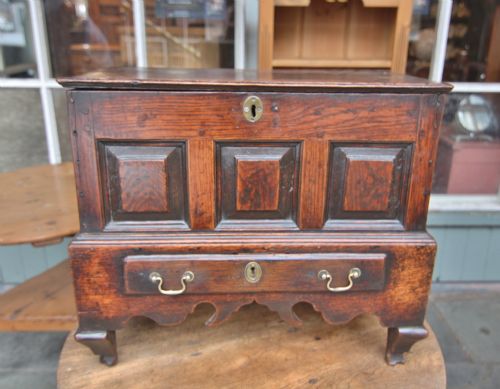
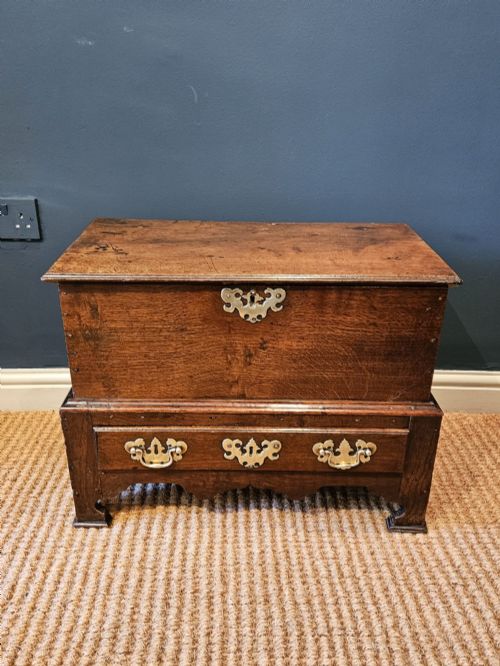


18th Century Miniature Coffer
These 18th century miniature coffer examples are small domestic chests built for documents and valuables, offering regional craftsmanship in miniature.
18th Century Miniature Coffer
When you search for an 18th century miniature coffer, you encounter pieces predominantly described as coffer bach or miniature chests originating from Wales, alongside English, Dutch, and Flemish examples. These domestic items take the form of small tabletop chests and boxes, often elevated on turned feet.
The regional Welsh vernacular tradition dominates the selection, spanning periods from early Georgian to the late eighteenth century. Makers constructed these small chests using native timber, following the architectural styles of larger household furniture.
How they were made
Makers built these pieces primarily using solid oak, supplemented by wood inlay, timber inlay, and occasionally copper alloy or iron hardware. Carpenters employed traditional joinery methods suited to small-scale furniture production.
Surface details include brass fitments and enamel elements on specific novelty trinket boxes and tabletop cabinets. Structural support often relies on turned feet attached directly to the base of the chest.
Some miniature chests come complete with tiny lockable compartments scaled perfectly for keeping household secrets.
What varies in quality
Differences in quality depend on the precision of the joinery and the presence of decorative timber inlay rather than basic utility. Early examples display refined regional characteristics that separate standard vernacular pieces from finer commissioned works.
The integrity of the original oak surfaces and the retention of period brass or iron fittings influence the overall character of each chest. Variations in the turning of the feet and the balance of proportions distinguish regional traditions.
The 18th Century Miniature Coffer Glossary
- Coffer bach
- A Welsh term translating to small coffer, used to describe miniature oak chests produced in Wales during the eighteenth century.
- Vernacular furniture
- Domestic items built by local craftsmen following regional traditions rather than metropolitan high styles.
- Inlay
- A technique where pieces of contrasting wood or other materials are inserted into a recessed surface to form a pattern.
- Turned feet
- Support feet shaped on a lathe, commonly found on early Georgian and Welsh regional miniature chests.
18th Century Miniature Coffer: Frequently Asked Questions
What is a coffer bach?
A coffer bach is a traditional Welsh miniature coffer or chest made during the eighteenth century.
These small pieces served to store valuables, documents, or treasured personal items in domestic settings.
Where were miniature coffers made?
The pieces available originate predominantly from Wales, with additional examples from England, the Netherlands, and Flanders.
Welsh regional pieces reflect specific local vernacular traditions in oak and construction methods.
How do I date an 18th century miniature coffer?
Dating relies on construction techniques, timber selection, and stylistic details such as turned feet and inlay work.
Most pieces span the Georgian period, with specific examples dated between seventeen hundred and the late eighteenth century.
How were these miniature chests used?
Original owners used these small chests on tabletops or surfaces to keep secure documents, money, or small trinkets.
Their portable size allowed them to function as personal storage units within the household.