
18th Century Mahogany Pedestal Table
An 18th century mahogany pedestal table brings centuries of practical elegance and solid timber construction into a room.
18th Century Mahogany Pedestal Table
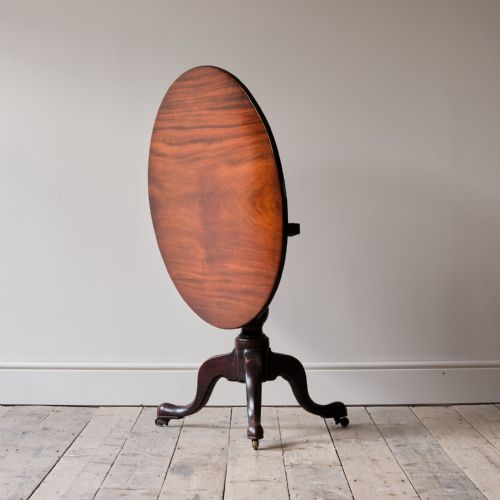
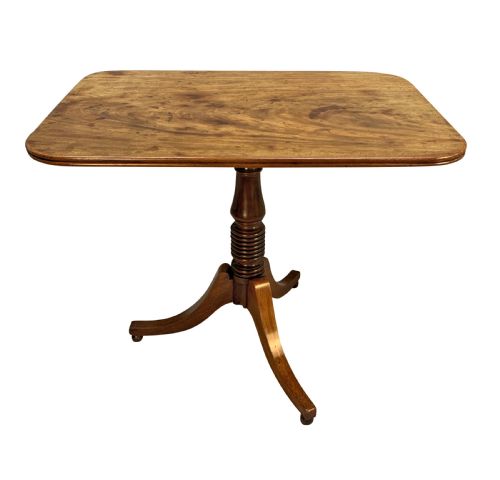
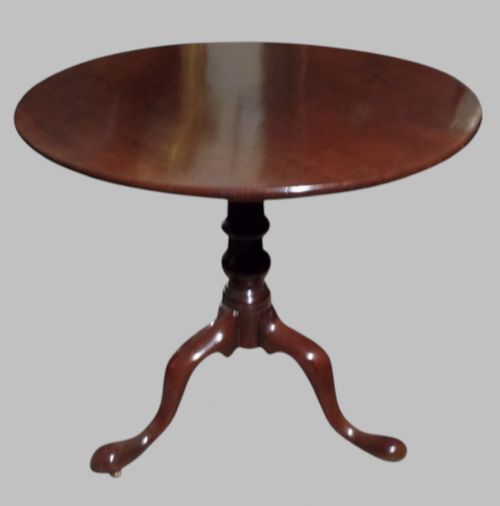
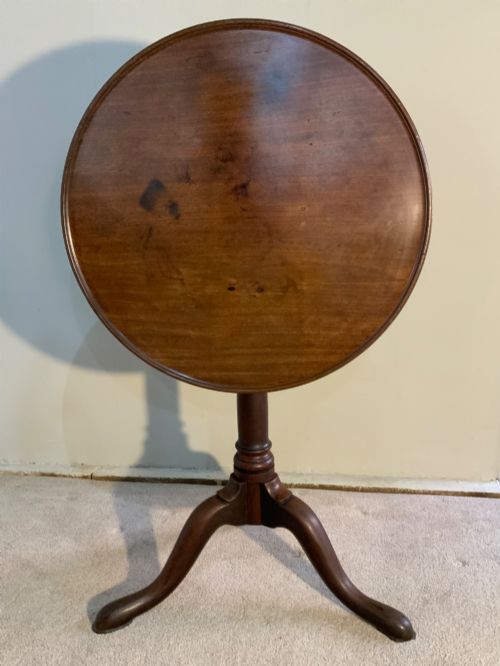
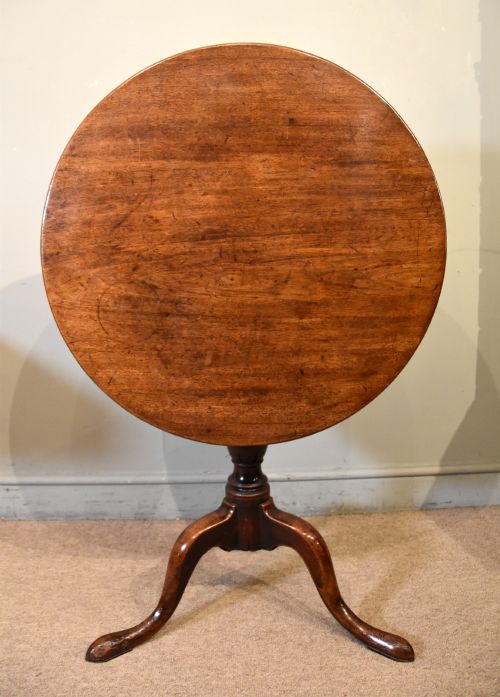
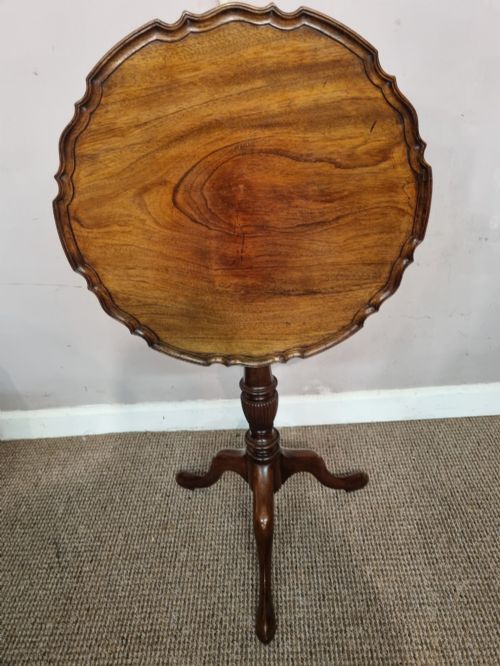
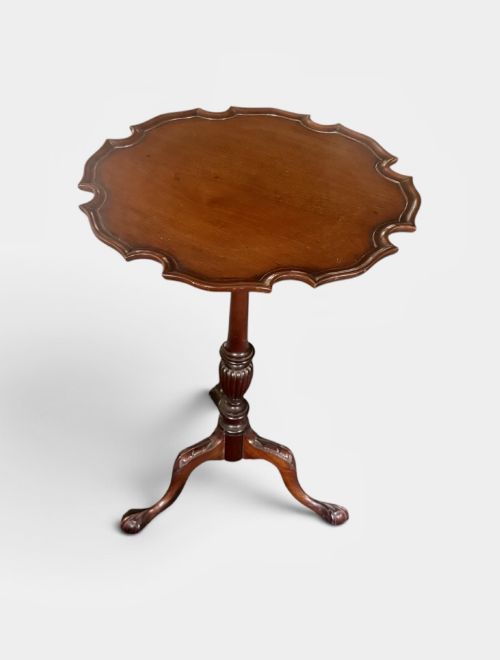
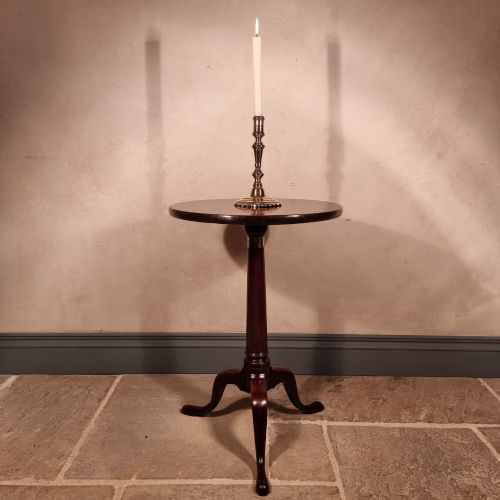
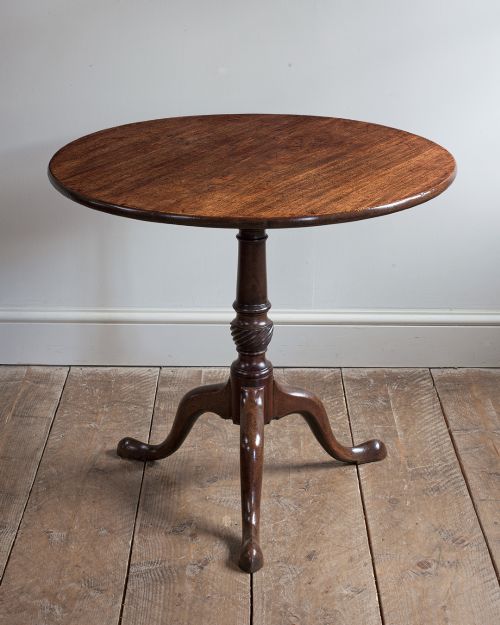
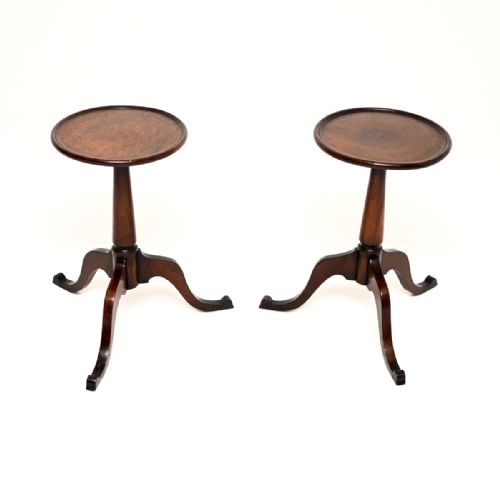
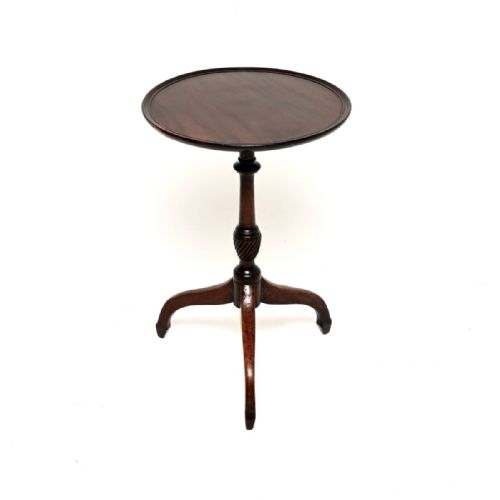
When you search for an 18th century mahogany pedestal table, you encounter tripod wine tables, tilt-top occasional pieces, and larger dining formats supported by a central column. These forms evolved to serve domestic life during the Georgian period, offering sturdy surfaces that could be moved or tilted aside when not in use.
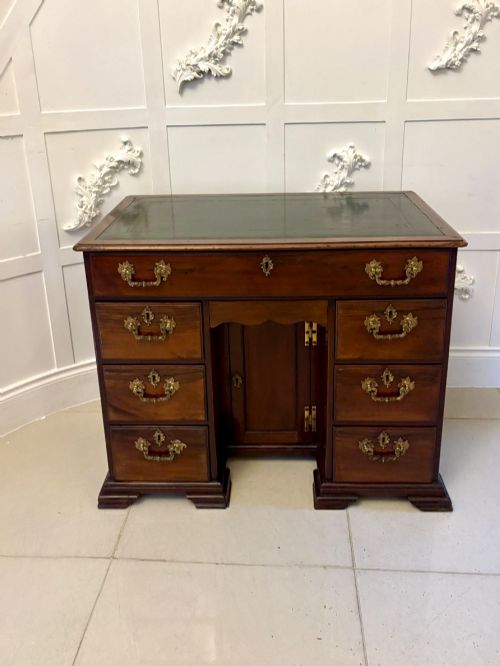
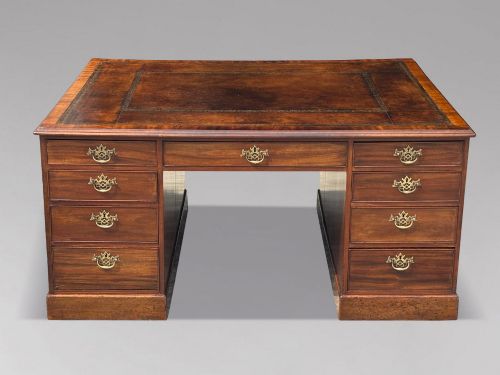
The versions most common on this page date from the Georgian and George III eras, frequently featuring circular, oval, or pie crust tops. Alongside these small occasional tables, the category extends to larger pedestal dining tables and partner desks resting on central pillars.
Makers of the period utilised the stability of a three-legged tripod base or heavy pedestal columns to support heavy timber without taking up excessive floor space. Their clean lines and proportioned columns suited the formal parlours and dining rooms of the eighteenth century.
How They Were Made
Cabinet makers built these pieces using solid mahogany, frequently selecting Cuban mahogany for its density, rich grain pattern, and deep natural colour. Secondary timbers appear in concealed areas, while brass fittings such as castors and birdcage mechanisms provide functional articulation.
Construction techniques rely on traditional joinery, turning lathes for central pillars, and hand-carved tripod legs terminating in pad, claw and ball, or spade feet. Tilt-top variations incorporate clever catches and birdcage pivots allowing the surface to fold vertically against the column.
Many tilt-top tables retain their tiny original wooden catches, designed to stop the top from wobbling while someone poured your evening tea.
What Varies in Quality
The distinction between standard examples and finer pieces lies in the selection of the timber grain, the crispness of the hand-carving on the knees and feet, and the integrity of the original mechanical joints. Superior tables display well-figured mahogany veneers or solid boards with deep chatoyancy, alongside neatly turned pillars that maintain strict vertical alignment.
Attention to detail in the edge mouldings, such as carved pie crust rims or fine boxwood and marquetry inlay, separates workshop productions from master cabinet maker outputs. The smoothness of the tilting action and the original fit of the birdcage mechanism also indicate the level of care invested during initial construction.
Gillows
The 18th Century Mahogany Pedestal Table Glossary
- Tilt-top table
- A table with a hinged surface that rotates to a vertical position when not in use. This mechanism saved valuable floor space in smaller eighteenth-century rooms.
- Birdcage
- A revolving wooden framework beneath the tabletop that allows the surface to both tilt and turn. It connects the top to the central pedestal column.
- Tripod table
- A small freestanding table supported by three legs radiating from a central pillar. This design ensures stability on uneven floorboards.
- Cuban mahogany
- A dense, dark variety of timber harvested in the Caribbean and widely utilised by British cabinet makers for high-status furniture during the eighteenth century.
18th Century Mahogany Pedestal Table: Frequently Asked Questions
What is a tilt-top table used for?
These tables served as versatile furniture for serving tea, reading, or holding decorative objects in eighteenth-century parlours. Their pivoting tops allowed them to stand flat against a wall when floor space was needed.
Today, they function well as occasional accent tables beside seating areas or in hallways, combining practical surface space with historical character.
How do I identify a George III table?
George III pieces typically date between 1760 and 1820, displaying specific stylistic traits such as crisp carved tripod legs, classical column turnings, and rich mahogany timber. Cabinet makers of this era focused heavily on proportion and structural balance.
Examining the construction methods underneath, such as hand-cut dovetails and timber shrinkage patterns, helps confirm the eighteenth-century origin of the piece.
Why does the wood colour vary?
Mahogany naturally darkens with age and exposure to light, developing a deep reddish-brown patina over the centuries. Different species, such as Cuban mahogany, naturally exhibit denser grain patterns and darker tones than later replacements.
Finish applications and historical polishing methods also contribute to the unique visual depth found on each individual antique table.
Can I use a wine table daily?
These sturdy tripod pieces were built to withstand regular domestic use in Georgian households, utilising solid hardwood construction and stable three-point bases. They easily support lamps, books, or drinks during everyday activities.
Gentle placement and avoiding direct heat sources will keep the antique polish and timber joints secure for modern living.