
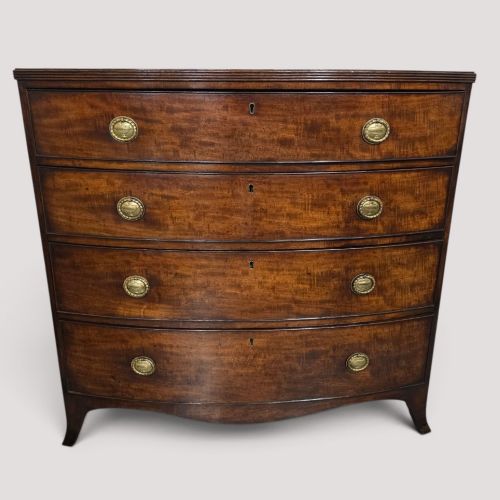

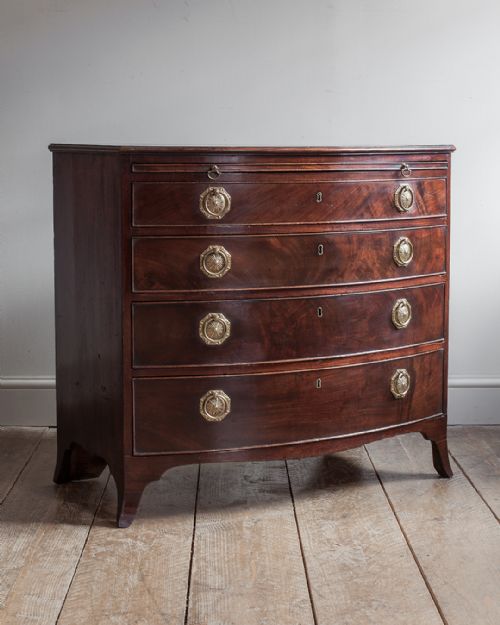
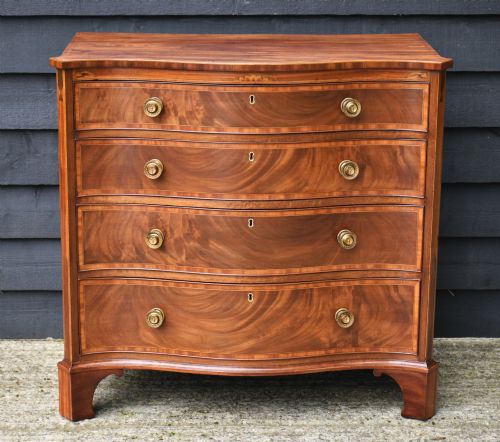
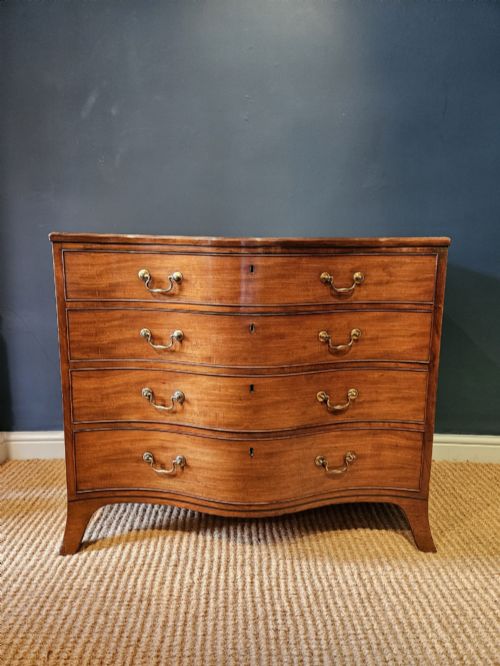
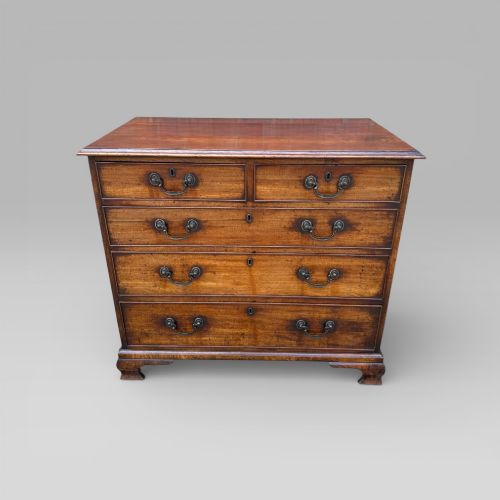
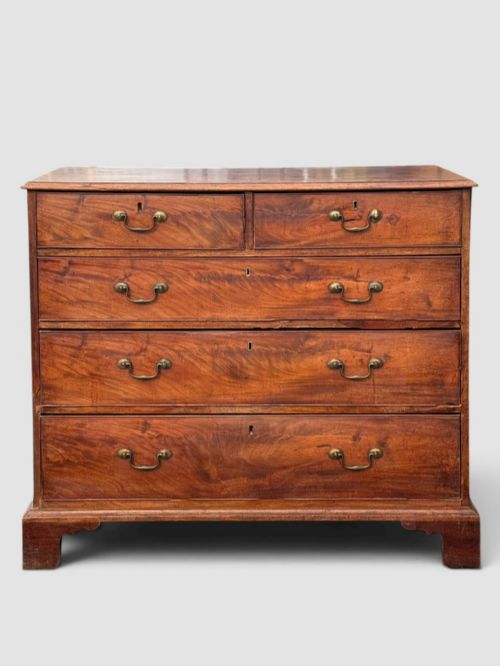
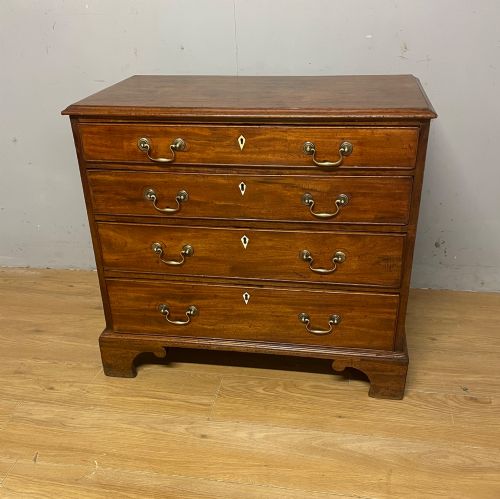
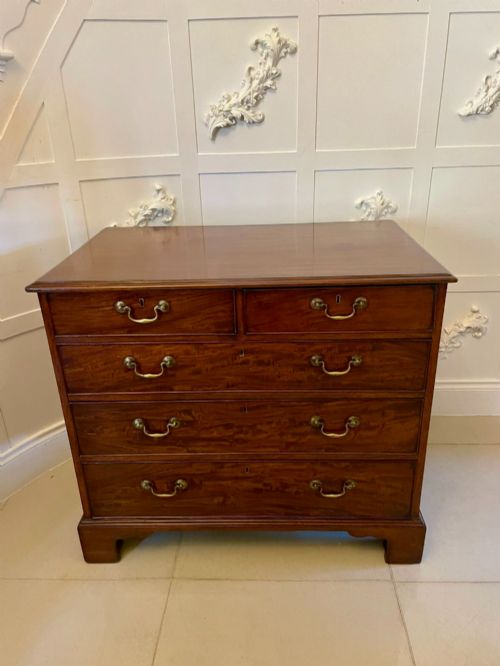
18th Century Mahogany Dresser
An 18th century mahogany dresser brings profound warmth and architectural proportion to a room, offering robust storage built to endure centuries of daily use.
18th Century Mahogany Dresser
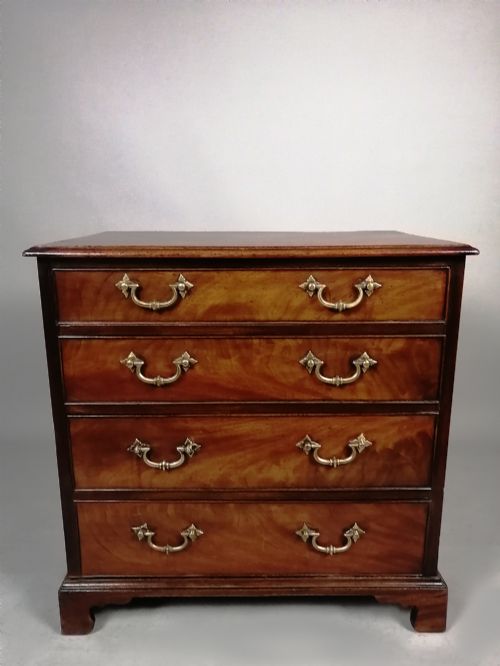
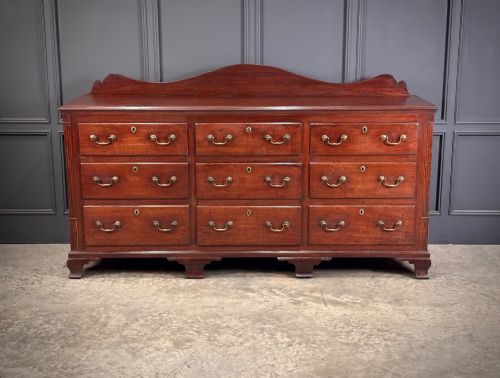
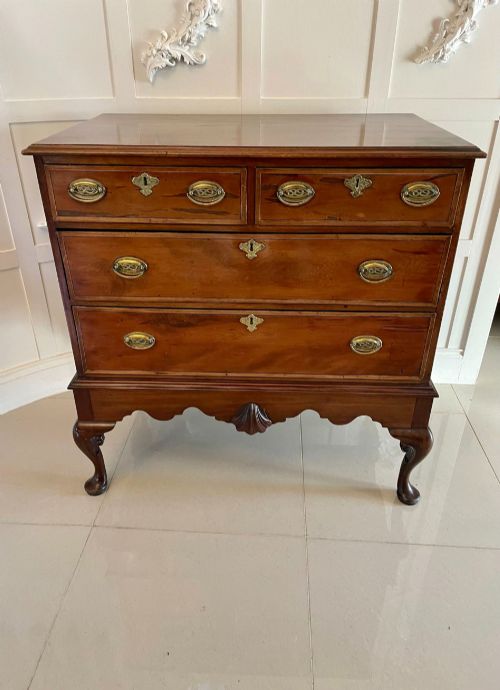
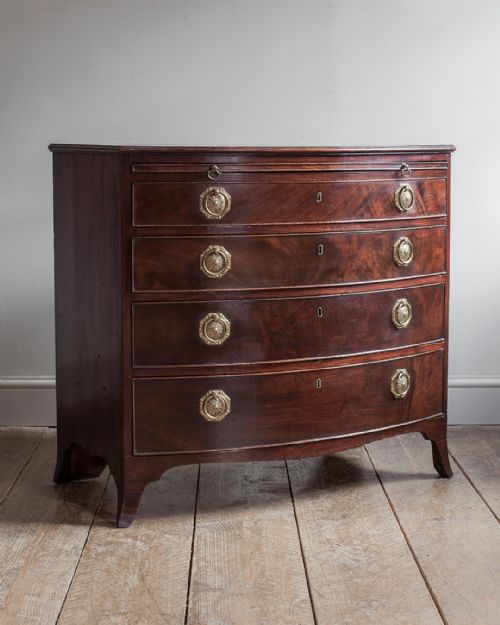
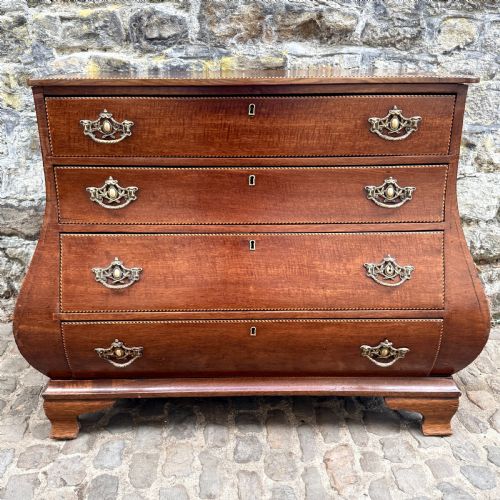
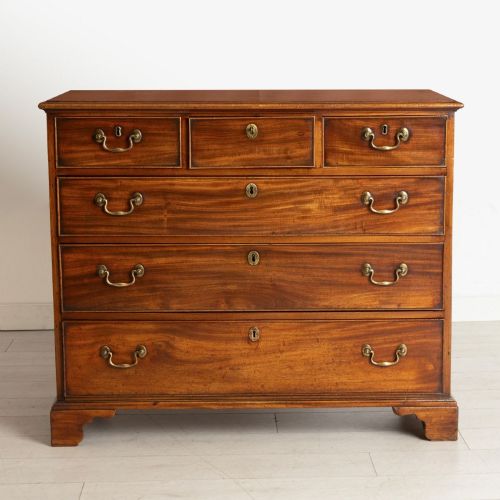
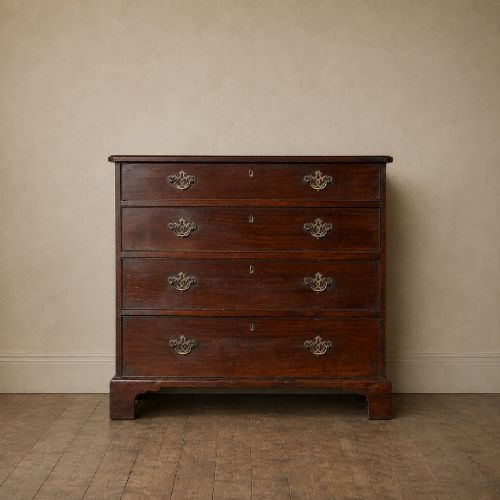
An 18th century mahogany dresser encompasses forms ranging from sturdy oak and mahogany bases to refined chests of drawers created during the Georgian and George III periods. Buyers searching for an 18th century mahogany dresser frequently encounter chests of drawers, serpentine fronts, and bachelor chests alongside traditional timber dresser bases.
The pieces on this page span the 18th century, 19th century, and Edwardian periods, with prominent representation from George II and George III reigns. Makers utilised mahogany, Cuban mahogany, and oak, often accented with satinwood crossbanding and brass handles.
Variations in regional design emerge through items such as Channel Islands chests and Dutch Baroque influences, alongside compact small proportions and hall chests. These domestic items fulfilled everyday storage needs while displaying the cabinetmaker's mastery of proportion and grain.
Materials and construction
Cabinetmakers constructed these pieces primarily from solid mahogany and Cuban mahogany, frequently pairing them with oak drawer linings and secondary timbers such as pine. Crossbanding in satinwood and contrasting inlay added visual depth to drawer fronts and top surfaces.
Joinery relied on hand-cut dovetails for drawer construction and sturdy bracket feet or plinth bases to support the weight of the timber. Original brass handles and backplates were secured with iron or brass fixings, while cockbeading framed the perimeters of individual drawers.
18th Century Mahogany Dresser Retail Price Guide 2026
Typical asking prices for 18th century mahogany dresser among the pieces listed under this phrase on Sellingantiques today, from the lower quarter to the upper quarter. They describe what is for sale here now, not the wider market.
Materials documented across the inventory include solid mahogany, Cuban mahogany, oak, satinwood, pine, brass, iron, and bone.
Judging quality and character
Quality rests upon the choice of timber and the handling of the grain, particularly in Cuban mahogany where rich figuring dictates the visual impact of a serpentine or bow front. Superior examples exhibit crisp moulding details, well-proportioned bracket feet, and harmonious crossbanding that frames the primary surfaces.
J Moorcroft
The 18th Century Mahogany Dresser Glossary
- Serpentine
- A front curved in a gentle wave shape with a convex centre flanked by concave sides. This complex contour requires skilled carpentry to shape the solid timber accurately.
- Brushing slide
- A pull-out shelf positioned above the top drawers, traditionally used for writing or folding garments. It operates on runners integrated into the internal framing.
- Crossbanding
- A strip of veneer applied to the border of a furniture surface with the grain running perpendicular to the centre panel. It creates a contrasting visual frame.
- Cockbeading
- A narrow semi-circular moulding projecting around the edge of a drawer front. It protects the drawer edges from impact and conceals the joint lines.
- Patina
- The deep surface sheen and warm coloration developed by timber through age, light exposure, and regular handling over generations.
18th Century Mahogany Dresser: Frequently Asked Questions
What is a brushing slide used for?
A brushing slide functions as a pull-out shelf located just beneath the top surface or upper drawers. It provided a convenient horizontal surface for light writing or brushing clothes.
Cabinetmakers integrated these slides smoothly into the internal frame so they remained concealed when not in use. They appear frequently on higher-grade Georgian chests and bachelor chests.
What is Cuban mahogany?
Cuban mahogany is a dense, durable hardwood imported from the West Indies during the 18th century. It became prized for its deep colour and intricate grain patterns.
Furniture built from this timber weighs substantially more than standard mahogany pieces. The wood resists wear effectively, developing a rich patina over centuries.
Where should I place a chest of drawers?
A chest of drawers adapts well to bedrooms, hallways, and living spaces where surface area and vertical storage prove useful. Placing the piece away from direct heat sources and strong sunlight protects the timber and finish.
Allowance must be made for clearance if the piece includes a pull-out brushing slide or cabinet doors. Wall anchoring provides stability on uneven historic floors.