

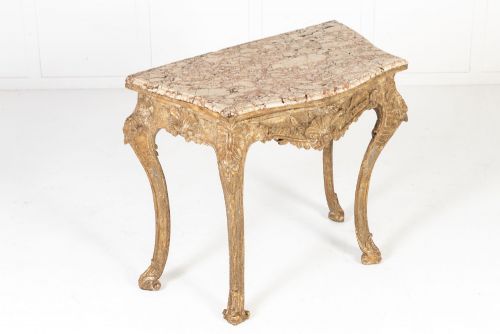


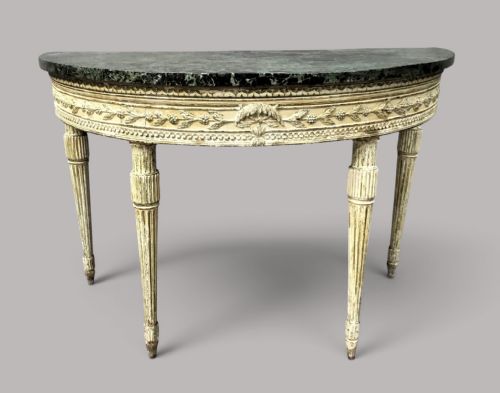
18th Century Italian Console
An 18th century Italian console brings sculptural presence to a room, offering carved ornament and marble tops that anchor an interior scheme.
18th Century Italian Console
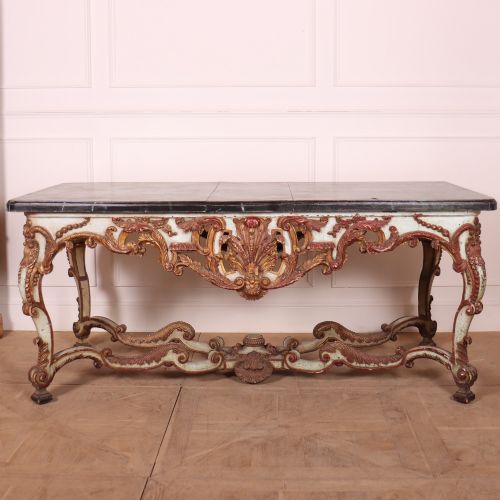
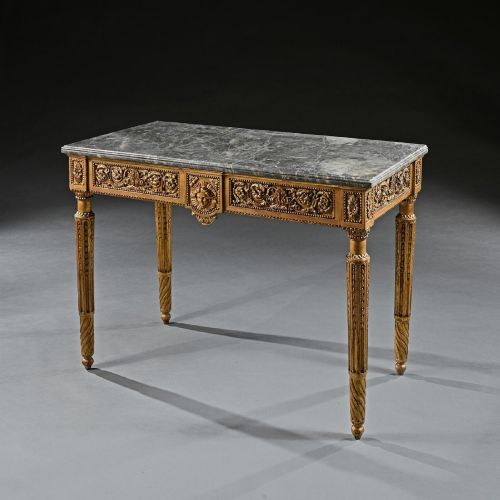
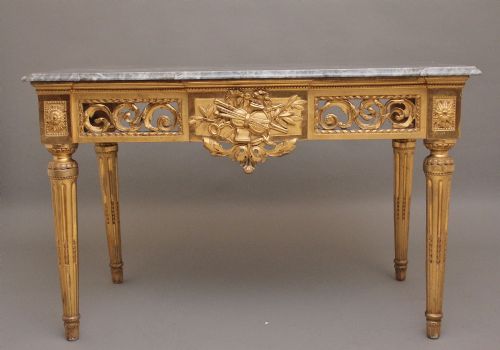
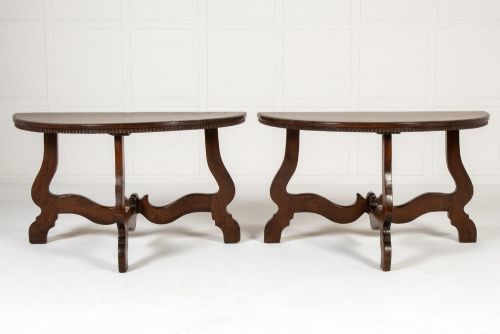
An 18th century Italian console is a decorative table designed to stand against a wall, frequently topped with marble. The examples appearing here span console tables, centre tables, and games tables, predominantly rooted in the 18th century alongside later 19th-century interpretations and a 1920 piece.
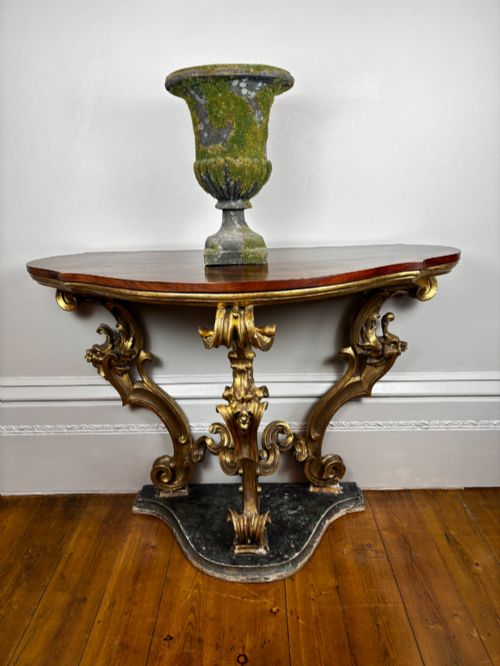
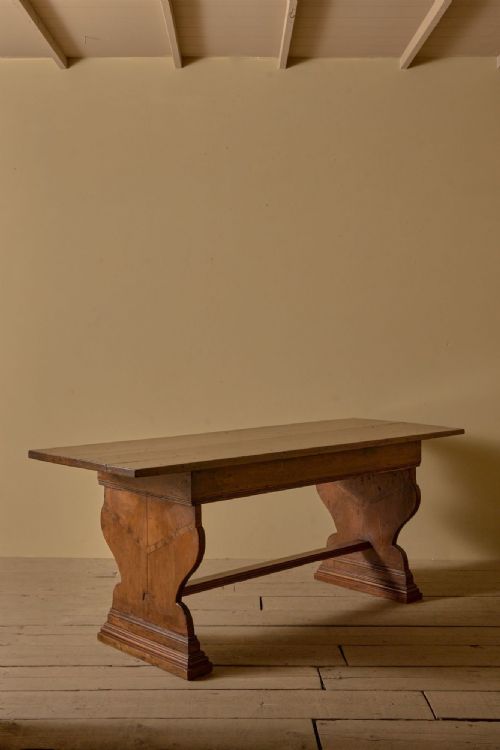
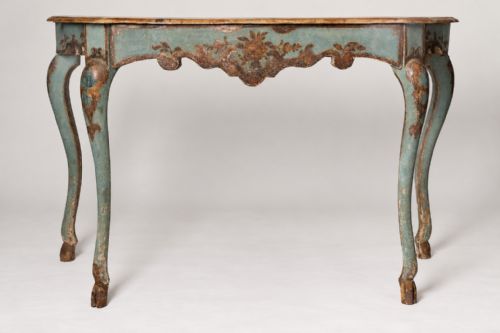
The dominant forms are console tables in walnut, giltwood, and painted finishes. Walnut and painted timber examples provide a direct link to the domestic interiors of the period, while gilded and silver-gilt pieces reflect grander decorative schemes.
How They Were Made
The construction relies heavily on carved wood, gesso, and gold leaf applied to timber frames. Artisans shaped walnut and painted wood, often combining carved giltwood with stone surfaces.
Surfaces feature applied marble tops, faux porphyry finishes, and inlaid work. Gesso provides the smooth ground necessary for the application of gold and silver leaf.
18th Century Italian Console Retail Price Guide 2026
Typical asking prices for 18th century italian console among the pieces listed under this phrase on Sellingantiques today, from the lower quarter to the upper quarter. They describe what is for sale here now, not the wider market.
The listings span the 18th century, the 19th century, and the year 1920, incorporating walnut, marble, giltwood, and painted wood.
What Varies in Quality
The depth and crispness of the carving distinguish finer tables from simpler workshop production. Tables featuring intricate scrollwork, high-relief carving, and original marble tops stand apart from plainer variants.
The application of the finish also dictates quality, with genuine gold leaf and silver gilt retaining a warmth that distinguishes them from later, flatter coatings. The integration between the wooden base and the stone top remains a key indicator of execution.
The 18th Century Italian Console Glossary
- Giltwood
- Wood that has been coated with gold leaf over a prepared gesso ground. This technique creates a luminous surface characteristic of grand console tables.
- Gesso
- A plaster mixture applied to wood surfaces as a base for painting or gilding. It allows craftsmen to carve fine details before applying metal leaf.
- Demi-lune
- A half-moon shape characteristic of certain console and games tables. This form allows the furniture to sit flush against a wall.
- Faux Porphyry
- A painted simulation of the hard purple-red igneous rock prized in antiquity. Artisans used this technique to achieve a decorative stone effect without using the solid mineral.
18th Century Italian Console: Frequently Asked Questions
Where should I place a console table?
These tables traditionally stand against a flat wall in a hallway, drawing room, or reception area. They suit spaces where a functional surface is desired beneath a mirror or painting.
Because many feature finished marble tops, they also serve well as freestanding centre tables depending on the specific room layout.
How do I care for a marble top?
Marble requires gentle cleaning with a soft cloth and neutral soap to avoid scratching the polished surface. Acidic liquids can etch the stone, so coasters should be used.
The wooden base benefits from dusting with a dry cloth, avoiding modern aerosol polishes that can build up on gilt or painted surfaces.
What distinguishes Rococo from Neoclassical tables?
Rococo designs emphasise asymmetrical scrolls, flowing curves, and exuberant carved ornament. These pieces lean towards dynamic movement and organic motifs.
Neoclassical tables adopt straighter lines, symmetry, and architectural details inspired by classical antiquity.
Are these tables designed to be freestanding?
Console tables are historically intended to be placed flat against a wall, frequently secured for stability. Some centre tables and games tables are finished on all sides for open placement.
Reviewing the back construction clarifies whether a specific piece was meant to be viewed from every angle.