
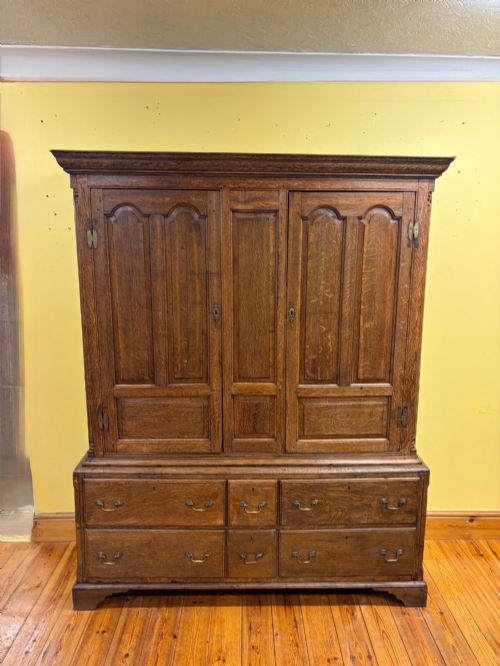
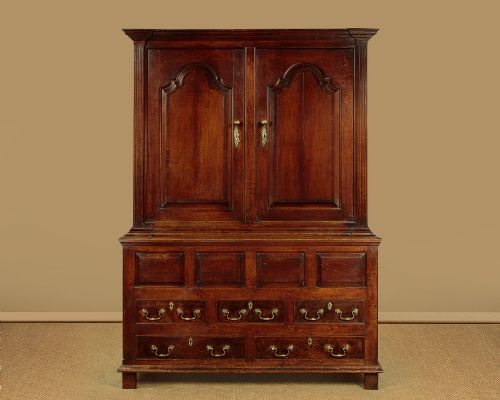
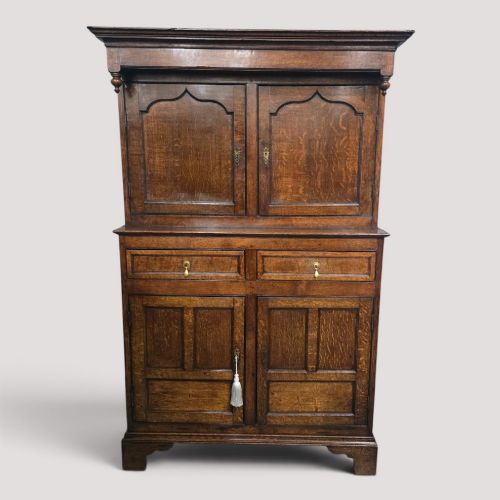
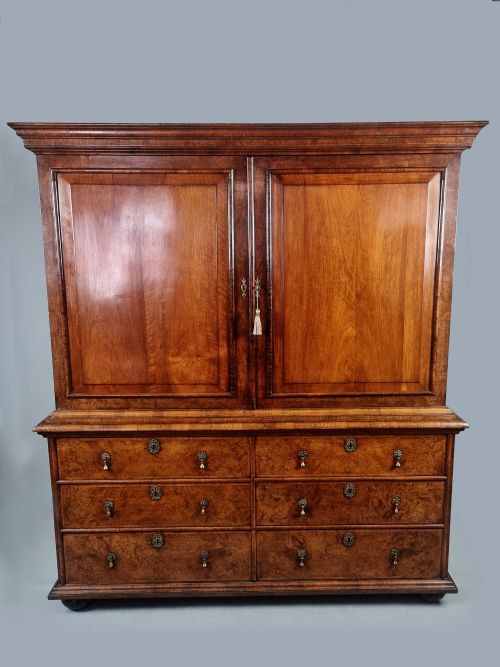


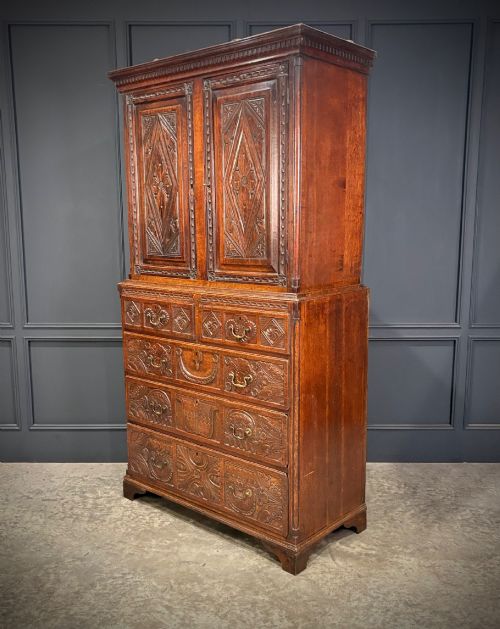

18th Century Housekeeper Press
These heavy timber pieces are built to store household linen and provisions, offering substantial storage alongside timeless character.
18th Century Housekeeper Press
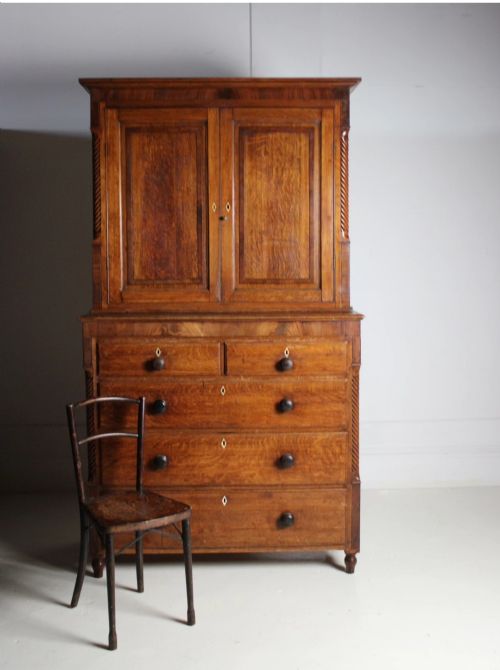
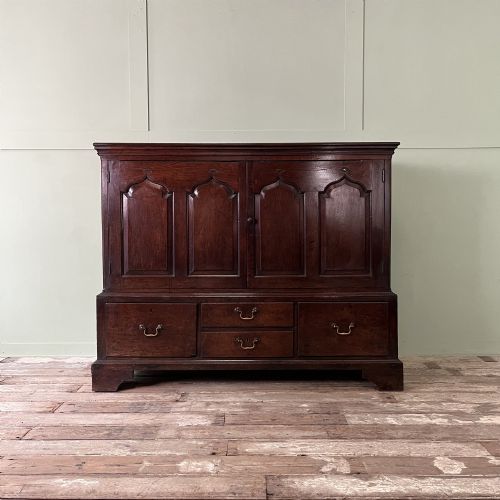
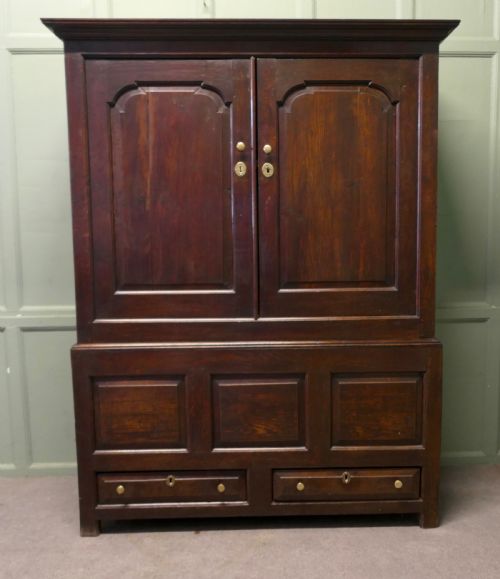
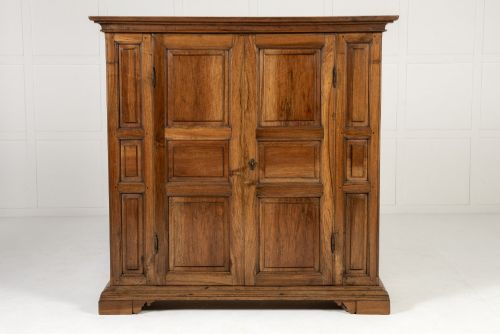
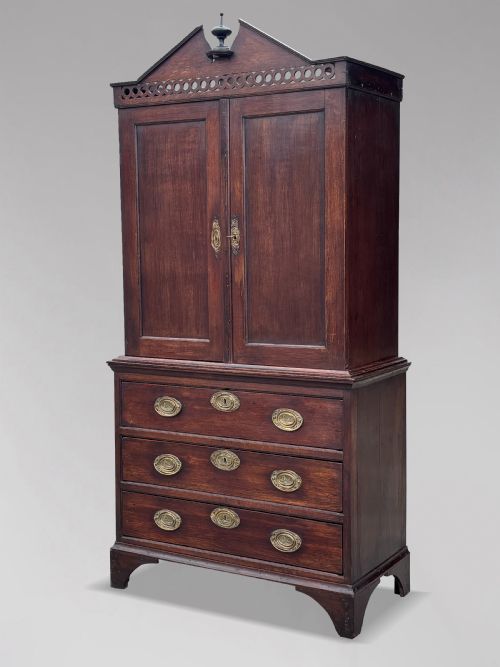
An 18th century housekeeper press is a substantial storage furniture piece traditionally used to organise household linen, dry goods and provisions. You will most frequently encounter sturdy oak examples originating from Georgian workshops, often arranged in two distinct stages with panelled doors enclosing interior shelving or hanging space.
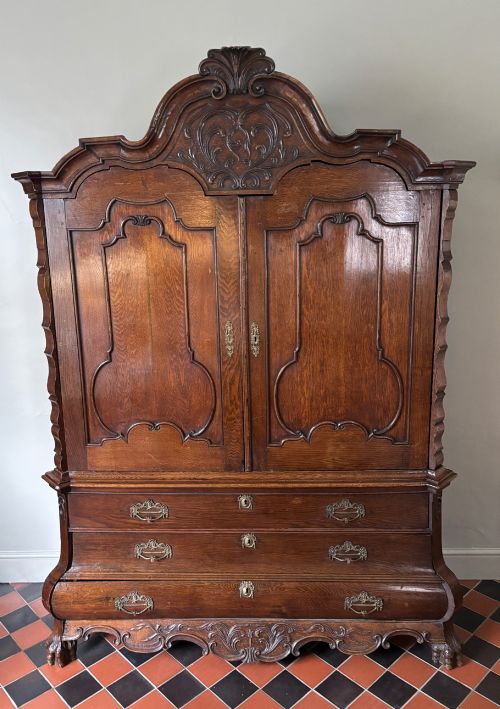
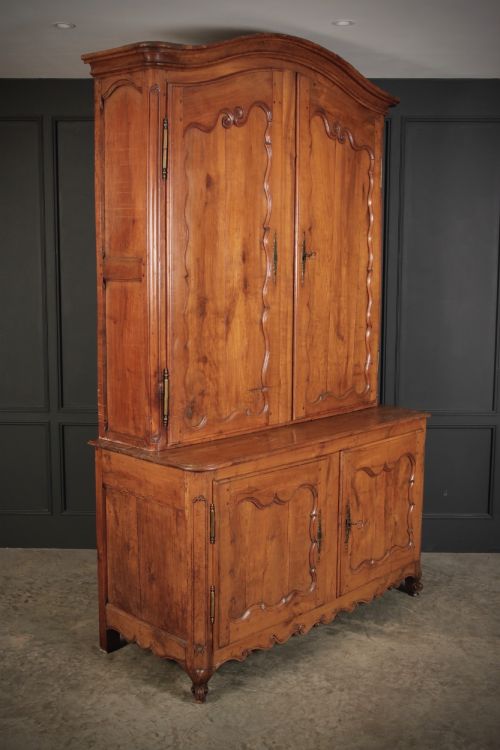
The selections span regional English variations like Welsh country styles and Yorkshire designs, alongside continental pieces in cherry wood, walnut and painted wood. These large functional units served the domestic economy of country houses and large estates before modern fitted closets existed.
Materials and construction
Cabinet makers built these presses primarily using solid local oak, complemented by mahogany, walnut, burr walnut, cherry wood and pine. Construction relied heavily on traditional frame and panel joinery to accommodate the natural movement of large timber boards over time.
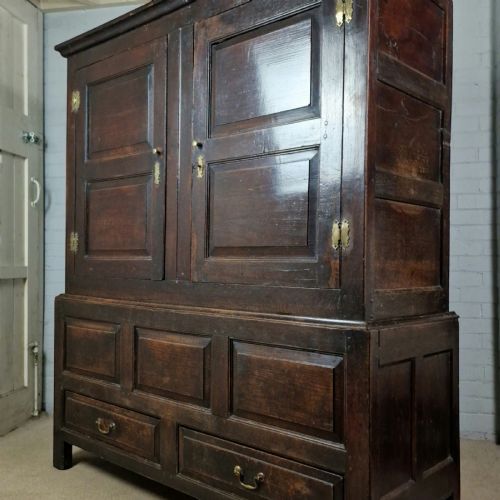
Brass hardware such as H-hinges, escutcheons and working locks secure the heavy doors, while iron components appear on regional tack and harness cupboards. Surfaces finish with simple wax polishes that highlight the natural grain of the wood without heavy modern varnishes.
Several surviving presses retain original harness hooks and tack compartments, built for storing leather riding gear alongside household linens.
Assessing quality and proportion
Quality rests in the choice of timber and the crispness of any carved detailing, such as fielded panels and moulded cornices. Superior examples maintain balanced proportions between the upper press section and the lower drawers or cupboard base.
Original brasses, untouched timber patination and retained interior slides or shelving elevate an example above altered pieces with replaced hardware or trimmed cornices.
The 18th Century Housekeeper Press Glossary
- Press cupboard
- A tall piece of furniture featuring enclosed shelving or hanging space, typically split into an upper and lower section. These units formed the backbone of domestic storage before fitted wardrobes.
- Livery cupboard
- An antique storage cabinet historically used for keeping rations, food or household garments. They often feature panelled doors and sturdy pegged joints.
- Cross-banding
- A decorative border technique where thin strips of veneer are laid across the grain of the primary wood. This method frames drawer fronts and panel edges on refined Georgian furniture.
- Escutcheon
- A protective brass plate surrounding a keyhole. These fittings prevent the surrounding wood from wearing down with regular use.
18th Century Housekeeper Press: Frequently Asked Questions
What is an 18th century housekeeper press used for?
These large storage units originally held household linens, folded blankets, dried provisions and estate records for the smooth running of a country house.
Today, they adapt well into modern hallways, large bedrooms or kitchens to provide deep pantry and wardrobe storage.
How do I date an 18th century housekeeper press?
Dating relies on examining the construction methods, such as hand-cut dovetails on internal drawers, timber species and regional vernacular styles. Secondary woods at the back and drawer linings also offer clues to the period of manufacture.
Hardware configurations, including iron cotter pins and brass H-hinges, help distinguish earlier 17th century survivals from later Georgian and Victorian interpretations.
Are these presses modular or fixed?
Most examples are constructed in two distinct stages, consisting of a heavy upper cupboard that rests upon a lower base cabinet or chest of drawers. This two-part design aided transport through narrow doorways in historic homes.
This modular split also makes modern placement easier when moving the heavy timber carcass between rooms.
How should I care for antique oak furniture?
Maintain stable humidity and temperature levels in your home to prevent the heavy timbers from splitting or warping over time. Avoid placing the piece in direct sunlight or directly against active radiators.
Apply a traditional beeswax polish occasionally to nourish the dry wood and preserve the historic surface patination.