
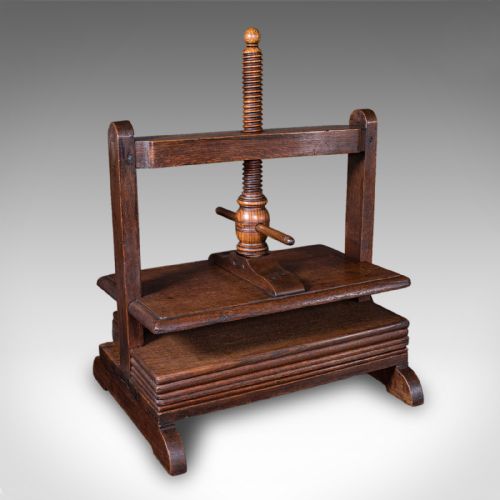


English Oak Linen Press
An English oak linen press is a substantial storage piece built to hold household textiles, combining panelled timber with deep domestic utility.
English Oak Linen Press
An english oak linen press serves as a commanding storage cabinet for domestic fabrics, originating in periods from the seventeenth century through to the twentieth century. These pieces encompass varied forms such as housekeeper cupboards, livery cupboards, and large country house cabinets.
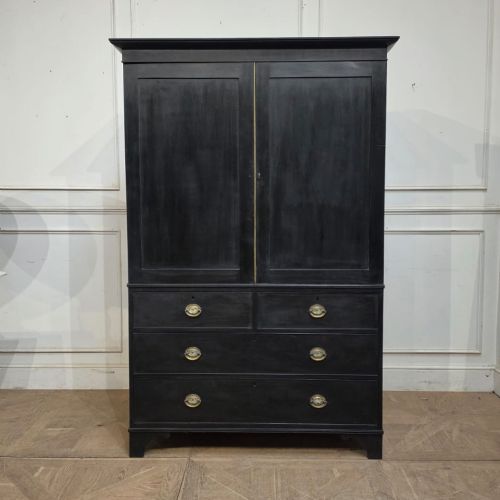
The version most commonly met on this page is the eighteenth-century Georgian oak cupboard or press, often displaying traditional panelled construction. Alongside these traditional presses, related forms like antique ladies flower presses and ebonised variants appear in the listings.
How they were made
Makers built these pieces primarily from solid oak, sometimes utilising ebonised oak for distinct visual contrast. Iron and brass fittings provide the functional hardware for doors, hinges, and internal mounts.
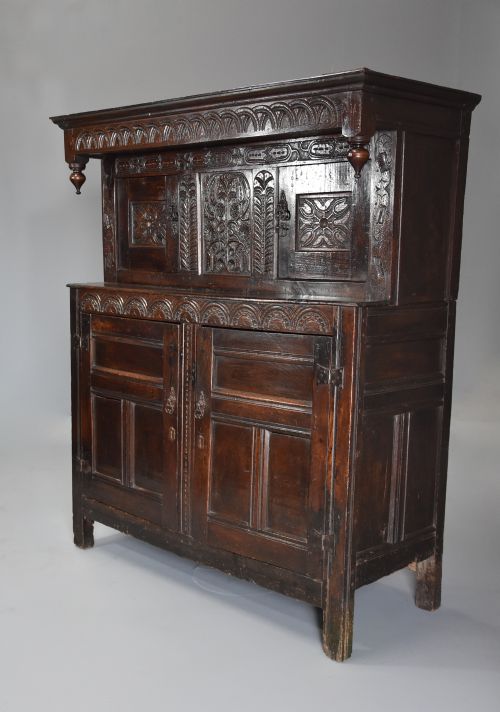
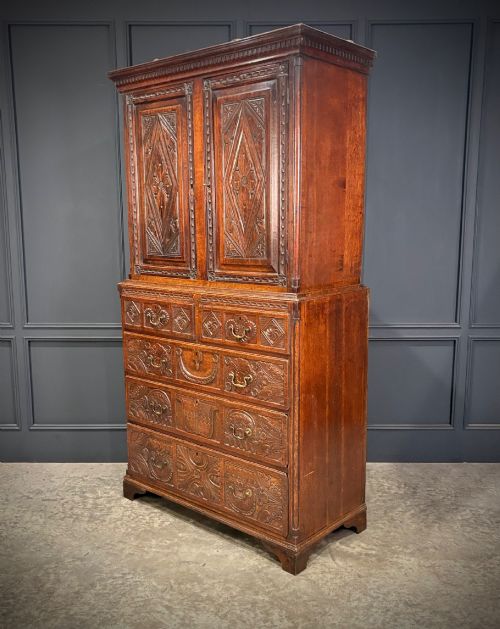
Construction relies heavily on traditional carpentry methods, including carved detailing seen on seventeenth-century Jacobean examples and Georgian country house builds. Surfaces often display an original, untouched patina developed through centuries of domestic use.
Listings span from the seventeenth-century Jacobean era through Georgian and Victorian periods up to nineteen hundred, constructed in oak, ebonised oak, brass, and iron.
What varies in quality
Quality rests upon the depth of the original patina and the preservation of untouched surfaces, which distinguish seventeenth and eighteenth-century examples from later pieces. Carved details executed with crisp precision elevate certain cupboards above plain utilitarian builds.
The structural integrity of the heavy oak framework and the survival of period brass or iron hardware determine the standing of each individual press. Cabinets retaining their original configuration demonstrate superior craftsmanship compared to altered pieces.
The English Oak Linen Press Glossary
- Linen press
- A tall storage cabinet historically designed for pressing and storing household linen and garments. These pieces usually feature upper and lower cupboard sections.
- Housekeepers cupboard
- A large domestic storage unit used in country houses to keep household provisions, linens, and utensils. They typically date from the Georgian and later periods.
- Livery cupboard
- An antique cupboard used for storing food, candles, or small household items before the widespread use of dedicated pantries. They share similarities in form with early press cupboards.
- Patina
- The surface sheen and colour developed by aged oak over centuries of handling and polishing. An untouched patina indicates genuine age and careful preservation.
- Ebonised oak
- Timber treated with a dark finish to imitate ebony wood. This technique appears on specific nineteenth-century pieces for a dramatic aesthetic effect.
English Oak Linen Press: Frequently Asked Questions
What is an english oak linen press?
An english oak linen press is a heavy timber cabinet built to store and press household textiles, linens, and garments. These pieces combine deep cupboards with sturdy wooden construction.
They evolved through various periods, encompassing seventeenth-century Jacobean press cupboards, eighteenth-century Georgian housekeeper cupboards, and later nineteenth-century wardrobe formats.
How were linen presses used historically?
Historically, households used these large presses to keep clean sheets, tablecloths, and clothing flat and free from dust. The upper and lower sections divided different types of textiles and household stores.
In large country houses, housekeeper cupboards served as the central storage hub for domestic management, holding everyday provisions alongside pressed linens.
How do I date an antique oak press?
Dating relies on examining the construction methods, carved motifs, and timber characteristics visible across different eras. Seventeenth-century examples often feature distinct Jacobean carving and heavy framing, while Georgian pieces show refined proportions.
Later nineteenth and early twentieth-century variations incorporate different hardware styles and cleaner lines, reflecting the shifting interior tastes of their respective periods.
How do I live with a large oak cupboard?
Living with a large oak press involves accommodating its substantial physical presence and weight within a modern room layout. Placing the piece away from direct heat sources protects the historical timber from drying out.
Regular dusting and minimal waxing preserve the original patina and surface character that these antique cupboards accumulate over centuries.