

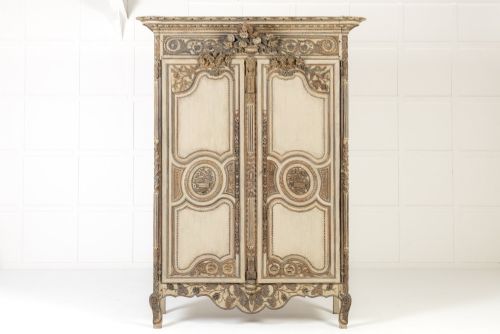


18th Century French Wardrobe
An 18th century french wardrobe is a substantial storage piece offering classic continental presence and generous internal depth for modern clothes.
18th Century French Wardrobe
When you search for an 18th century french wardrobe, you are looking at large timber storage furniture built for continental homes before the era of fitted closets. The examples on this page span the 18th and 19th centuries, taking the form of armoires, housekeeper's cupboards, and linen cupboards.
You are most likely to meet solid oak and walnut armoires originating from regional provinces such as Burgundy. These pieces often feature carved details and substantial double doors designed to store heavy textiles and garments.
How they were made
Cabinet makers constructed these wardrobes using solid regional timbers like oak, walnut, yew, and chestnut, joined with traditional framing techniques. Surfaces were left natural, bleached, or finished with paint and gold leaf accents.
Iron and brass hardware, including heavy hinges and working locks, secured the large timber doors. Carving was executed directly into the solid wood panels by hand.
18th Century French Wardrobe Retail Price Guide 2026
Typical asking prices for 18th century french wardrobe among the pieces listed under this phrase on Sellingantiques today, from the lower quarter to the upper quarter. They describe what is for sale here now, not the wider market.
Listings feature oak, walnut, yew, and chestnut timbers, alongside painted finishes, gold leaf, and iron hardware.
What varies in quality
Quality rests in the choice of timber and the ambition of the carving. Dense, well-figured walnut and solid oak with crisp, deep hand-carving stand apart from simpler regional builds.
Proportion and scale dictate the visual success of the piece. Low and tall variants differ in their architectural presence, with taller armoires demanding more accomplished joinery to maintain structural integrity across large panel doors.
The 18th Century French Wardrobe Glossary
- Armoire
- A large freestanding wardrobe or cupboard with doors enclosing shelving or hanging space. They were essential for storing garments and household linens.
- Bleached oak
- Timber treated to lighten its natural tone while retaining the prominent grain pattern. This finish softens the visual weight of heavy 18th century cabinetry.
- French Provincial
- A style originating from regional workshops outside Paris, combining traditional craftsmanship with local decorative motifs. These pieces often display simpler, sturdier forms than court furniture.
- Housekeeper's cupboard
- A large storage cabinet traditionally used for household provisions and linens. They frequently feature multiple doors and robust internal shelving.
18th Century French Wardrobe: Frequently Asked Questions
What is an 18th century french wardrobe?
An 18th century french wardrobe is a large freestanding timber storage cabinet, often called an armoire, designed for continental homes.
These pieces provide deep internal space enclosed by heavy panelled doors and substantial iron or brass hardware.
How were these wardrobes used?
Original homes utilised these large cupboards to store folded textiles, household linens, and heavy garments before modern closets existed.
Today, many buyers adapt the generous internal depth to function as modern wardrobes or general storage furniture.
What woods were used?
Cabinet makers built these wardrobes from regional hardwoods available in French and neighbouring provinces. Oak and walnut appear most frequently, alongside yew, chestnut, and painted finishes.
Surfaces were sometimes left natural, bleached, or decorated with paint and gold leaf.
How do styles differ?
Styles range from regional French Provincial builds with carved walnut panels to Dutch Neoclassical and country house linen cupboards.
Proportions vary from low oak armoires to tall housekeeper's cupboards featuring four doors.