



18th Century Ebonised Furniture
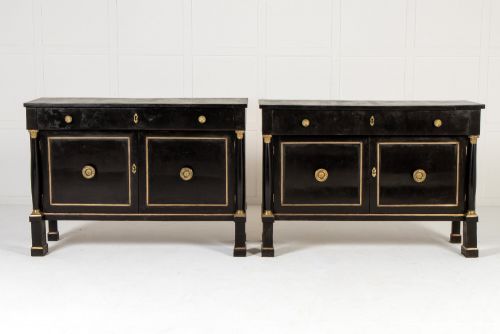
These 18th century ebonised furniture pieces bring dark, striking presence into a room, shaped by continental cabinet makers working in walnut, oak, and brass.
18th Century Ebonised Furniture
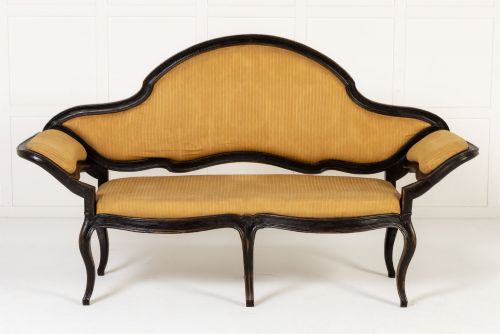
When you search for 18th century ebonised furniture, you encounter dark-finished timber items spanning sofas, side cabinets, commodes, and bureau bookcases. These pieces originate from continental workshops, particularly in Italy and France, reflecting distinct regional design currents of the period.
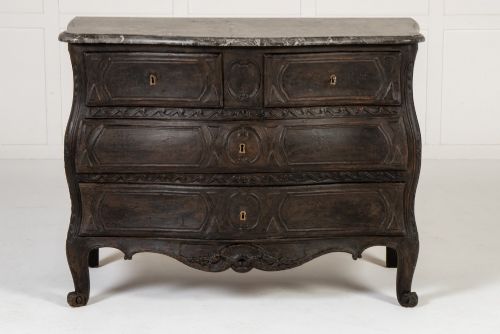
The pieces appearing on this page most frequently take the form of Italian and French commodes, side cabinets, and seating. You will find items influenced by Italian Rococo and Neoclassical movements, alongside French Provincial and Louis XV aesthetic traditions.
Makers of this era utilised dark wood finishes to create dramatic contrast within formal interiors, often pairing ebonised surfaces with contrasting materials like marble tops or brass mounts. The scale ranges from intimate bedside chests to substantial double-dome bureau bookcases.
How they were made
Cabinet makers built the primary carcass structures using foundational timbers such as oak, pine, and burr walnut. Surfaces were then treated to achieve the characteristic ebonised finish, imitating more costly exotic woods through staining and polishing.
Craftsmen incorporated decorative elements including brass hardware and applied mounts to enhance the dark wood surfaces. Marble tops appear on specific storage pieces, providing a durable and contrasting horizontal plane above the ebonised drawers.
18th Century Ebonised Furniture Retail Price Guide 2026
Typical asking prices for 18th century ebonised furniture among the pieces listed under this phrase on Sellingantiques today, from the lower quarter to the upper quarter. They describe what is for sale here now, not the wider market.
Object forms on this page span large double dome bureau bookcases down to intimate serpentine bedside chests and turned chairs.
What varies in quality
The distinction between standard and superior pieces rests on the precision of the cabinet work and the integrity of the ebonised finish. Finer examples display meticulous joinery in complex forms like serpentine fronts and bombe contours.
Material selection dictates the upper tier of the range, visible in the quality of the underlying burr walnut, the weight of the brass mounts, and the integration of fitted marble slabs. Balance of proportion within regional styles like Italian Rococo further separates ordinary items from exceptional ones.
The 18th Century Ebonised Furniture Glossary
- Ebonised wood
- Timber treated with stain, dye, or polish to simulate the dark, dense appearance of genuine ebony. This finish was widely utilised across European cabinet making during the eighteenth century.
- Bombe commode
- A chest of drawers characterised by convex curves and bulging sides that taper towards the base. This French form requires advanced carpentry to achieve its swelling profile.
- Bureau bookcase
- A combination furniture piece featuring a sloping desk flap that opens for writing, surmounted by shelving enclosed behind doors. Double-dome variants represent particularly ambitious eighteenth-century construction.
- Serpentine
- A furniture line or surface shaped with a double-curved edge, convex at the centre and concave at the ends. This contour demands skilled hand-shaping of the timber.
18th Century Ebonised Furniture: Frequently Asked Questions
What periods define this furniture?
These pieces belong to the eighteenth century, encompassing regional European movements such as Italian Rococo, Neoclassical, and French Provincial.
The styles reflect the specific design vocabulary of continental workshops operating during this period.
Which materials appear most often?
Construction relies primarily on timbers like oak, pine, and burr walnut, finished with ebonisation.
Surfaces frequently incorporate brass fittings and marble tops to provide textural contrast.
Where were these pieces made?
Evidence points towards continental European origins, with distinct representation from Italian and French regional makers.
Workshop traditions varied from the ornate curves of French commodes to the architectural lines of Italian bureau bookcases.
How do I style these dark pieces?
The deep ebonised finish works well against lighter walls, allowing the sculptural forms of commodes, mirrors, and sofas to stand out.
Pairing them with rooms that highlight their brass mounts and marble tops accentuates the contrasting materials.