

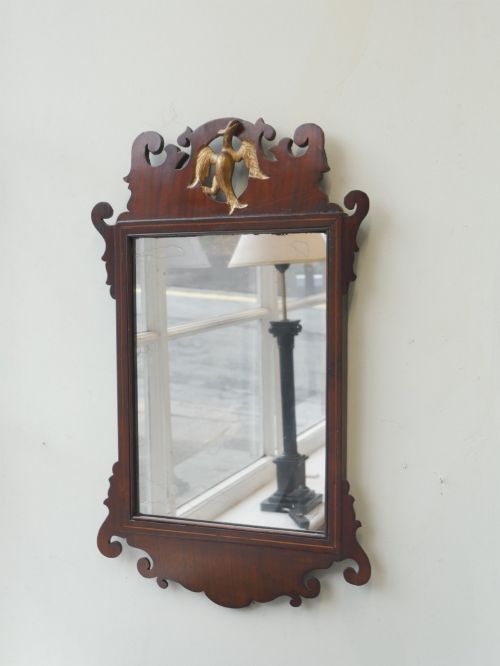
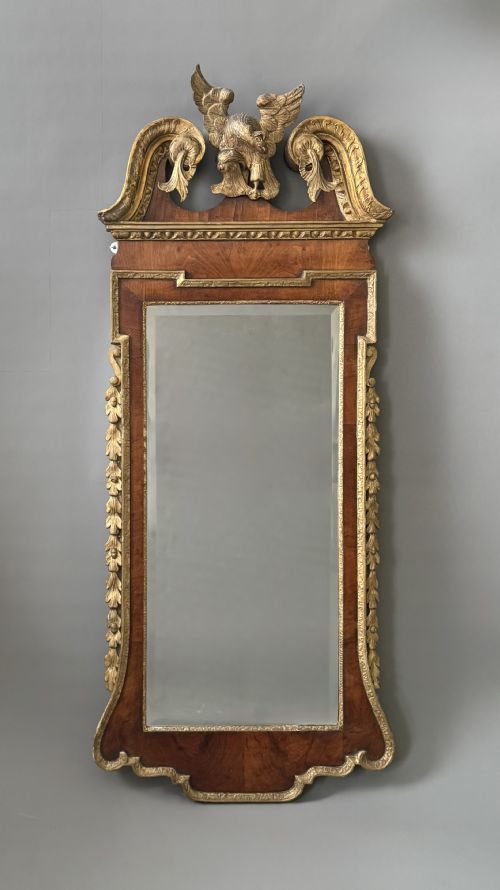
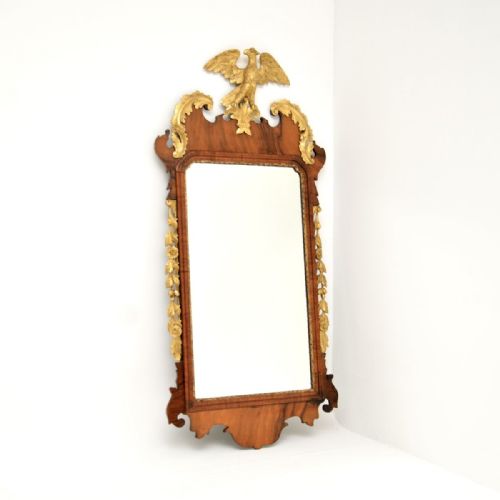
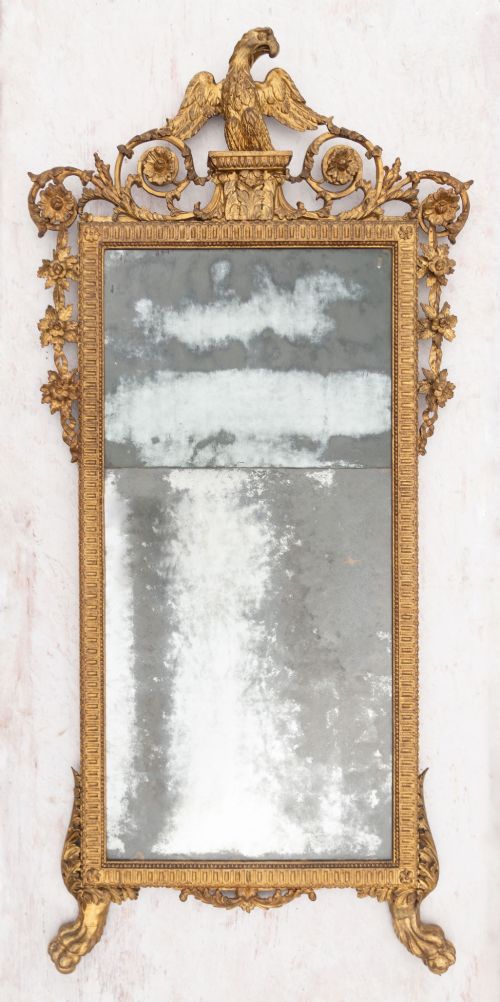


18th Century Eagle Mirror
An 18th century eagle mirror brings sculptural presence and carved drama to a room, hung where candlelight or daylight catches the gilt.
18th Century Eagle Mirror
An 18th century eagle mirror combines wall glass with carved timber, taking forms from the Georgian and Neoclassical vocabularies. These pieces appear in wall mirror and pier mirror formats, frequently rendered in walnut or mahogany alongside giltwood highlights.
Buyers meet variations spanning George I through George III styles, as well as 18th Century Italian examples and later Edwardian interpretations in scarlet and giltwood. The prevailing formats rely on wooden frames shaped for vertical wall placement.
Most examples on this page draw upon Georgian design traditions, balancing architectural proportions with carved surface details. The materials range from dark hardwoods to bright gold leaf laid over gesso.
How they were made
Carvers shaped frames from solid timbers such as mahogany and walnut, often applying gesso to build up surfaces for gilding with gold leaf. Parcel gilt elements brought bright contrast to dark wood grains.
Glass plates, including Vauxhall types, were set into these wooden carcasses, secured from behind to form the reflective surface. Brass and other metals occasionally appeared in structural or hanging hardware.
18th Century Eagle Mirror Retail Price Guide 2026
Typical asking prices for 18th century eagle mirror among the pieces listed under this phrase on Sellingantiques today, from the lower quarter to the upper quarter. They describe what is for sale here now, not the wider market.
Current listings span the 18th century through the Edwardian period, utilising mahogany, walnut, giltwood, and brass.
What varies in quality
The finesse of the carving distinguishes the standard of an 18th century eagle mirror, separating stiff execution from fluid, deeply undercut foliage and avian forms. Crisp detail in the gesso beneath the gold leaf indicates careful workshop practice.
The selection of primary timbers alters the visual weight, with figured mahogany and rich walnut offering different textures compared to painted or gilded surfaces. Original glass plates retain a depth and slight distortion that replacement panels lack.
The 18th Century Eagle Mirror Glossary
- Giltwood
- Wood coated with gold leaf or powder over a prepared gesso ground. This finish catches the light and warms interior spaces.
- Parcel Gilt
- A decorative treatment where parts of a wooden object are gilded while other areas show the natural grain of walnut or mahogany. It creates contrast across the frame.
- Vauxhall Mirror
- A mirror featuring bevelled plate glass historically associated with the Vauxhall glasshouse. These plates display characteristic thickness and subtle surface irregularities.
- Pier Mirror
- A tall, narrow mirror designed to hang on the wall between windows. Their proportions suit specific architectural spaces in period rooms.
18th Century Eagle Mirror: Frequently Asked Questions
Where should I hang an 18th century eagle mirror?
These mirrors suit spaces above mantelpieces or between windows where their vertical proportions find balance. Placing them opposite a light source helps illuminate the room.
Ensure the wall construction supports the combined weight of the timber frame and glass plate safely.
How do I clean the glass?
Use a soft, dry cloth to remove dust from the glass surface and carved frame. Avoid spraying liquids directly onto the wood or gilt elements.
Moisture can seep behind the glass plate or damage delicate gold leaf over time.
Are these mirrors heavy?
Solid mahogany, walnut, and thick glass plates create substantial weight in these pieces. Professional hanging hardware suited to period furniture is essential.
Check the wall fixings periodically to ensure the security of the mounting.
How do I identify a Georgian style frame?
Georgian frames display architectural symmetry, carved mouldings, and specific timber choices like mahogany and walnut. Details often reflect Neoclassical or earlier George I through George III design rules.
Comparing the construction methods on the reverse helps confirm the period approach.