





18th Century Derby Figure
An 18th century derby figure captures the inventive spirit of Georgian ceramic design through delicate porcelain sculpture.
18th Century Derby Figure
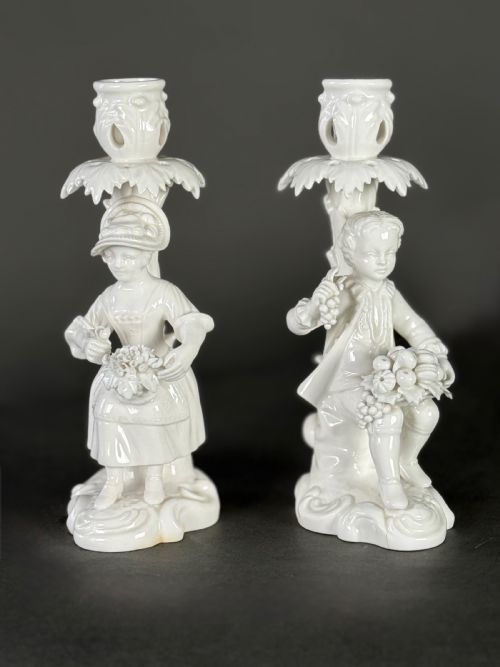
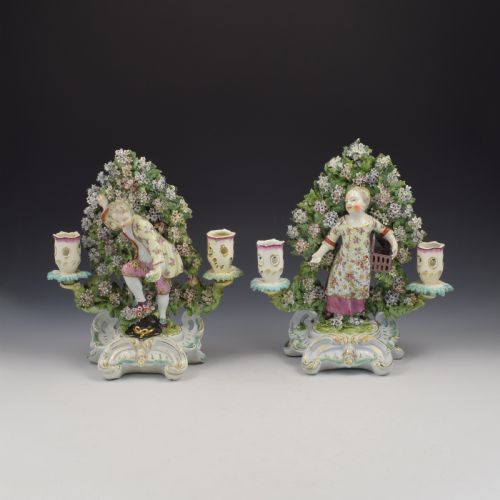
When a buyer investigates an 18th century derby figure, they examine modelled porcelain works spanning mythological subjects, pastoral scenes, and theatrical characters. These pieces range from solitary figures of shepherds or classical deities to complex allegorical groups and functional candlestick figures incorporating bocage backgrounds.
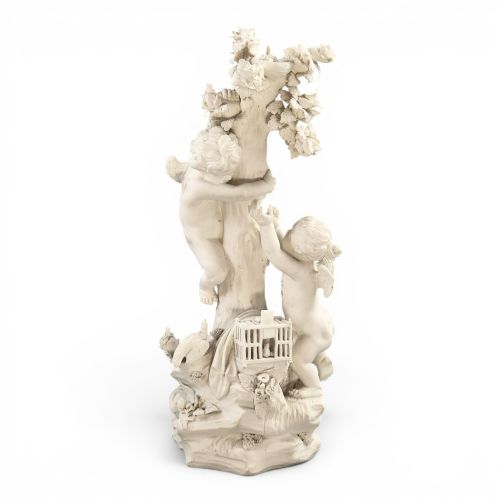
The selections available here lean heavily toward Georgian pieces produced during the formative decades of the factory, particularly the patch-mark period and the subsequent biscuit porcelain era. Figures such as stage actors, musicians, and elements of nature demonstrate the sculptural ambition of the Derbyshire manufactory during the Georgian era.
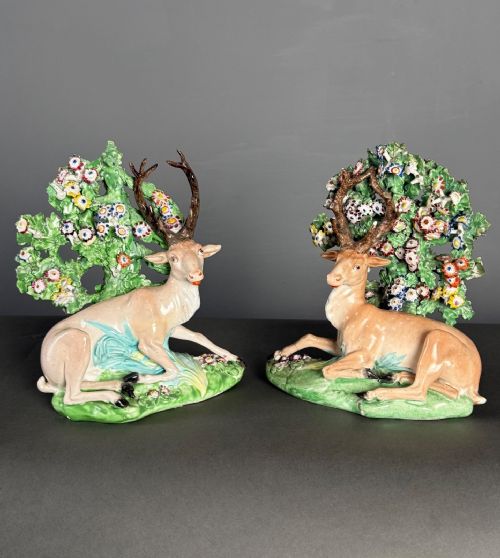
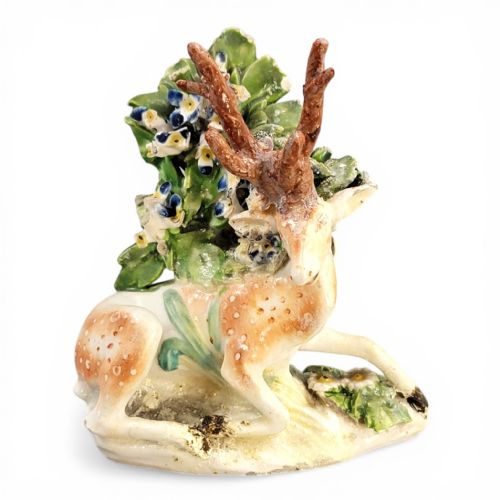
Collectors frequently encounter representations of the four seasons, the elements, and classical mythology alongside everyday street vendors and animals like stags and sheep. These varied forms reflect both the domestic interior trends of the eighteenth century and the technical capabilities of soft-paste and hard-paste porcelain.
Materials and Techniques
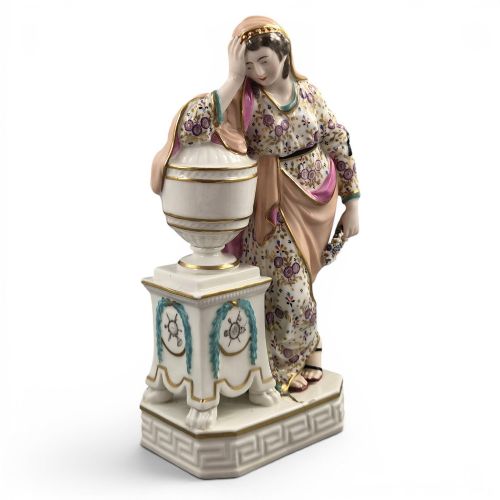
Potters utilised soft-paste porcelain in the earlier decades before introducing hard-paste porcelain and unglazed biscuit porcelain, which allowed modellers to capture intricate details without the softening effect of a glossy glaze. Gilding and enamel painting added colour and metallic highlights to garments, bases, and attributes.
Moulds formed the basis of production, often requiring multiple sections assembled with liquid clay before firing in kiln conditions that tested the limits of the paste. The inclusion of applied porcelain foliage, known as bocage, demanded immense skill to prevent collapse during high-temperature firing.
Early modellers captured everything from solemn classical deities to a pug dog and a Welsh tailor riding a goat.
Factors Determining Quality
The complexity of the composition, particularly in multi-figure groups or pieces featuring elaborate bocage and separate sconces, separates standard utilitarian wares from major sculptural achievements. Preservation of delicate extremities and original gilding also governs the standing of individual pieces.
William Duesbury And Co·Pierre Stephan·William Tate
The 18th Century Derby Figure Glossary
- Biscuit Porcelain
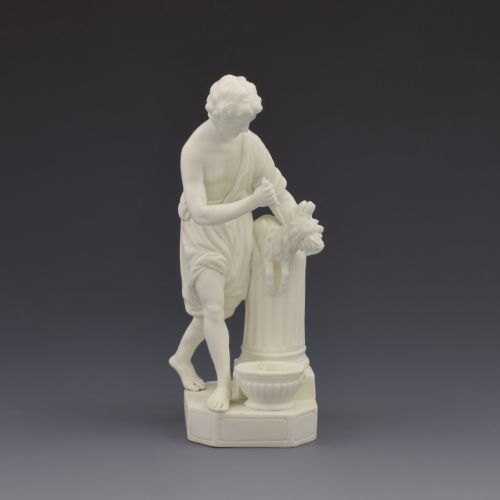
- Un-glazed porcelain fired to a porous, matte finish that resembles marble and highlights fine sculptural detail. This technique became particularly prominent at Derby for classical figures and allegorical groups.
- Bocage
- Applied porcelain foliage and flowers forming an arbour or background behind a figure. It requires exceptional skill to prevent distortion during the kiln firing process.
- Patch-Mark Period
- An early phase of production characterised by small circular unglazed patches on the base left by kiln props. This feature assists in dating eighteenth-century pieces accurately.
- Soft-Paste Porcelain
- An artificial porcelain body composed of clay, glass frit, and white sand, fired at lower temperatures than hard-paste. It produces a warm, translucent body favoured by early modellers.
- Enamel
- Coloured metallic oxides painted onto the glazed surface and refired to fuse with the glaze. These pigments provide the vivid palette seen on Georgian figures.
18th Century Derby Figure: Frequently Asked Questions
How do I identify a patch-mark period piece?
Examine the unglazed underside of the base for small square or circular scars left by the kiln supports during firing. These marks indicate production during the early decades of the enterprise.
Such technical indicators separate the output of the mid-eighteenth century from later nineteenth-century reproductions or variants.
Why do some figures have bocage?
Bocage represents leafy arbours or flowering branches intended to frame pastoral and allegorical subjects against a natural backdrop. This decorative convention provides a sense of outdoor scenery.
Candlestick figures frequently incorporate this foliage around the sconces to blend utility with ornamental sculpture.
How were these figures displayed originally?
Eighth-century households placed these porcelain sculptures across mantelpieces, pier tables, and dining room centrepieces as conversation pieces. Sets representing the seasons or continents often spanned the length of a sideboard.
Candlestick variants provided ambient illumination while doubling as decorative art objects during evening gatherings.
Are these figures painted by hand?
Enamel colours and gilt highlights were applied by hand using mineral pigments over the initial glaze before a secondary firing fixed the design. Artisans varied brushwork according to the garment patterns and facial expressions.
Consequently, no two painted examples share identical detailing even when cast from the same model number.