

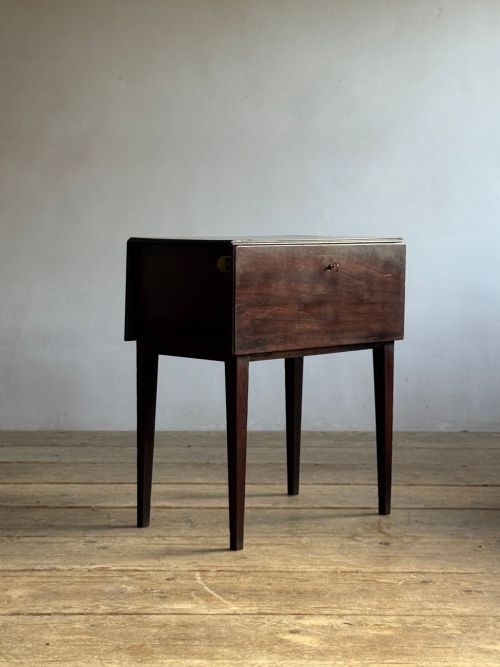


18th Century Commode Table
An 18th century commode table brings profound character and practical storage to a room through centuries of refined cabinet-making.
18th Century Commode Table
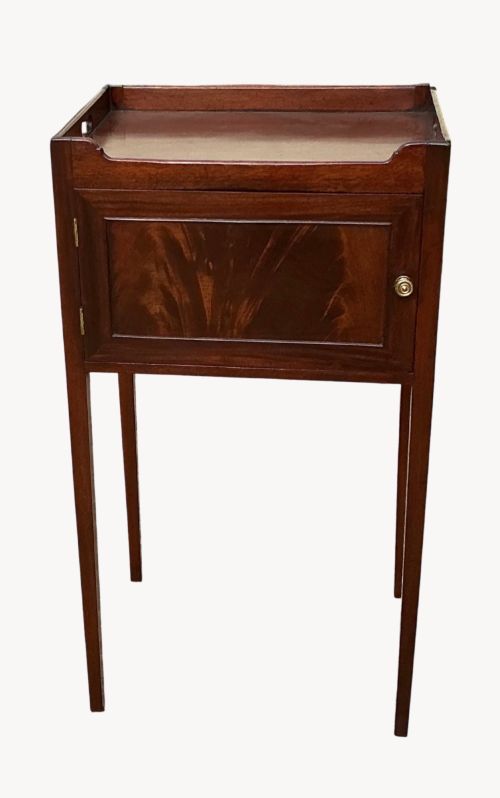
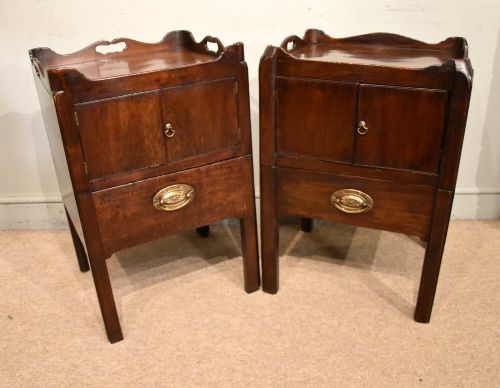
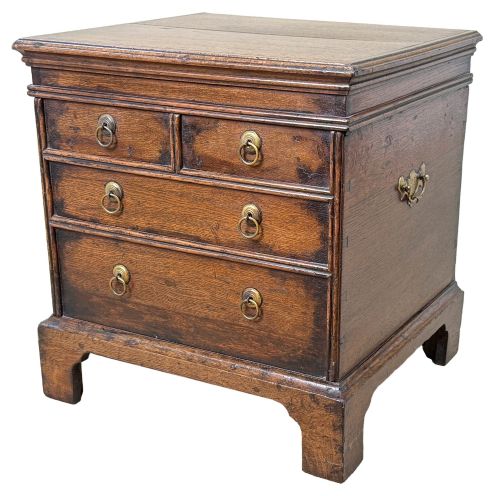
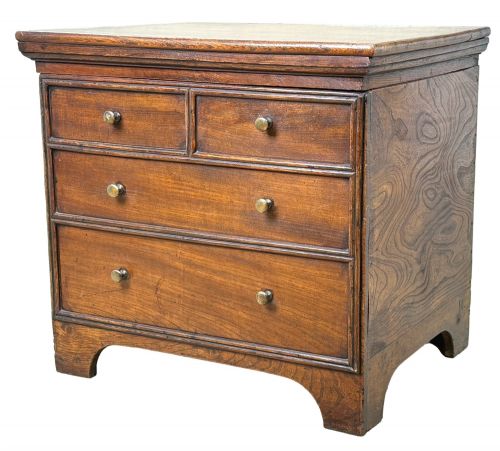
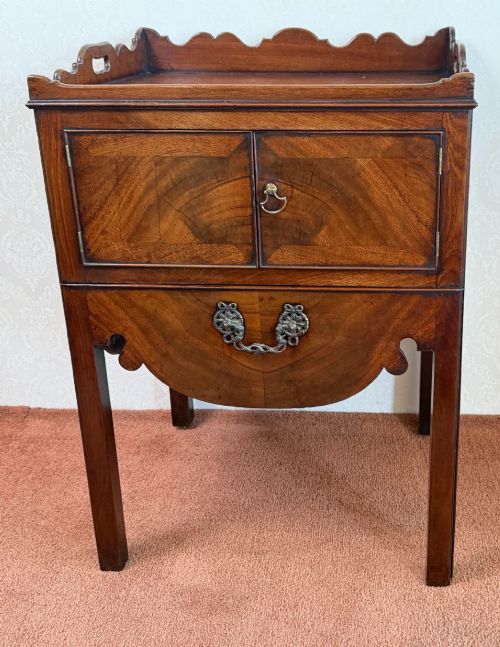
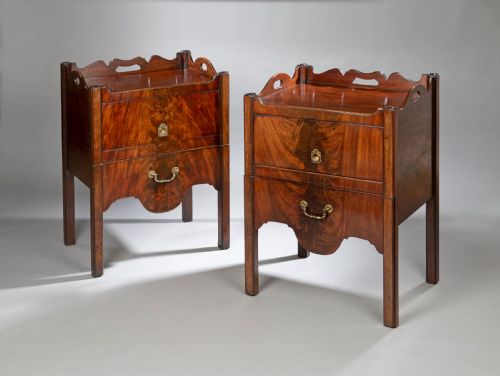
An 18th century commode table encompasses a variety of compact storage forms designed for private chambers, including bedside cabinets, nightstands, and close stools. The listings on this page show these pieces predominantly taking the form of tray top cupboards and small chests of drawers associated with the Georgian period.
Makers of these items utilised timber such as mahogany, walnut, oak, and elm to construct functional furniture for domestic use. Pieces frequently display regional characteristics, ranging from English George III designs to Italian burr walnut serpentine fronts and French provincial side tables.
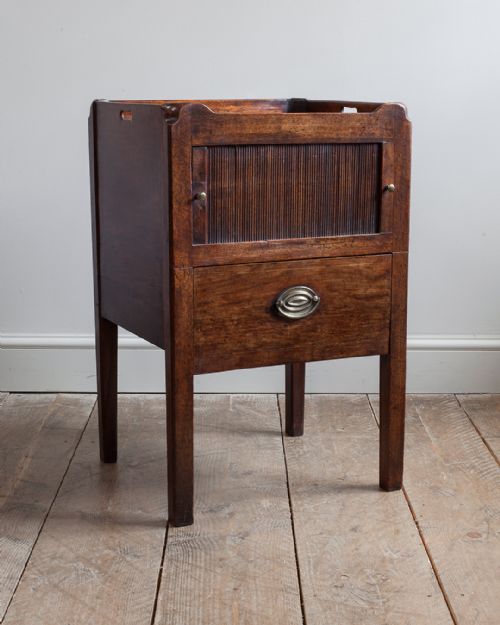
Buyers will encounter specific variations like tambour front commodes, deception tables, and travelling dressing chests amongst the standard bedside tables. These items reflect the diverse domestic requirements of their original owners while maintaining a consistent scale suited for smaller spaces.
Materials and Construction
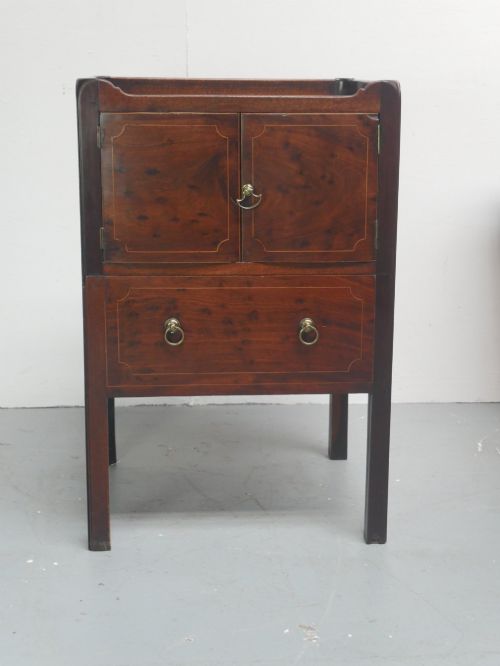
Cabinet-makers relied heavily on solid mahogany and walnut for primary surfaces, often complemented by secondary woods like oak for structural interiors and drawer linings. Boxwood inlay provided precise decorative contrast on select panels and tabletops.
Joinery techniques focused on durability and clean exterior lines, utilising dovetailed drawer construction and framed panels to accommodate timber movement. Tray tops were frequently shaped from solid timber or incorporated intelligent gallery railings to prevent items from sliding off the surface.
Several items double as disguised close stools, proving that 18th-century owners valued discretion just as much as fine mahogany.
Distinguishing Quality
The standard of timber selection and the crispness of carved or inlaid details dictate the overall refinement of a commode. Superior examples demonstrate thoughtful grain matching across drawer fronts and harmonious proportions that balance height, depth, and width.
Original brass hardware, smooth sliding tambour mechanisms, and intact gallery edges significantly elevate the integrity of a piece. The presence of secondary woods appropriate to the period and region further confirms the authenticity of the construction.
The 18th Century Commode Table Glossary
- Tray top
- A tabletop finished with a raised moulded edge or gallery designed to keep objects secure. This feature is particularly common on bedside tables and commodes from the Georgian era.
- Tambour
- A flexible shutter door constructed from narrow vertical strips of wood glued to a canvas backing. It slides smoothly along a track to conceal interior compartment storage.
- Close stool
- A piece of furniture disguised as a small chest or bedside cabinet designed to enclose a chamber pot. They often feature hinged tops and cupboard doors concealing the fitted interior.
- Serpentine front
- A furniture front curving outward in the centre and inward at the sides. This contour requires exceptional woodworking skill to execute properly.
- Deception table
- A piece designed to appear as one type of furniture while serving another function entirely. In 18th-century pieces, this often masked washing or commode facilities.
18th Century Commode Table: Frequently Asked Questions
What is an 18th century commode table used for today?
These versatile pieces function wonderfully as bedside tables, lamp tables, or small storage units in living spaces. Their compact dimensions allow them to fit easily into modern rooms while providing enclosed storage.
Buyers often place them beside a bed or sofa to hold lighting and everyday items. The historical character adds a distinct focal point to any interior scheme.
How do I identify a George III bedside commode?
George III pieces typically display high-quality mahogany construction, clean architectural lines, and refined details such as bracket feet or finely moulded tray tops. Look for traditional joinery methods like hand-cut dovetails on the drawer interiors.
Stylistic cues often include subtle stringing, brass pull handles, and well-proportioned cabinet doors. These elements point directly to the prevailing cabinet-making standards of the late 18th century.
Are tambour doors original to 18th century tables?
Tambour doors were indeed utilised by 18th-century cabinet-makers to create smooth-sliding closures for small cupboards and nightstands. They require precise alignment of individual wooden slats to function correctly.
A genuine period tambour door moves fluidly within its recessed track without catching. The mechanism represents an advanced technical achievement for furniture of that era.
How should I care for antique walnut and mahogany?
Maintain the timber by keeping the piece away from direct sunlight and extreme temperature fluctuations that can cause wood to split. Regular dusting with a soft, dry cloth preserves the natural polish of the surface.
Avoid applying modern silicone-based polishes, opting instead for traditional beeswax when nourishment is required. Gentle handling ensures the historical finish remains intact for years to come.