

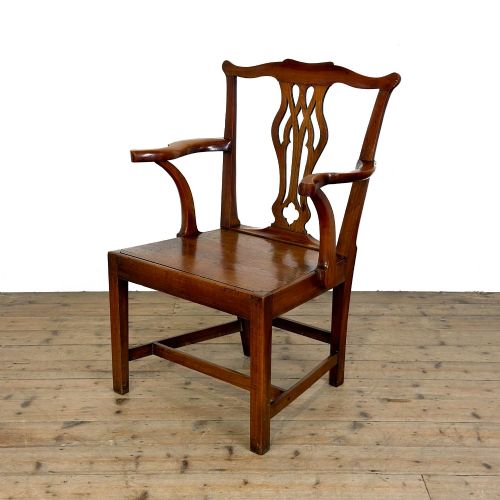
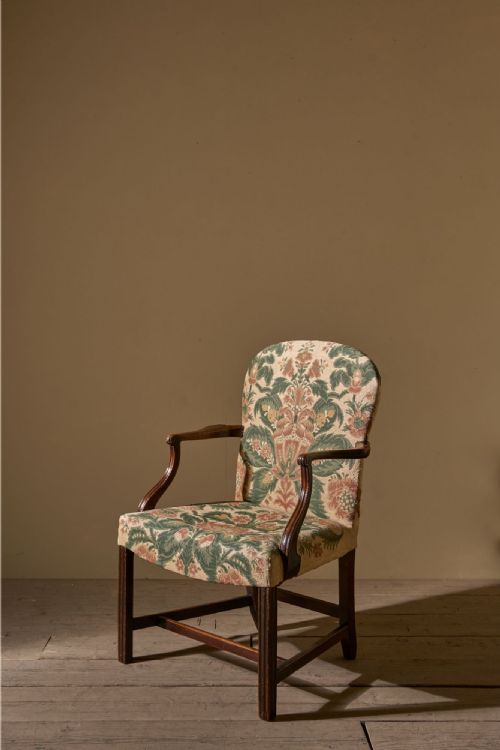
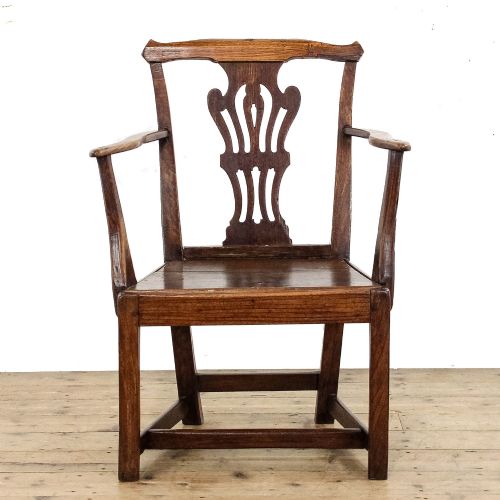
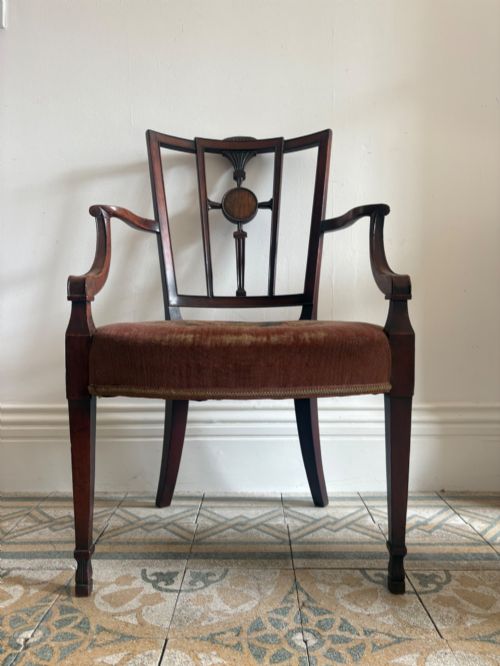
18th Century Carver Armchair
An 18th century carver armchair brings solid timber framework and period proportion to a study or dining table.
18th Century Carver Armchair
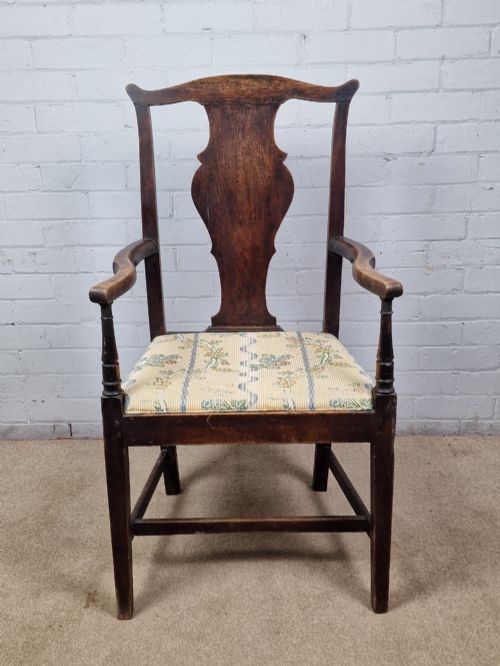
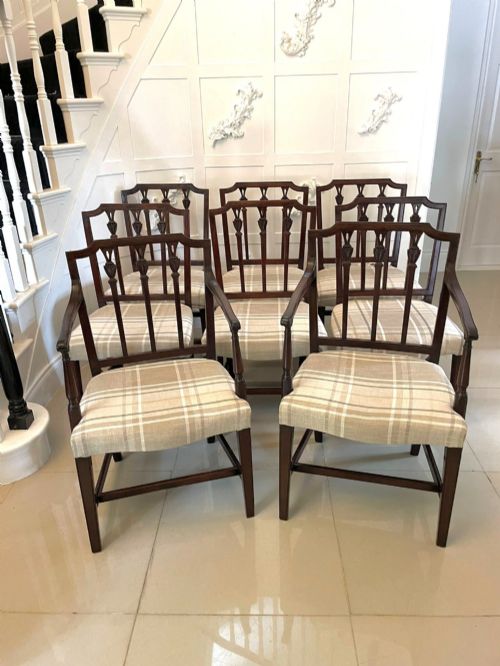
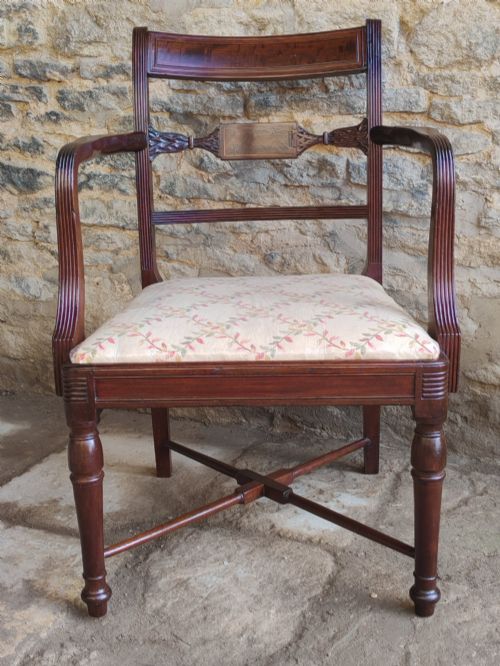
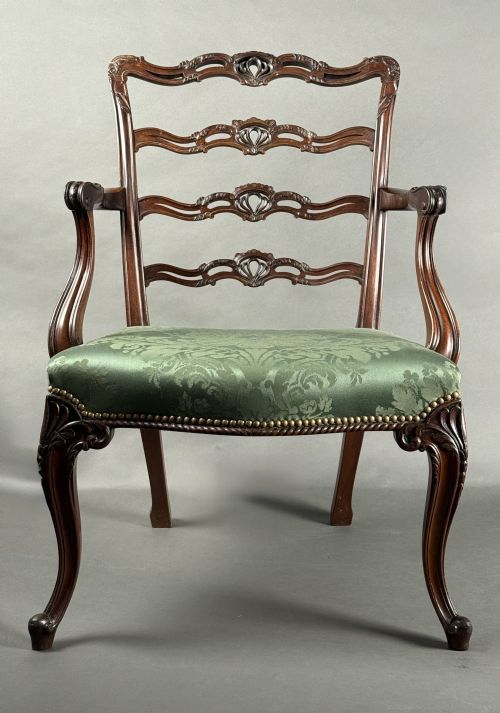
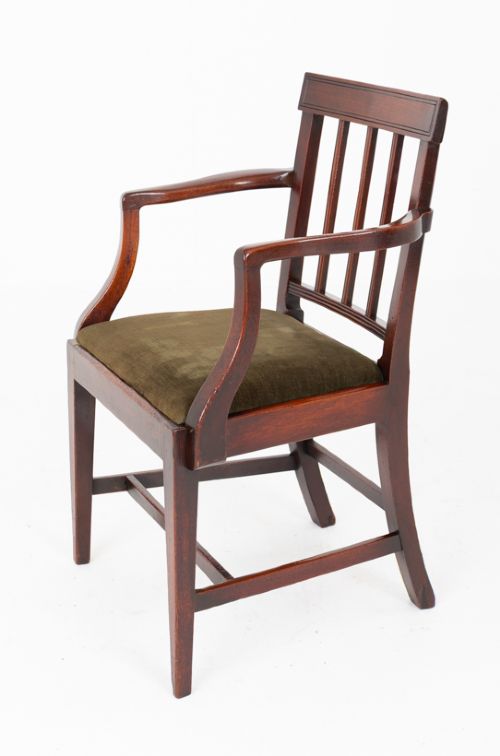
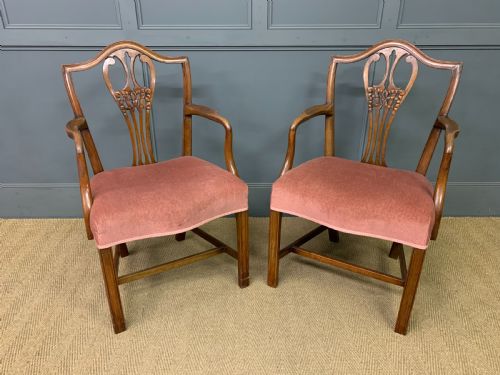
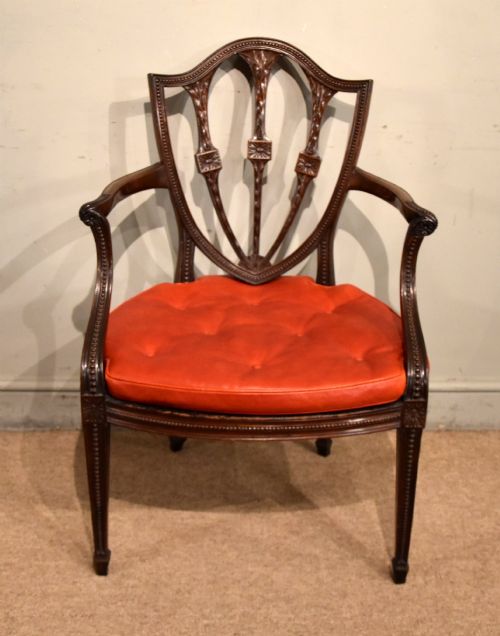
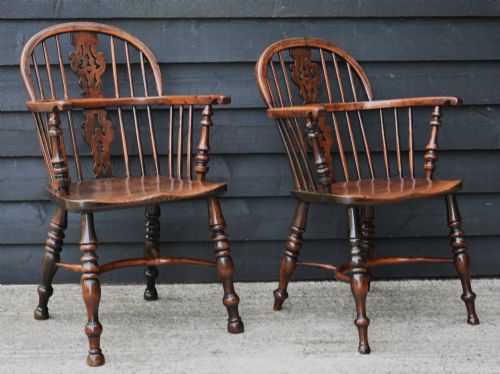
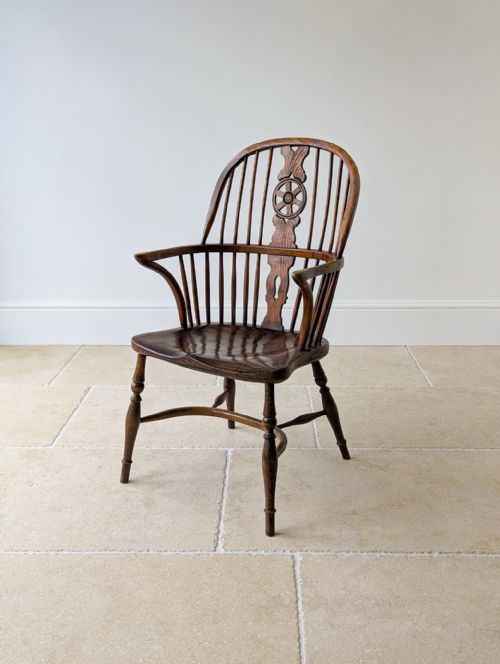
An 18th century carver armchair stands as a primary seating form designed with armrests for the head of a dining table or a parlour desk. Pieces originate predominantly from the Georgian, George III, and Chippendale traditions, spanning walnut, mahogany, fruitwood, and mixed timber vernacular builds like ash and elm.
Buyers will encounter formal mahogany carvers alongside painted country examples and walnut pieces displaying regional British or Italian Rococo influences. Proportions vary from standard desk heights to generous gentleman's elbow chairs.
Materials and Construction
Cabinetmakers utilised dense hardwoods such as mahogany and walnut for formal metropolitan seating, employing mortise and tenon joinery to anchor the arms to the upright posts. Regional bodgers and joiners turned to local timber stocks, combining ash frames with solid elm seats for robust windsor and ladderback forms.
Carving technique distinguishes formal chairs, where craftsmen shaped mahogany or fruitwood splats into pierced ribbons, interlaced lattices, or ladder backs by hand with gouges and chisels. Surface finishing involved traditional wax polishing on fine hardwoods, while vernacular or country pieces often received coats of paint.
Some provincial makers incorporated unexpected block feet and rustic paint layers to keep local squires comfortably seated through long parish suppers.
Judging Quality
The refinement of the timber carving and the crispness of detail dictate the upper tier of quality. Superior chairs display deep, undercut pierced splats and precisely executed joinery where the arms meet the uprights.
Integrity of the timber grain and the survival of original surface finishes separate exceptional examples from heavily restored pieces. Proportion, balance, and the harmonious integration of the arm design with the wider chair frame define the standard.
Gillows
The 18th Century Carver Armchair Glossary
- Carver
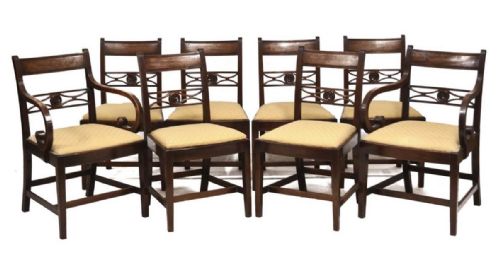
- An armchair designed to match a set of single dining chairs, typically positioned at the table ends. These items provided comfortable seating with integrated armrests for the principal diner.
- Splat
- The vertical wooden slat positioned in the centre of the backrest. This component often bore the decorative carving characteristic of Chippendale or Hepplewhite designs.
- Comb back
- A Windsor chair variation where the vertical spindles extend upward to support a horizontal top rail resembling a hair comb. This construction offers robust back support through steam-bent timbers.
- Elbow chair
- A domestic seating term used interchangeably with carver, denoting a chair with low armrests intended for a desk, morning room, or dining space.
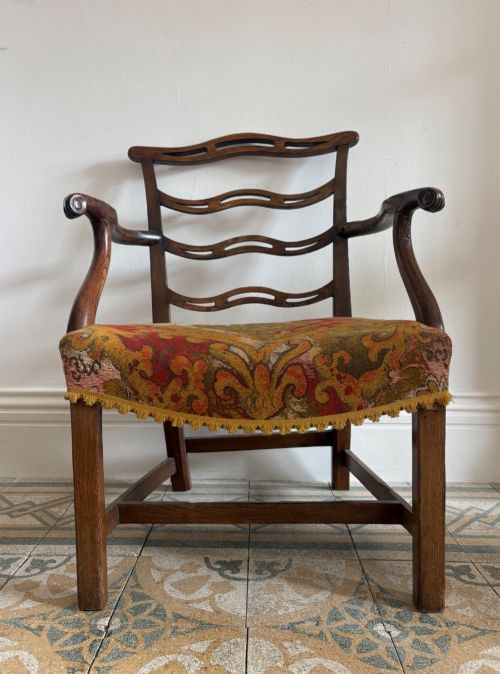
- Ladderback
- A chair back constructed from a series of horizontal arched slats resembling a ladder. Country workshops favoured this design for vernacular ash and elm seating.
18th Century Carver Armchair: Frequently Asked Questions
What is the difference between a carver and an armchair?
A carver traditionally refers to an armchair designed specifically to match a set of dining chairs, placed at the head of the table. The term often overlaps with general antique armchairs from the period.
Dining carvers typically feature a slightly wider stance and supportive armrests while maintaining the visual height and style of the accompanying single chairs.
Where were these chairs used in a Georgian home?
These chairs served multiple functions across the home, appearing primarily in formal dining rooms and studies. Gentleman's elbow chairs also found placement in morning rooms and bedrooms.
Vernacular versions in ash and elm belonged to farmhouse kitchens and provincial parlours, built to withstand daily domestic utility.
Are these chairs suitable for daily use?
These pieces function well in modern interiors when placed with consideration for their age and structural joinery. Solid hardwood frames offer substantial durability for regular seating.
Buyers should examine the stability of the arm joints and seat frames to ensure the timber remains secure for everyday placement around a table.