
18th Century Burr Walnut
When you encounter 18th century burr walnut, you are looking at richly figured timber fashioned into chests, desks and cabinets during the Georgian and Queen Anne eras.
18th Century Burr Walnut
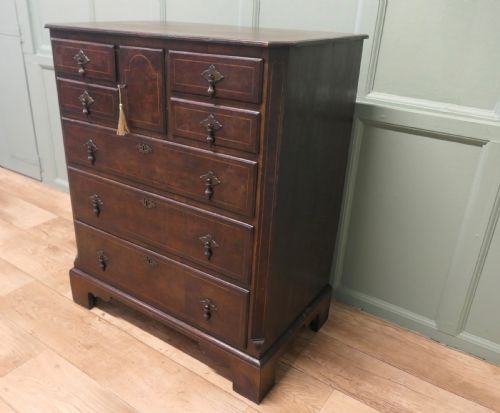
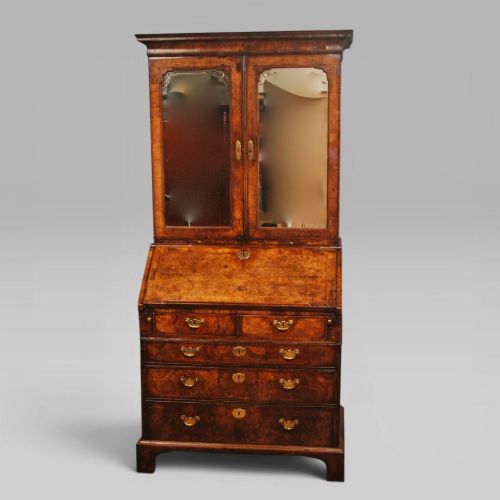
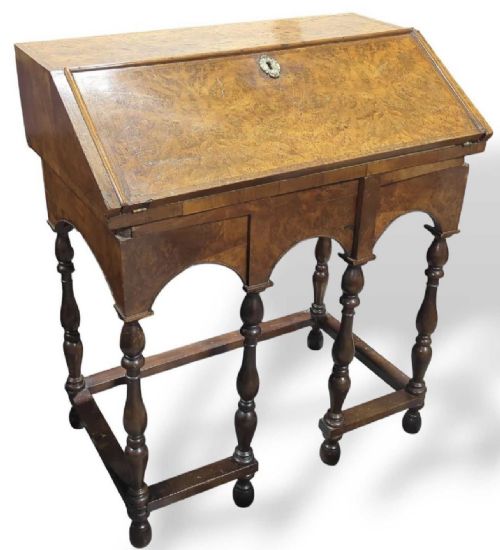
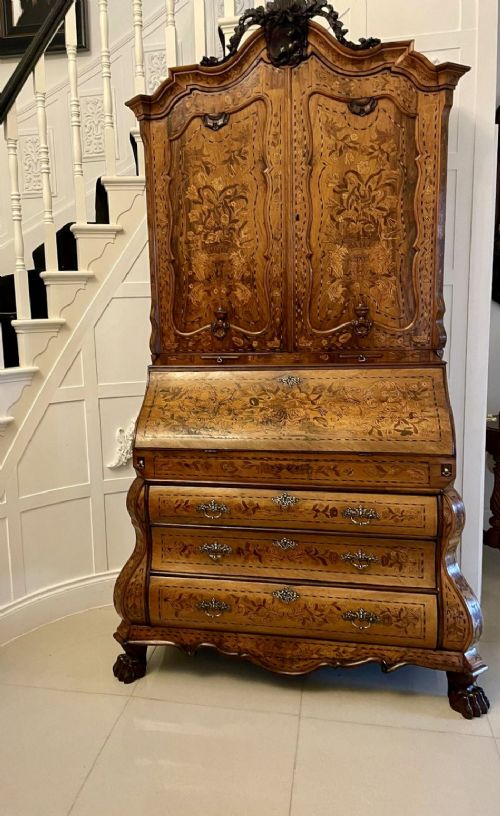
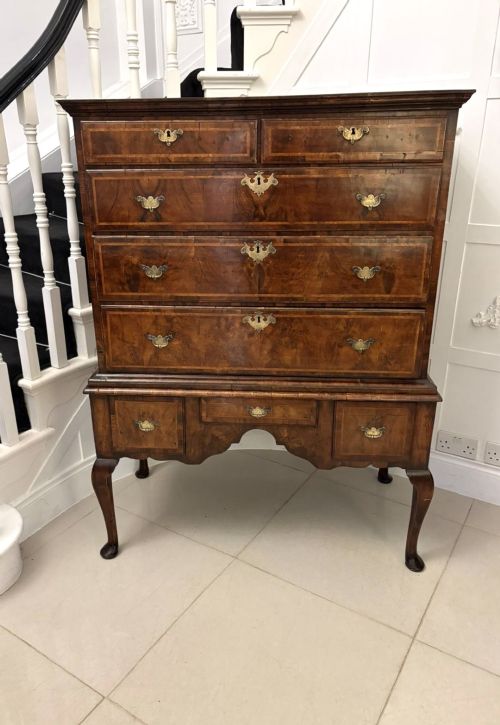
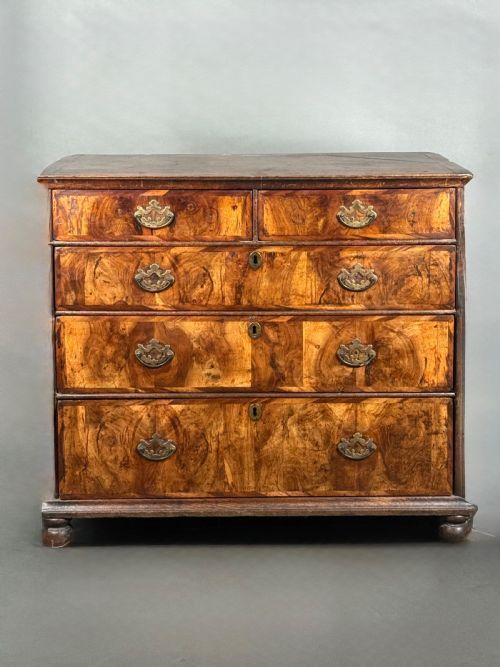
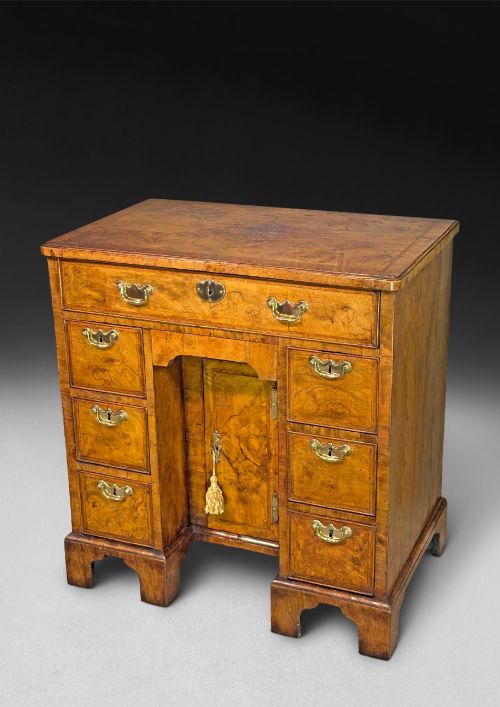
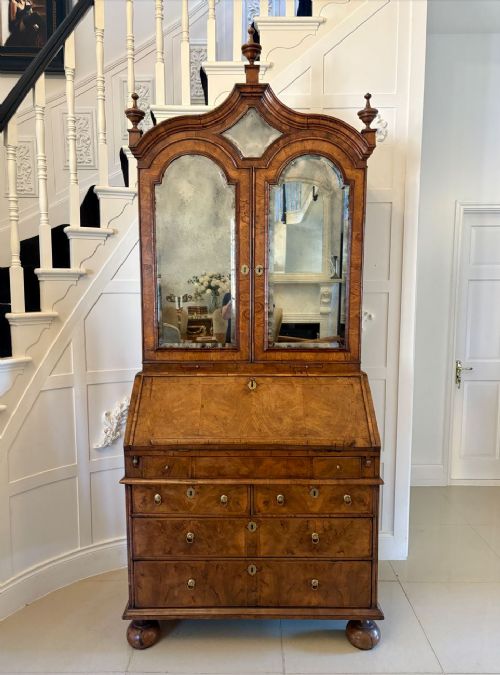
18th century burr walnut encompasses a distinct group of domestic furniture fashioned primarily during the reigns of Queen Anne and the early Georges. The selection here centres heavily on chests of drawers, bureau bookcases, kneehole desks and lowboys produced across Britain and continental Europe.
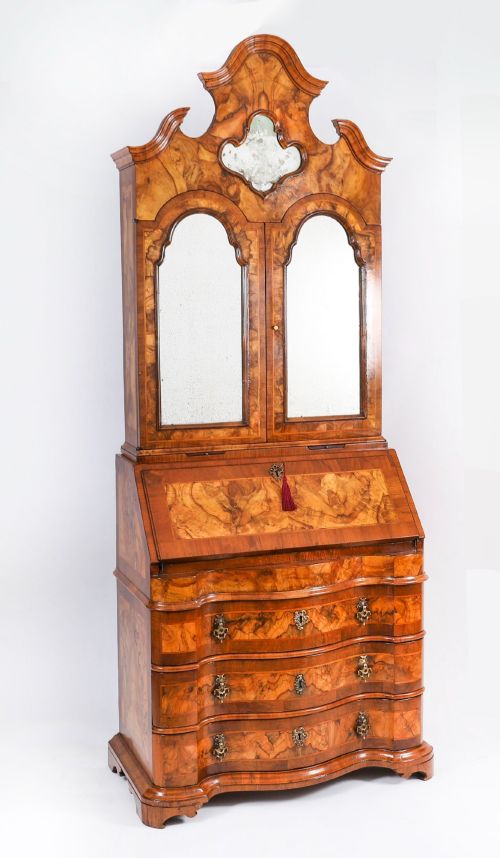
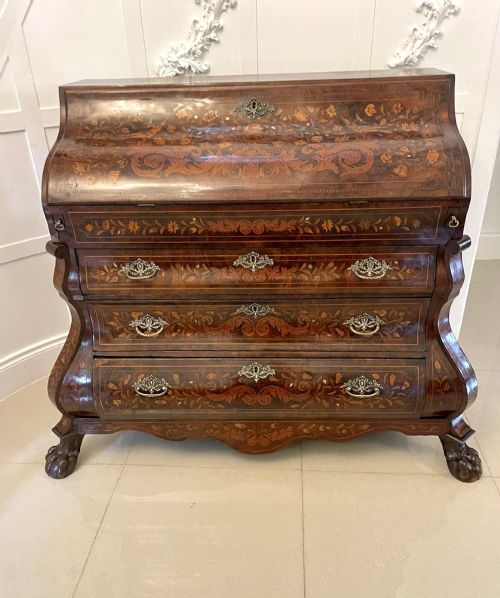
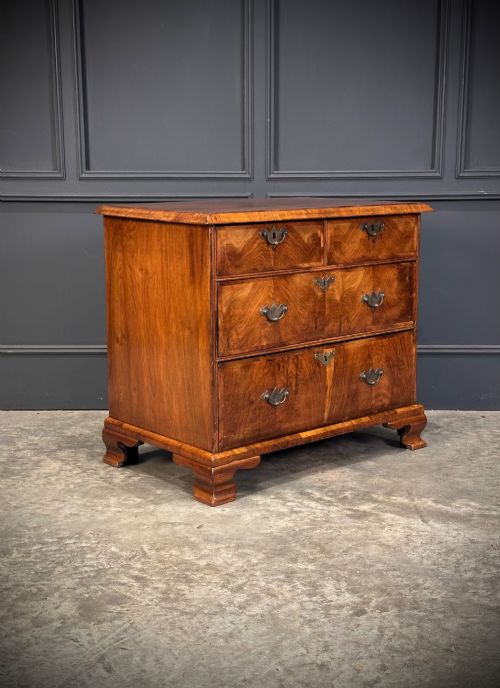
Buyers will most frequently meet chests of drawers and bureau desks originating from the early 1700s to the mid-18th century. These forms showcase the dramatic, swirling grain patterns peculiar to burr walnut timber, often shaped with bombe profiles or supported on slender cabriole legs.
Materials and technique
Cabinetmakers constructed these pieces by applying thin veneers of burr walnut to more stable secondary woods such as oak or pine. This technique allowed workshops to display the intricate, knotty grain of the burr across large flat surfaces without risking the splitting associated with solid boards.
Craftsmen enhanced the figured walnut veneers using cross-banding, feather-banding and floral marquetry inlays executed in fruitwood. Structural elements commonly incorporated oak for drawer linings and brass for handles and escutcheons.
Listings feature woods including burr walnut, plain walnut, oak, fruitwood, and mirror glass across forms from chests to writing desks.
What separates the tiers
Quality rests principally on the density and symmetry of the burr walnut veneer and the crispness of the secondary details like herringbone inlay and feather-banding. The most accomplished examples display continuous, matched grain patterns across entire drawer fronts rather than pieced-together scraps.
Proportion and originality dictate the upper tier of pieces, where untouched drawer linings, period brassware and undisturbed patination elevate a bureau or chest. Heavy restoration or replaced timber lower the standing of an item significantly.
The 18th Century Burr Walnut Glossary
- Burr walnut
- A figured timber obtained from the gnarled growth on walnut trees, prized for its swirling, highly decorative grain patterns.
- Bureau bookcase
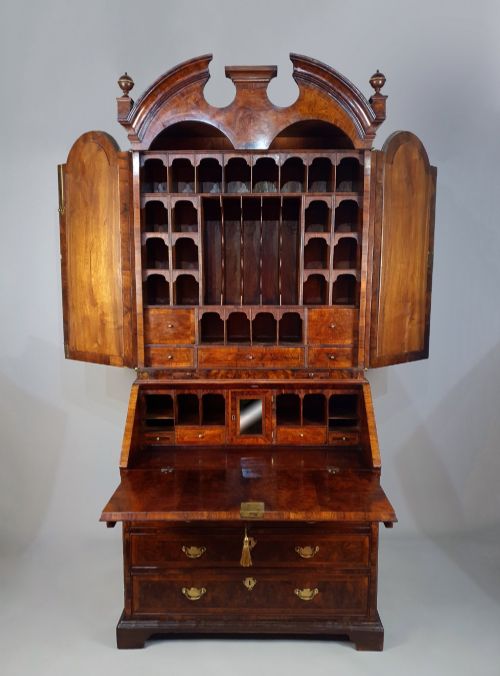
- A writing desk with a sloping fall-front enclosing pigeonholes and small drawers, topped by a glazed or panelled cabinet.
- Bombe
- A bulging, swelling contour found on continental European case furniture, particularly Dutch chests and commodes.
- Feather-banding
- A decorative inlay technique using narrow strips of veneer laid diagonally to form a herringbone pattern around drawer edges.
- Lowboy
- A small side table or dressing table featuring a low set of drawers supported on four legs.
- Chest on stand
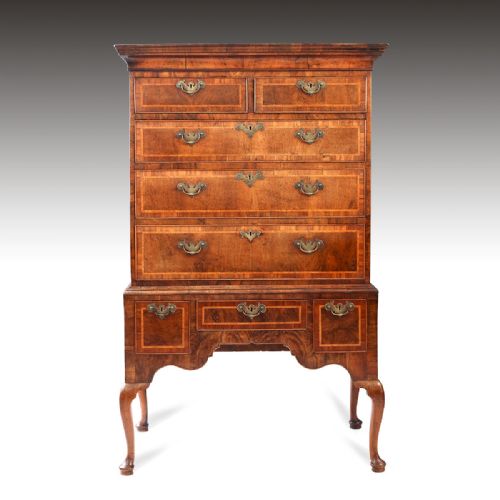
- A tall case of drawers elevated on an open frame with four legs, popular during the early Georgian period.
18th Century Burr Walnut: Frequently Asked Questions
How do I care for burr walnut furniture?
Keep these items away from direct sunlight and steady sources of artificial heat to prevent the delicate walnut veneers from drying out or lifting from the carcase. Apply a traditional beeswax sparingly and buff gently with a soft cloth to maintain the surface sheen.
Avoid using modern silicone-based polishes or damp cloths, as moisture can penetrate old timber and cause the polish to cloud. Gentle dusting with a dry feather duster is generally all that is required for daily upkeep.
How can I tell Queen Anne pieces from George III?
Queen Anne items date from the early 1700s and frequently feature warm walnut veneers, cushion-moulded drawers and graceful cabriole legs ending in pad feet. The overall aesthetic prioritises curved lines and figured timber surfaces.
By contrast, George III examples from later in the century often incorporate straight lines, bracket feet and occasionally mahogany alongside walnut. Construction methods also shift subtly as cabinetmaking techniques evolved through the decades.
Were these items used for writing or storage?
Many examples combined both functions, particularly bureau bookcases and escritoires which paired a sloping writing flap with extensive interior compartments and deep drawers below. These served as private spaces for correspondence and document storage.
Simpler forms like standard chests of drawers and lowboys were dedicated entirely to bedside or parlour storage, holding linens, clothing or small personal valuables out of sight.
What is a kneehole desk?
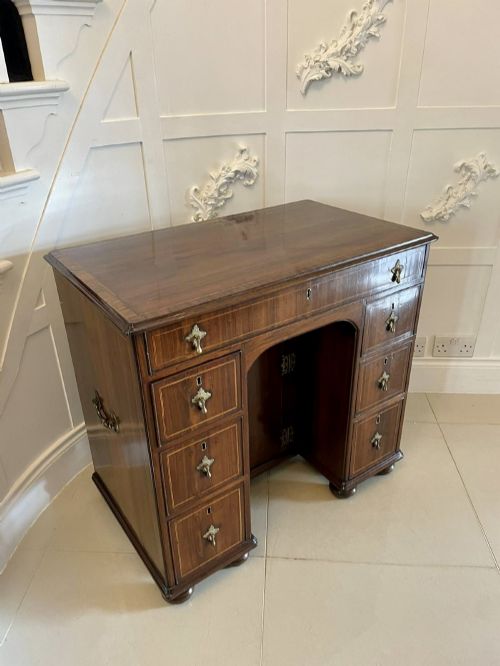
A kneehole desk is a compact writing table featuring a central recessed space for the user's legs, flanked by two banks of small drawers. They emerged in quantity during the early 18th century and were designed for private studies or bedchambers.
Most feature a concealed central drawer hidden beneath the top surface above the kneehole opening, often accompanied by pull-out candle slides for evening illumination.