


18th Century Bow Front Sideboard
An 18th century bow front sideboard brings elegant curved lines and superb timber to a dining room, offering both generous storage and striking Georgian presence.
18th Century Bow Front Sideboard
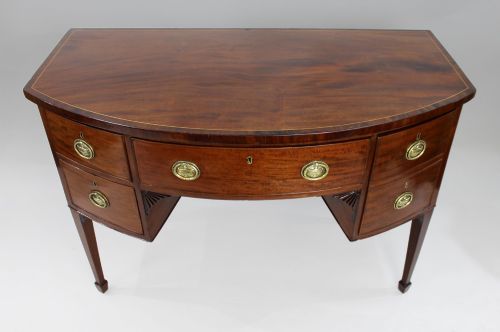
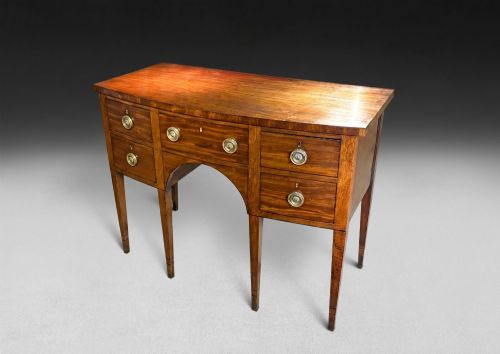
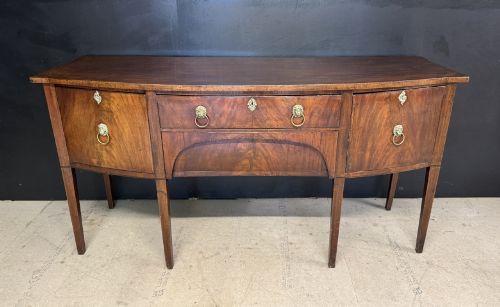
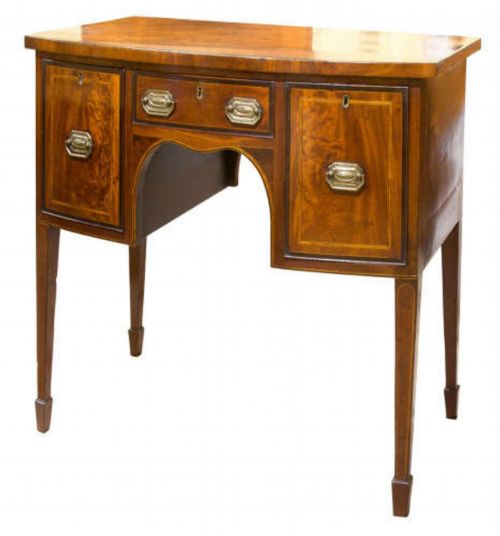
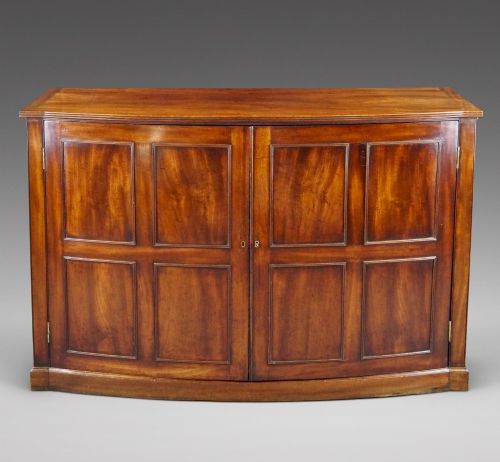
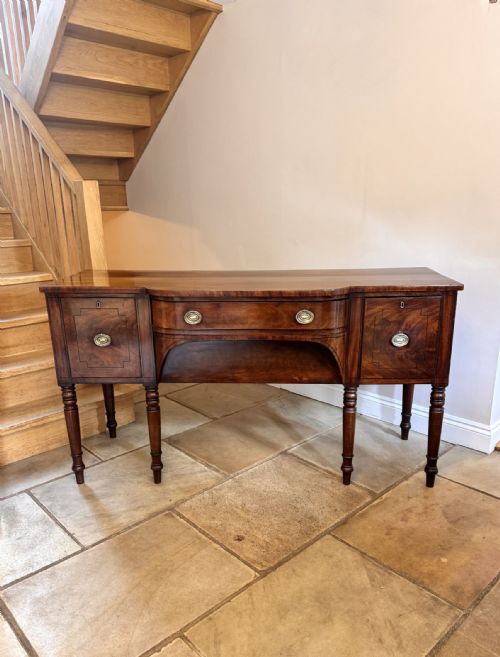
An 18th century bow front sideboard is a substantial dining room storage piece defined by its convex curving front and refined proportions. The pieces seen here span the Georgian and George III periods, alongside Sheraton designs and occasional French provincial examples.
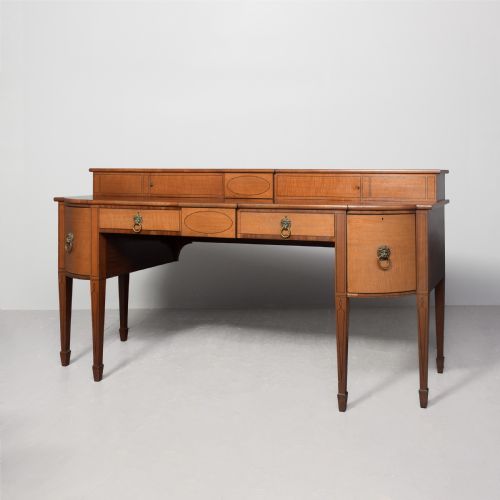
Most entries belong to the broader Georgian era, utilising mahogany as the primary timber. Buyers will encounter standard sideboards, side servers, stage-back variants, and related forms like cutlery boxes and commodes.
Makers of the period designed these items to anchor formal dining spaces while providing practical storage for cutlery and serving ware. The curved facade softens the rectangular geometry of traditional dining rooms.
Materials and Construction
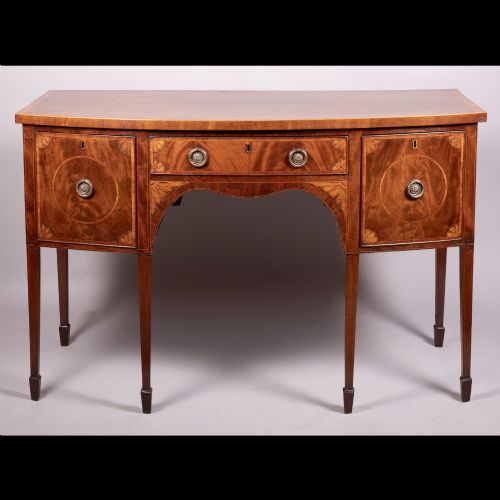
Cabinet makers relied heavily on solid and veneered mahogany, frequently selecting flame mahogany for dramatic visual depth on the curved drawer fronts. Decorative detailing often involved contrasting stringing and banding in lighter timbers such as boxwood, satinwood, and purpleheart.
Structural integrity was supported by secondary woods like oak, particularly for drawer linings and internal framing. Brass fittings, including ring pulls and backplates, completed the hardware scheme, while select pieces incorporated solid silver mounts.
Listings feature mahogany, satinwood, boxwood, purpleheart, oak, and brass across Georgian and George III periods.
Quality Variations
The distinction between standard examples and top-tier pieces rests on the choice of timber figure and the precision of the cabinet work. Superior items display matched flame mahogany veneers and crisp boxwood or satinwood stringing that follows the complex curves without distortion.
Proportion and scale also dictate quality, with smaller or narrow examples achieving particular demand among collectors. The handling of secondary woods and the preservation of original brass hardware further elevate a piece above ordinary workshop output.
The 18th Century Bow Front Sideboard Glossary
- Bow front
- A cabinet front that curves outward in a convex arc. This shape gained immense popularity during the Georgian period to soften room layouts.
- Stringing
- Thin inlaid lines of contrasting wood used to outline drawer fronts and tabletops. Boxwood and satinwood were frequent choices for this delicate decorative work.
- Flame mahogany
- A highly figured wood grain pattern resembling flickering flames. Cabinet makers reserved this premium veneer for the most prominent surfaces.
- Stage-back
- A raised rear superstructure on a sideboard designed to hold platters or knife boxes. Scottish workshops frequently produced examples featuring this architectural addition.
- Bandings
- Border strips of contrasting timber veneer applied around the edges of top surfaces and drawers. Purpleheart and satinwood feature in these decorative borders.
18th Century Bow Front Sideboard: Frequently Asked Questions
What is a bow front sideboard used for?
These pieces served as functional serving stations and storage units in grand dining rooms. They held heavy serving platters, silverware, and linens.
Today, they function similarly in modern dining spaces or serve as focal storage credenzas in hallways and living rooms.
How do I identify a George III sideboard?
George III pieces typically exhibit classical proportions, flame mahogany veneers, and precise stringing details. Look for tapering legs and period brass hardware.
Scottish variants often include stage-backs, while English versions tend toward clean serpentine or bow front profiles.
Are all bow front sideboards mahogany?
Mahogany forms the vast majority of surviving examples from this era. Cabinet makers valued its stability and rich natural colour.
Satinwood and French provincial woods also appear among the listings, often paired with contrasting inlay timbers.
Where should I place a bow front sideboard?
The curved front requires adequate clearance to appreciate the silhouette without obstructing walkways. Dining rooms remain the traditional placement for serving and display.
Larger hallways or spacious living areas also accommodate these items well, provided the room proportions balance the length of the sideboard.