



18th Century Bombe Commode
An 18th century bombe commode offers swelling serpentine lines and substantial storage, bringing dramatic continental presence to a room.
18th Century Bombe Commode
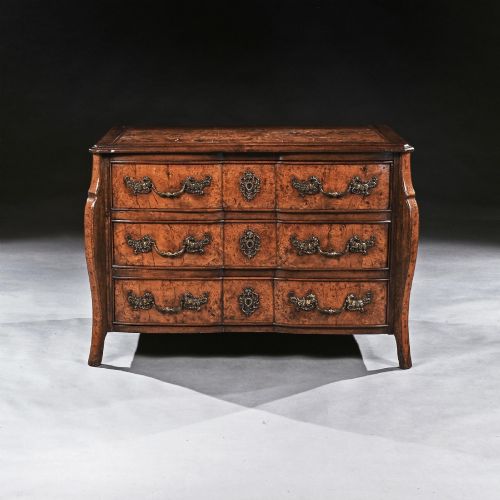
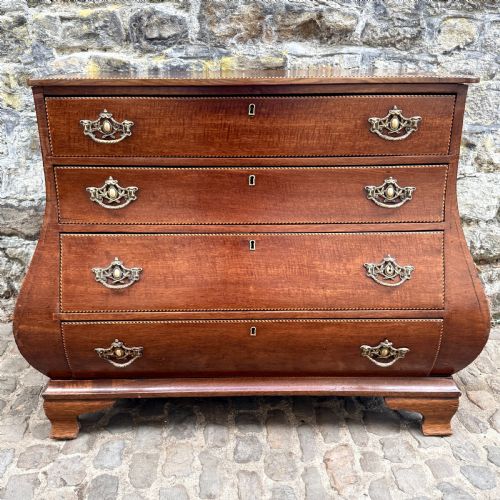
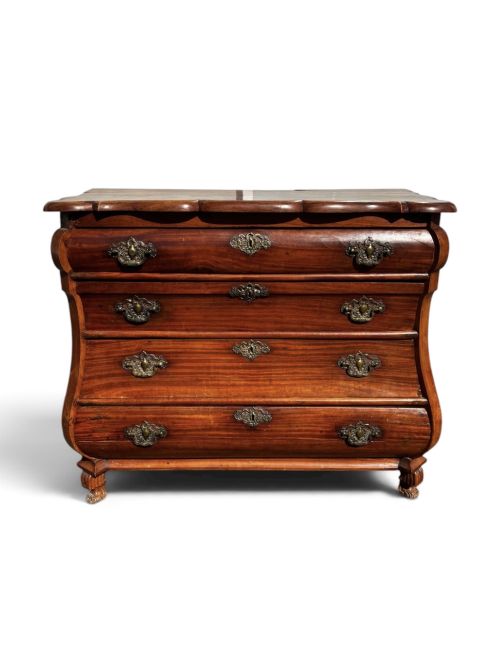
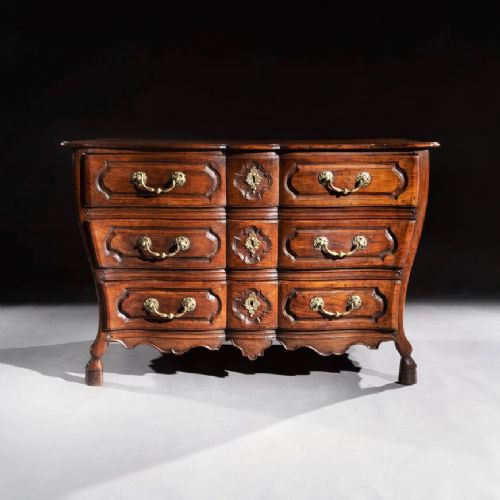
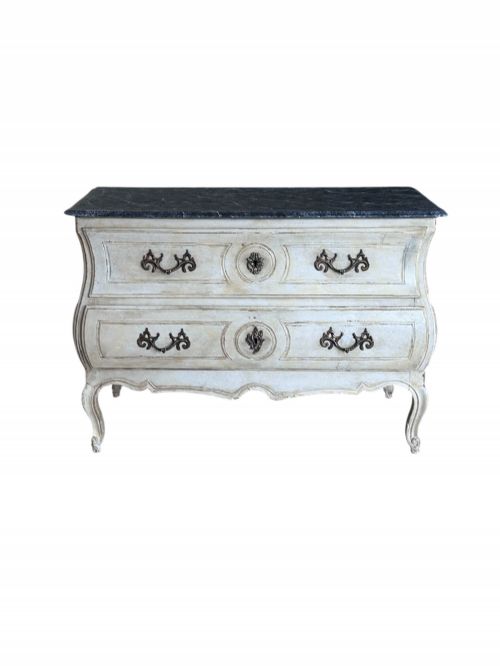
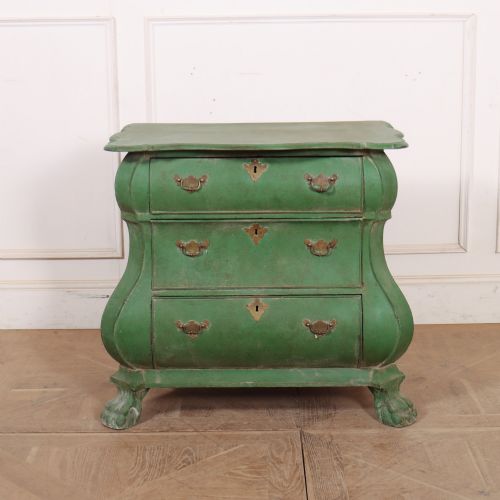
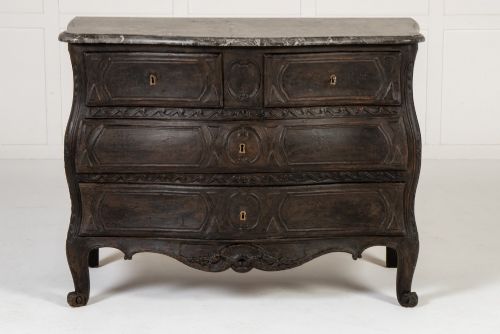
An 18th century bombe commode is defined by its pronounced outward-swelling front and sides, giving the piece a robust, volumetric silhouette. Buyers seeking this form will find examples originating primarily from France, the Netherlands, and Germany, executed in regional interpretations of the Rococo and Baroque styles. These chests range from grand salon pieces to more restrained provincial variants.
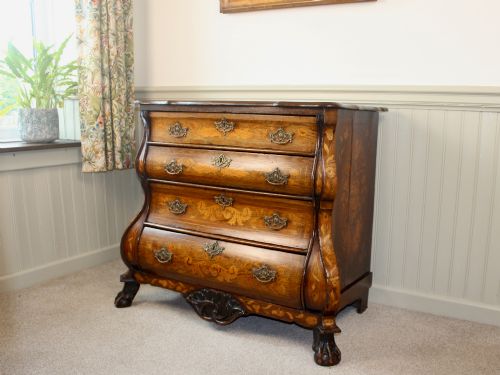
The most frequent encounters on this page include Dutch walnut and marquetry chests alongside French walnut, kingwood, and painted provincial examples. Alongside standard commodes, related forms such as bureaus, bedside tables, and sideboards share the characteristic swelling profile. These pieces combine decorative timber work with practical drawer storage, often finished with marble tops.
Periods represented stretch from the early decades through to later revivals, though the core of the selection centres on the 18th century. Regional craftsmanship dictates the detailing, from the exuberant marquetry of Dutch workshops to the fluid gilt-bronze mounts of French ateliers. Each piece records the specific aesthetic preferences of its place of origin.
Materials and Construction
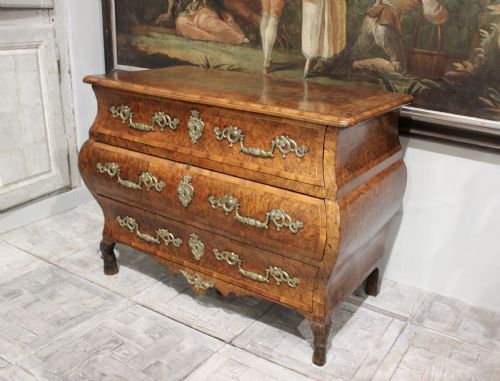
Makers constructed the carcase of an 18th century bombe commode using dense foundational timbers like oak or pine, onto which choice veneers of kingwood, walnut, burr elm, or plum were applied. The complex curved surfaces required specialist sawing and bending techniques to achieve the characteristic convex and concave contours without compromising structural integrity.
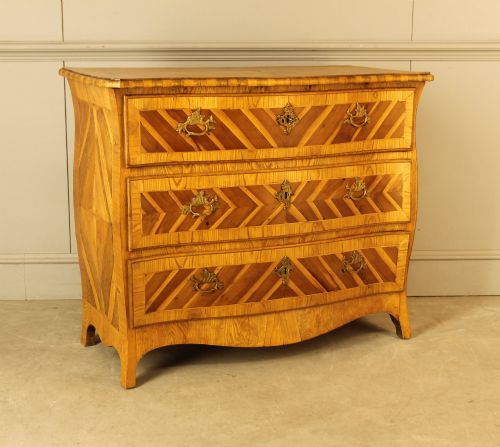
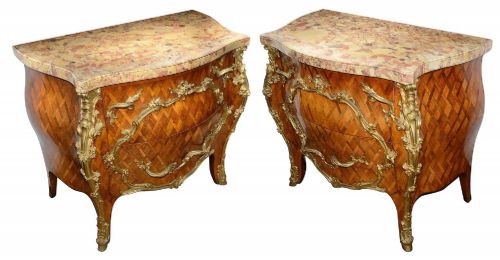
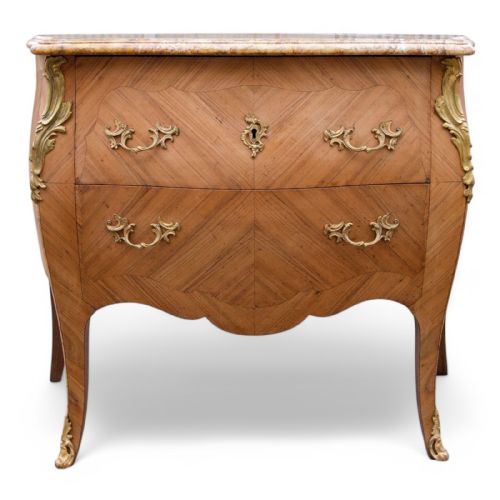
Surface decoration frequently involved intricate floral marquetry or parquetry, utilising contrasting natural woods to create pictorial panels across the drawer fronts and sides. In many French and German examples, cast ormolu and bronze mounts protect vulnerable corners and accent the handles, while marble slabs provide a heavy, durable top surface.
Several chests incorporate secret drawers hidden behind heavily curved friezes, designed to keep family ledgers safe from prying eyes.
Judging Quality and Execution
The distinction between tiers of production rests in the handling of the timber and the integration of mounts. Superior examples display seamless veneer matching across extreme curves, where grain patterns follow the swelling contours of the drawer fronts rather than buckling under tension. Finer pieces also exhibit crisply cast and chased ormolu mounts that sit flush against the wood.
Structural honesty and the preservation of original surfaces dictate the standing of a commode. Untouched marquetry detail, original drawer linings, and matching marble tops elevate an item above pieces that have undergone extensive timber replacement or later surface stripping. The fluidity of the overall serpentine sweep reveals the confidence of the original workshop.
Germain Landrin
The 18th Century Bombe Commode Glossary
- Bombe
- A swelling, convex furniture profile that curves outward on the front and sides. This form demands advanced cabinetmaking skills to execute successfully across multiple planes.
- Ormolu
- Gilt bronze mounts applied to furniture edges, feet, and handles for decoration and protection. The technique involves treating metal with a mercury and gold amalgam.
- Marquetry
- Inlaid decorative patterns created by fitting different coloured veneers onto a structural background. It frequently depicts floral, geometric, or architectural scenes.
- Kingwood
- A dense, heavily figured South American timber prized by cabinetmakers for its rich dark violet-brown tones and distinctive grain. It was widely used for high-status French veneer work.
- Parquetry
- A geometric mosaic of wood pieces used for flooring or furniture surfaces. Unlike marquetry, it relies on repeating angular shapes rather than pictorial designs.
18th Century Bombe Commode: Frequently Asked Questions
What is a bombe commode?
A bombe commode is a chest of drawers characterised by its outward-curving, rounded sides and front. This dramatic shape requires complex joinery and creates a substantial visual presence.
Originating primarily in continental Europe during the 18th century, these chests served as both functional storage and high-status decorative furnishings for salons and bedrooms.
How do Dutch and French commodes differ?
Dutch examples often feature dense walnut, elaborate floral marquetry, and robust proportions. They emphasise rich timber figure and deep, curving drawer fronts.
French pieces tend to incorporate refined kingwood veneers, fluid Rococo lines, and elaborate gilt-bronze or ormolu mounts, reflecting court tastes of the period.
Were these chests always topped with marble?
Many high-tier continental commodes, particularly French and German examples, were fitted with shaped marble slabs to provide a durable and luxurious surface. Wooden tops remained common in provincial workshops and on certain Dutch models.
Marble tops added significant weight to the piece and protected the underlying timber from water and daily use.
How should I care for an antique commode?
Keep wooden surfaces away from direct sunlight and steady heat sources to prevent the underlying veneers from drying and lifting. Regular dusting with a soft, dry cloth is sufficient for maintenance.
Avoid commercial liquid polishes, and consult a professional conservator if the joints loosen or the historic finish requires attention.