

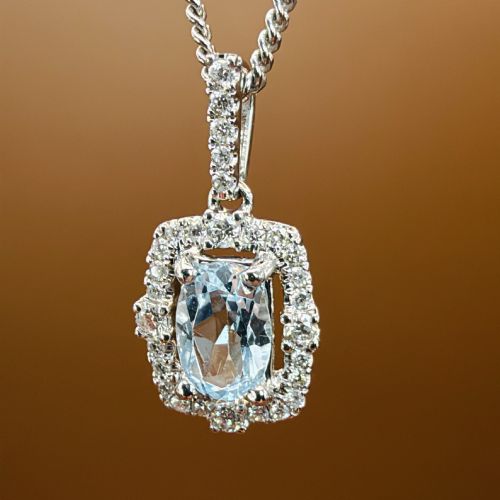
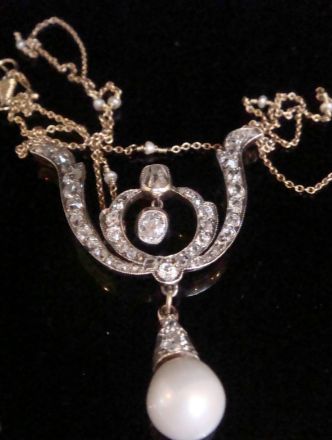


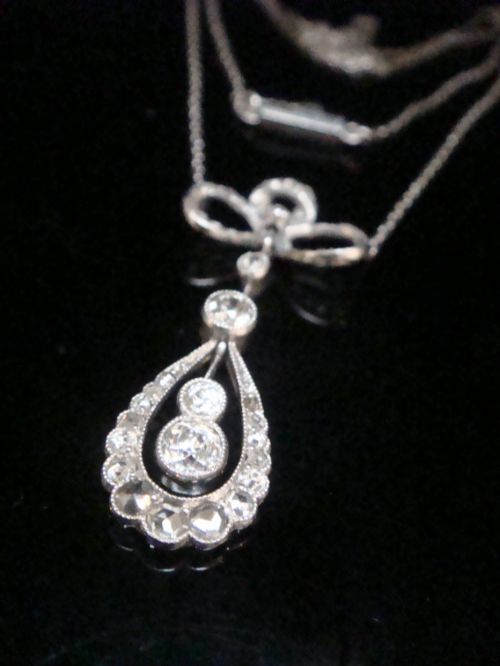


18ct White Gold Pendant
An 18ct white gold pendant brings together bright precious metal and fine stones, offering a wearable piece of history.
18ct White Gold Pendant
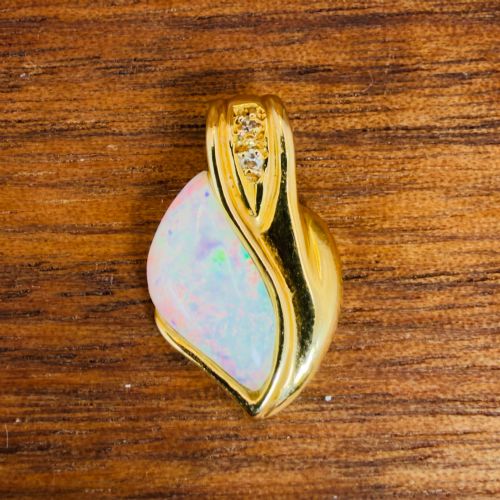
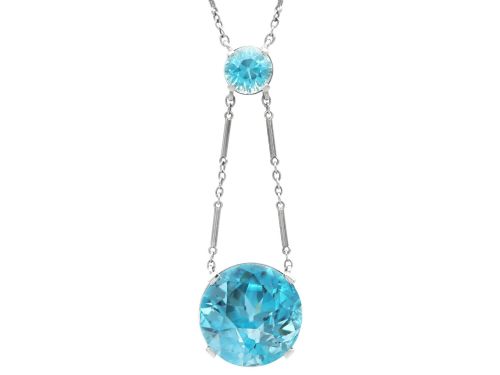
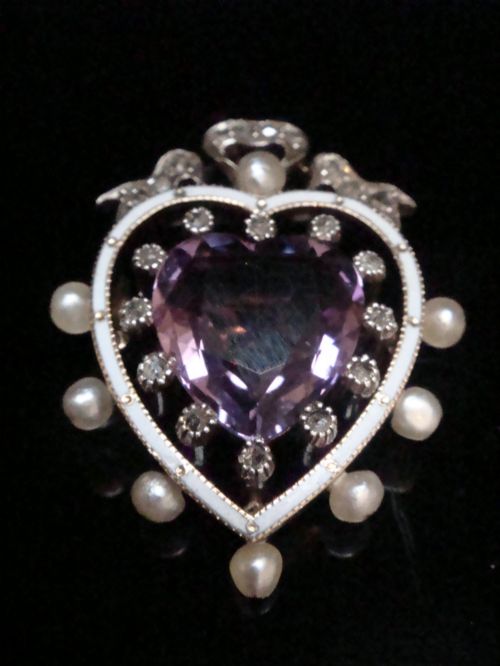
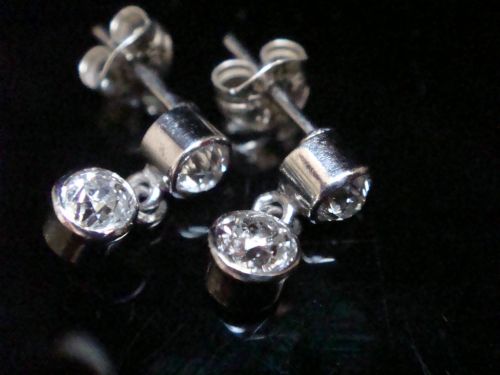
When searching for an 18ct white gold pendant, a buyer encounters a range of historic periods including Edwardian, Art Deco, and mid-century designs. These pieces often incorporate necklaces, drops, and charms set with diamonds, aquamarines, opals, and pearls alongside the primary metal.
The selections span from early twentieth-century work to later vintage items. Many items combine 18ct white gold with platinum or yellow gold to support varied gemstones such as tourmalines, amethysts, and rubies.
How they were made
The construction relies on 18ct white gold, frequently paired with platinum to provide secure settings for intricate stone arrangements. Goldsmiths utilised traditional techniques to shape bows, hearts, crosses, and drop clusters.
Stones including diamonds, opals, and aquamarines are integrated using bezel or cluster methods. Enamel work and delicate articulation appear in specific Edwardian and Art Deco examples to add movement and colour.
18ct White Gold Pendant Retail Price Guide 2026
Typical asking prices for 18ct white gold pendant among the pieces listed under this phrase on Sellingantiques today, from the lower quarter to the upper quarter. They describe what is for sale here now, not the wider market.
Several pieces feature tiny articulated drops designed to catch the light with every turn of the head.
What varies in quality
Quality rests in the precision of the metalwork and the integration of the stones. Pieces that maintain crisp detail in motifs like bows or geometric Art Deco lines display superior workshop standards.
The selection of complementary gems, such as certified natural pearls or well-matched diamonds and coloured stones, dictates the character of each piece. Heavier gauge metal and balanced articulation elevate the construction.
The 18ct White Gold Pendant Glossary
- White gold
- An alloy of gold combined with white metals such as palladium or silver to produce a pale, silvery hue. This metal forms the primary structure for many twentieth-century pendants.
- Cluster pendant
- A central gemstone surrounded by a border of smaller stones, typically diamonds. This arrangement maximises the visual impact of the piece.
- Art Deco
- A design style prevalent in the 1920s and 1930s characterised by geometric lines and stylised motifs. Pieces from this era often utilise platinum alongside white gold.
- Edwardian
- A period spanning the early twentieth century known for delicate garlands, lace-like platinum and gold work, and natural pearl or diamond sets.
- Solitaire
- A mounting holding a single gemstone, usually a diamond, as the sole focus of the pendant. This minimal setting highlights the quality of the individual stone.
18ct White Gold Pendant: Frequently Asked Questions
How do I date an 18ct white gold pendant?
Dating depends on stylistic clues such as Edwardian motifs, Art Deco geometry, or mid-century forms. The cut of the diamonds and the combination of metals also offer clear chronological markers.
Examining the manufacturing techniques and setting styles helps place the piece within its proper historical decade.
What stones are typically found in these pendants?
Diamonds are the most frequent companion to 18ct white gold, appearing as accents or central solitaires. Aquamarines, opals, tourmalines, amethysts, and pearls also feature prominently across the periods.
These gems are selected to complement the pale tone of the white gold metalwork.
Are these pendants suitable for daily wear?
Most pieces are robust enough for regular use, provided they receive appropriate care. Solid 18ct gold and platinum settings hold stones securely during normal daily activities.
Antique and vintage items benefit from periodic checks of the claws and mounts by a professional jeweller.
What is the difference between Edwardian and Art Deco pendants?
Edwardian designs favour flowing curves, bows, natural pearls, and delicate lace-like platinum and gold structures. Art Deco pieces introduce sharp geometric lines, symmetrical drops, and bold coloured stones.
Each style reflects the prevailing aesthetic and technological shifts of its respective era.