

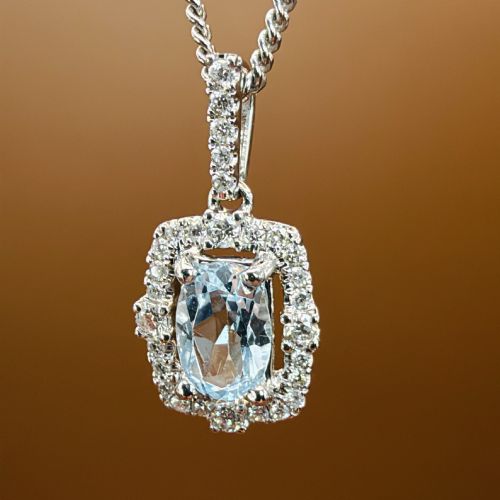

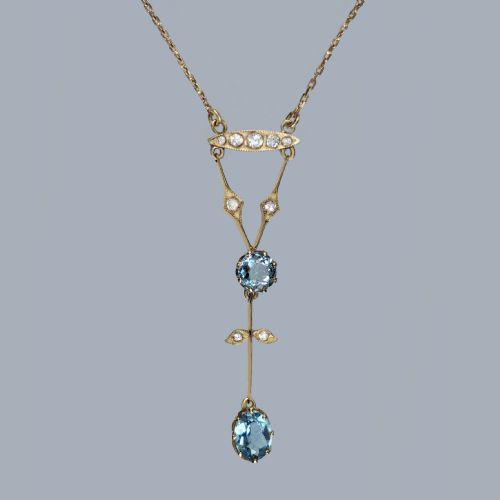


Aquamarine Diamond Necklace
An aquamarine diamond necklace brings together cool, clear beryl and brilliant stones in mountings that span from Edwardian drop designs to mid-century gold work.
Aquamarine Diamond Necklace
An aquamarine diamond necklace combines pale blue beryl with sparkling diamonds in formats ranging from simple drop pendants to substantial cluster necklaces. When you search for an aquamarine diamond necklace, you encounter pieces designed to showcase large central stones supported by diamond accents.
The pieces on this page appear in styles such as Edwardian, Art Deco, retro, and mid-century modern. These designs utilise various gold purities and platinum to frame the signature blue gems.
How they were made
Goldsmiths and jewellers built these necklaces using platinum, yellow gold, white gold in nine, fourteen, and eighteen carat, and eleven carat gold. Stones feature in claw settings, cluster arrangements, and drop configurations alongside pearls and demantoid garnets.
Lapidaries cut the aquamarines into oval, large oval, and asscher shapes, whilst diamonds appear in brilliant and carré cuts. Metalwork reflects the period, moving from delicate platinum wirework to structured yellow and white gold mountings.
Aquamarine Diamond Necklace Retail Price Guide 2026
Typical asking prices for aquamarine diamond necklace among the pieces listed under this phrase on Sellingantiques today, from the lower quarter to the upper quarter. They describe what is for sale here now, not the wider market.
Materials span aquamarine, diamond, platinum, 18ct white gold, pearl, yellow gold, 9ct gold, and 14ct gold.
What varies in quality
Quality depends on the saturation and clarity of the aquamarine, the weight and cut of the surrounding diamonds, and the refinement of the metal setting. Larger stone carat weights combined with platinum or high-carat gold indicate the upper end of the range.
The precision of the stone setting and the integrity of the period mounting distinguish finer examples from standard production pieces. Workmanship in gallery wirework and claw security demonstrates the skill involved in construction.
The Aquamarine Diamond Necklace Glossary
- Aquamarine
- A pale blue to light greenish-blue variety of beryl used as the primary gemstone in these necklaces. It is named for its seawater hue and forms the visual centrepiece of the jewellery.
- Cluster pendant
- A jewellery arrangement where a central stone is surrounded by a ring of smaller stones, typically diamonds. This layout maximises light reflection around the main gem.
- Carré cut
- A square step-cut diamond or gemstone shape with parallel facets. It offers a geometric appearance common in Art Deco pieces.
- Demantoid garnet
- A green variety of garnet sometimes included alongside aquamarines and diamonds in Edwardian pieces. It provides a contrasting flash of colour.
- Asscher cut
- A square emerald cut with cropped corners and large step facets. It creates an octagonal outline that catches light in distinct concentric patterns.
Aquamarine Diamond Necklace: Frequently Asked Questions
How do I date an aquamarine diamond necklace?
Dating relies on the gemstone cuts, metal choices, and overall design characteristics inherent to specific decades. Edwardian pieces often feature platinum drop motifs, whilst Art Deco items display geometric lines and carré cuts.
Later mid-century and retro examples utilise heavier yellow gold settings and larger stone carat weights. Examining the construction methods helps place a piece within its original era.
What metals are used in these necklaces?
These necklaces incorporate platinum, yellow gold, white gold, and eleven carat gold. Platinum appears frequently in early twentieth-century and Art Deco pieces for its strength and bright finish.
Yellow gold spans nine, fourteen, and eighteen carat purities, particularly in mid-century and retro designs. White gold also occurs in twentieth-century production.
How should I care for my necklace?
Clean aquamarine and diamond jewellery using warm soapy water and a soft brush to remove everyday oils. Avoid harsh chemicals and ultrasonic cleaners if pearls or delicate settings are present.
Store the necklace separately in a lined box to prevent scratching between the softer beryl and harder diamonds.
What stone cuts are common?
Oval cuts dominate the selection, offering a classic shape that showcases the pale blue colour across large surface areas. Asscher and carré cuts appear in specific periods like the Art Deco era.
Diamonds are generally cut as brilliant accents or geometric shapes to frame the primary aquamarine.