


18ct Gold Enamel Pendant
These pieces combine high carat metal with vitreous colour, offering wearable sentiment and miniature art that collectors prize.
18ct Gold Enamel Pendant
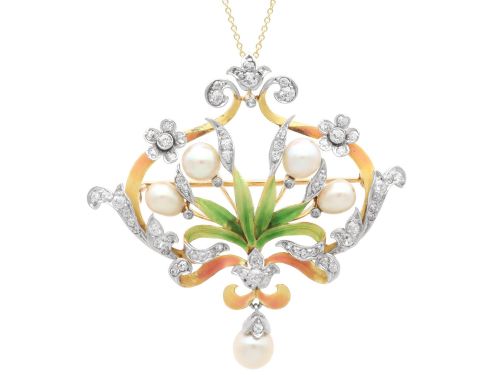
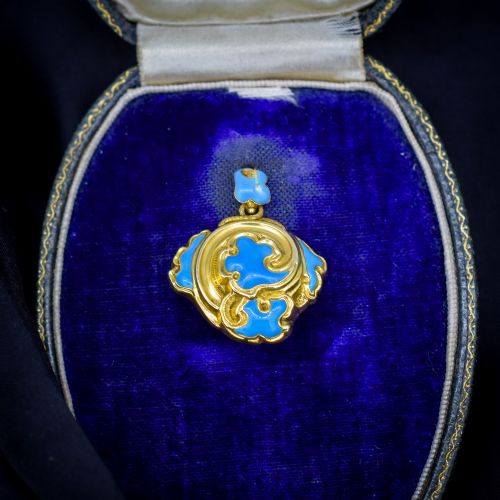
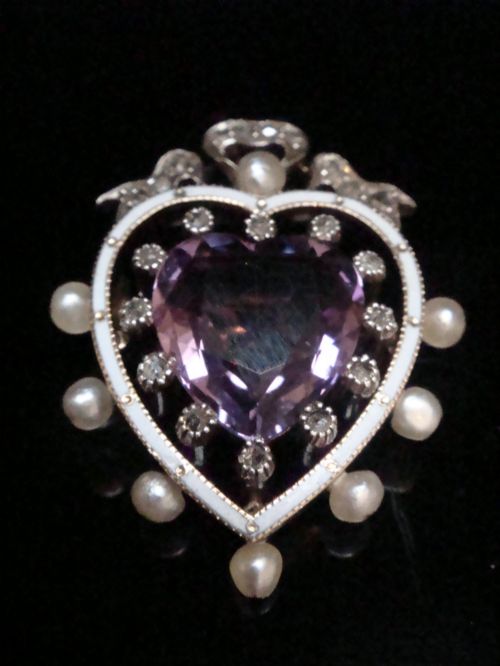
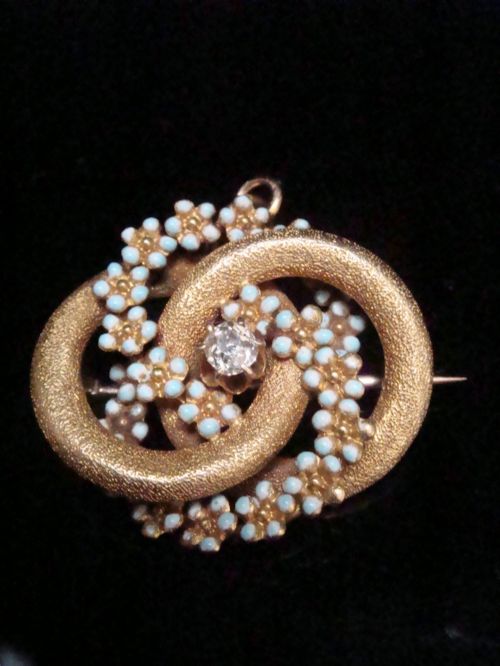
An 18ct gold enamel pendant brings together heavy precious metal and fired glass decoration, appearing in forms from mourning lockets to lucky charms. The pieces collected under this term span the nineteenth and twentieth centuries, taking in styles from Victorian and Edwardian work to French Belle Epoque and Art Deco. Buyers meet both geometric motifs and organic subjects like hearts, crosses, and floral designs.
Locket pendants and charm medals dominate the selection, frequently incorporating secondary materials such as diamonds, pearls, turquoise, and amethyst. Many items double as brooches, showing the versatility common in earlier jewellery production. Pieces range from sober nineteenth-century mourning pieces with hair work to playful French gambling card charms and portrait miniatures.
How they were made
Goldsmiths shaped high carat yellow gold into settings, frames, and hollow puffy forms, applying vitreous enamel by fusing powdered glass to the metal surface under high heat. Techniques include guilloche work with engine turned patterns beneath translucent coats, along with plique a jour methods that leave enamel unsupported by backing to let light pass through like stained glass.
Gemstones such as rose cut diamonds, natural pearls, rubies, and amethysts are flush set or held in claw mountings integrated into the design. Miniatures are hand painted behind glass or crystal covers, while hair work lockets preserve woven strands beneath internal compartments.
Materials documented in these pieces include enamel, diamonds, pearls, glass, turquoise, amethyst, and human hair.
What varies in quality
The standard of an 18ct gold enamel pendant rests on the crispness of the metalwork and the preservation of the vitreous surface. Finer examples display meticulous hand painting, even guilloche engraving, and secure stone settings without disturbance to the surrounding glass decoration.
Artisanal execution dictates value, from the depth of translucent enamel layers to the structural integrity of hinged lockets and integrated bails. Pieces retaining their original miniature paintings, undisturbed hair work, or complex plique a jour compartments represent the more accomplished end of surviving production.
The 18ct Gold Enamel Pendant Glossary
- Guilloche
- An ornamental technique in which a very precise, intricate recurring pattern is mechanically engraved into a metal surface. Translucent enamel is then applied over the top to let the underlying texture catch the light.
- Plique a jour
- A enamelling technique where the enamel is applied within a cellular framework with no backing metal, creating a stained glass effect that transmits light directly through the coloured glass.
- Rose cut
- An antique diamond cut featuring a flat base and a domed crown consisting of triangular facets arranged in a symmetrical pattern. This cut was favoured before the development of modern brilliant faceting.
- Mourning locket
- A piece of jewellery designed to hold a keepsake, frequently human hair or a painted portrait, to commemorate a deceased person. These items often feature black or blue enamel and inscribed sentiments.
- Lovers knot
- A decorative motif formed by two interlaced overhand knots, symbolising affection and fidelity. It appears frequently in Victorian gold and enamel pieces.
18ct Gold Enamel Pendant: Frequently Asked Questions
How do I date an antique pendant?
Dating relies on stylistic markers, motifs, and material combinations recorded across Victorian, Edwardian, and Art Deco eras. Examining the construction of the bail, the style of the enamel, and any integrated hair work or portrait painting helps narrow the period.
Assay marks and hallmarks, where present on the high carat gold, offer further chronological clues. Comparing the piece to documented examples from the nineteenth and early twentieth centuries confirms its place in the timeline.
Can I wear my pendant every day?
High carat gold provides a durable mount, but the vitreous enamel and set gems require careful handling to avoid impact damage. Removing the piece before physical work, swimming, or sleeping protects the fragile glass surfaces and delicate pearl settings.
Stored safely away from other hard jewellery, a well maintained pendant withstands regular wear. Gentle cleaning with a soft cloth preserves the polish of the gold and the lustre of the enamel.
What is plique a jour enamel?
Plique a jour translates from French as letting in daylight, describing an intricate method that resembles miniature stained glass. Artisans fire enamel within open metal wire frames without a solid backing plate.
This technique allows light to shine directly through the translucent coloured glass panels. It demands exceptional skill to prevent the glass from cracking during the multiple firings required.