


18ct Gold Diamond Bangle
An 18ct gold diamond bangle brings together precious metal and brilliant stones in a rigid wrist ornament spanning the Victorian, Edwardian, and Art Deco eras.
18ct Gold Diamond Bangle
An 18ct gold diamond bangle is a rigid circular bracelet cast in gold and set with diamonds, appearing across periods from Victorian and Edwardian times through to the Art Deco and Mid-Century eras. Buyers seeking this phrase encounter hinged bangles and rigid bracelets that sit securely on the wrist, often incorporating gemstones alongside diamonds.
The pieces listed on this page span the late nineteenth century to the middle of the twentieth century, with Edwardian and 1940s examples appearing frequently. Makers and workshops from France and elsewhere produced these items in various styles including Belle Epoque, Art Nouveau, and Retro 1940s.
Alongside plain gold and diamond configurations, many examples integrate rubies, sapphires, pearls, enamel, and platinum settings. These varied forms provide collectors with options ranging from delicate cross-over designs to substantial gem-set pieces.
How they were made
Goldsmiths utilised 18ct yellow gold, 18ct white gold, and 18ct rose gold as the structural base for these bangles, frequently combining platinum with gold during the Edwardian period to mount diamonds securely. The integration of platinum allowed workshops to create finer claw and bezel settings that maximised the light entering each stone.
Stones were cut and set by hand, ranging from early brilliant cuts to calibré-cut sapphires and rubies placed alongside pearls and enamel work. Hinged mechanisms and secure clasps were engineered into the rigid gold hoops to ensure the bracelets remained fastened during wear.
Listings feature 18ct yellow gold, 18ct white gold, and 18ct rose gold paired with platinum.
What varies in quality
The standard of a piece depends on the weight and purity of the stones set into the gold, with larger diamond carat weights and well-matched sapphires or rubies elevating the work. The precision of the hand-setting and the integrity of the platinum or gold claw work further distinguish finer examples from standard production.
Design complexity and structural preservation define the upper tier of these bangles, particularly in pieces featuring intricate Art Nouveau motifs or integrated watch movements. The original condition of the hinge, clasp, and enamel details dictates how well a piece has survived decades of use.
Ilias Lalaounis·Baume & Mercier
The 18ct Gold Diamond Bangle Glossary
- Bangle
- A rigid bracelet that slips over the hand or opens on a hinge to fit the wrist. These items do not drape like link chains.
- Brilliant cut
- A diamond cut with numerous facets designed to maximise light return and sparkle. This cut appears frequently in Edwardian and later jewellery.
- Calibré-cut
- Small gemstones shaped specifically to fit tightly together within a geometric channel or border. This technique defines many Art Deco pieces.
- Cross-over
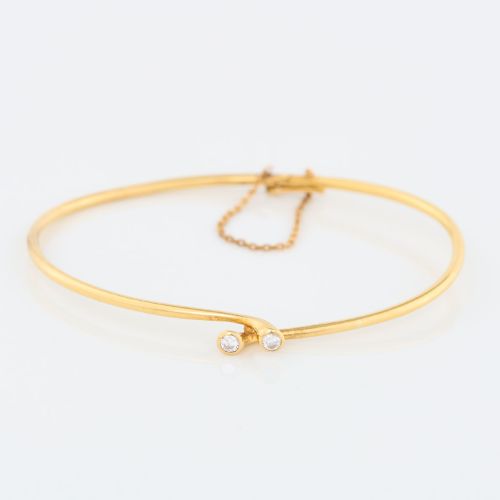
- A design where the two ends of a bangle sweep past each other, often terminating in opposing gemstones. This form creates a dynamic visual flow on the wrist.
- Belle Epoque
- A French design period spanning the late nineteenth century and the early twentieth century characterised by light, garland-style motifs. Platinum and diamonds dominate this aesthetic.
18ct Gold Diamond Bangle: Frequently Asked Questions
Can I wear an antique bangle daily?
Daily wear is possible for sturdy gold bangles, but delicate Edwardian platinum-topped settings or pieces containing pearls and enamel demand caution. Gemstones set in open-back mounts accumulate dust and skin oils that dull their brilliance over time.
Remove jewellery before sleeping, swimming, or engaging in manual tasks to protect the original gold structure and secure stone settings.
How do I distinguish Edwardian from Art Deco pieces?
Edwardian bangles rely on platinum and yellow gold to showcase lace-like motifs, pearls, and soft diamond arrangements. The aesthetic remains light, romantic, and organic.
Art Deco pieces shift towards geometric symmetry, strong colour contrasts using sapphires or rubies, and streamlined platinum settings. Lines become sharper and more architectural.
What is the difference between a bracelet and a bangle?
A bracelet is flexible, constructed from linked segments or chain strands that drape fluidly around the wrist. Movement is flexible and continuous across the entire circumference.
A bangle maintains a fixed circular or oval shape, constructed as a solid rigid hoop or a hinged band that retains its form when removed.