
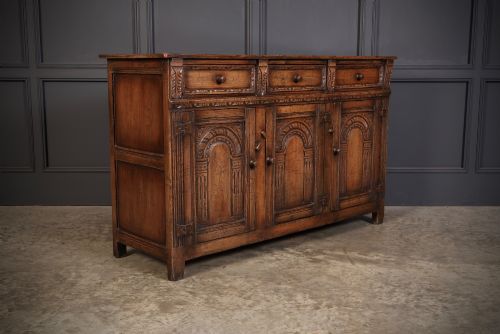
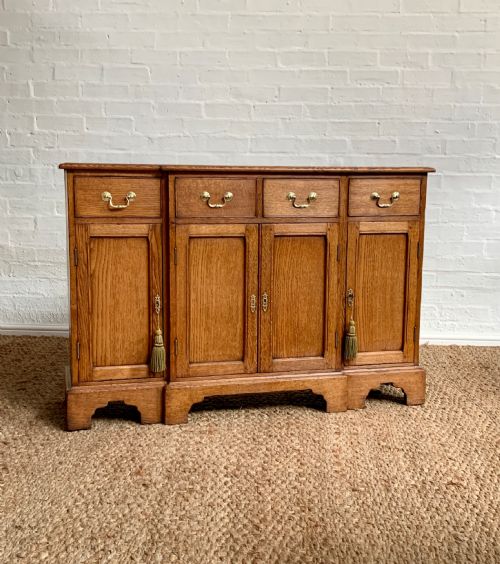

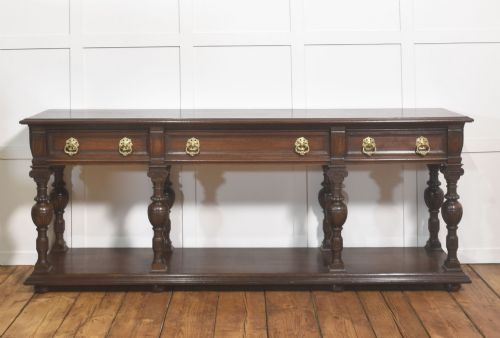


17th Century Style Sideboard
These heavy timber cabinets and dresser bases answer to the search for a 17th century style sideboard, offering centuries of domestic storage through robust construction.
17th Century Style Sideboard
A 17th century style sideboard encompasses heavy oak court cupboards, dresser bases, and side cabinets built to last in domestic spaces. These pieces emerge from periods including the seventeenth century itself, alongside later revivals from the Victorian era and the early twentieth century.
Buyers meet court cupboards, livery cabinets, and dresser bases featuring carved panels and sturdy doors. Styles span Jacobean revival, Flemish Baroque, and Renaissance revival, reflecting robust forms.
Origins include English workshops alongside continental examples executed in rich oak or walnut. The predominant forms utilise solid timber frameworks designed for utilitarian storage and display.
What varies in quality
The standard of carving determines much of the visual merit, distinguishing crisp, deep relief work from softer, shallower execution. Timber selection matters profoundly, with dense, figured oak or walnut sitting at the upper end of the scale.
Construction integrity separates robust originals and faithful revivals from lighter alternatives. Original brass or iron hardware and unaltered timber structures command higher regard among collectors.
17th Century Style Sideboard Retail Price Guide 2026
Typical asking prices for 17th century style sideboard among the pieces listed under this phrase on Sellingantiques today, from the lower quarter to the upper quarter. They describe what is for sale here now, not the wider market.
Mother-of-pearl glints unexpectedly from the depths of dark historic timber, proving our ancestors loved a little flash.
The 17th Century Style Sideboard Glossary
- Court cupboard
- A heavy enclosed storage piece with an upper and lower section, traditionally used for displaying plate. It forms a central pillar in early domestic interior furnishing.
- Dresser base
- A long low table fitted with drawers and cupboards beneath, serving as a primary workspace and storage unit. These pieces frequently include open racks above for ceramics.
- Jacobean style
- An aesthetic drawing on early seventeenth-century English design principles, characterised by geometric moulding and carved strapwork. Revival pieces replicate these heavy architectural proportions.
- Livery cupboard
- A small ventilated cabinet used for storing rations and provisions in domestic settings. The construction usually incorporates turned spindles or pierced panels for airflow.
- Flemish Baroque
- A continental decorative style featuring exuberant carved scrolls, figures, and architectural motifs. It introduces dramatic visual weight to cabinet furniture.
17th Century Style Sideboard: Frequently Asked Questions
How do I date a 17th century style sideboard?
Examine the tool marks, timber shrinkage, and joinery methods visible on the interior and reverse of the cabinet.
Later revival pieces from the Victorian and Edwardian eras often reveal machine-sawn timber or modern fixings that contrast with older construction.
What is the difference between a court cupboard and a dresser base?
Court cupboards feature enclosed upper and lower compartments designed for secure storage and display.
Dresser bases provide a low horizontal surface with drawers and cupboards underneath, often built for kitchen or dining room utility.
Where should I place a heavy oak cabinet?
Position these substantial pieces against structural walls in dining rooms, hallways, or spacious living areas.
Keep them away from direct heat sources and strong sunlight to protect the aged timber and prevent warping.
How do I maintain solid oak furniture?
Apply natural beeswax periodically to nourish the dry timber and maintain a soft sheen on the carved surfaces.
Avoid liquid polishes containing silicones, using only a dry cloth for routine dusting.