
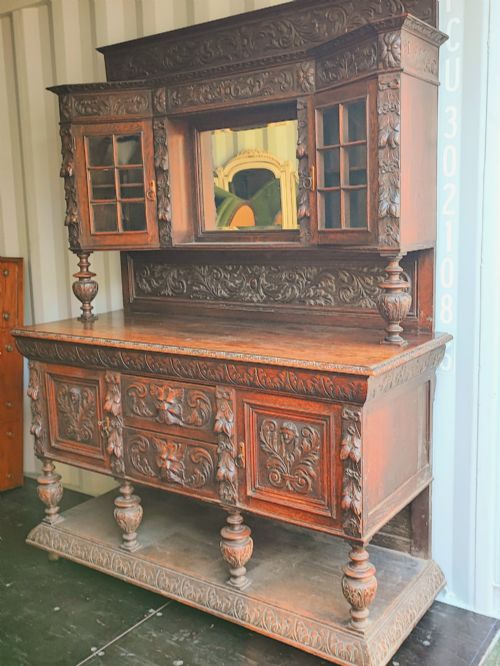
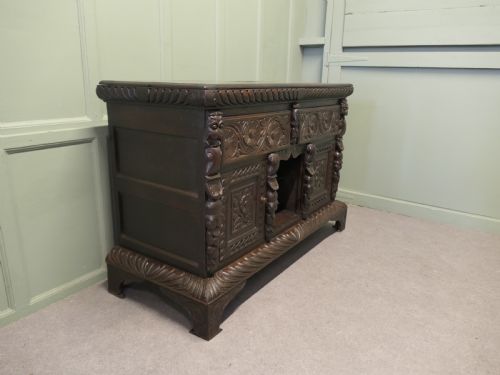


Heavy Oak Credenza Server
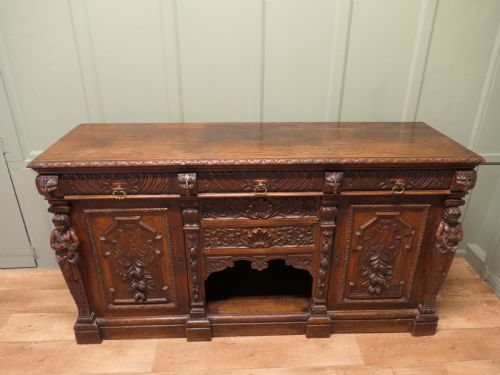
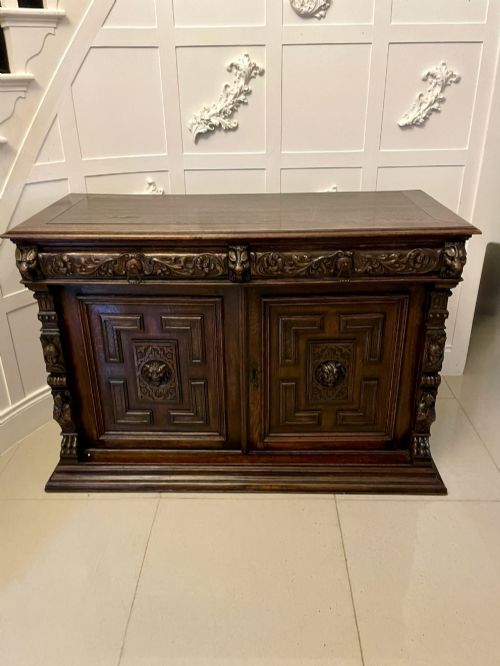
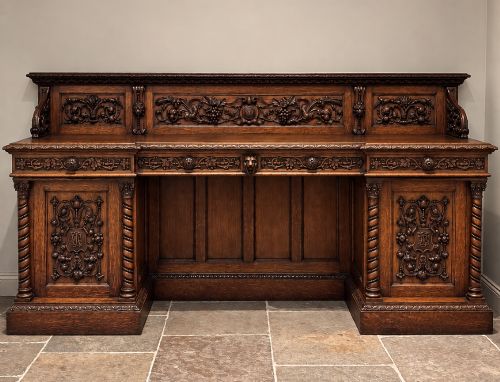
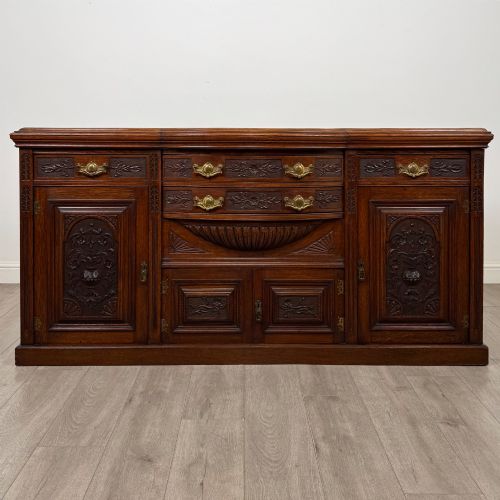
These heavy oak credenza server pieces bring robust timber construction and deep historic character into a room, offering substantial storage alongside striking period detail.
Heavy Oak Credenza Server
When you search for heavy oak credenza server items, you encounter substantial Victorian sideboards, dresser bases, and side cabinets built from solid timber. These forms span the nineteenth and early twentieth centuries, drawing heavily on Gothic, Renaissance, and Flemish Baroque revivals.
You are most likely to meet large Victorian sideboards featuring elaborate carvings, monumental proportions, and deep shelving. Many examples incorporate architectural pediments, heavy panel doors, and occasionally mirrored backs or brass hardware.
The material palette centres firmly on oak and pollard oak, often accented with bevelled glass and mirror glass. Pieces range from straightforward utilitarian cupboards to deeply carved Green Man designs with distinct mythological motifs.
Materials and construction methods
Makers utilised solid oak and pollard oak to build these heavy structures, ensuring immense durability and rich natural grain patterns. Timber surfaces were frequently finished with deep hand-carving, displaying high levels of joinery skill.
Hardware elements typically included brass and other metals for hinges, handles, and locks, while glass and bevelled glass were set into doors and upper sections. Structural integrity relied on heavy framing and traditional jointing methods to support the grand proportions.
Distinctions in quality
The refinement of the hand-carving separates the finest examples from simpler utilitarian furniture, particularly in sculptural details like Green Man faces or botanical motifs. Depth, crispness, and symmetry in the woodwork indicate superior craftsmanship.
Proportions and timber selection also drive distinctions, with figured pollard oak and grand architectural facades marking out the most ambitious Victorian commissions. The integration of original brass hardware and bevelled glass further elevates a piece.
The Heavy Oak Credenza Server Glossary
- Credenza
- A sideboard or buffet used for serving food and storing dining ware. This form traditionally sat against a dining room wall.
- Green Man
- A sculptural architectural ornament depicting a human face carved from or entwined with leaves and vines. It appears frequently on Victorian revival woodwork.
- Pollard Oak
- Timber harvested from trees that have been pollarded, producing a highly decorative and mottled grain pattern. Cabinetmakers prized this wood for panel fronts.
- Renaissance Revival
- A nineteenth-century design movement drawing inspiration from fifteenth and sixteenth-century European architecture and furniture. Pieces in this style feature heavy classical proportions and bold ornamentation.
- Bevelled Glass
- Glass panes with edges cut and polished at an angle to catch the light. This technique adds decorative depth to cabinet doors and mirror plates.
Heavy Oak Credenza Server: Frequently Asked Questions
What is a heavy oak credenza server?
These items are substantial nineteenth and early twentieth-century storage pieces, generally categorized as sideboards, buffets, or dresser bases. They are built primarily from solid oak with significant decorative carving.
They function as grand serving stations and storage cabinets for dining rooms and large living spaces, combining deep cupboards with display surfaces.
How do I care for antique oak furniture?
Maintain the wood by keeping it away from direct heat sources and sudden humidity changes to prevent timber movement. Regular dusting with a dry cloth keeps the surface clean without damaging the finish.
Apply a traditional beeswax occasionally to nourish the oak and preserve its deep lustre over the years. Avoid modern silicone polishes that can build up on carved details.
How can I tell a Victorian sideboard's period?
Examine the construction methods, timber choice, and stylistic revival influences visible in the carvings and hardware. Victorian pieces often combine Gothic or Renaissance motifs with heavy brass fixtures and sometimes bevelled mirror glass.
Dates can sometimes be inferred from registration marks, specific revival movements, or occasional direct inscriptions left by makers or previous owners.
Where should I place a large oak sideboard?
Position these heavy items against a sturdy wall with sufficient floor space to accommodate their grand depth and height. They suit dining rooms, large hallways, or spacious living areas where their monumental proportions will not overwhelm the room.
Ensure the floor can support significant weight, as solid oak construction combined with glass and mirrors makes these pieces exceptionally heavy.