


17th Century Style Box
These 17th century style box pieces are sturdy wooden containers and chests built to echo early periods.
17th Century Style Box
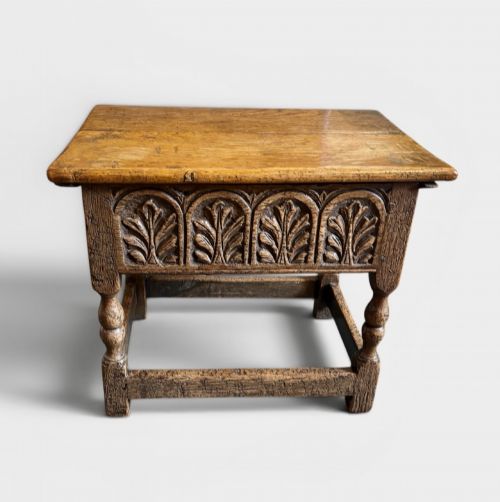
When you search for a 17th century style box, you are looking at sturdy wooden containers, Bible boxes, coffers, and small chests designed to evoke early periods. These items range from genuine period pieces to later revival items made in the nineteenth and twentieth centuries.
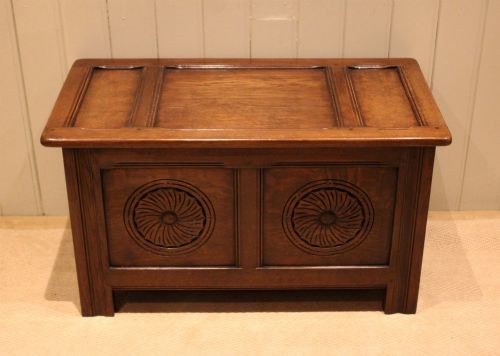
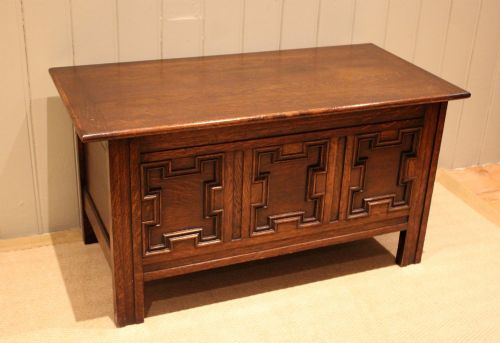
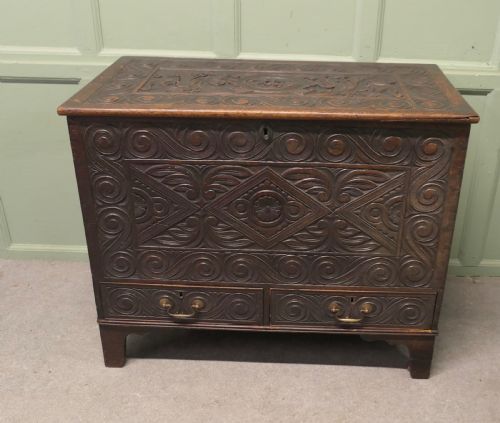
You will most frequently meet solid oak coffers, Bible boxes, and blanket chests on this page. Many pieces display revival styles such as Jacobean and Gothic, utilising heavy timber construction and traditional joinery.
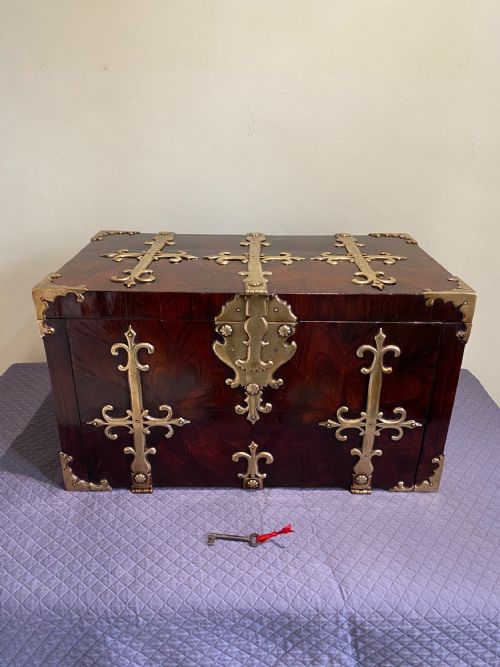
The selection includes specific forms like sword chests, deed boxes, and table cabinets alongside standard storage chests. Origins span English, French, and Iberian workshops across several centuries of manufacture.
Materials and construction methods
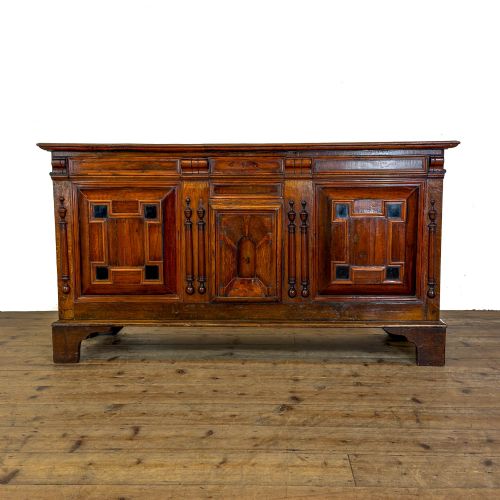
Carpenters built these pieces primarily using solid oak, chestnut, and kingwood, reinforced with iron hinges and brass fittings. Ebonised wood and bone inlay occasionally appear on specific decorative items.
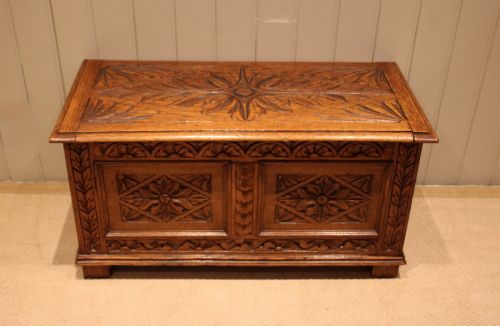
Makers utilised frame and panel construction alongside standard jointing techniques to ensure structural rigidity. Carving was frequently applied directly to the timber surfaces, depicting geometric motifs, foliage, and figures such as the Green Man.
Keep an eye out for the occasional Green Man peering out from the carved oak panels.
Assessing quality in early storage pieces
Quality separates through the selection of timber and the crispness of the hand carving. Solid construction using dense oak with well-fitted joints indicates superior craftsmanship compared to simpler assembled boxes.
The integration of original ironwork, such as strap hinges and locks, elevates a piece. Finer examples retain their original surface patination and honest signs of age without heavy modern alterations.
The 17th Century Style Box Glossary
- Coffer
- A large wooden chest traditionally used for storing valuables and household goods. These pieces often feature hinged lids and sturdy boarded or framed construction.
- Bible Box
- A small desktop box historically used to store sacred texts and writing materials. They frequently feature sloping lids and carved front panels.
- Joint Stool
- An early form of domestic seating constructed with pegged mortise and tenon joints. These items served as seating or small stands.
- Jacobean Revival
- A nineteenth and twentieth century design movement that emulates the heavy, carved styles of the early seventeenth century. Furniture from this movement utilises dark oak and geometric ornamentation.
- Parnassian
- Not applicable here.
- Boarded construction
- A simple method of building chests using thick planks joined edge to edge or nailed directly at the corners. This technique precedes more complex frame and panel methods.
17th Century Style Box: Frequently Asked Questions
What is a 17th century style box?
A 17th century style box is a wooden storage container, Bible box, or small coffer built to emulate the heavy timber furniture of the seventeen hundreds and earlier.
These items encompass both genuine period survivals and later revival pieces made during the Victorian and Edwardian eras.
How were these boxes used?
Households utilised these containers for storing valuable documents, textiles, Bible books, and personal belongings securely.
Smaller boxes often sat on tables for desk work, while larger coffers stood against walls for general blanket and clothing storage.
How do I identify a revival piece?
Revival pieces often display machine-sawn timber marks, modern internal hinges, or specific nineteenth century construction methods despite showing seventeenth century style carving.
Examining the wood shrinkage, nail types, and wear patterns helps distinguish an original period item from a later copy.
What woods were commonly used?
Oak is the dominant material seen across English coffers and Bible boxes, selected for its local availability and durability.
French and continental examples frequently utilise chestnut or kingwood alongside decorative inlay materials like bone.
How do I care for antique oak?
Maintain antique oak in stable room conditions away from direct heat sources and strong sunlight to prevent the timber from splitting.
Apply traditional beeswax occasionally to nourish the surface and preserve the historic patination of the wood.