



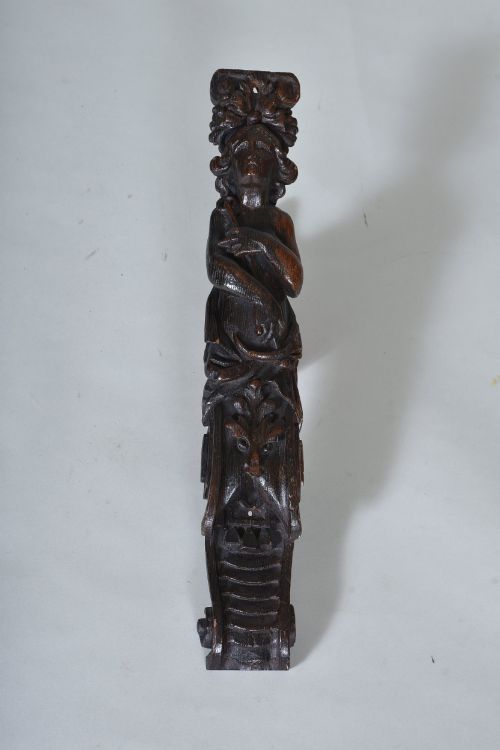
17th Century Oak
When searching for 17th century oak, collectors encounter robust furniture and fittings shaped by centuries of domestic use and structural evolution.
17th Century Oak
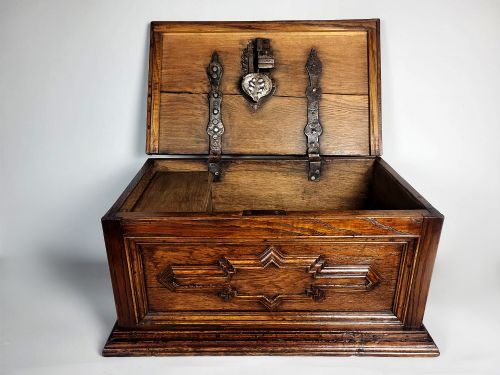
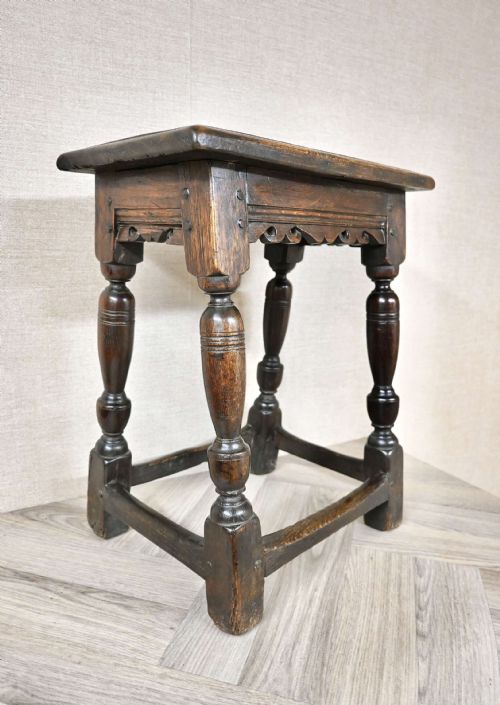
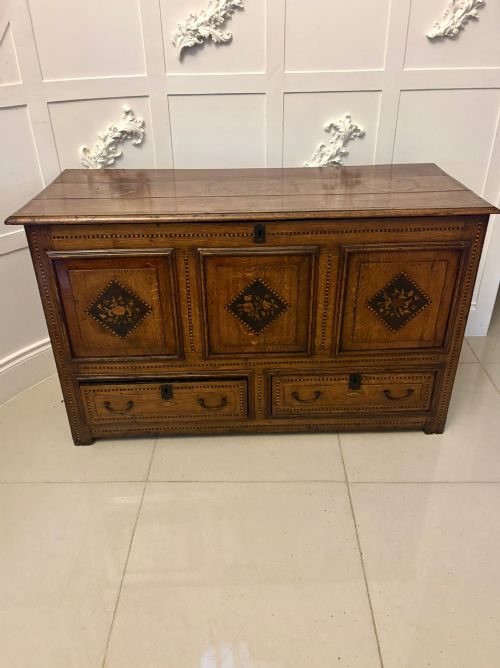
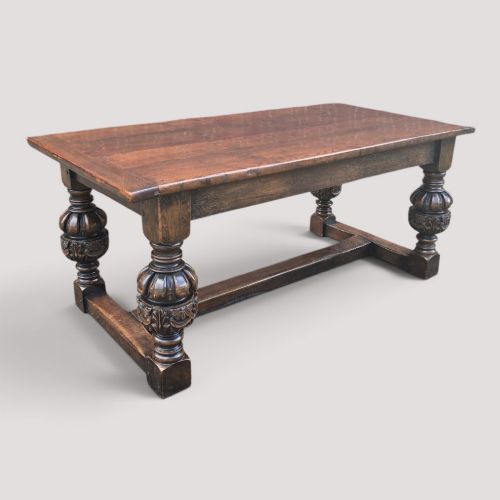
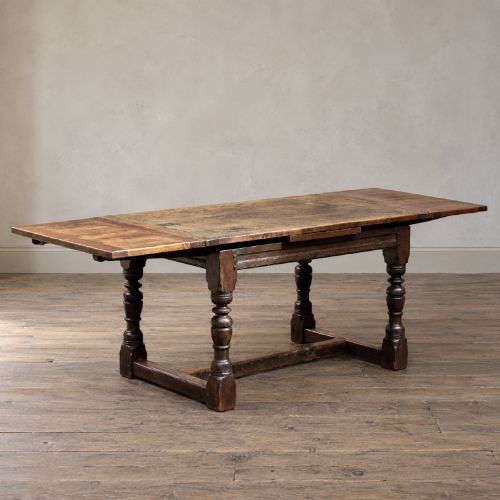
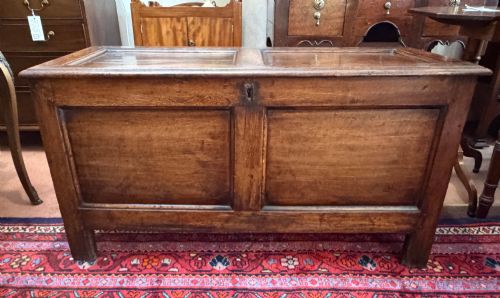
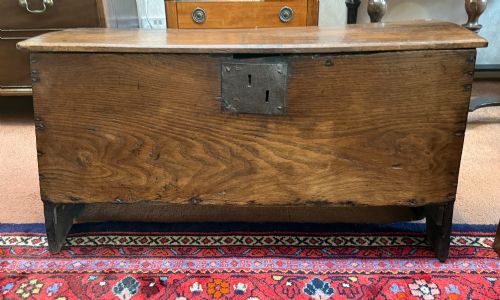
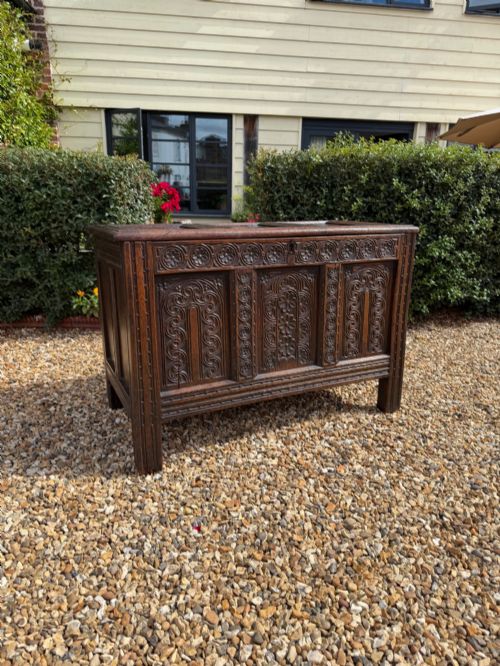
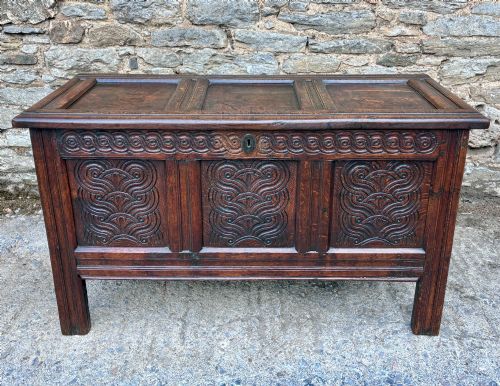
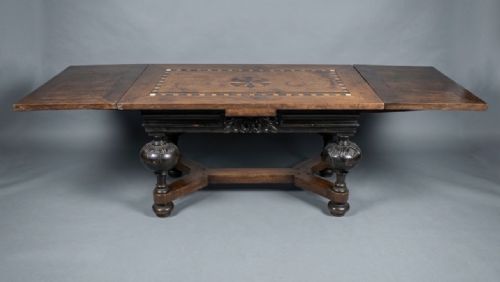
Items associated with 17th century oak span utilitarian storage pieces like coffers, chests, and mule chests alongside dining tables, side tables, armchairs, and joint stools. Surviving artefacts also encompass architectural elements such as carved panels, door fragments, and framed maps or oil portraits.
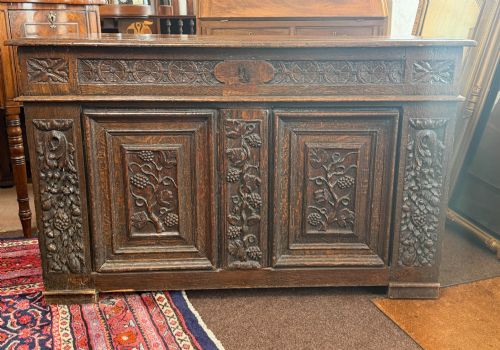
The material record includes authentic period pieces alongside later interpretations from the 19th and early 20th centuries created in revival styles. Buyers frequently encounter coffers and panelled chests bearing carved geometric decoration, strapwork, or regional traits characteristic of English, Welsh, French, and Dutch workshops.
How they were made
Cabinet makers utilised solid oak timbers, often quarter-sawn to display the characteristic medullary ray figuring, combined with structural joinery like mortise and tenon joints secured by wooden pins. Secondary woods such as elm, sycamore, beech, walnut, and laburnum appear alongside iron hardware, brass handles, and occasionally marquetry or inlaid contrasting veneers.
Surface ornamentation relied heavily on hand carving, chip carving, linenfold motifs, and geometric mouldings applied to drawer fronts and panelled frames. Construction methods prioritised sturdy framing, utilising five-plank configurations for simpler chests and panel-and-frame techniques for larger armoires, dressers, and court cupboards.
Current listings feature oak alongside iron, brass, walnut, beech, and glass across periods spanning the sixteenth century to the 1930s.
What varies in quality
The grade of an object depends significantly on the integrity of its timber selection, the crispness and depth of hand-carved ornamentation, and the proportion of original structural components retained over time. Pieces displaying regional vernacular distinctiveness, such as specific Welsh or provincial continental construction traits, often demonstrate superior local craftsmanship.
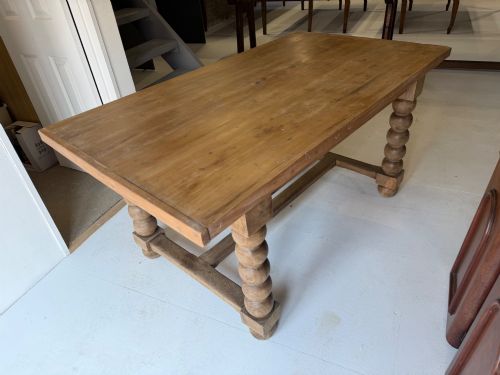
Execution of decorative details like marquetry inlay, geometric mouldings, and turned elements such as bobbin legs dictates the refinement of the piece. High-status survival is further underscored by documented provenance, harmonious patination resulting from age and wax polishing, and minimal structural replacement.
The 17th Century Oak Glossary
- Coffer
- A large wooden chest used historically for storage, typically constructed with a hinged lid and panelled sides.
- Joint stool
- A sturdy wooden stool built using mortise and tenon joinery, common in domestic settings before the widespread use of individual chairs.
- Mule chest
- A storage chest featuring one or more drawers built into the base beneath the main compartment.
- Refectory table
- A large, long dining table traditionally utilised in communal halls and dining spaces.
- Marquetry
- Decorative inlay work using various coloured woods to create pictorial or geometric patterns on a surface.
- Treen
- Small handmade wooden domestic objects produced prior to the modern era.
17th Century Oak: Frequently Asked Questions
How do I identify a genuine 17th century oak coffer?
Examine the construction methods, tool marks, and timber shrinkage patterns visible on the interior and underside of the piece. Hand-split boards and pegged mortise and tenon joints typically indicate period manufacture.
Check for consistency in the wood's patination and wear patterns around high-touch areas like lid edges and feet. Later revivals often display uniform machine milling or lack the structural movement accumulated over centuries.
Were these tables used for dining?
Large oak tables from this era served central roles in domestic life for dining, administrative work, and communal gatherings. Their heavy construction accommodated daily household demands.
Many examples feature stretchers near the floor to keep feet away from damp rushes or stone flags. Drop-leaf and draw-leaf variants provided flexible surface areas when entertaining.
How should I care for antique oak furniture?
Maintain stable indoor humidity and temperature levels to prevent the solid oak timbers from drying out, splitting, or warping. Keep pieces away from direct heat sources and strong sunlight.
Apply traditional beeswax periodically to nourish the wood and preserve the natural patination. Avoid modern silicone-based polishes that can degrade the historic surface finish.
What is the difference between Jacobean and William and Mary styles?
Jacobean furniture, spanning the early to mid 17th century, is characterised by heavy proportions, dark finishes, deep geometric carvings, and strapwork ornamentation. Forms are robust and architectural.
William and Mary pieces from the later decades introduce lighter proportions, Dutch influences, trumpet or spiral turning, and sophisticated veneering techniques like marquetry. The overall aesthetic shifts toward refined elegance and elevated casework.