




17th Century Oak Server
A 17th century oak server provides sturdy surface space and deep historical character for a dining room or hallway.
17th Century Oak Server
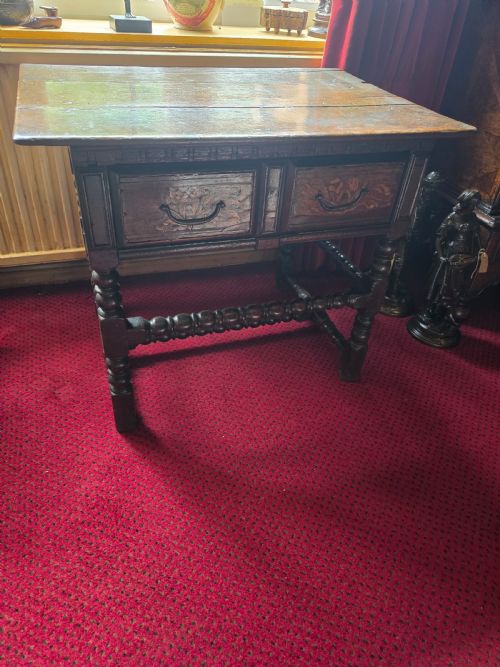
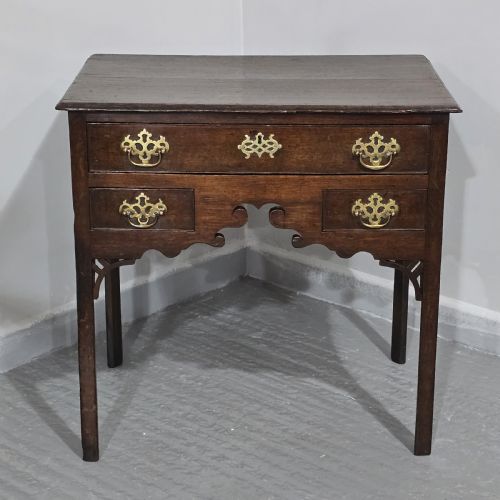
When you search for a 17th century oak server, you encounter low tables, dresser bases, and sideboards designed for food preparation and display. These items span authentic period pieces from the 17th century alongside revival interpretations made in the Victorian era and the early twentieth century.
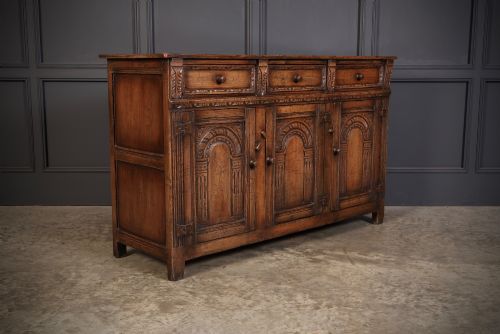
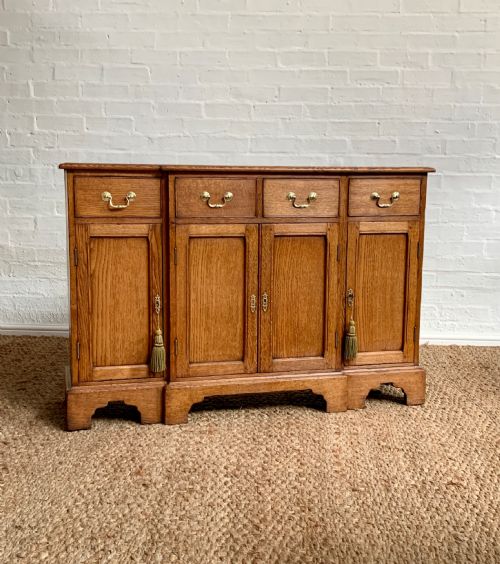
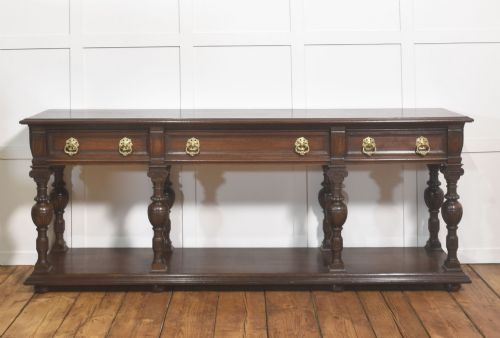
The forms vary from simple side tables with single drawers to low dressers, court cupboards, and console tables. Many examples originate from English workshops, while others reflect Spanish Baroque, Flemish, and French Renaissance styles.
Buyers are most likely to meet solid oak dresser bases and side tables featuring rectangular tops and deep drawers. These functional forms served households for centuries and continue to provide practical storage alongside distinct period presence.
Materials and construction methods
These items rely principally on solid oak, chosen for its strength, durability, and rich grain. Carpenters utilised traditional joinery methods, including pegged mortise and tenon joints, to construct stable frames that endure for centuries.
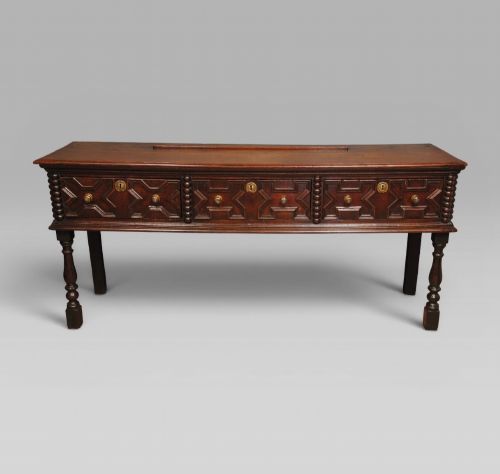
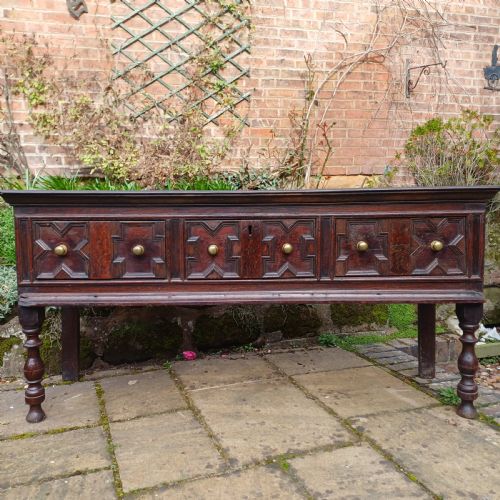
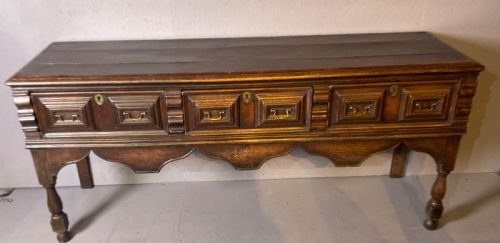
Drawer fronts frequently display geometric mouldings, panel work, or hand carving. Metal elements such as brass and iron appear on drop handles, escutcheons, and hinges, complementing the dark timber surfaces.
Many seventeenth-century drawers still retain stubborn traces of historical flour, spice dust, and centuries of spilled ale in their corners.
Assessing quality in early oak furniture
The standard of carving and the crispness of geometric mouldings separate the finest examples from simpler output. Crisp detailing on drawer fronts and stiles indicates skilled craftsmanship at the bench.
The integrity of the timber and the extent of later alterations dictate the character of a piece. Surfaces that retain rich patination and minimal replacement timber carry greater historical honesty.
The 17th Century Oak Server Glossary
- Dresser base
- A low wooden unit fitted with drawers and occasionally cupboards below, used originally for food preparation and serving. These pieces form the foundation for many larger dining room displays.
- Lowboy
- A small seventeenth or eighteenth-century table featuring one or more rows of drawers, standing on relatively tall legs. They often served as dressing tables or side serving surfaces.
- Court cupboard
- An enclosed two-tier piece of dining furniture used for storing and displaying plate and food. The upper section is typically recessed behind carved supports or a canopy.
- Refectory
- A long table style traditionally used in communal dining halls. Surviving examples adapted for serving provide substantial length and robust timber construction.
- Geometric moulding
- Raised wooden profiling applied in repetitive angular patterns to drawer fronts and door panels. This decorative technique became prominent during the seventeenth century.
- Patina
- The deep sheen and mellow colour developed on wooden surfaces through decades of handling, polishing, and oxidation. It serves as a visual indicator of age and continuous use.
17th Century Oak Server: Frequently Asked Questions
What is the difference between a server and a dresser base?
A server generally refers to a side table or low console used specifically for holding food and dishes during meals. A dresser base provides similar surface space and drawer storage but often possesses a heavier, more enclosed cabinet structure.
Both forms belong to the broader category of seventeenth-century dining furniture. Their precise designation often depends on regional terminology and the specific height of the piece.
How can I tell a 17th century piece from a revival copy?
Authentic seventeenth-century pieces display hand-cut joinery, pegged framing, and timber surfaces that have aged through centuries of use. The wood exhibits natural wear patterns and a deep patina unique to early oak.
Revival pieces, such as those made around nineteen-ten or nineteen-twenty, often show machine milling marks and different fastener types. Examining the interior construction and timber shrinkage helps clarify the age of the item.
How do I care for antique oak furniture?
Antique oak requires stable humidity levels and protection from direct sunlight to prevent the timber from drying out or splitting. Applying a traditional beeswax polish occasionally helps nourish the wood and maintain its protective barrier.
Avoid placing these tables near direct heat sources such as radiators or fires. Gentle dusting with a dry cloth keeps the carved details and moulded drawer fronts clear without harming the antique finish.
What styles influenced early oak servers?
Jacobean design heavily influenced English oak furniture through geometric panelling, strapwork, and sturdy columnar legs. Continental movements also played a part, introducing Spanish Baroque motifs and French Renaissance carving.
These stylistic influences spread through regional workshops, resulting in distinct regional variations like West Country cupboards and Lancashire buffets. Makers adapted continental trends to suit local British tastes and available timber.