



17th Century Marquetry Chest
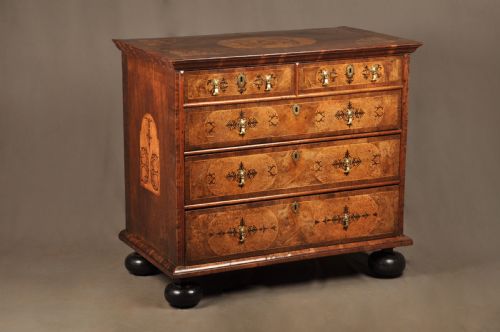
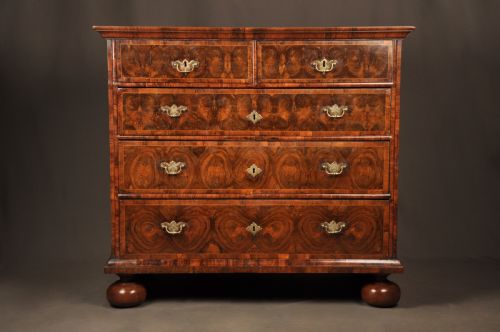
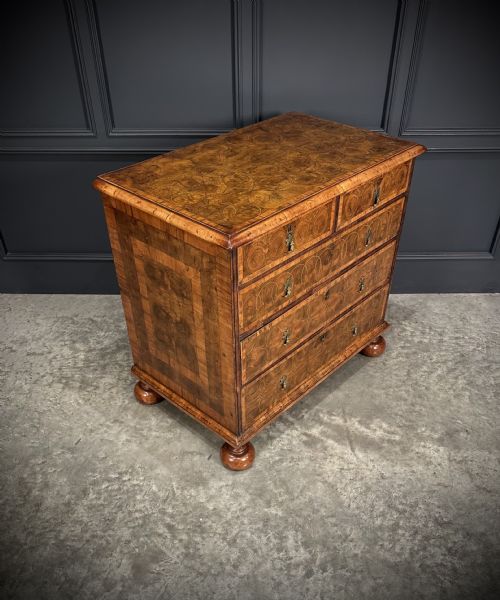
A 17th century marquetry chest brings centuries of intricate floral and geometric woodwork into a room, offering serious historical presence.
17th Century Marquetry Chest
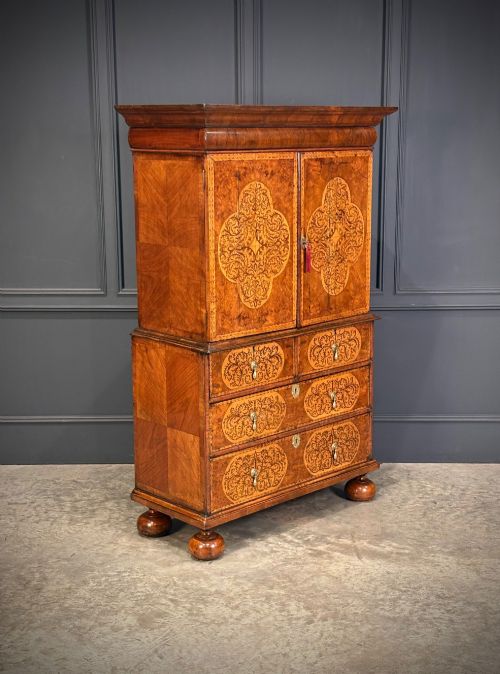
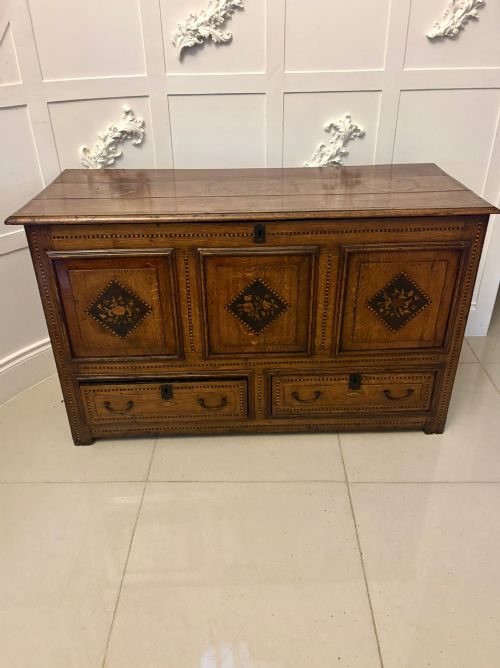
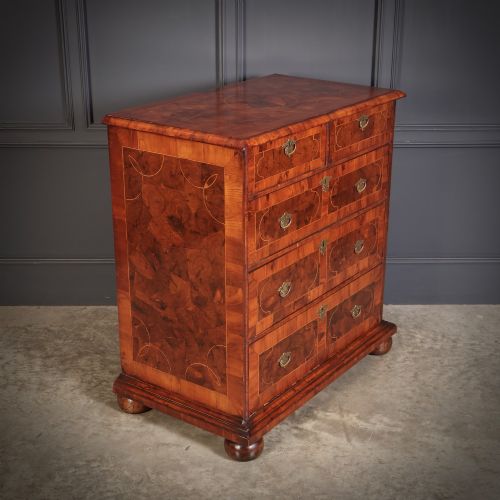
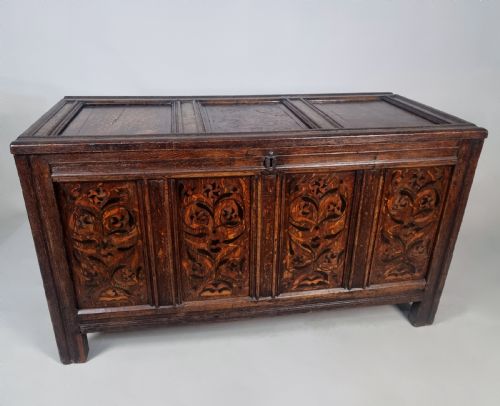
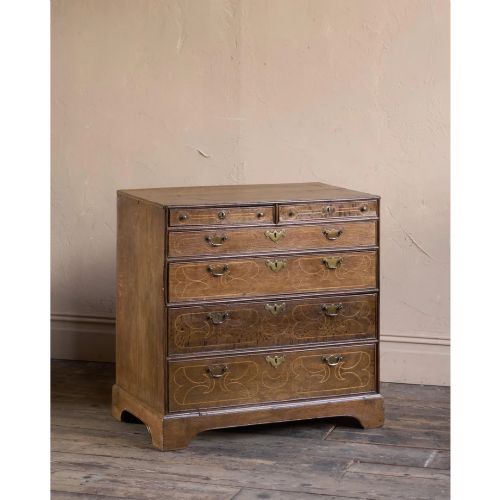
When you search for a 17th century marquetry chest, you encounter heavily figured wooden storage furniture decorated with complex inlaid veneers. These pieces range from mule chests and coffers to multi-drawer chests on stands, often associated with the William and Mary and Baroque periods.
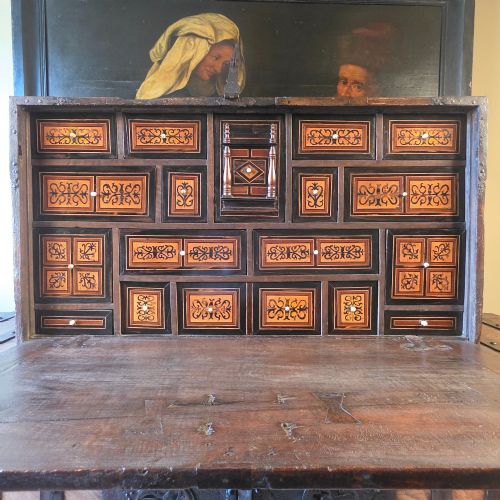
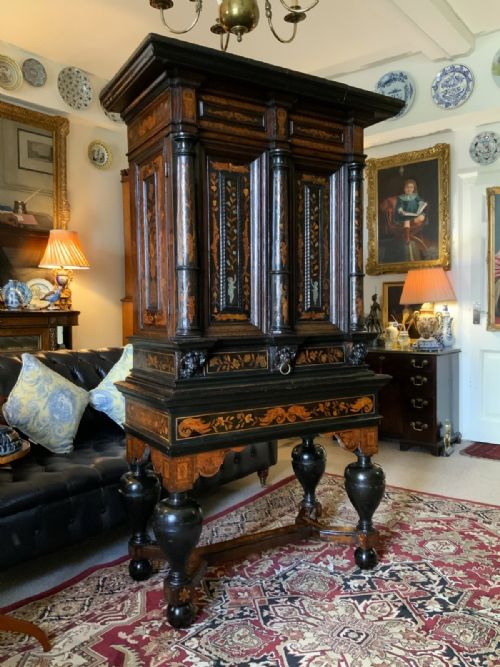
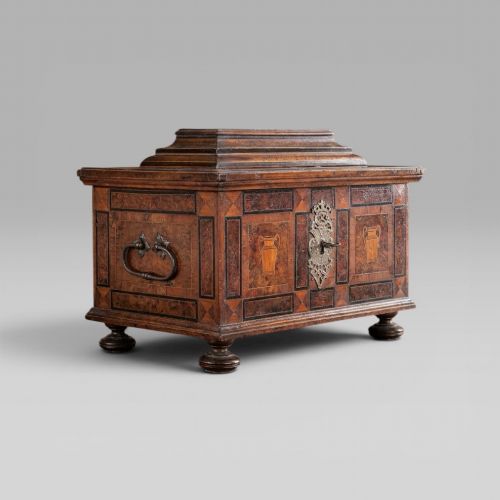
The versions most commonly met on this page include walnut and oak chests adorned with floral, arabesque, or seaweed marquetry patterns. Alongside these, you find specialised forms such as cabinets on stands and lidded caskets originating from English, Dutch, and German workshops.
How they were made
Cabinetmakers constructed carcass frames primarily using sturdy native timbers like oak or walnut, providing a stable foundation for decorative surfaces. They then applied thin cross-grain veneers, known as oyster veneers, cut from branch wood to create repeating circular grain patterns.
Makers embellished these surfaces through detailed marquetry inlay, embedding contrasting woods such as boxwood and fruitwood, along with pewter and brass, into shaped recesses. This meticulous cutting and fitting of disparate materials required steady hands and specialised saws.
Some seventeenth-century German coffers doubled as secure money chests, fitted with elaborate iron locking mechanisms hidden beneath decorative wood panels.
What varies in quality
The visual success of a piece rests on the precision of the veneer work and the complexity of the inlaid designs. Master craftsmen achieved sharp, seamless joints between the contrasting timbers, whereas lesser examples reveal wider gaps filled with dark mastic.
The choice of secondary woods and the depth of the carving on structural elements also dictate the standing of a piece. Better examples utilise rich burr walnut, olive, or laburnum combined with intricate seaweed or floral panels, retaining their original stands and mounts.
The 17th Century Marquetry Chest Glossary
- Marquetry inlay
- The practice of forming decorative patterns by inserting thin pieces of wood, bone, or metal into a prepared veneer ground. This technique defines the surface ornamentation of the period.
- Oyster veneer
- Slices of branch wood cut transversely to show circular growth rings resembling oyster shells. Cabinetmakers arranged these closely together to cover large drawer fronts and tabletops.
- Seaweed marquetry
- An intricate, flowing two-part inlay pattern resembling seaweed or fine arabesque foliage, popular during the late seventeenth century. It requires extreme precision from the marquetry cutter.
- Mule chest
- A traditional storage chest featuring one or two drawers beneath the main lidded compartment. They combine the utility of a coffer with the accessibility of drawer storage.
17th Century Marquetry Chest: Frequently Asked Questions
Where were these chests made?
The evidence points to English, Dutch, and German workshops operating during the seventeenth and early eighteenth centuries. Continental makers frequently employed elaborate floral designs, while English pieces often favoured walnut and seaweed marquetry.
Craftsmen across these regions shared techniques, leading to stylistic overlaps in Baroque furniture production.
How do I care for oyster veneer?
Keep the wood away from direct sunlight and sudden temperature shifts to prevent the thin circular veneers from lifting. Regular gentle dusting and occasional waxing help maintain the natural moisture of the timber.
Avoid excessive liquid cleaners, as moisture can weaken the historic animal glues beneath the surface.
What is a cabinet on stand?
This form pairs a primary storage cabinet or chest with a dedicated supporting framework, usually featuring four or more legs joined by stretchers. These raised units elevated the decorative work and displayed the status of the owner.
Many surviving examples showcase elaborate marquetry across both the upper cabinet and the supporting base.
How do I spot later alterations?
Examine the secondary woods inside the drawers and the underside of the carcass for consistency in tool marks and ageing. Alterations often reveal mismatched timbers or replacement hardware that does not match the original period.
Comparing the style of the inlay to known seventeenth-century motifs helps confirm the original date of manufacture.