




17th Century Brass Coffer
A 17th century brass coffer is a robust storage piece combining timber foundations with heavy metal mounts, offering both security and period presence.
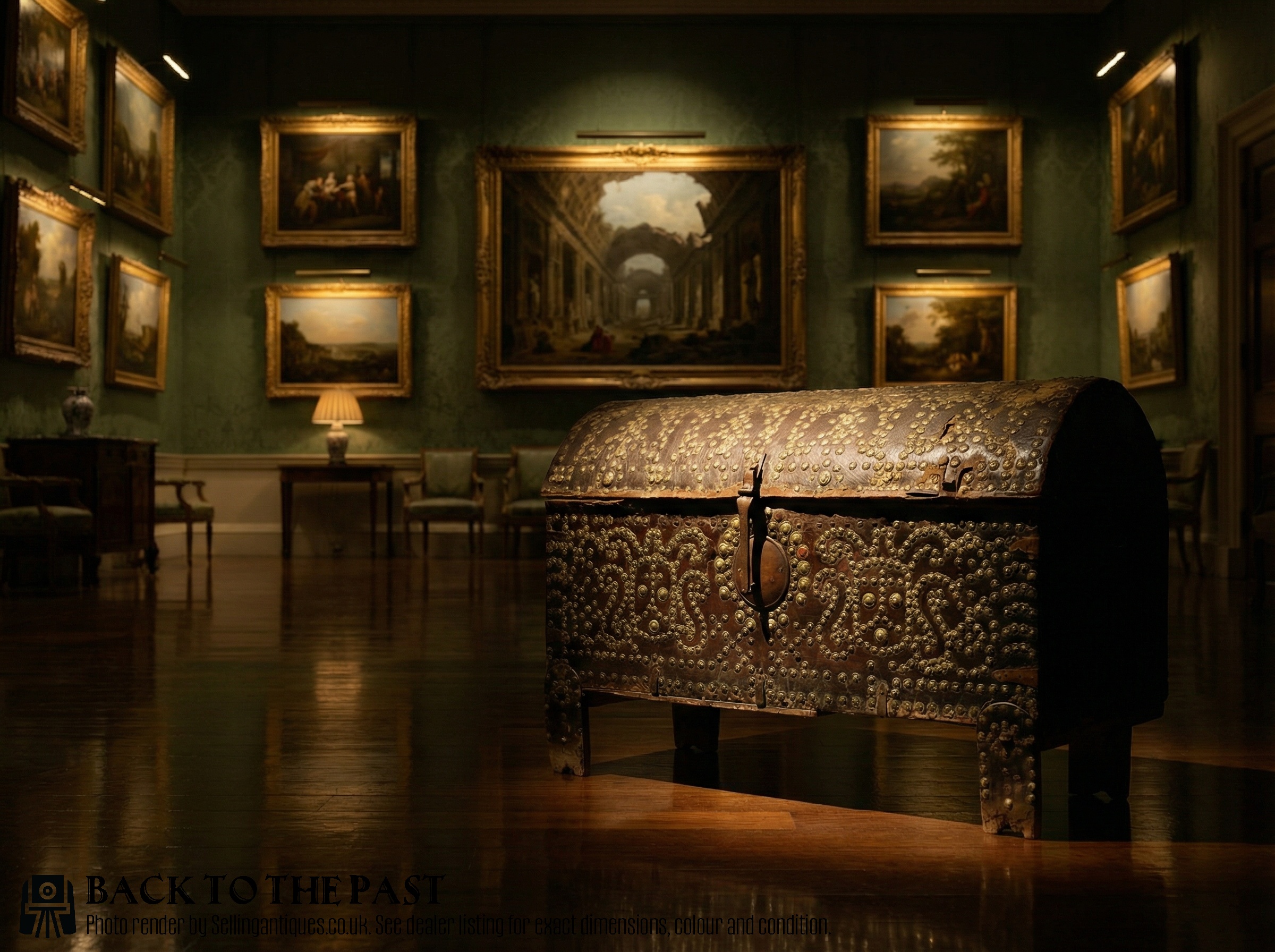
17th Century Brass Coffer
A 17th century brass coffer encompasses sturdy oak, leather clad, and exotic wood containers designed for secure storage and travel. Buyers searching this phrase encounter substantial timber frames reinforced with iron and brass elements, reflecting the period's need for durable containment.
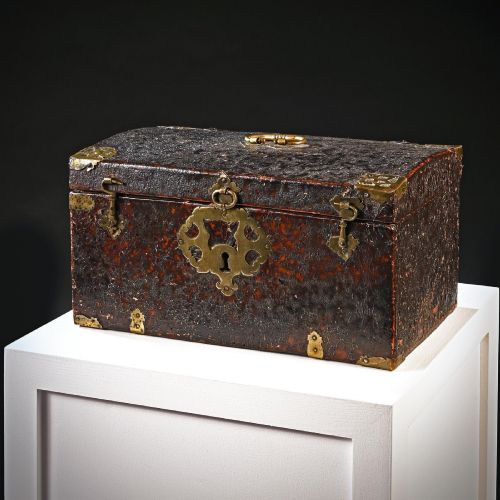
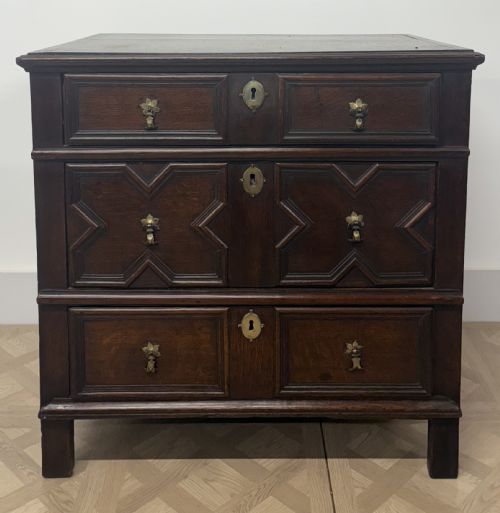
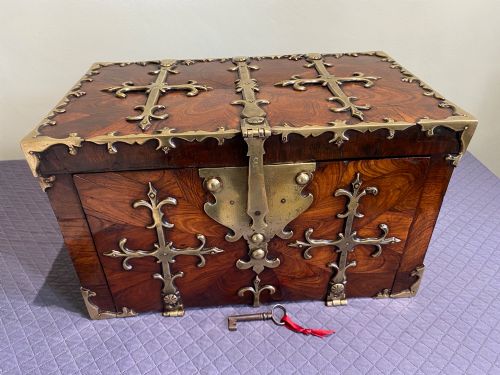
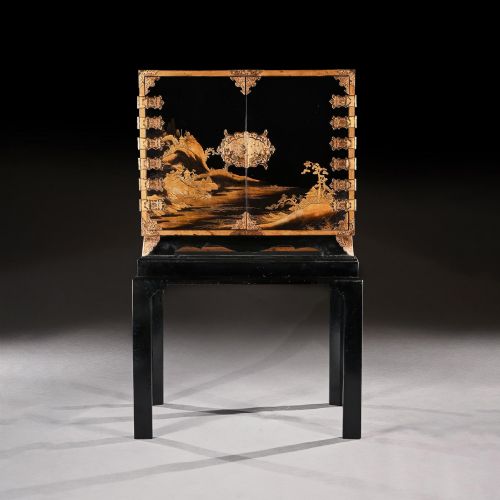
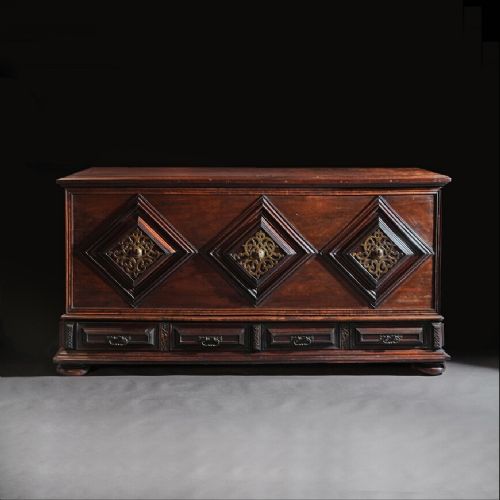
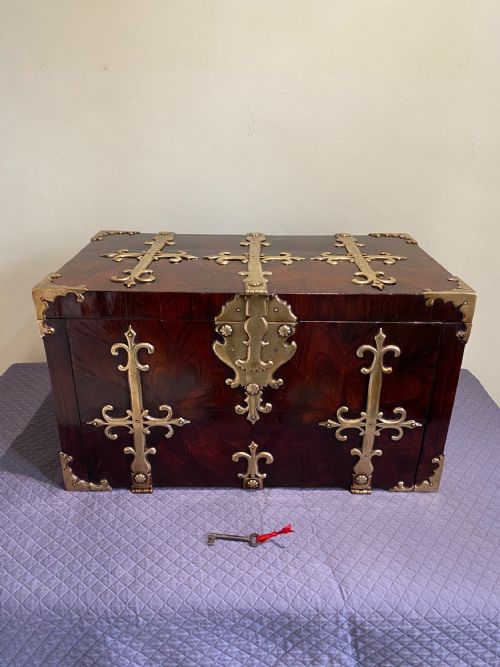
The selections span distinct regional workshops, showcasing Jacobean oak framing, Spanish and Portuguese leather work, and William and Mary kingwood veneering. These forms range from travelling boxes and strongboxes to larger chests and cabinets on stands.
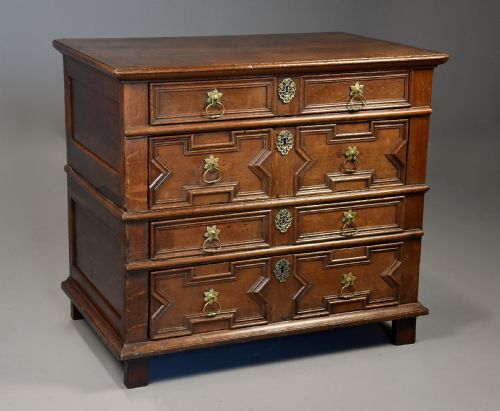
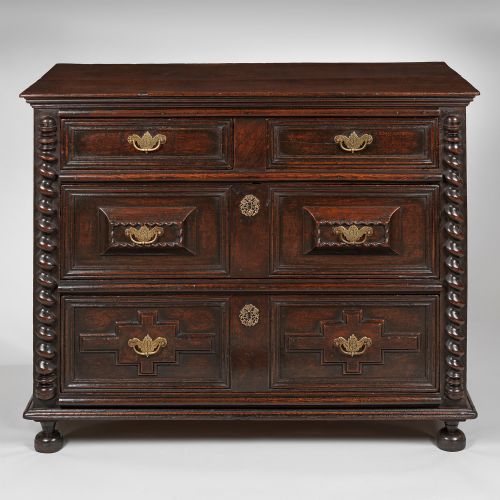
While many entries feature oak or leather construction, related forms such as chest of drawers and mule chests share the same seventeenth century vernacular. Each piece demonstrates the heavy timber construction and metal hardware characteristic of domestic storage from the era.
How they were made
Construction relies heavily on solid oak timbers, often joined with traditional framing and panel techniques, alongside secondary woods like walnut and mahogany. Artisans applied kingwood veneers on sophisticated pieces, while leather clad examples utilised animal hide stretched over a wooden core and secured with decorative nailhead details.
Metalwork forms a crucial structural and aesthetic component, utilising brass and iron for hinges, lockplates, corner brackets, and studwork. Chip carving and geometric mouldings add surface texture directly into the timber, supported by specialised surface finishes like lacquer on imported works.
17th Century Brass Coffer Retail Price Guide 2026
Typical asking prices for 17th century brass coffer among the pieces listed under this phrase on Sellingantiques today, from the lower quarter to the upper quarter. They describe what is for sale here now, not the wider market.
What varies in quality
The calibre of a 17th century brass coffer depends on the integrity of its primary materials and the sophistication of its construction. Pieces retaining their original brasses, locks, and structural hardware stand apart from those with replaced elements.
Surface preservation dictates distinction, where untouched patination on oak or well maintained leather and kingwood veneer reflects superior survival. The precision of geometric mouldings and chip carving further separates standard utility pieces from exceptional workshop output.
The 17th Century Brass Coffer Glossary
- Coffre Forte
- A strongbox or chest designed for securing valuables, typically reinforced with heavy metal bands and complex locking mechanisms. These portable safes were utilised by merchants and nobility.
- Geometric Mouldings
- Applied wooden trim arranged in repeated geometric patterns, frequently seen on the drawer fronts of seventeenth century furniture. This technique added visual depth to flat surfaces.
- Mule Chest
- A traditional storage chest featuring one or more drawers at the base beneath the main compartment. It bridges the transition between simple trunk storage and the modern chest of drawers.
- Nailhead Details
- Decorative brass or iron tacks driven in patterns along the edges of leather clad trunks and boxes. They served the dual purpose of securing the hide and providing visual ornamentation.
- Patina
- The surface sheen and mellowing developed by wood, leather, and metal through age, handling, and light exposure over centuries. It serves as an indicator of authenticity and original finish.
17th Century Brass Coffer: Frequently Asked Questions
What is a 17th century brass coffer used for?
These pieces served as secure containers for transporting and storing high value items such as documents, currency, and textiles. Their robust construction and heavy locks protected contents from theft and environmental damage during travel or in domestic settings.
Today, they function as striking focal points in period interiors while providing practical surface space and concealed storage. Collectors utilise them to house smaller collections or simply display them as sculptural examples of early joinery.
How do I identify a 17th century piece?
Authentic period pieces display traditional construction methods such as hand cut joinery, wrought iron hardware, and timber shrinkage consistent with age. Examination of the interior boards, tool marks, and fastener types helps confirm the period.
Stylistic markers like Jacobean geometric mouldings, Charles II framing, and William and Mary veneers align the piece with documented historical design phases. Comparing the hardware style and wood species to known examples provides further verification.
How do I care for leather clad chests?
Leather surfaces require stable humidity and protection from direct heat sources to prevent the hide from drying and cracking. Gentle dusting with a dry, soft cloth maintains the surface without introducing moisture that could harm the underlying wood.
Avoid modern chemical polishes or heavy oils unless advised by a specialist conservator. Allowing the natural patina to breathe preserves the historical integrity of the piece.
What woods were used in these coffers?
Oak forms the primary structural foundation for the majority of domestic British and European pieces from this era. Secondary woods like walnut, elm, and imported exotics such as kingwood and mahogany appear on high status cabinets and veneered furniture.
The choice of timber often reflects the regional origin of the workshop, from local British woodlands to continental European and colonial trade centres.