

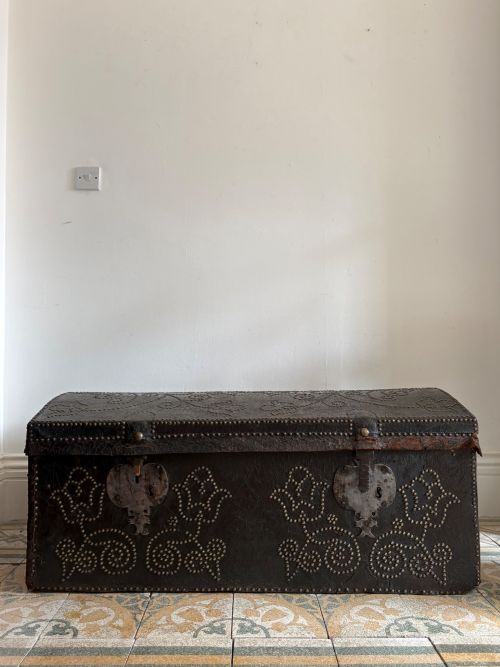


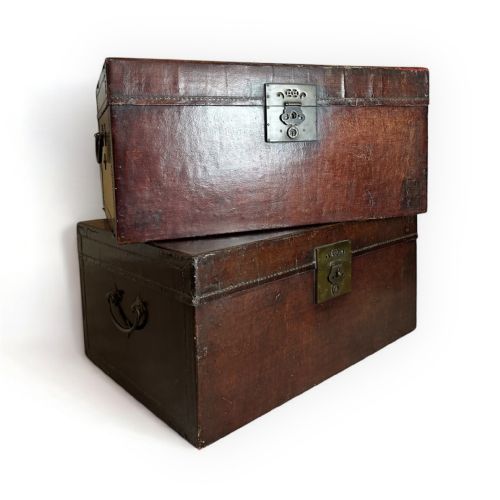


Dark Leather Storage Trunk
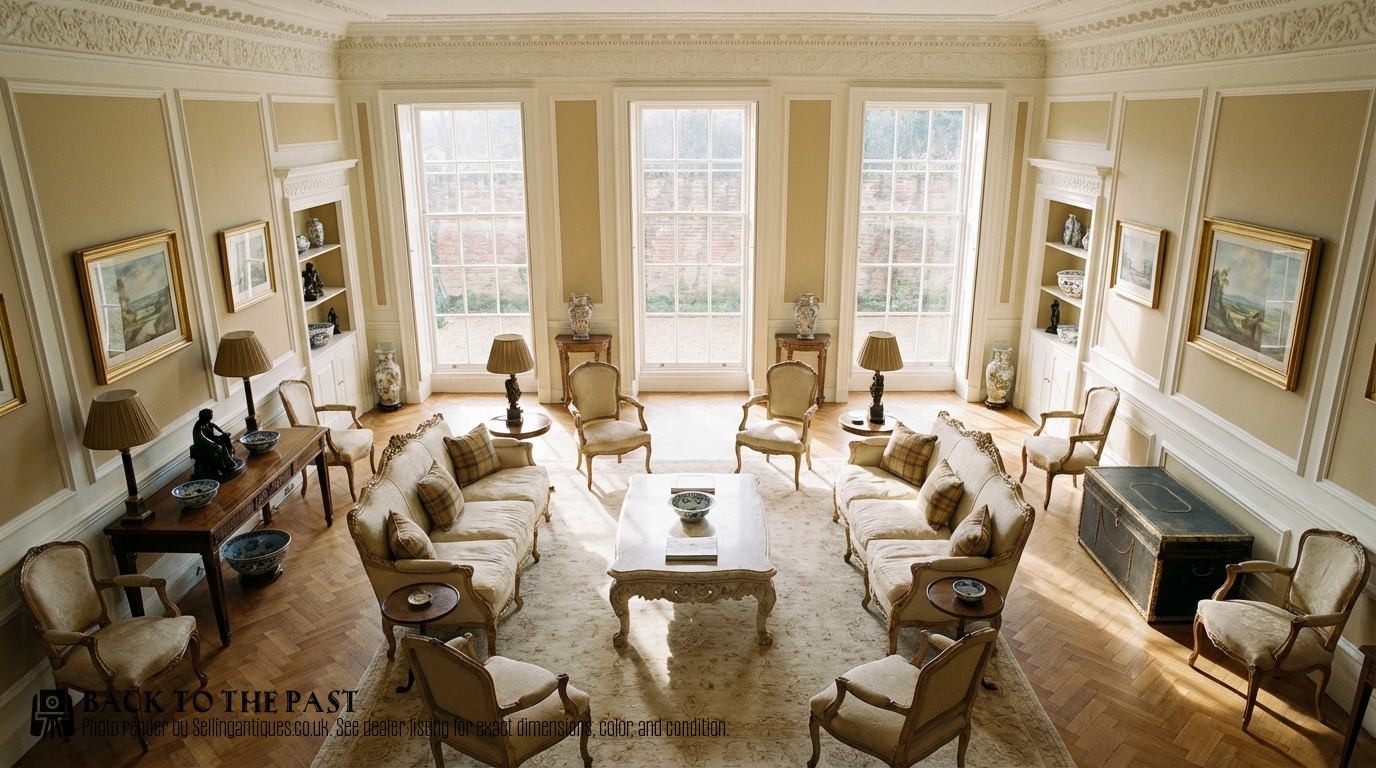
A dark leather storage trunk brings rich texture and practical ballast to a room, offering robust housing for blankets and linens.
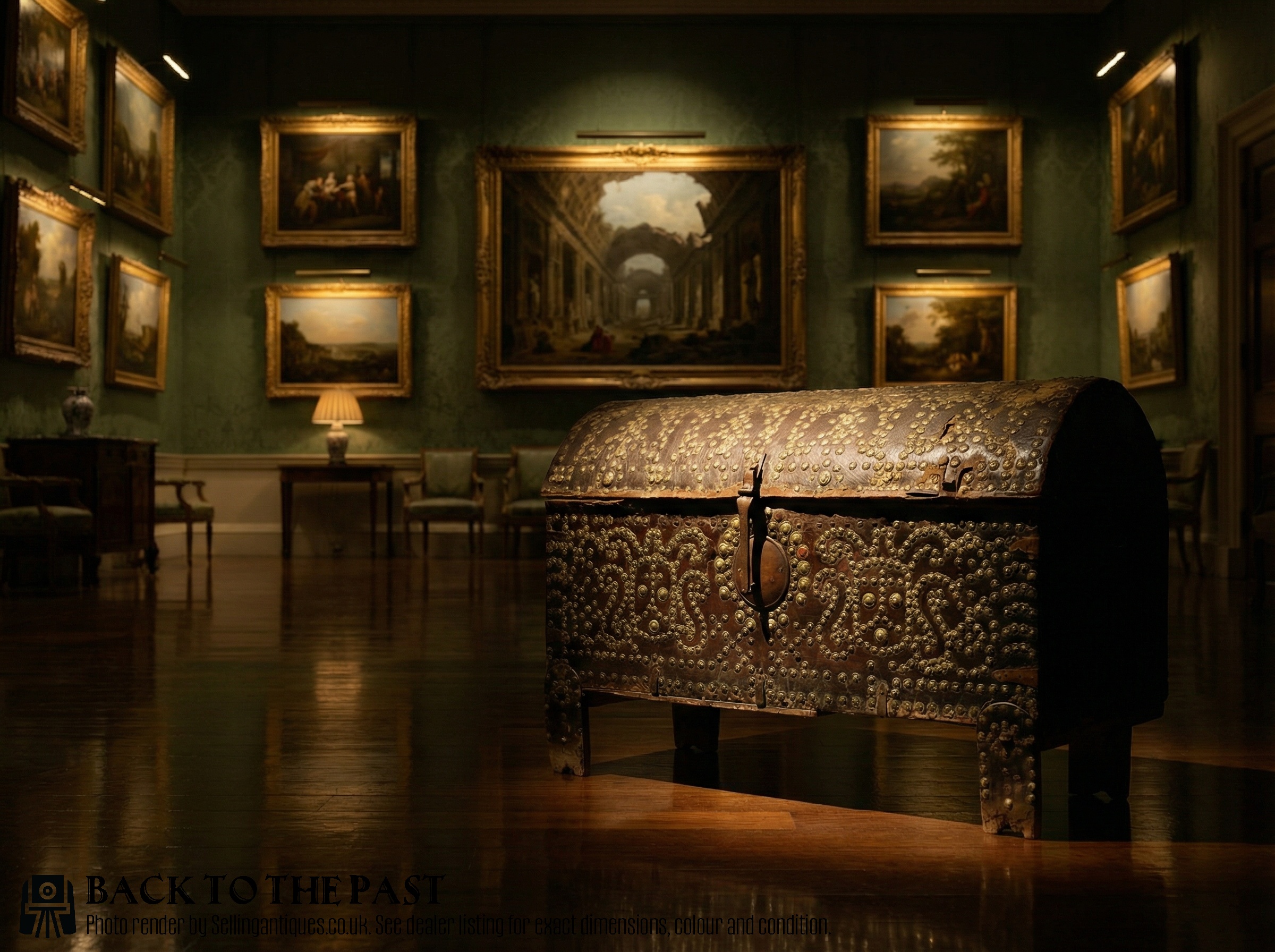
Dark Leather Storage Trunk
A dark leather storage trunk is a sturdy receptacle designed for travel or domestic storage, appearing across the seventeenth, eighteenth, nineteenth, and early twentieth centuries. These pieces cross various stylistic movements, encompassing Regency, Victorian, Gothic Revival, and Chinese export aesthetics.
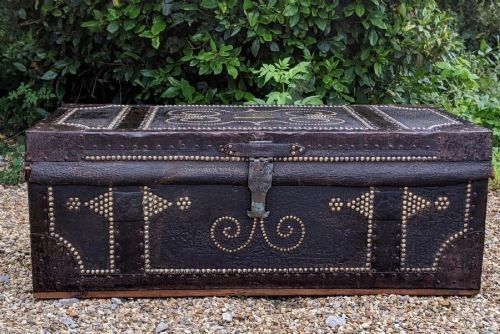
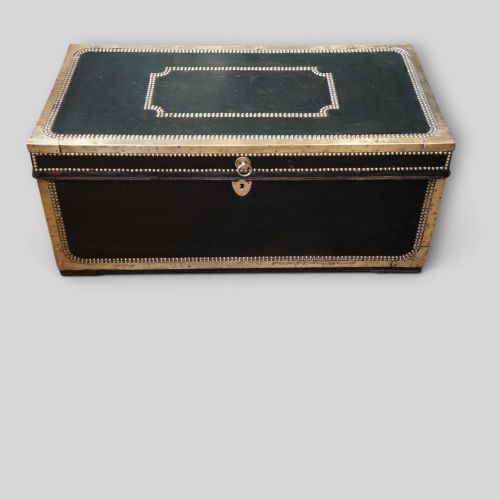
The most common examples encountered on this page date from the nineteenth century, including coaching trunks, campaign pieces, and heavy travel chests. Builders formed these items from wood, canvas, and iron before covering them in dark leather and reinforcing them with brass studs and metal bindings.
How they were made
Craftsmen built the core structure from timber such as oak or camphorwood, providing a rigid carcase to withstand the rigours of travel. They then applied outer layers of dark leather, black canvas, or hide, securing the skin with rows of heavy brass studs.
Makers reinforced the vulnerable corners and edges with iron or brass banding to prevent splitting during transit. Iron handles and brass carrying mounts were fitted to the sides, allowing luggage handlers to move the heavy chests.
Dark Leather Storage Trunk Retail Price Guide 2026
Typical asking prices for dark leather storage trunk among the pieces listed under this phrase on Sellingantiques today, from the lower quarter to the upper quarter. They describe what is for sale here now, not the wider market.
Listings feature periods spanning from the 17th century through to the Edwardian era, incorporating woods like oak and camphorwood alongside iron and brass.
What varies in quality
The standard of a dark leather storage trunk rests upon the integrity of its timber frame and the quality of its metal mounts. Superior pieces utilise dense hardwoods like oak or camphorwood beneath the hide, whereas lesser examples rely on lighter, more pliable woods.
Detailing differentiates the workshop execution, visible in the precision of the brass studding and the heft of the iron hardware. Maker attribution, such as work bearing the stamp of Samuel Pratt, elevates the standing of a piece within the market.
Samuel Pratt
The Dark Leather Storage Trunk Glossary
- Campaign trunk
- A portable chest constructed for military officers or travellers on the move, typically featuring recessed brass handles and reinforced corners. These items were built to withstand frequent dismantling and rough transport.
- Coaching trunk
- A heavy storage chest designed to be strapped to the roof or boot of a stagecoach. Such pieces prioritised weather resistance and thick leather reinforcement over delicate ornamentation.
- Camphorwood
- An aromatic timber prized for its insect-repellent properties, frequently used for the interior lining of nineteenth-century travel chests. This wood protects stored garments from moths and dampness.
- Dome top
- A curved lid construction that encourages rainwater to run off during outdoor transit. This profile is frequently seen on earlier seventeenth and eighteenth-century examples.
- Studded
- Decorated or reinforced with small, rounded metal nails driven through the leather into the wood beneath. The pattern of these studs often forms geometric designs across the surface.
Dark Leather Storage Trunk: Frequently Asked Questions
What were dark leather storage trunks used for?
These chests originally served as durable luggage for transporting clothing and personal belongings across land and sea during long journeys. Travellers loaded them onto coaches, ships, and trains, relying on the stout leather and metal bindings to protect contents from the elements.
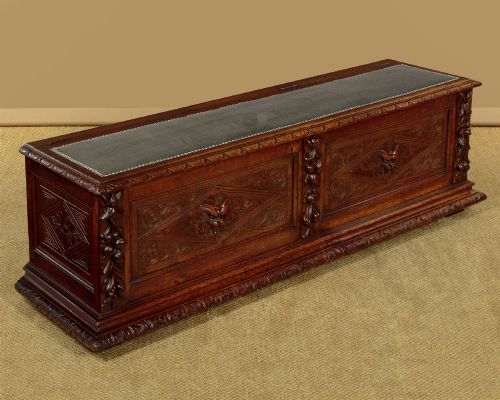
Today, they function primarily as static living room furniture or bedroom storage. Owners place them at the foot of beds or use them as coffee tables while concealing bulky blankets and pillows inside.
How do I date a leather trunk?
Dating relies on observing construction methods, hardware styles, and the materials used for the internal carcase. Seventeenth and eighteenth-century examples often feature dome tops and heavy oak frames, while nineteenth-century pieces display varied brass detailing and maker stamps.
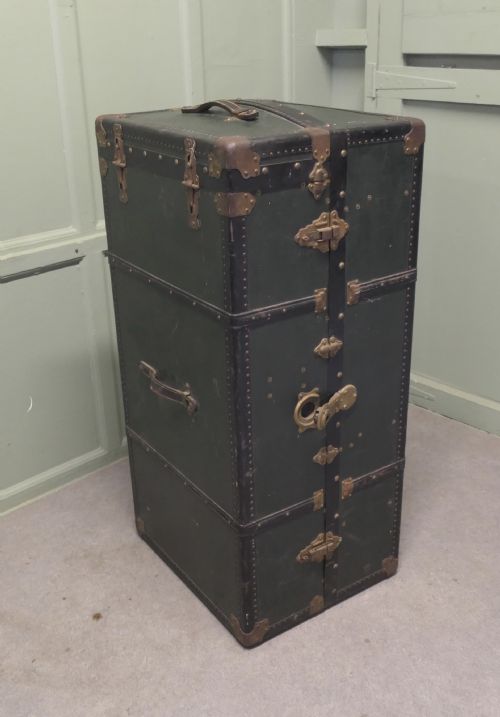
Later Victorian and Edwardian iterations incorporate canvas bindings, fitted internal compartments, and machine-made iron components. Examining the specific type of lock and keyhole plate also helps narrow down the decade of production.
Are these trunks waterproof?
While the exterior leather and canvas coverings offered protection against rain during nineteenth-century transit, they are not hermetically sealed today. The aged hide and timber joints can allow moisture through if left in damp environments.
Modern placement should avoid direct contact with damp walls or unsealed floors to preserve the internal wood and linings. Regular waxing helps maintain the moisture resistance of the historic leather.
How do I clean old leather?
Maintenance requires gentle removal of surface dust using a soft brush or a dry cloth. Avoid soaking the hide with water, as aged leather absorbs moisture quickly and can warp or rot the underlying stitching.
Applying a specialist leather dressing or neutral wax helps nourish the dry skin and prevents further cracking. Test any product on a small, hidden area beneath the trunk before treating the entire surface.