
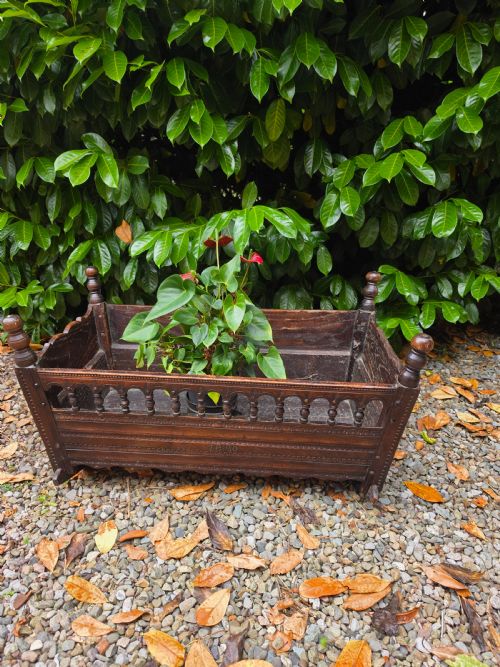
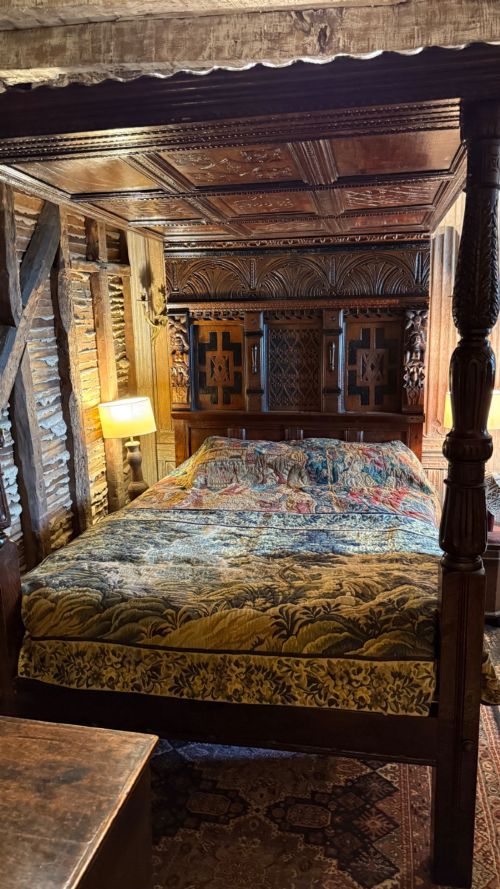
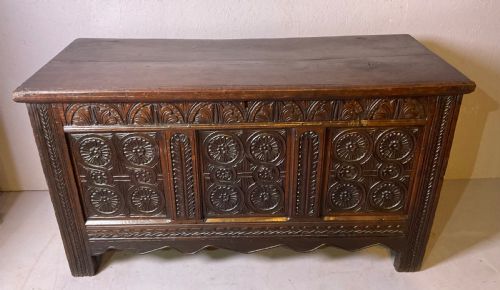
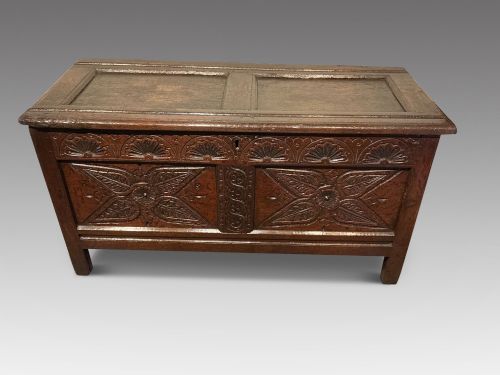



17th Century Bed
A genuine 17th century bed brings the weight of centuries into a room, offering sleeping quarters built from sturdy oak and framed by grand testers.
17th Century Bed
When searching for a 17th century bed, buyers encounter substantial oak frames designed for sleep, ranging from monumental four-poster tester beds to rarer cupboard beds, day beds, and cradles. The selection also heavily encompasses storage forms from the same era, including coffers, blanket chests, and mule chests, which share the materials and joinery of contemporary sleeping furniture.
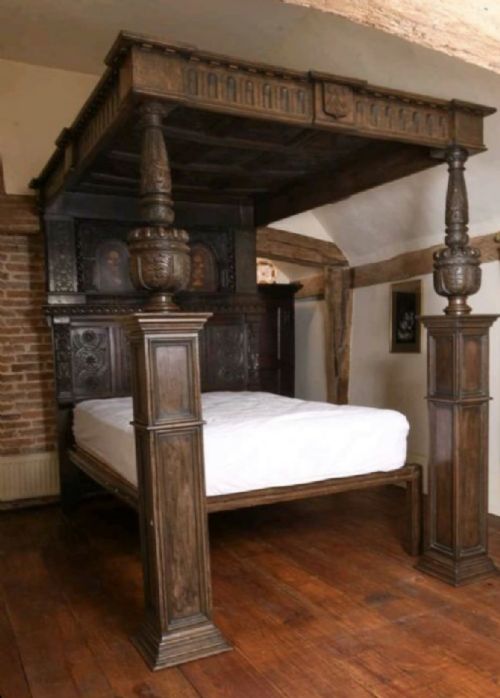
The version most commonly met on this page is the four-poster tester bed, often constructed from English oak, alongside period-appropriate revival pieces dating from later centuries built in the Jacobean style. These heavy timber constructions reflect domestic life across periods spanning the reign of Charles I, the Commonwealth, and Charles II.
Alongside major sleeping furniture, the selection includes related domestic pieces such as joint stools, rocking cribs, and day beds fashioned from walnut, fruitwood, and ebonised wood. Regional variations emerge clearly in items like Yorkshire and North Country coffers, demonstrating local woodworking traditions within the broader seventeenth-century vernacular.
How they were made
Carpenters of the era built these beds and chests predominantly from solid oak, utilising traditional frame and panel construction to accommodate the natural expansion and contraction of timber. Joinery relied heavily on mortise and tenon joints secured with wooden pegs rather than metal fixings, ensuring structural rigidity across centuries of use.
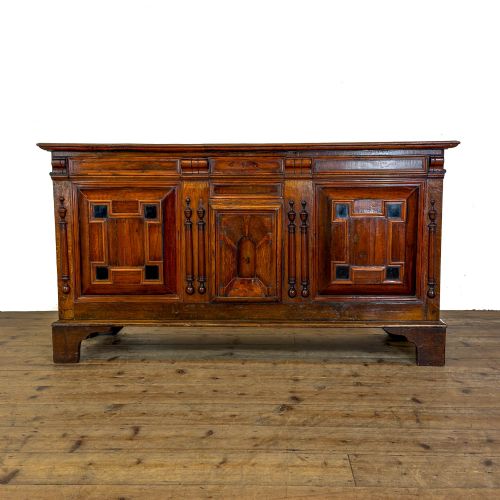
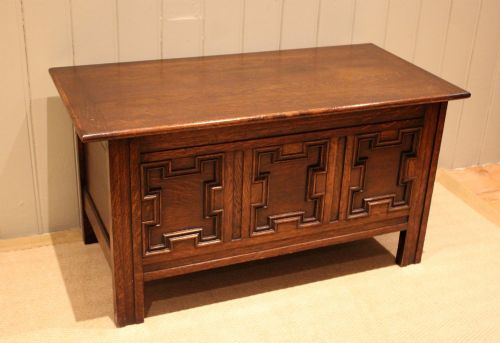
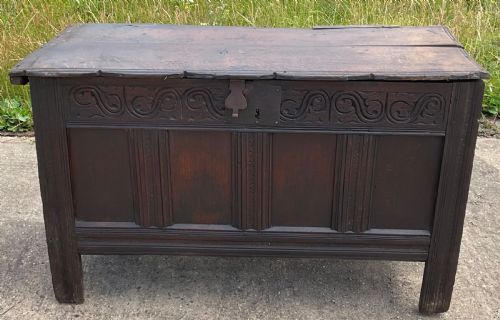
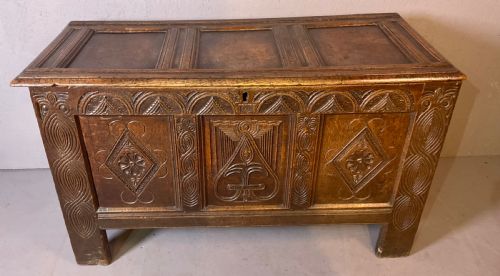
Decoration was achieved through hand-carving directly into the wood, employing geometric guilloche patterns, scrolling foliage, and arcaded panels. Selected pieces integrate contrasting materials such as fruitwood inlay, brass fittings, wrought iron hardware, and marquetry work to add visual depth to the dense timber surfaces.
Listings feature oak, fruitwood, and walnut pieces alongside iron and brass hardware, spanning the 17th century through to 1930s revival furniture.
What varies in quality
Quality in these early pieces rests upon the crispness and depth of the hand-carved ornamentation, where deeply cut, spirited motifs indicate the hand of a confident artisan rather than a hurried workshop. The integrity of the structural timber, the retention of original panels, and the absence of extensive modern replacement wood further distinguish superior examples.
The sophistication of the timber selection and joinery defines the upper tier of the range, visible in carefully matched grain patterns and harmonious proportions across large tester frames and mule chests. Pieces that preserve their early surface patination without aggressive stripping carry greater historical coherence than those altered by modern interventions.
The 17th Century Bed Glossary
- Coffer
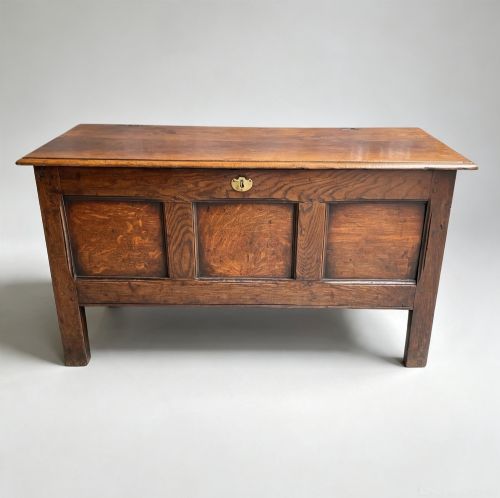
- A heavy wooden chest with a hinged lid, used historically for storing valuables, linens, and documents. These pieces often feature carved fronts characteristic of seventeenth-century joinery.
- Mule chest
- A storage chest fitted with one or more drawers in the base beneath the main compartment. This form developed during the seventeenth century as an evolution from the standard blanket chest.
- Joint stool
- A sturdy, low wooden stool constructed with pegged mortise and tenon joints by specialist joiners. They frequently served as flexible seating or bedside tables in early households.
- Marquetry
- The decorative craft of applying thin veneers of wood and other materials to form intricate pictorial patterns on a surface. This technique appears on select chests and panels.
17th Century Bed: Frequently Asked Questions
How do I fit a modern mattress into an antique bed?
Seventeenth-century bed frames were constructed to accommodate historical dimensions rather than standardised modern mattress sizes. Buyers often commission bespoke mattresses tailored to fit the exact interior measurements between the posts.
Modern wooden slats or supportive bases can usually be integrated discreetly within the historic rails to ensure structural safety and sleeping comfort without altering the antique frame.
Were these tester beds used for warmth?
The enclosed design of a four-poster tester bed served a practical purpose in drafty early homes by trapping body heat and blocking cold air currents. Heavy curtains and testers provided a micro-climate for sleeping during cold winter months.
This architectural enclosure also offered a degree of privacy in busy households where multiple occupants shared bedchambers.
How do I distinguish genuine seventeenth-century oak from revival pieces?
Authentication relies on examining tool marks, timber shrinkage, and the nature of the joinery used throughout the framework. Hand-riven oak displays characteristic surface undulations and peg holes that differ markedly from machine-sawn revival furniture.
Revival pieces from the nineteenth and twentieth centuries often exhibit uniform wear patterns and machine-cut elements that reveal a later manufacturing date.
What is the difference between a coffer and a mule chest?
A coffer is a traditional storage chest accessed exclusively from a single lid on the top, requiring items on the bottom to be removed to reach lower layers. This represents the older, simpler form of household storage.
A mule chest incorporates one or more drawers beneath the main lift-top compartment, providing easier access to stored textiles and marking a transitional step toward modern drawer storage.