




15ct Yellow Gold Pin
These pieces of 15ct yellow gold pin jewellery span the Victorian, Edwardian, and Art Deco periods, bringing together delicate stones and fine metalwork.
15ct Yellow Gold Pin
When you search for 15ct yellow gold pin items, you encounter a variety of brooches, pendant brooches, and bar brooches spanning the late nineteenth century through to the early twentieth century. The selection includes Victorian, Edwardian, and Art Deco pieces, alongside Arts and Crafts designs.
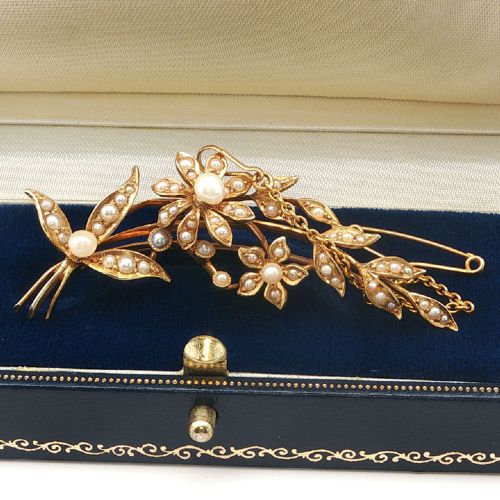
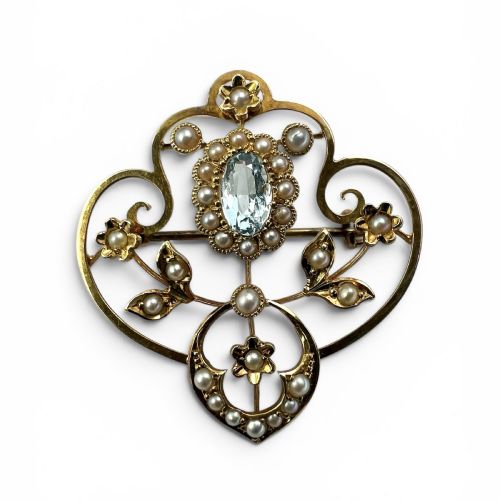
You are most likely to meet bar brooches, floral sprays, and symbolic motifs such as hearts, crescents, swallows, and horseshoes. These items often function as both traditional brooches and pendant brooches, offering versatile ways to wear antique jewellery.
The materials paired with the gold include seed pearls, diamonds, turquoise, aquamarines, rubies, and opals. Natural pearls and multi-gemstone arrangements appear frequently across the Victorian and Edwardian examples.
How they were made
The foundation of these pieces is 15ct yellow gold, a specific alloy standard used extensively in British and European jewellery before the adoption of 9ct and 18ct standards in later decades. Goldsmiths shaped this metal into slender bar mounts, hollow stampings for floral sprays, and intricate wirework frames.
Gemstones such as rose-cut diamonds, turquoise, and aquamarines were hand-set using traditional claw, bezel, and pave techniques. Seed pearls were typically threaded on fine wire or glued and pegged onto gold stems within floral and winged heart compositions.
15ct Yellow Gold Pin Retail Price Guide 2026
Typical asking prices for 15ct yellow gold pin among the pieces listed under this phrase on Sellingantiques today, from the lower quarter to the upper quarter. They describe what is for sale here now, not the wider market.
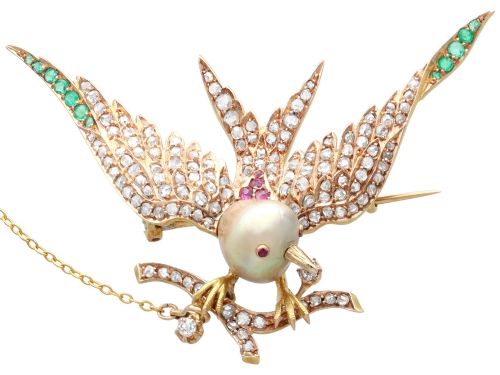
Swallow motifs flutter across the centuries, carrying sentimental messages tucked securely behind Victorian pin stems.
What varies in quality
The distinction between standard commercial pieces and the finest examples rests on the choice and matching of gemstones, such as natural pearls and well-cut diamonds. Maker attribution, visible in specific Arts and Crafts workshop marks, elevates the standing of a piece.
The complexity of the metalwork also defines the upper range, where hand-chased details, enamel work, and multi-stone configurations demonstrate superior goldsmithing skill. Simpler bar brooches with single stones sit at the more accessible end of the range.
Murrle Bennet and Co
The 15ct Yellow Gold Pin Glossary
- 15ct Gold
- An alloy containing fifteen parts pure gold out of twenty-four, commonly utilised in British antique jewellery. This standard provides a distinct warm yellow tone.
- Bar Brooch
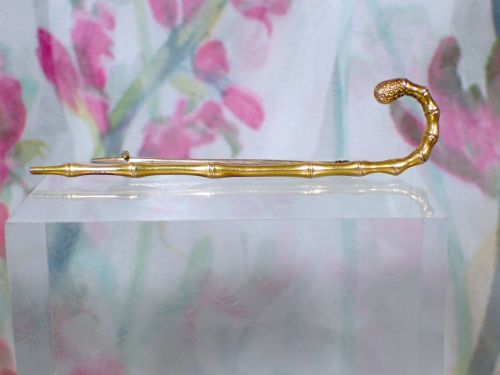
- A horizontal pin featuring a narrow metal bar as the primary structural element. These often display central gemstone clusters or decorative motifs.
- Seed Pearl
- A very small natural or cultured pearl, often half-drilled and mounted on pegs. They form delicate floral sprays and crescent moons.
- Pendant Brooch
- A dual-purpose piece fitted with both a pin mechanism and a hidden loop. This allows the item to be worn on a chain as a pendant or pinned directly to clothing.
- Rose-Cut Diamond
- An antique diamond cut featuring a flat base and a domed crown with triangular facets. This cut predates the modern brilliant cut.
15ct Yellow Gold Pin: Frequently Asked Questions
What periods do these pins come from?
The pieces span the Victorian, Edwardian, and Art Deco eras, alongside late nineteenth-century Arts and Crafts examples. Most items date from roughly eighteen ninety to nineteen thirty.
This timeframe encompasses distinct stylistic shifts, moving from ornate symbolic Victorian motifs to lighter Edwardian pearl work and geometric Art Deco designs.
How were these brooches worn originally?
Victorian and Edwardian ladies wore them pinned to lace collars, lapels, and cravats, or secured at the centre of necklines. Many double collar pins linked two points of a garment together with small chains.
Some examples also served as pendants when suspended from gold chains, offering dual utility for formal attire.
How do I care for antique gold pins?
Store them individually in soft pouches to prevent the delicate gold pins from bending. Keep them away from harsh chemical cleaners that can damage seed pearls and turquoise.
Gentle cleaning with a soft microfibre cloth preserves the antique finish without harming the softer gemstones or natural pearls.