




A 2026 Guide by Sellingantiques

C. 1850 Wonderful Dutch Delft Faience Polychrome Toby Jug - Pseudo Mark Apk, 19th Century
Priced at £339 from Artsonline
Earthenware potters in Staffordshire developed the form around the 1760s.
The traditional figure is a stout man seated on a chair, wearing eighteenth-century clothing.
Antique Toby Jugs take their name from Toby Philpot, a notorious drinker featured in an old English folk song.
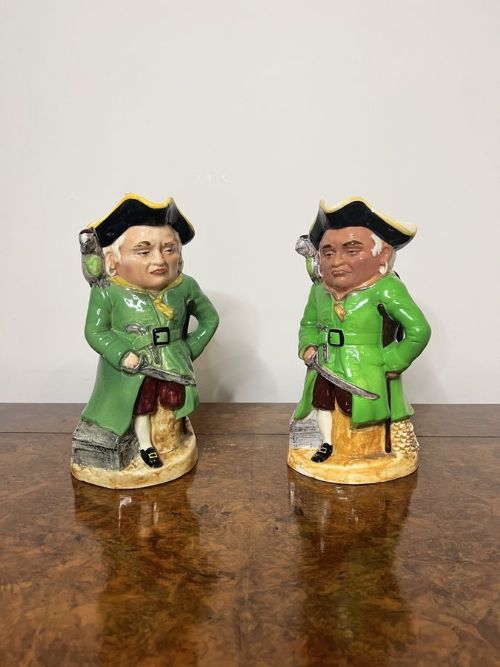
Look for a tricorn hat. The corners form the pouring spout and provide a wide rim for filling.
Production expanded across Britain throughout the nineteenth century, reflecting changing fashions and regional clay types.
Ralph Wood of Burslem worked between 1750 and 1772. His factory produced some of the earliest recorded examples.
Thomas Whieldon made them during the mid-eighteenth century. His pieces often show a distinctive tortoiseshell glaze using manganese and copper oxides.
Enoch Wood continued production into the early nineteenth century, introducing new character models and brighter enamel finishes.

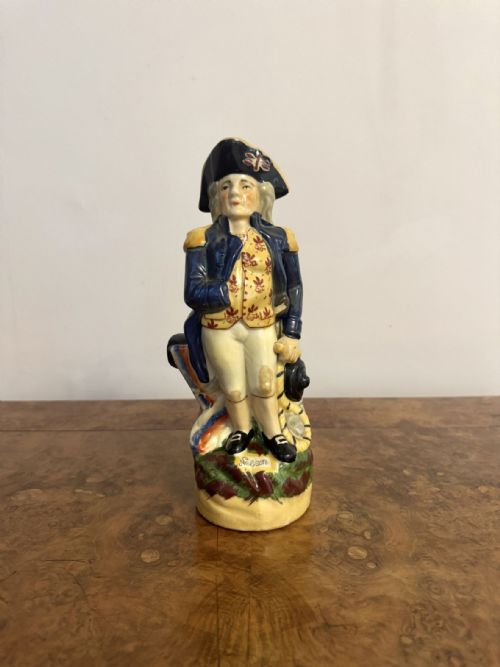
Quality Antique Victorian Staffordshire Toby Jug of Mr Snuff, 1860
Priced at £325 from Unique Antiques by Emma Jade
The 2026 retail price guide for Antique Toby Jugs is drawn from a proprietary archive of over 1.1 million retail prices indexed by Sellingantiques since 2003. This guide relies exclusively on their own internal data; no external sources or auction records are used.
Analysing nearly 25 years of UK antique market history alongside current retail values, the data indicates that typical UK retail prices for Antique Toby Jugs range between £100 and £500. Entry-level prices generally fall under £100 and premium examples upwards of £500.
The hollow body holds the liquid. A curved handle attaches to the back of the figure's chair or shoulders.
Check the accessories. The seated figure usually balances a foaming jug of ale on one knee and rests a pipe beside the other.
They're often missing the removable lid that forms the crown of the hat. These get separated from the jug over time.
Factories cast the main body in two-part plaster moulds. You'll sometimes spot the faint seam line running down the sides.
Arms and pipes were cast separately. Workers attached these elements using liquid clay slip before the first firing.
Decorators painted the earlier underglaze colours quite broadly. Later enamel work shows tighter brushwork around the face and clothing details.
"Some feature an interior ceramic frog attached to the bottom. It surprises the drinker as they finish their ale."
"Potters occasionally moulded female versions. Martha Gunn and Gin Woman are two of the rarer historical forms that turn up."
"Early examples sometimes function as measuring jugs. The internal volume matches regional standards for a pint or quart of ale."
Based on almost 25 years of Sellingantiques UK antique market data, Antique Toby Jugs appeared 237 times (out of 1,100,000 antiques) which gives it a rarity score of 95/100.
This score measures scarcity within the Sellingantiques archive only and is not a survey of the entire antiques market, so these statistics may not be indicative of the general availability of Antique Toby Jugs elsewhere.
The removable lid forms the crown of the tricorn hat. It keeps the ale free from tavern dust and insects while the jug sits on a table.
Pouring a drink means removing it first. The design makes it easy to misplace, which explains why they're often missing their original covers today.
Pale colours often indicate early underglaze oxides rather than dirt. The firing process makes these metallic hues naturally run and mottle across the ceramic body.
Dust it with a soft dry brush. If you need to wash it, use warm water and a mild dish soap.
Don't soak earthenware for long periods. The unglazed base can absorb water, which risks forcing the surface glaze to lift as it dries out again.
Potters used overglaze enamels to bring out the moulded character.
The decorators applied these details by hand. Each piece looks slightly different depending on who held the brush.
A branch handle is a common stylistic choice rather than a strict regional marker. Many Staffordshire potters adopted naturalistic details as tastes changed in the nineteenth century.
The twisted form offers a better grip for a heavy vessel. It also ties into the rustic tavern theme that made these pieces popular.
Please note: This Antique Toby Jugs guide and its associated pricing data are provided for general informational purposes only. It does not constitute formal financial, investment, or appraisal advice and should not be relied upon as the sole basis for any commercial activity, purchasing, or sales decisions. Sellingantiques.co.uk accepts no liability for any actions taken in reliance on this information. Always consult with a qualified professional or independent appraiser.
