

A 2026 Guide by Sellingantiques
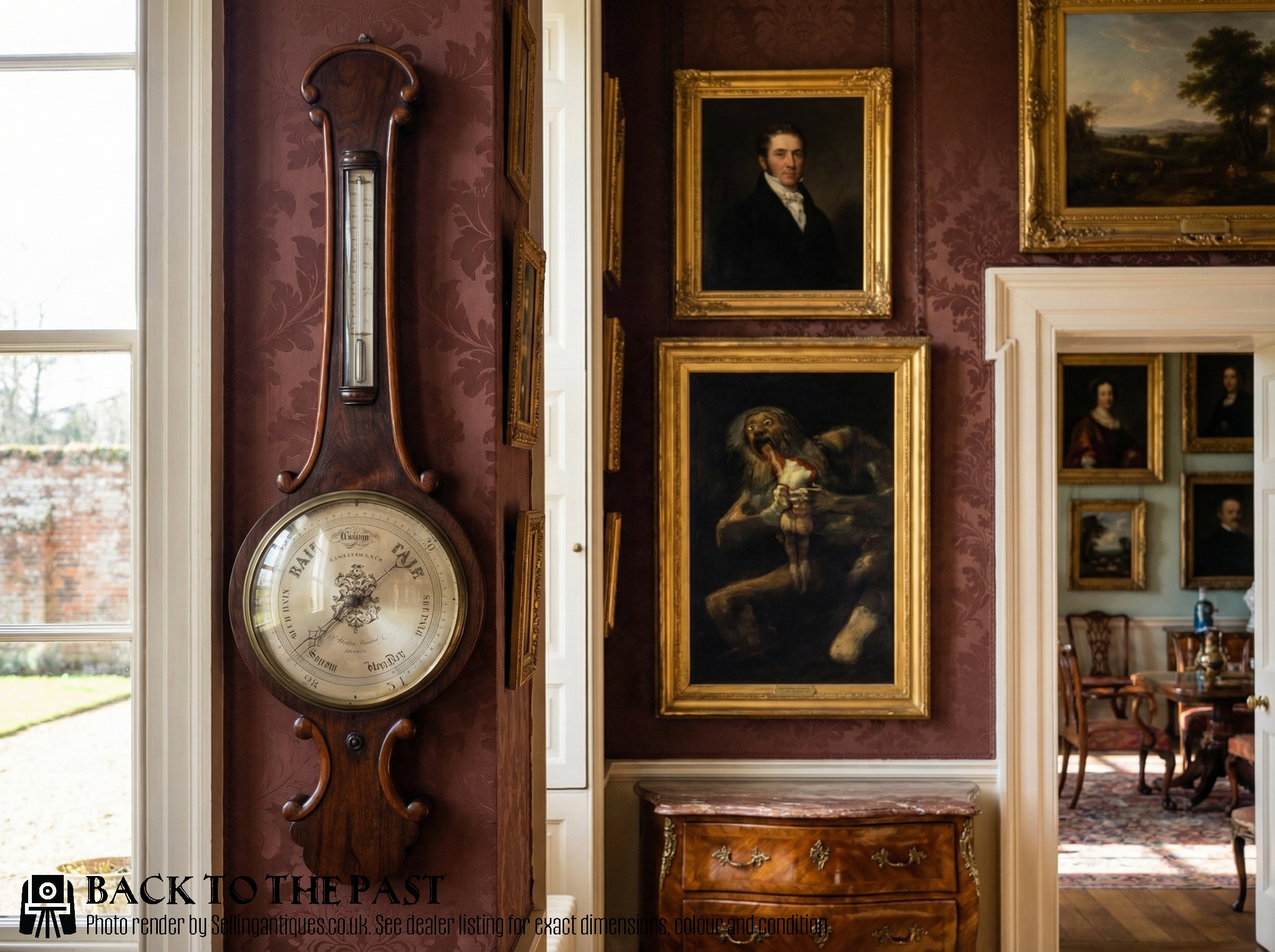
C19th Rosewood Mercury Barometer by Joseph Somalvico & Co, 19th Century
Priced at £895 from Fernyhough Antiques Ltd
Invented in the seventeenth century, the design adapted the standard stick mercury tube.
Italian immigrants brought the trade to Britain. They settled heavily in London during the late Georgian period and came to dominate the production of antique wheel barometers.
Look at the stylistic shifts over time. Earlier architectural pediments gradually gave way to the classic rounded tops and scroll designs that most people recognise today.
Many households relied on them to forecast daily rain or shine.
Provincial towns eventually had a maker or retailer. Often the names engraved on the dials belong to jewellers who sold them rather than the actual craftsmen.
Charles Gatty worked in Reading during the late eighteenth century. He produced well-regarded early examples with architectural pediments.
Negretti & Zambra formed in the mid-nineteenth century in London. They made thousands of domestic weather instruments for a growing middle class.
Notice the Italian names. Pastorelli and Torre are frequently seen on standard Victorian dials.
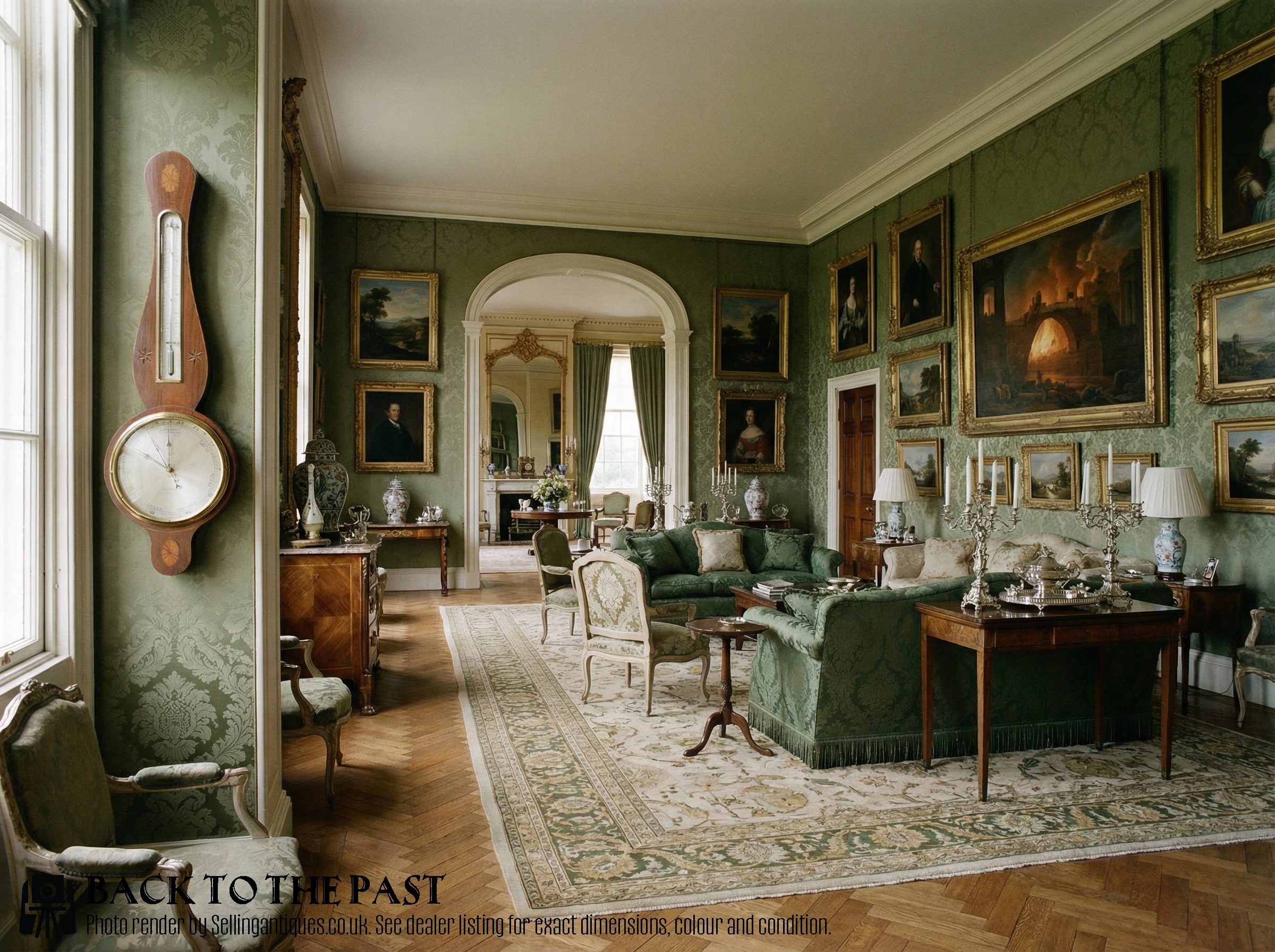
Early Wheel Barometer - Bassi, Georgian
Priced at £1,550 from Its About Time
The 2026 retail price guide for Antique Wheel Barometers is drawn from a proprietary archive of over 1.1 million retail prices indexed by Sellingantiques since 2003. This guide relies exclusively on their own internal data; no external sources or auction records are used.
Analysing nearly 25 years of UK antique market history alongside current retail values, the data indicates that typical UK retail prices for Antique Wheel Barometers range between £600 and £2,300. Entry-level prices generally fall under £600 and premium examples upwards of £2,300.
A large circular dial dominates the lower half. This displays the main pressure readings alongside typical weather states like 'Fair' or 'Change'.
Check the slender neck. A silvered thermometer usually sits behind a protective glass panel here.
Some elaborate antique wheel barometers include extra dials. A hygrometer at the very top and a spirit level at the base are common additions on the larger models.
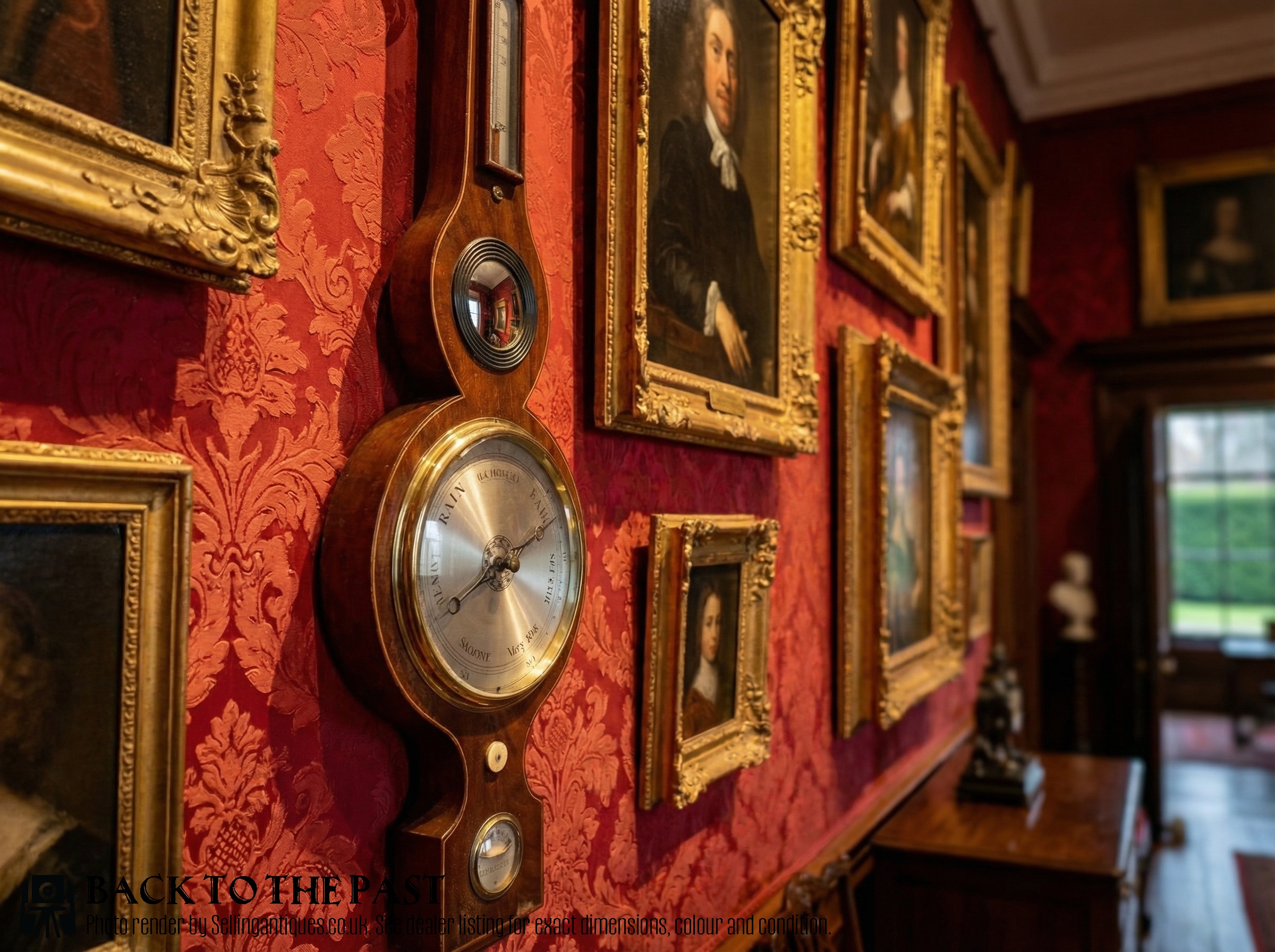
Inlaid Mahogany Barometer by J Groce, York, 19th Century
Priced at £390 from Eclectic Antiques
Veneer application required significant skill. Cabinetmakers applied thin sheets of mahogany over a pine or oak carcase to achieve those complex curved shapes.
Inspect the edges. Boxwood or ebony lines were frequently inlaid by hand to frame the dials.
Engraving the brass plates was a specialist trade. Craftsmen cut the letters with burins before applying a paste of silver chloride to finish the surface.
"The internal pulley system uses a tiny glass weight on a thread to counterbalance the main float."
"Open the back door. Most cases feature this hidden panel to provide easy access to the delicate glass tube for transport and servicing."
"Polish applied by hand. The wood cases were often French polished to a high gloss, protecting the delicate veneers while enhancing the grain."
Based on almost 25 years of Sellingantiques UK antique market data, Antique Wheel Barometers appeared 330 times (out of 1,100,000 antiques) which gives it a rarity score of 94/100.
This score measures scarcity within the Sellingantiques archive only and is not a survey of the entire antiques market, so these statistics may not be indicative of the general availability of Antique Wheel Barometers elsewhere.
Always move them upright. The mercury inside the glass tube will spill or create air bubbles if the case is tilted or laid flat.
Some dealers use a cork to plug the open end of the siphon tube before moving. This requires opening the back panel and handling the glass carefully.
If air does get into the column, a specialist will need to extract it. It pays to keep the instrument vertical at all times.
Restringing the pulley is a standard repair. The mechanism relies on a thin silk or nylon thread connecting the float, the central arbor and a counterweight.
A horologist or barometer specialist can open the front and reattach a new line. They will also recalibrate the hand to ensure it matches current atmospheric pressure.
You move the brass setting hand manually to align with the main steel pointer.
The next day, the gap between the two hands shows if the pressure has risen or fallen.
Wiping a tarnished dial with modern metal polish will strip the remaining silvering. The silver layer is very thin and fragile.
Specialists restore these by cleaning the brass plate, applying a traditional silver chloride paste and re-waxing the engraved letters. This brings back the original contrast without damaging the antique wheel barometer.
Please note: This Antique Wheel Barometers guide and its associated pricing data are provided for general informational purposes only. It does not constitute formal financial, investment, or appraisal advice and should not be relied upon as the sole basis for any commercial activity, purchasing, or sales decisions. Sellingantiques.co.uk accepts no liability for any actions taken in reliance on this information. Always consult with a qualified professional or independent appraiser.
