


A 2026 Guide by Sellingantiques
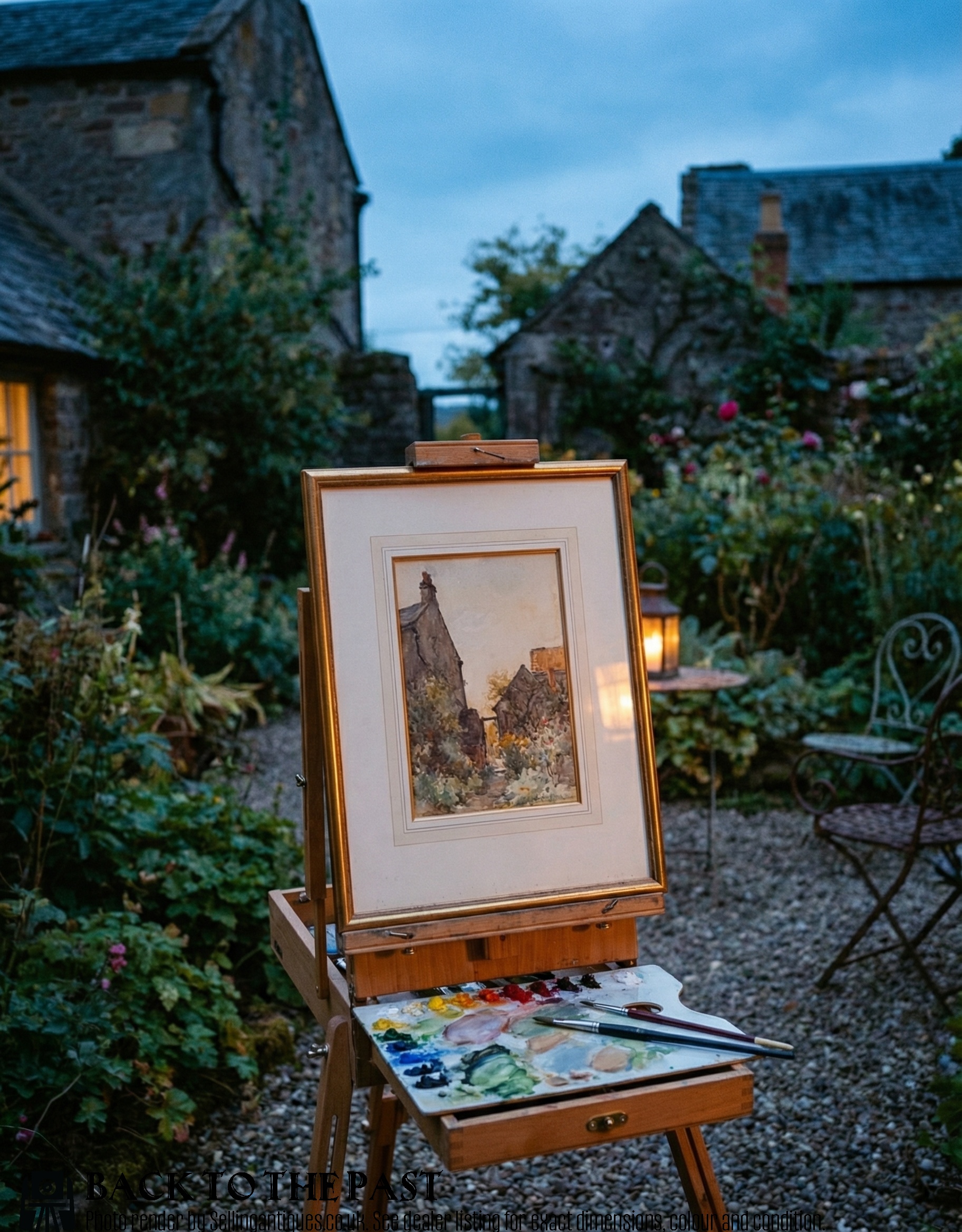
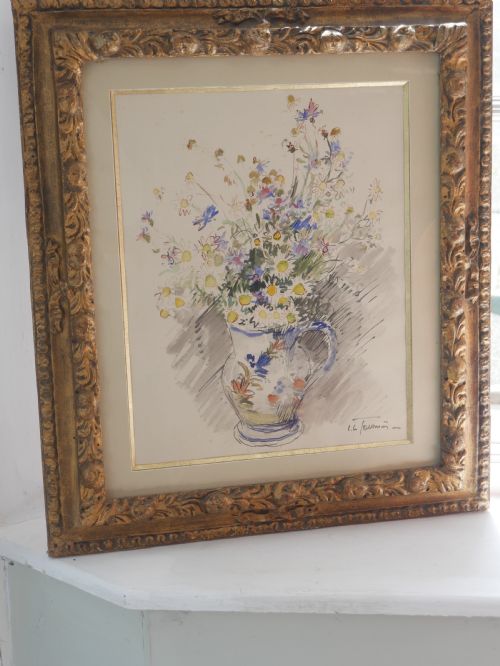
Owen Bowen (1873–1967), “Cottage Garden”, Watercolour, 1922, 1940
Priced at £545 from Marlborough Antiques & Interiors
They started as tinted drawings. Artists used monochrome washes over ink lines to map out estates or record antiquities.
The late eighteenth century changed things. Watercolour became an art form in its own right, moving away from simple topographical records.
Look at the founding of the Society of Painters in Water Colours in 1804. It gave these artists a dedicated exhibition space away from oil painters.
Sketching tours across Britain grew popular. Painters took portable kits to the Lake District and Wales to capture rugged scenery on the spot.
Paul Sandby worked in the eighteenth century. He pushed the medium beyond simple map-making into complex landscape scenes.
J.M.W. Turner used wet-in-wet techniques. He scraped and scratched the paper to build texture in his atmospheric marine and landscape works.
Thomas Girtin is another major name from the same period. He abandoned the traditional monochrome underpainting to lay local colour directly onto the paper.

Robert Winchester Fraser (1848-1906): Watercolour Painting “Eyot, Near Marlow, 1891”, 1890
Priced at £245 from Quiet Street Antiques of Bath
The 2026 retail price guide for Antique Watercolours is drawn from a proprietary archive of over 1.1 million retail prices indexed by Sellingantiques since 2003. This guide relies exclusively on their own internal data; no external sources or auction records are used.
Analysing nearly 25 years of UK antique market history alongside current retail values, the data indicates that typical UK retail prices for Antique Watercolours range between £200 and £1,500. Entry-level prices generally fall under £200 and premium examples upwards of £1,500.
Transparency is the hallmark. The white of the paper reflects light back through the pigment rather than relying on applied white paint.
You'll spot pencil or ink outlines beneath the colour in earlier examples.
Granulation appears where heavier pigment particles settle in the hollows of rough paper, creating a mottled texture.
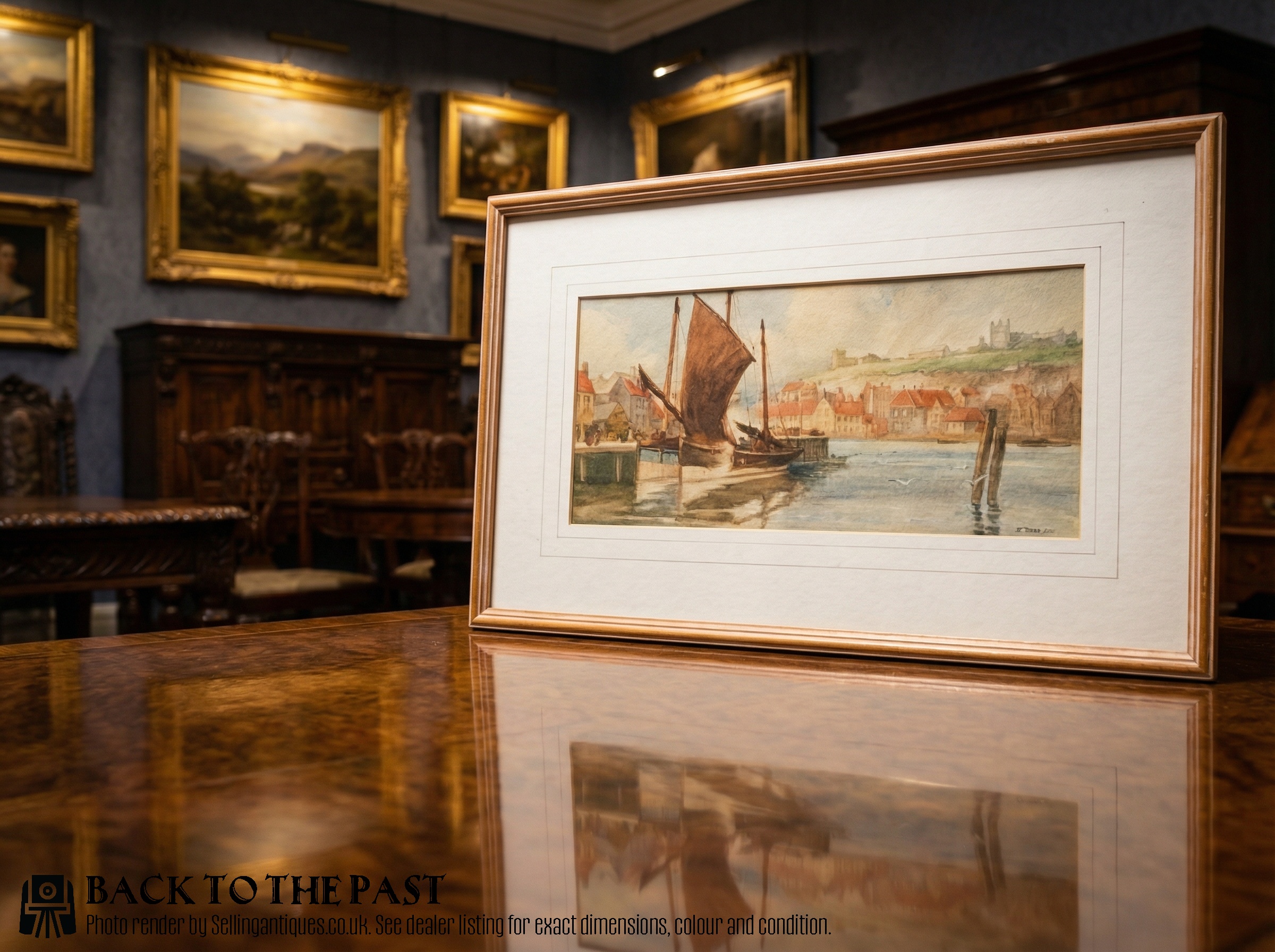
Wm Ward 1921 Signed Original Early 20th Century Antique Watercolour Painting Fishing Boats, Abbey & Whitby Harbour Yorkshire Coast British Landscape, 1920
Priced at £70 from Strickland & Russell
Early practitioners worked methodically. They laid down a neutral grey or brown wash to establish tone before adding thin glazes of colour.
Later techniques grew looser. Artists began working directly onto wet paper to encourage colours to bleed and blend unpredictably.
Scraping out was a popular technique. Painters removed wet or dry pigment with a knife or thumbnail to reveal the white paper for highlights.
"Many artists created their own bespoke pigment blends. They guarded these recipes closely to maintain a distinct, recognisable palette in their work."
"Portable paint boxes revolutionised the craft. The invention of moist watercolour cakes meant painters no longer had to grind dry pigments out in the field."
"Watercolours were widely used for detailed natural history illustration. The medium captures the delicate textures of feathers and petals exceptionally well."
Based on almost 25 years of Sellingantiques UK antique market data, Antique Watercolours appeared 10224 times (out of 1,100,000 antiques) which gives it a rarity score of 13/100.
This score measures scarcity within the Sellingantiques archive only and is not a survey of the entire antiques market, so these statistics may not be indicative of the general availability of Antique Watercolours elsewhere.
This requires a professional paper conservator. They use controlled chemical baths and suction tables to draw the discolouration out without damaging the fibres.
Attempting this at home with household bleach usually destroys the sheet. The chemicals degrade the paper structure over time and often alter the surrounding pigments.
Rippled paper is often called cockling. It happens when moisture expands the fibres unevenly, usually due to changes in humidity or water damage.
A conservator can relax the paper using humidity chambers and then press it flat under controlled weights.
Sometimes the rippling is just how the artist stretched the paper initially, especially with heavier washes.
UV-filtering glass is the standard choice. It blocks the ultraviolet light that causes fugitive pigments to fade over time.
Museum glass offers both UV protection and an anti-reflective coating. This stops glare hiding the subtle washes.
It isn't a good idea to keep that border, as it's likely an old acidic mount. Wood-pulp mounts from the nineteenth and early twentieth centuries contain lignin, which breaks down into acid and damages the artwork.
You should replace it with a modern acid-free or cotton rag mount. This stops the acid transferring to the watercolour paper and preventing the brown burn lines you often see on older pieces.
Keep any old labels or inscriptions from the original backing board. They hold useful provenance details.
Please note: This Antique Watercolours guide and its associated pricing data are provided for general informational purposes only. It does not constitute formal financial, investment, or appraisal advice and should not be relied upon as the sole basis for any commercial activity, purchasing, or sales decisions. Sellingantiques.co.uk accepts no liability for any actions taken in reliance on this information. Always consult with a qualified professional or independent appraiser.
