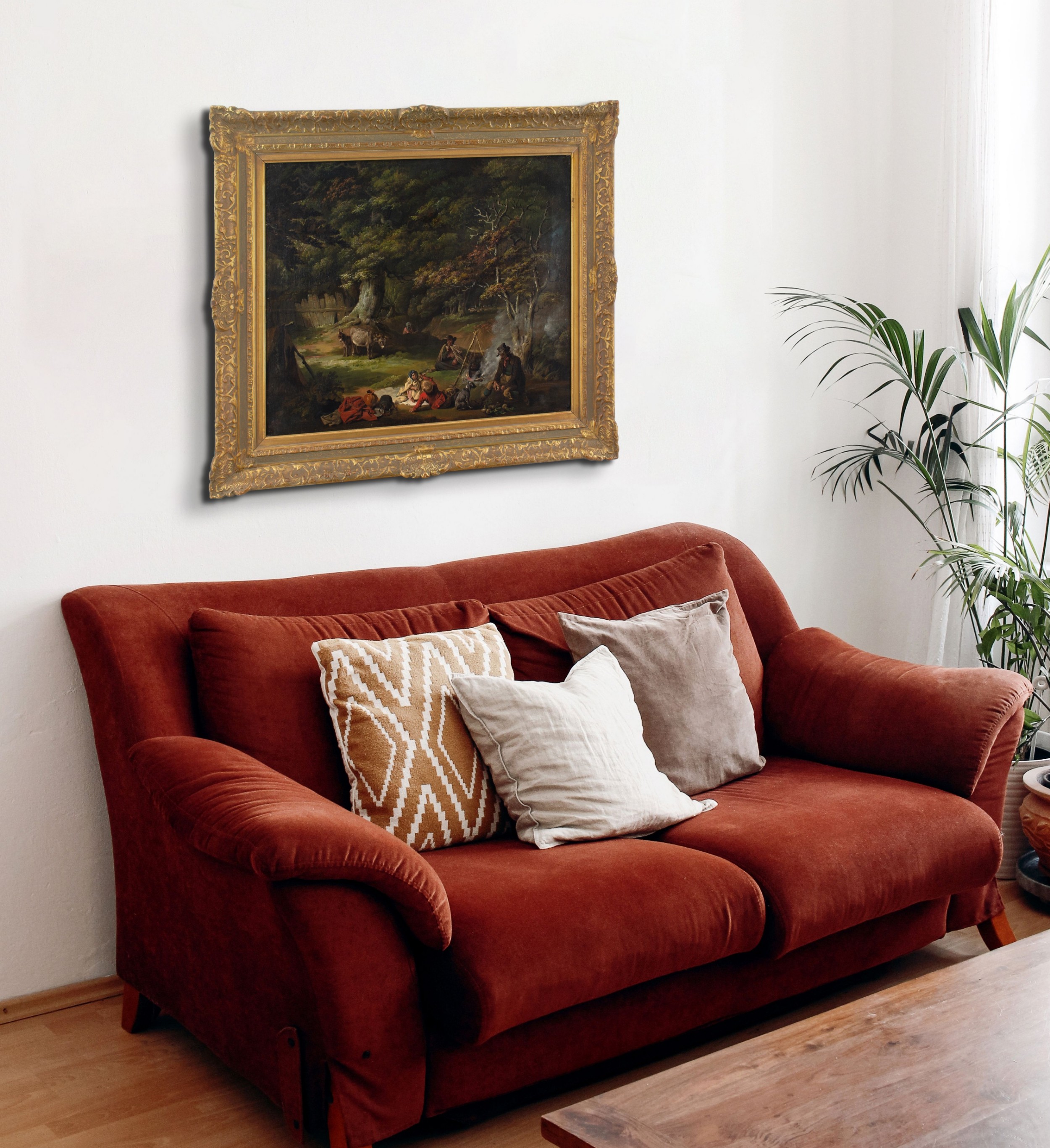
Brave Fine Art has dated this piece to the 19th Century.
His rugged rural scenes were popular with the aristocracy but led to malaise due to the vigorous demands of his patrons. Sir Edwin Henry Landseer RA (1802-1873) proclaimed that noone could paint a better horse - high praise indeed.
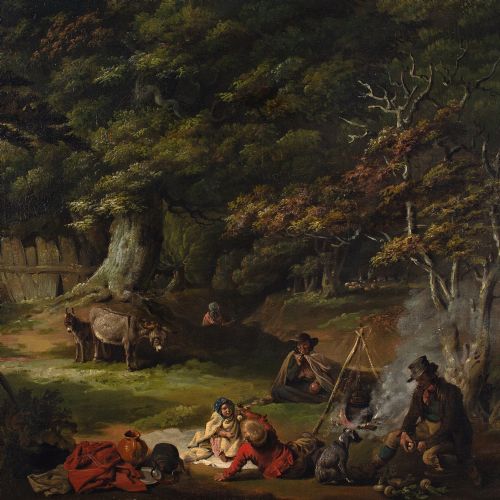
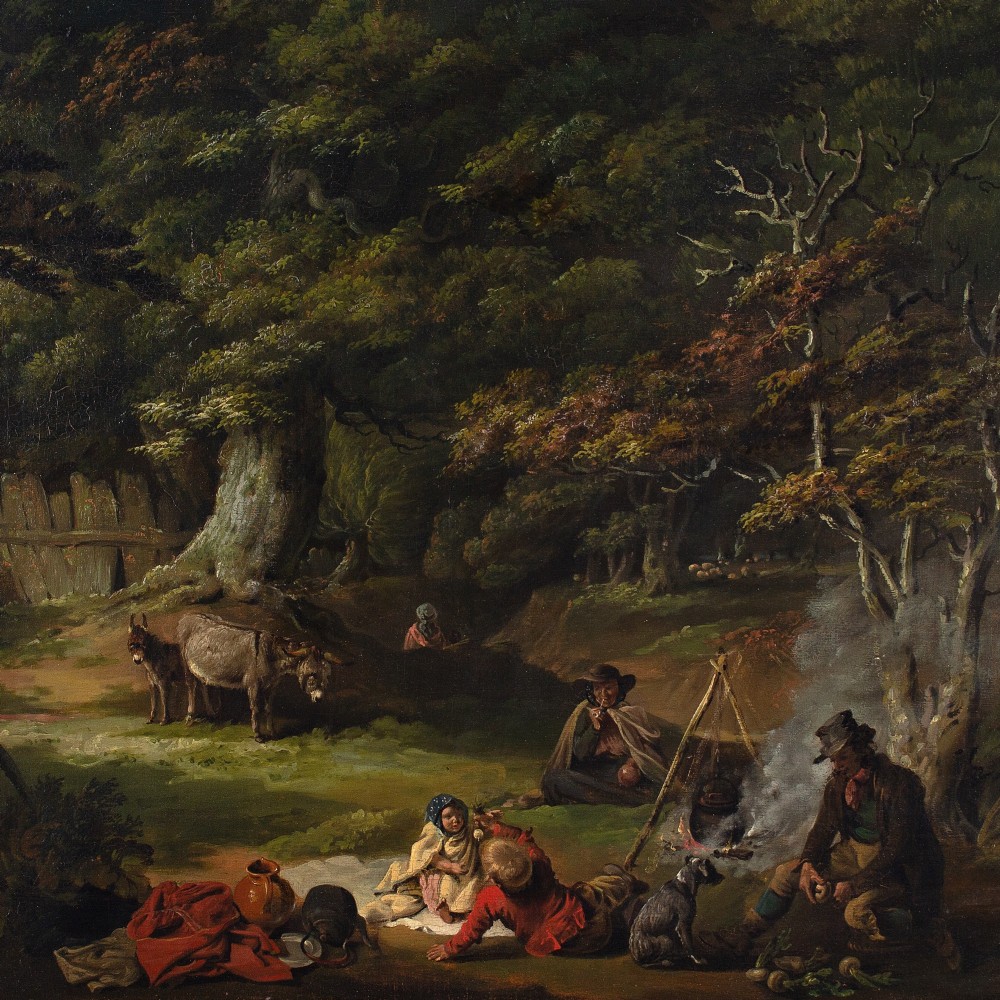
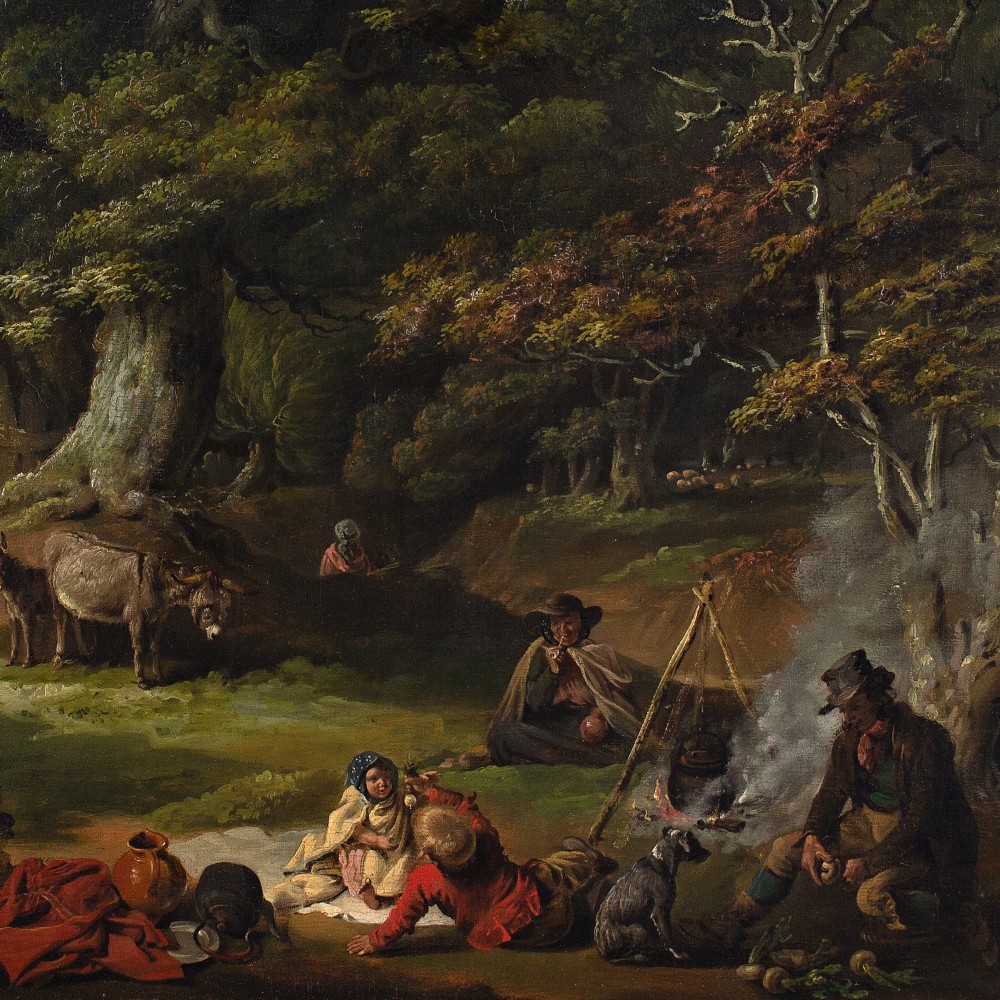
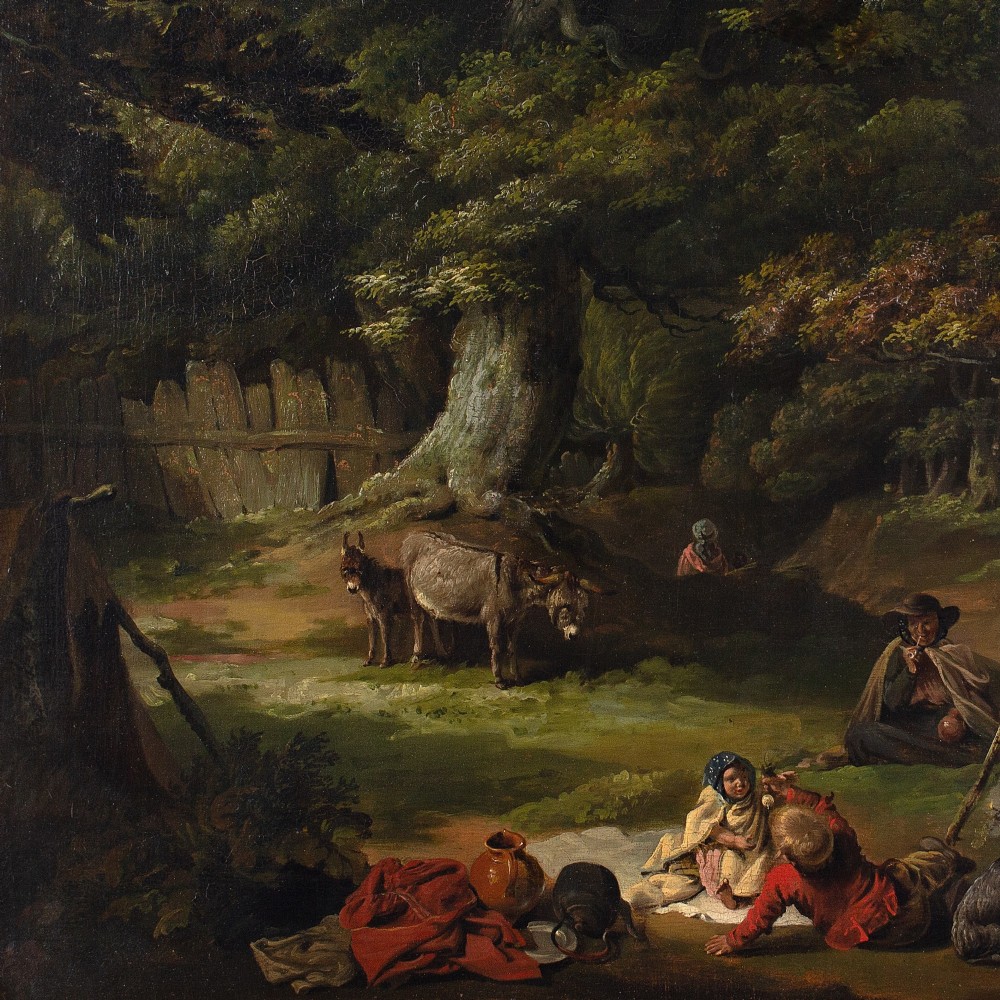
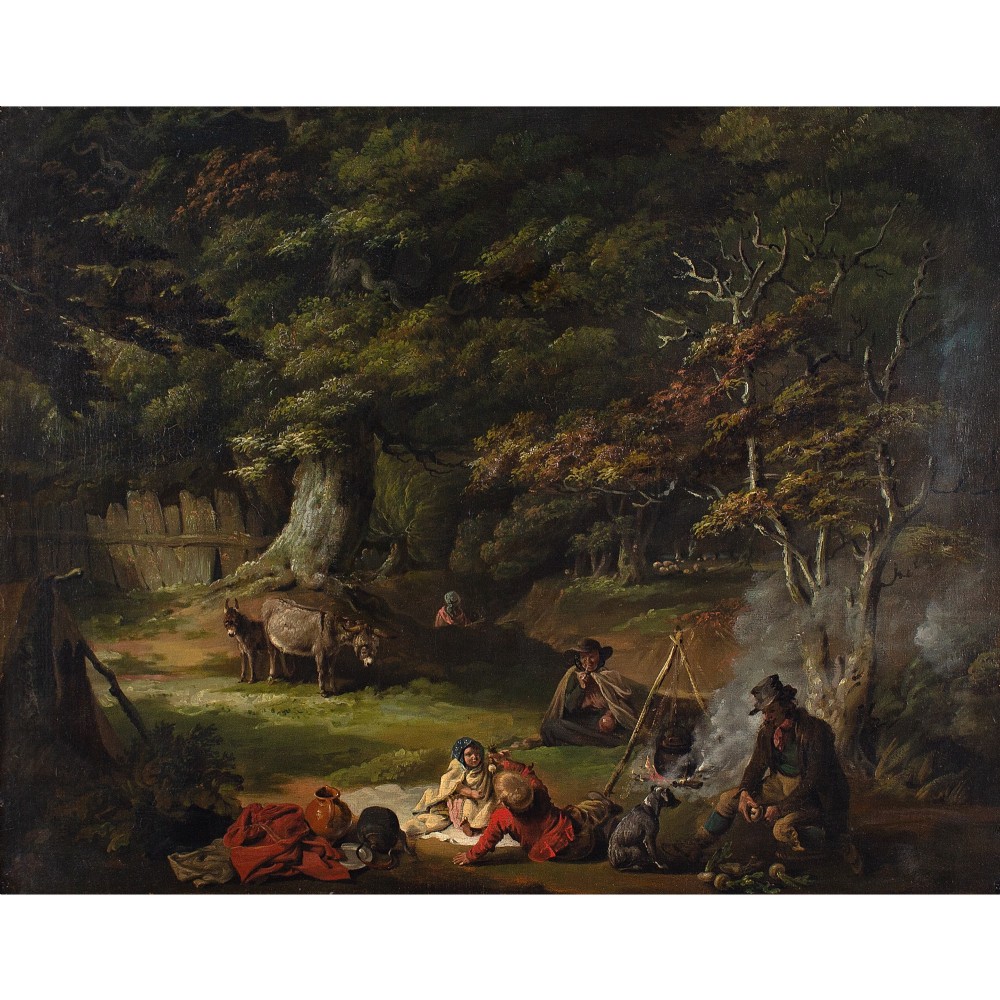
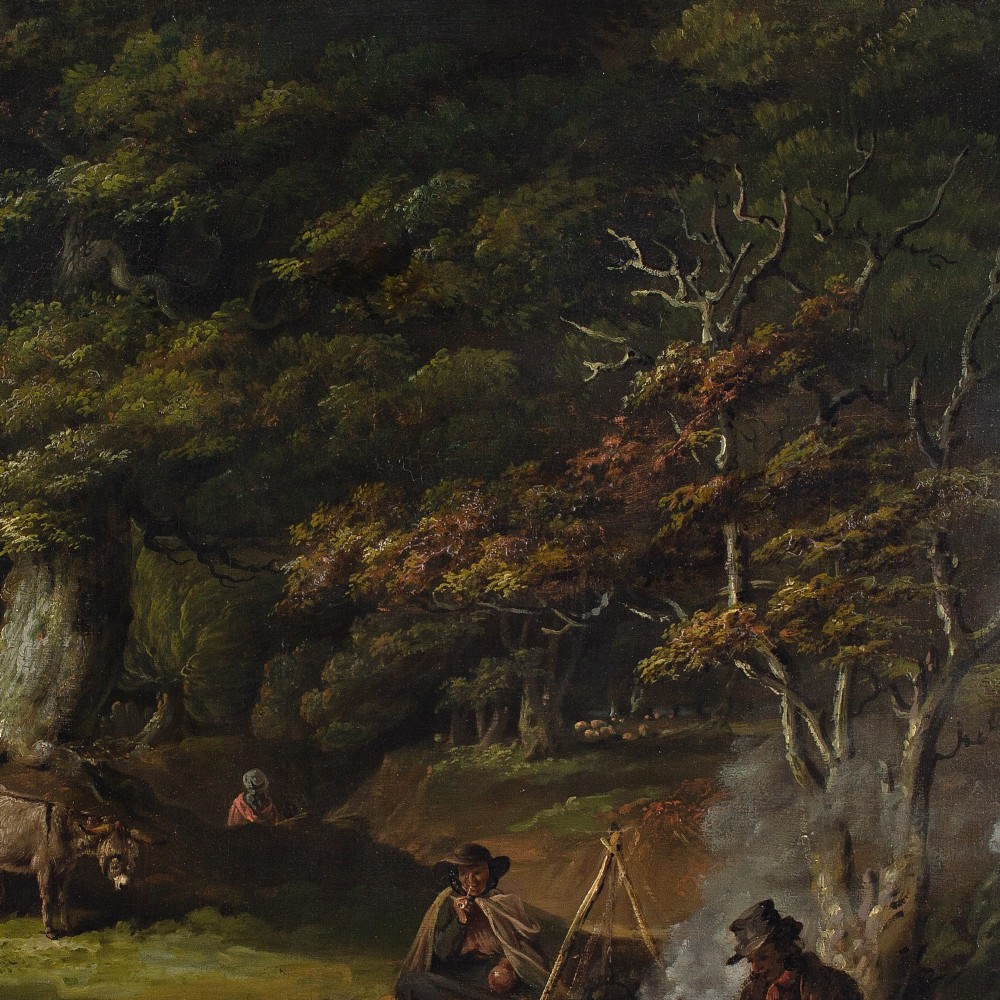
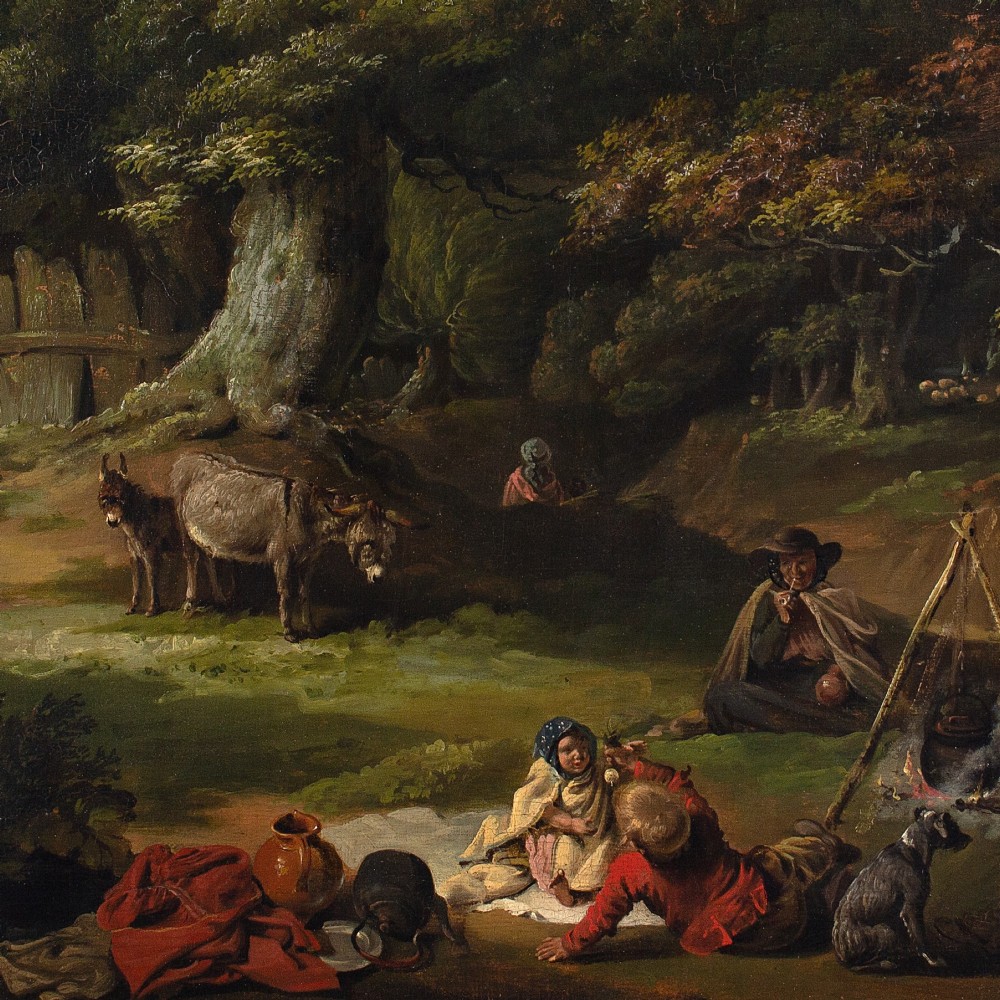
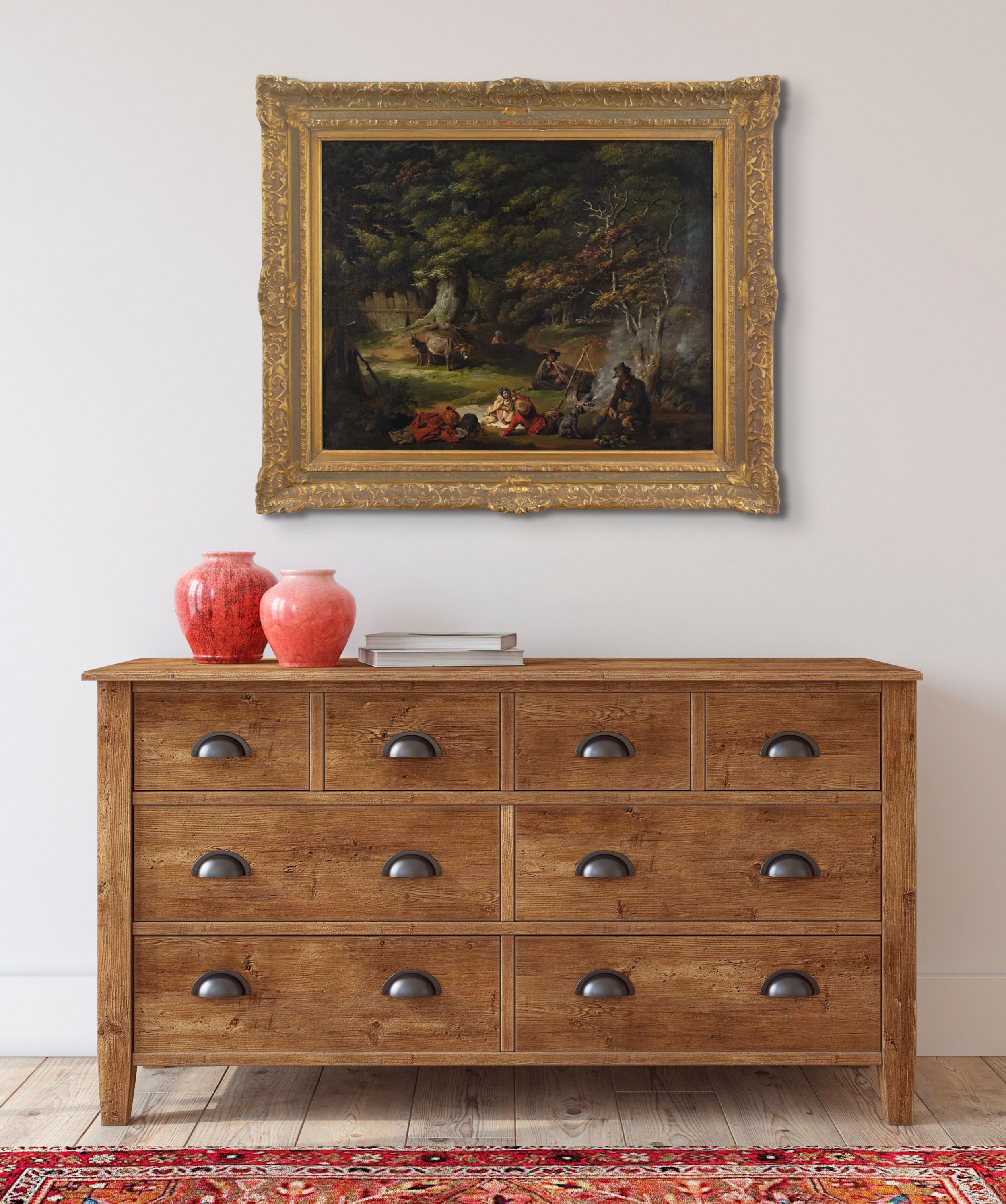
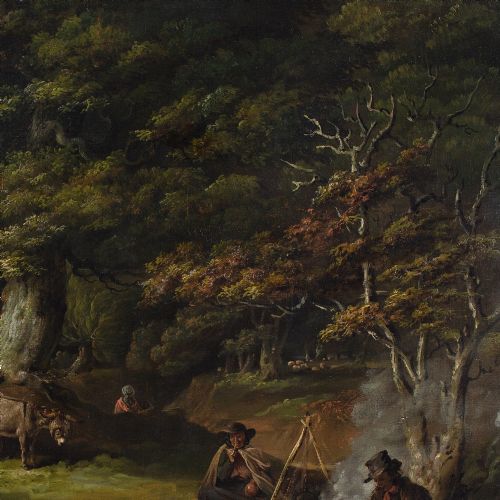
Bristow’s popularity was in part due to his location - he was born in Eton and worked predominantly in Windsor. But also it reflected his precocious mastery of capturing the rustic environs of rural working families. Here, we see a family of travellers dining in a wood. In the foreground, a dishevelled father peels vegetables alongside a fire. His dog looks on, waiting patiently for occasional scraps. Mother sits behind, smoking a pipe as the dinner cooks.
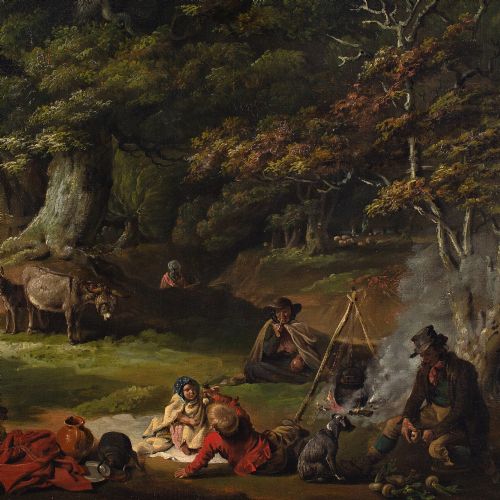
Bristow’s scenes are often accompanied by animals, which tend to carry expressions to communicate a general mood. Note the donkeys by the tree, both exhausted and forlorn.
Travellers were oft the source of Victorian paintings but it’s wrong to assume that depictions of ‘gypsy’ encampments were in any way derogatory. The Victorian upper classes were generally straight-laced, withheld, and constrained by rigmarole. So hence, they longed for scenes that conveyed a sense of unbridled freedom as a tonic for their suppressed emotions. They certainly stereotyped the travelling community as free-spirited and romantic, yet, for them, this was an idealisation which suited the societal backdrop.
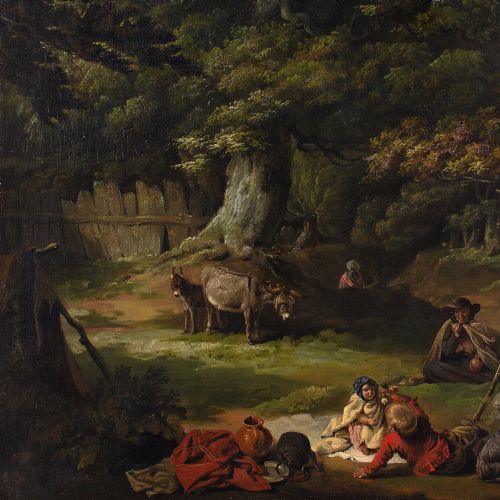
Bristow’s patrons included Royalty and several of his works are held in the Royal Collection. His career was effectively cut short when he withdrew from public life for fear of further patronage.
Signed lower left and held within a later frame.
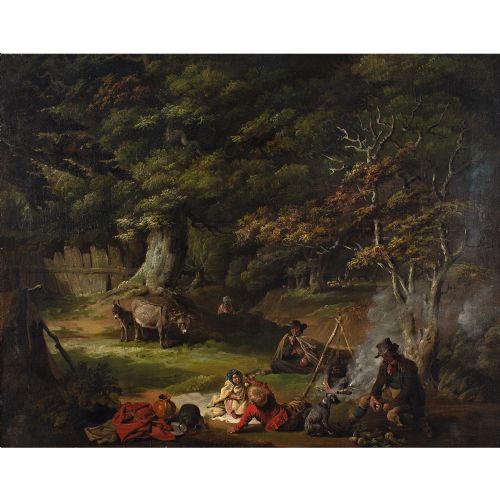
Medium: Oil on canvas
Overall size: 38” x 32” / 97cm x 81cm
Year of creation: c. 1840
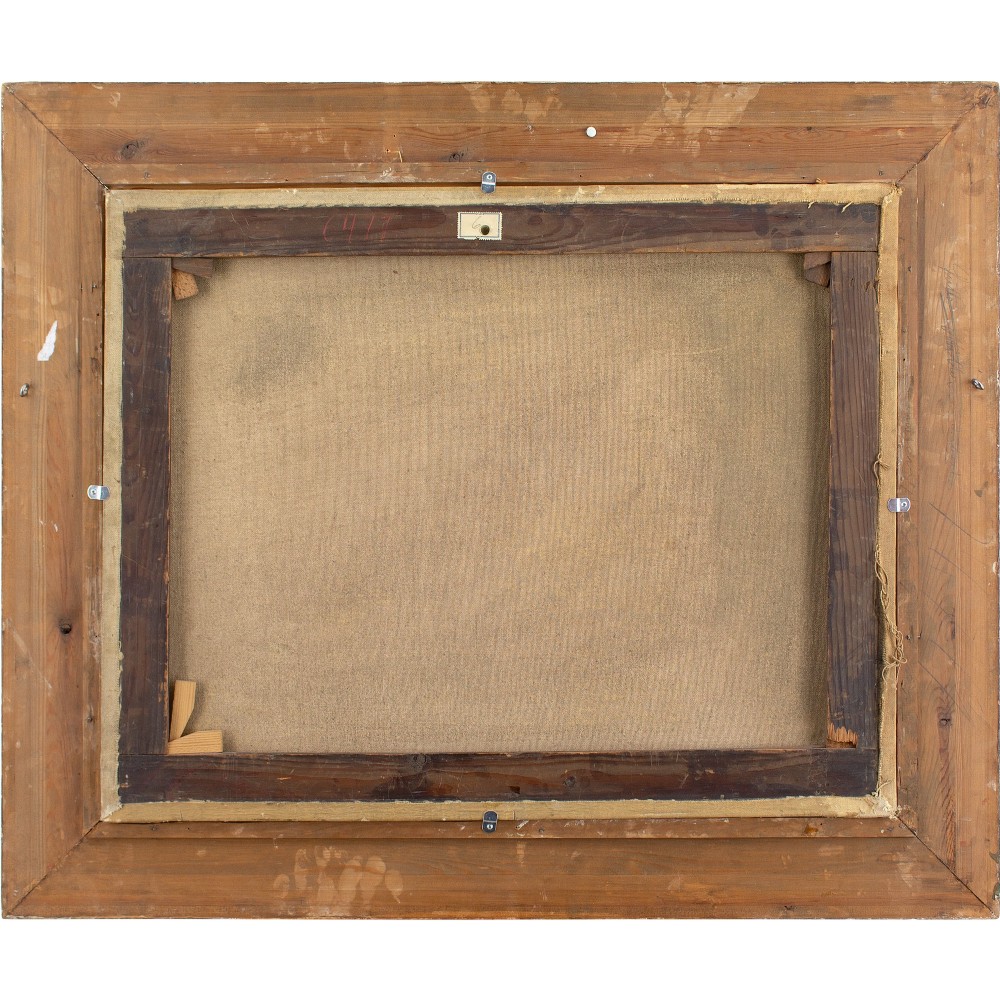
Condition: Artwork presents well. Fine craquelure but the paint is stable. Canvas relined. Frame with some light wear.
Artist’s auction maximum: £29,000
Edmund Bristow exhibited numerous times at the Royal Academy, British Institution, and the Society of British Artists. His works are held in various public collections including at the British Museum, Royal Collection Trust, Walker Art Gallery, Royal Museums Greenwich, Denver Museum, and the National Trust.
Learn more about Edmund Bristow in our directory.
Brave Fine Art has dated this piece to the 19th Century.
Exquisite antique paintings that capture the imagination.
You can view the stock and full dealer information on the Brave Fine Art Profile Page
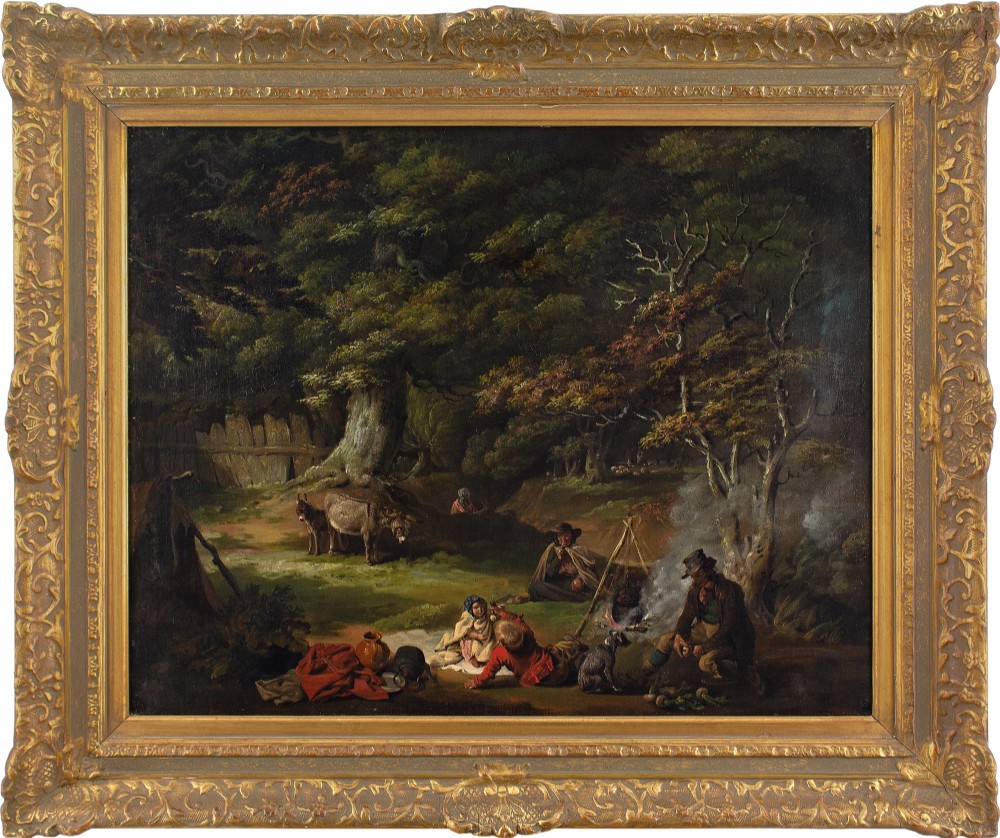
Edmund Bristow, Travellers in a Wood - Antique Oil Painting