It was listed by Titan Fine Art. Sold pieces stay on Sellingantiques as a record of what has passed through, and the next one is rarely far away.
Titan Fine Art has dated this piece to the 17th Century.
In portraiture, the power of beauty was utilised to convey notions of status and influence and many sitters favoured artists that excelled at portraying them in this manner. Van Dyke, Peter Lely, Godfrey Kneller, and Michael Dahl often portrayed a woman as a beautiful seductress, and this added to an artist’s desirability amongst many sitters.
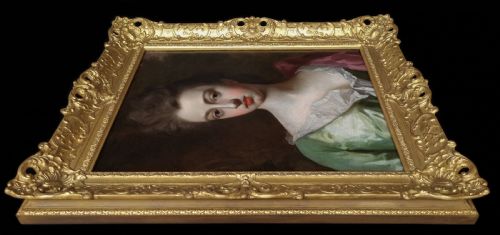
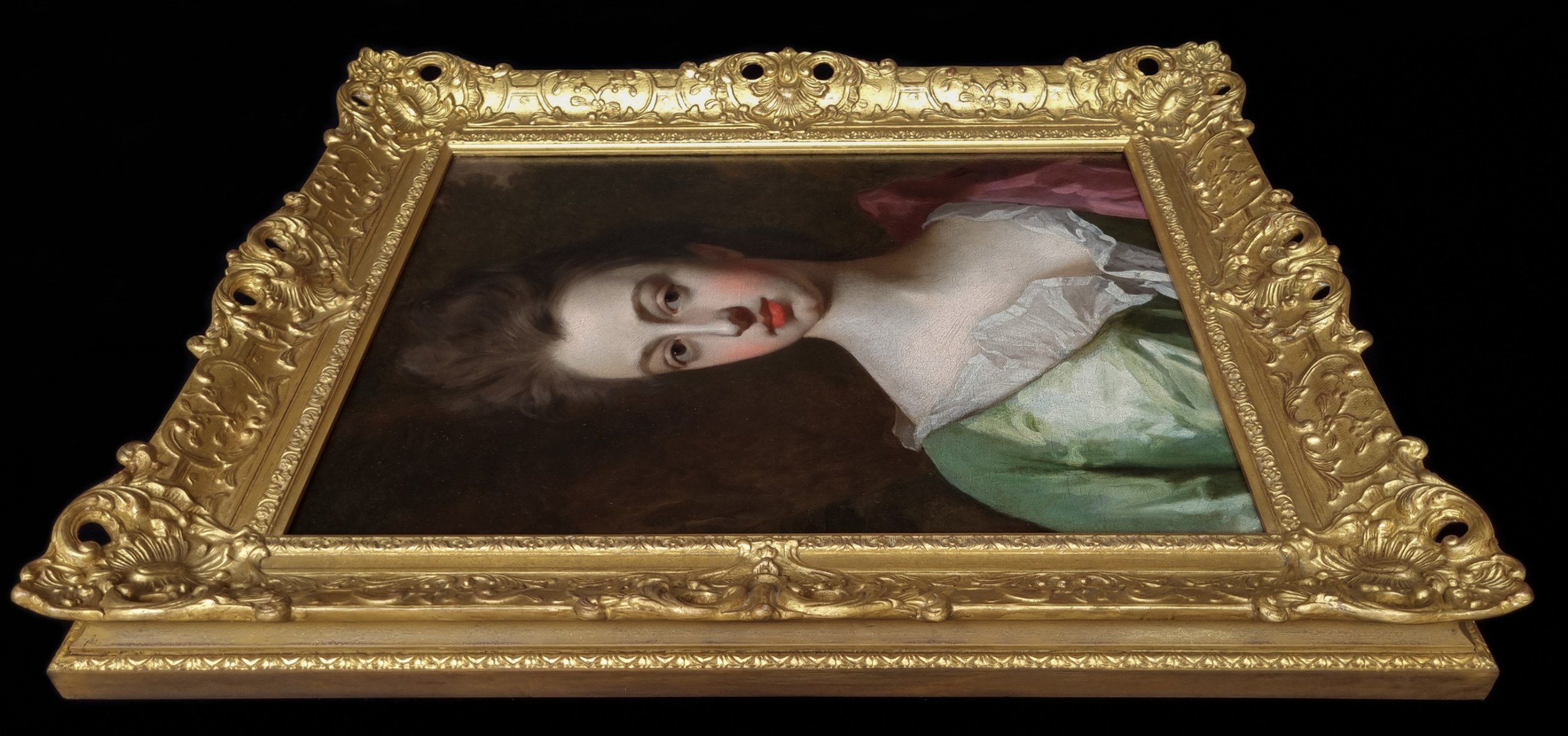
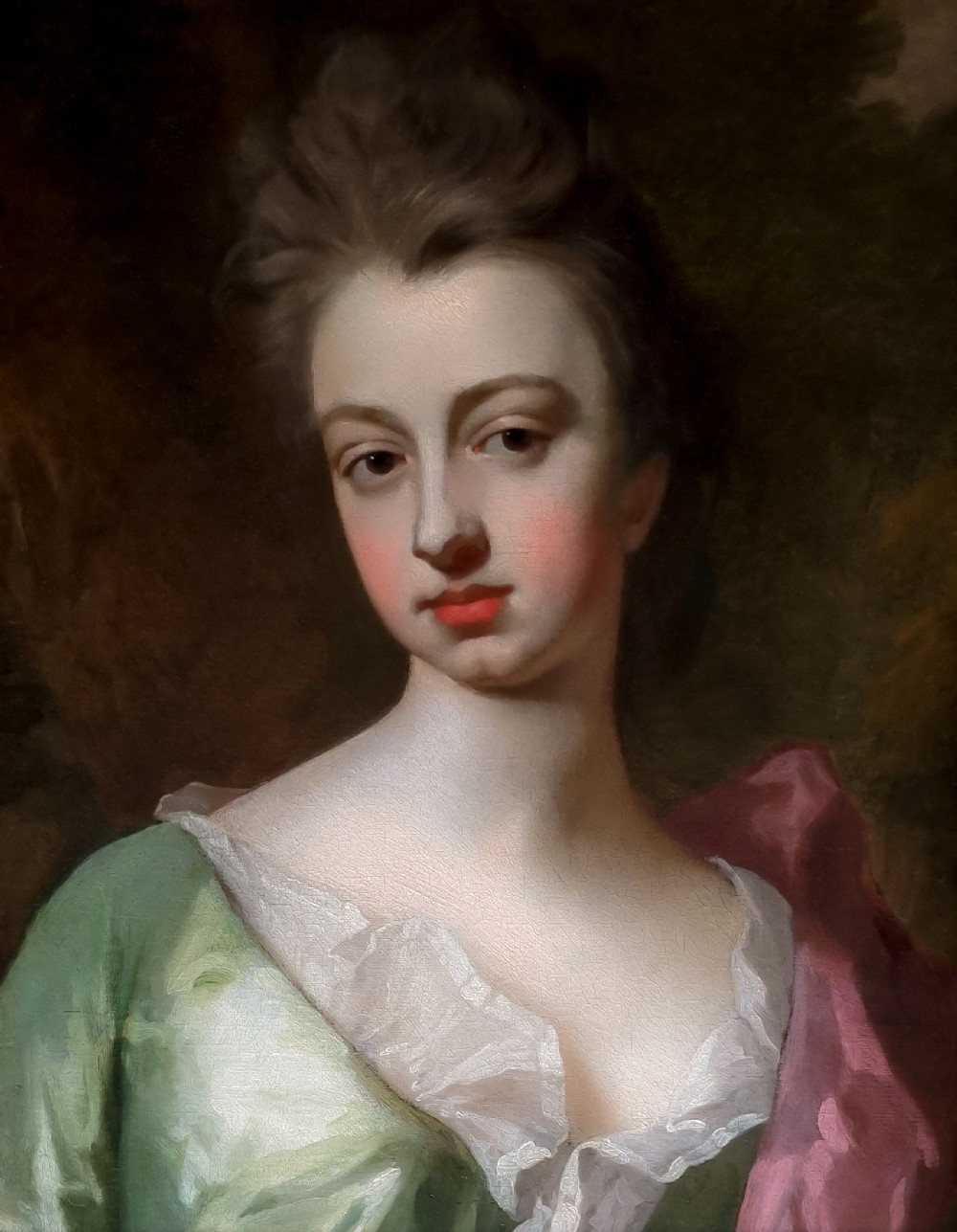
The attractive lady in this exquisite portrait has traditionally been identified as Sarah Churchill, Duchess of Marlborough; she was a renowned beauty and prominent figure at the Courts of King William and Queen Mary and later Queen Anne. A highly respected women among the upper echelons of English aristocratic society.
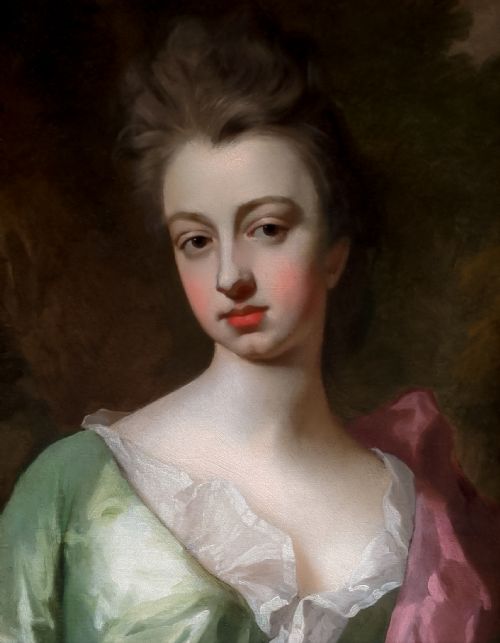
Born Sarah Jennings in 1660, she later married the general John Churchill, 1st Duke of Marlborough in 1677-78. As a child, Sarah formed a close friendship with the Princess Anne (the future queen of Great Britain) and entered the household of Anne’s father, the Duke of York (the future James II) in 1673. Sarah was devoted to the Princess Anne, who came to depend upon her; they addressed each other as Mrs. Morley and Mrs. Freeman; and, upon Anne’s marriage in 1683, Sarah became one of the ladies of the bedchamber. Eventually the friendship faded and they never met again. Sarah died in London in 1722.
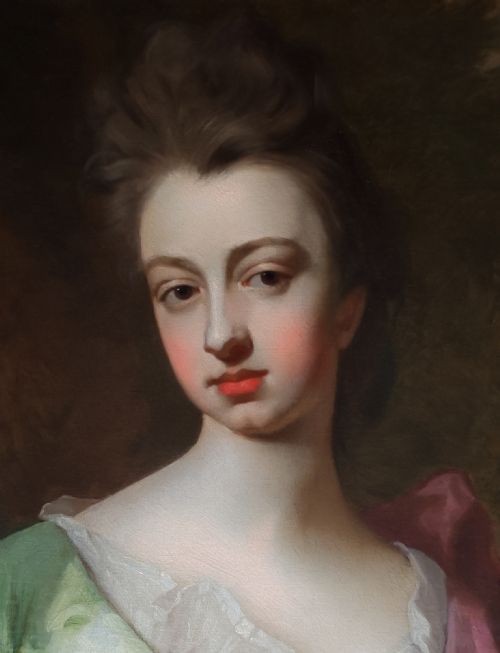
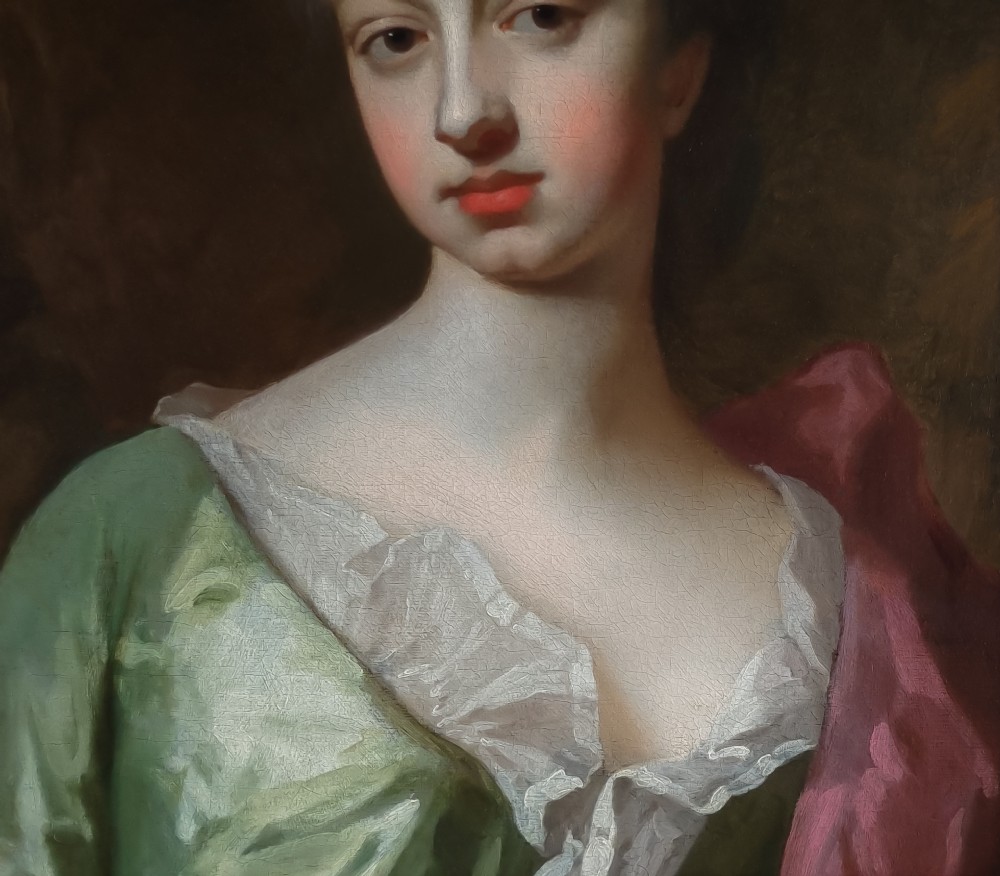
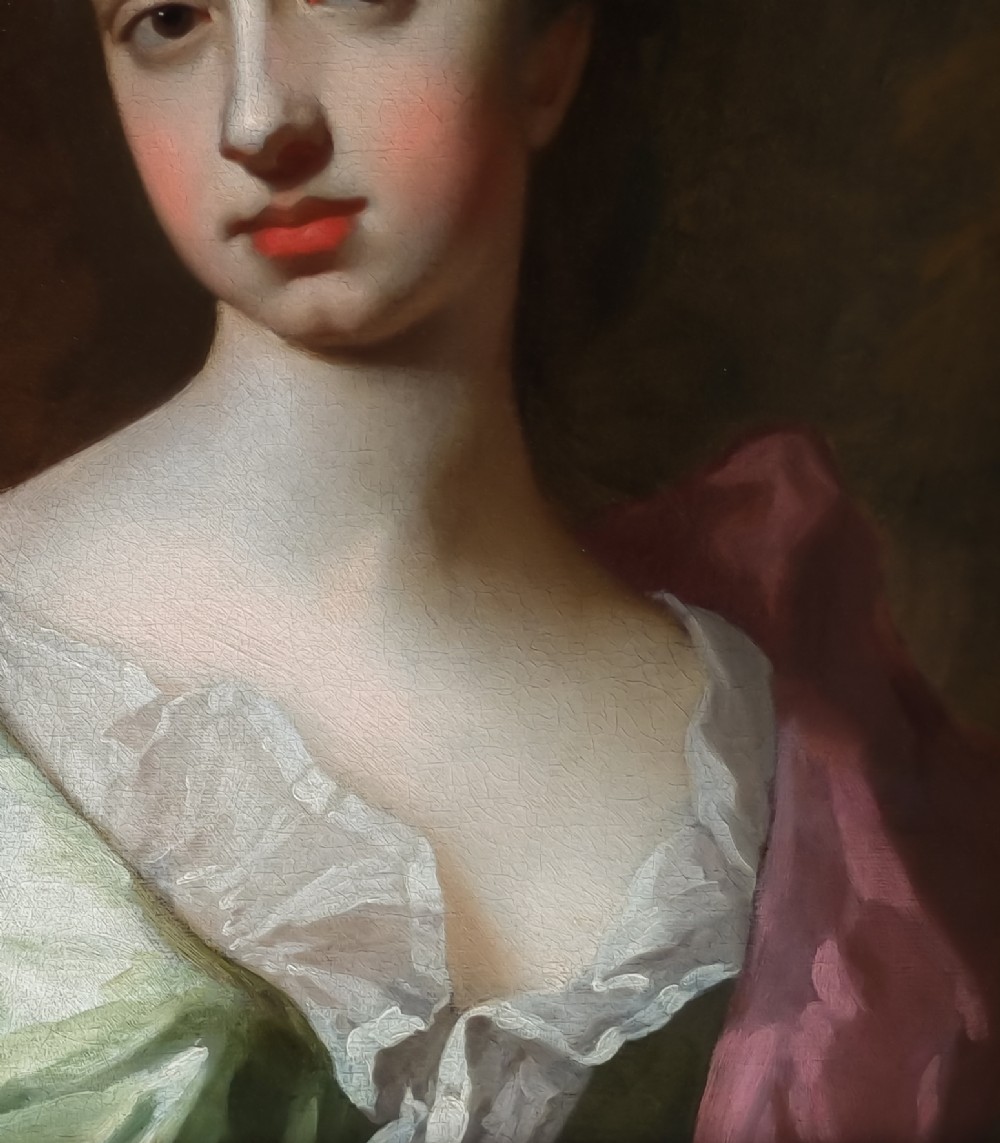
Our portrait typifies Dahl’s eloquent depiction of aristocratic women and is a fine example of his sophisticated and unassuming style. It is typical of the formula used by Dahl for head-and-shoulder images of women. The Duchess is presented against a stark background, extravagant lighting casting a prominent shadow to one side. The curve of her neck, the elegant turn of her head, and the lively handling of drapery, are characteristic of Dahl’s work. He also used the green, pink, and white colour combination for his draperies as seen here, especially in the 1690s and early 1700s.
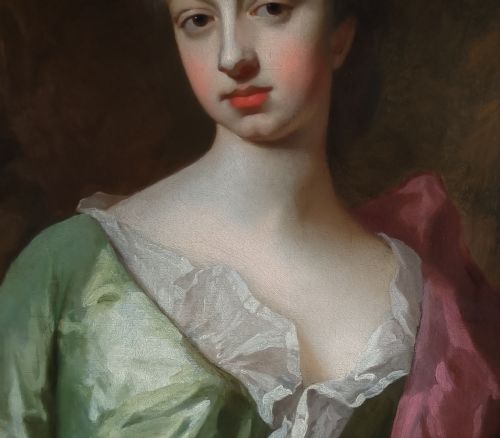
The stylistic appearance of the portrait and the coiffure suggest a later 1690s dating – which is also the most likely date that Dahl painted his notorious set of ‘beauties’ at Petworth House.
The portrait is a fine example of Dahl's manner at a time when he was in direct competition with the preeminent painter Sir Godfrey Kneller (1646-1723), and it demonstrates that he was capable of outperforming Kneller.
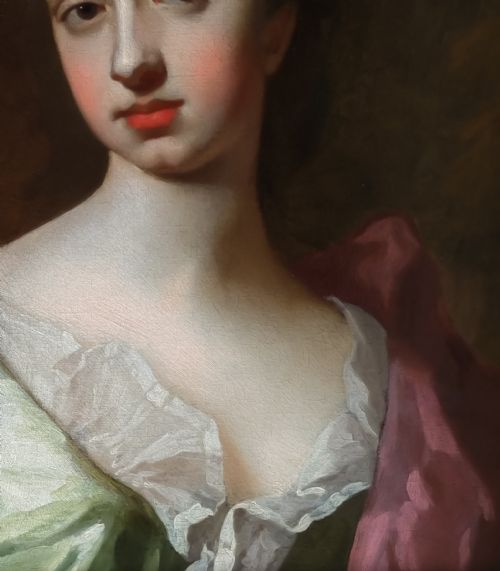
Michael Dahl (1659-1743) was a painter of exceptional talent. Born in Stockholm he studied with David Ehrenstrahl, the leading Swedish portrait painter of his day. Dahl came to London in 1682 where he became acquainted with Godfrey Kneller and in 1685 he left for Europe before returning to London in 1689 where he remained. However During Dahl's absence, Kneller was able to consolidate his supremacy as the fashionable portrait painter, although the prolific Dahl was his closest competitor. Dahl’s female portraits are distinctly different with better drawing for the heads and a more elegant and straightforward portrait without the excessive use of props and other distracting elements often seen in Kneller’s portraits.

In 1698 Dahl was offered the position of painter to the court of the Swedish King, Charles XII, but preferred to stay and settle permanently in London where he established an independent studio and by 1700 became the most successful painter in England, second only to Godfrey Kneller. His Scandinavian origins ensured patronage from Prince George of Denmark, and Queen Anne and members of the English court.
The death of Kneller in 1723 left Dahl the principal London portraitist. His work is represented in many British country houses and private collections, and in many preeminent museums around the world.
Full description at: www.titanfineart.com
Titan Fine Art has dated this piece to the 17th Century.
Specialist in 17th & 18thc portraits. Highly curated selection, museum-level research & pro conservation. Exceptional art, expertly vetted.
You can view the stock and full dealer information on the Titan Fine Art Profile Page

Portrait of Sarah Churchill, Duchess of Marlborough in a Green Dress and Pink Mantle C.1690s; by Michael Dahl (1659-1743), Antique Oil on Canvas Painting