Cheshire Antiques Consultant Ltd has dated this piece to the 19th Century.

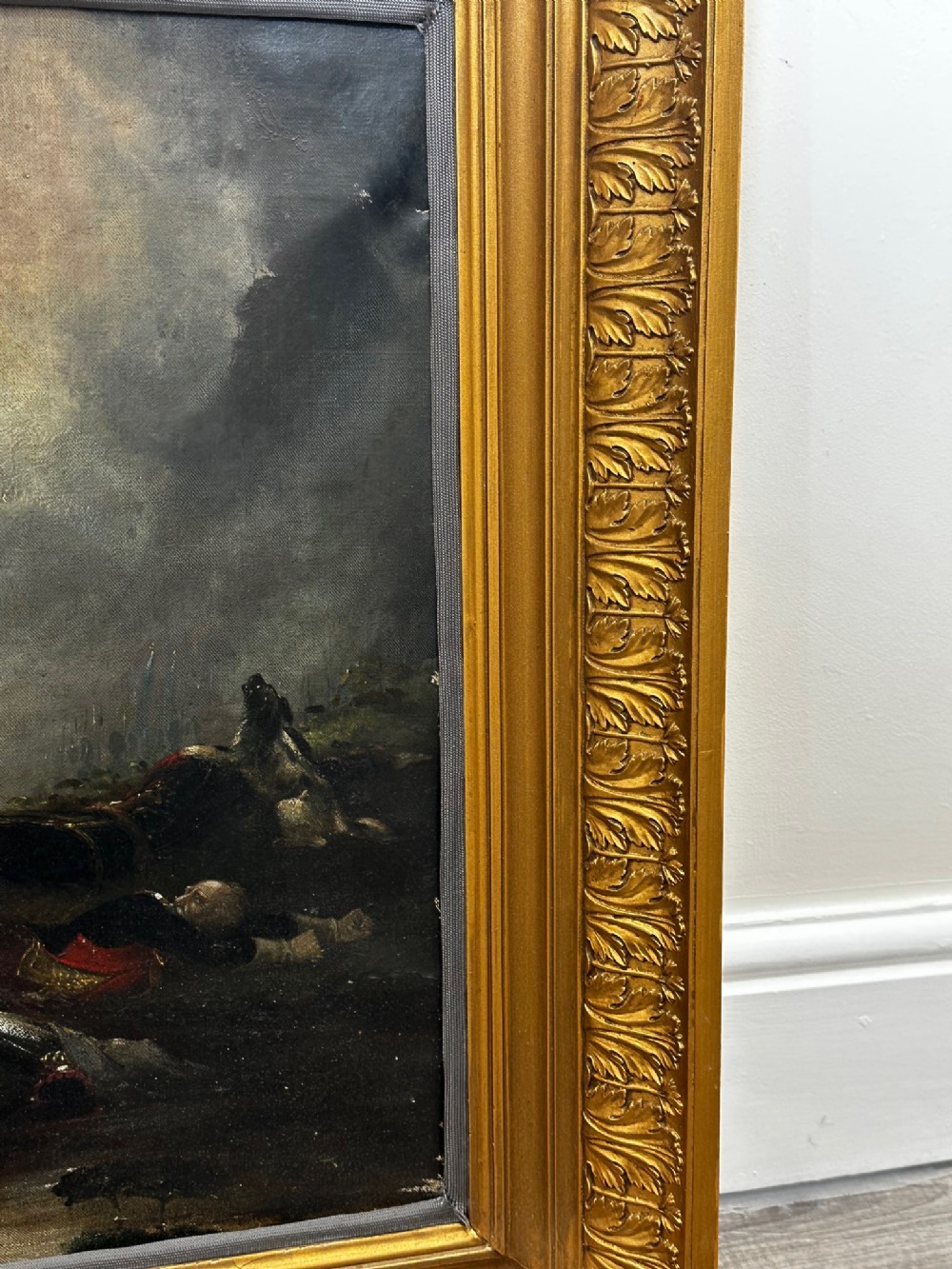
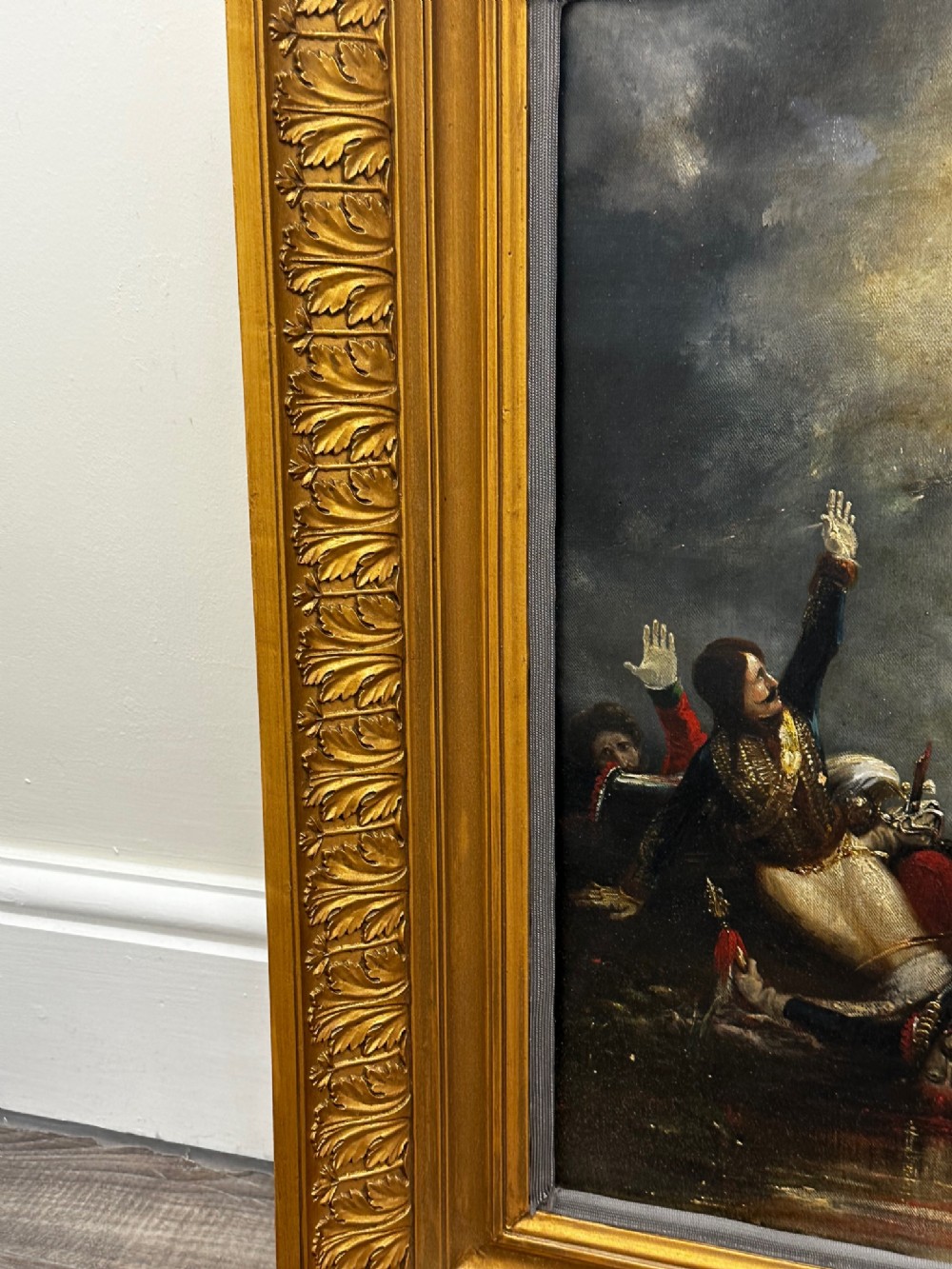
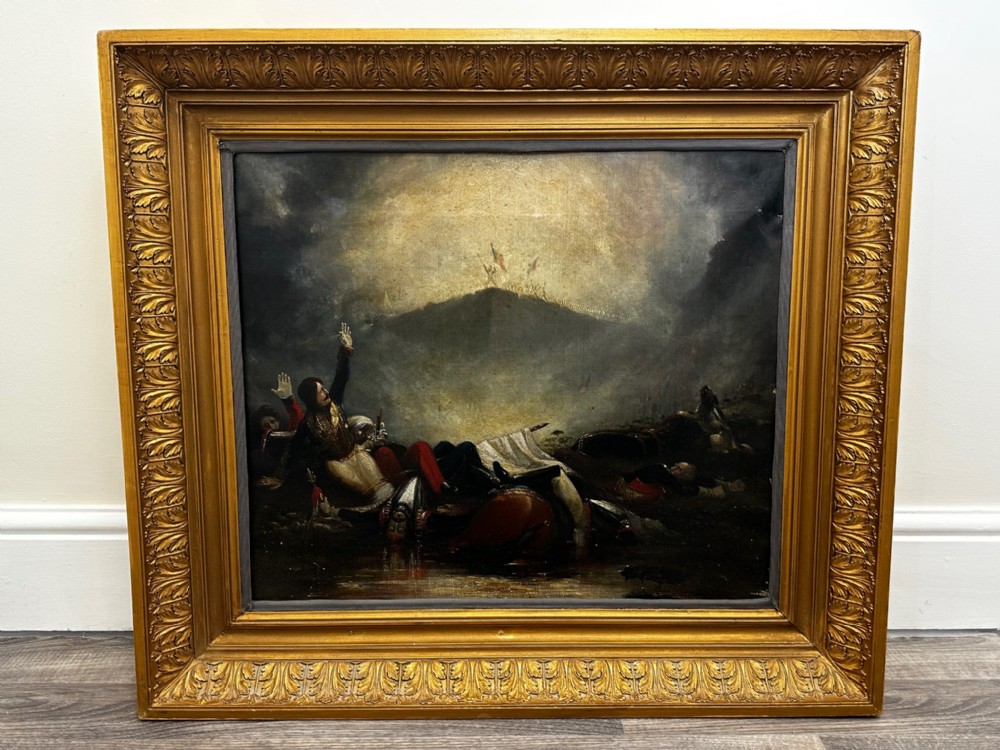
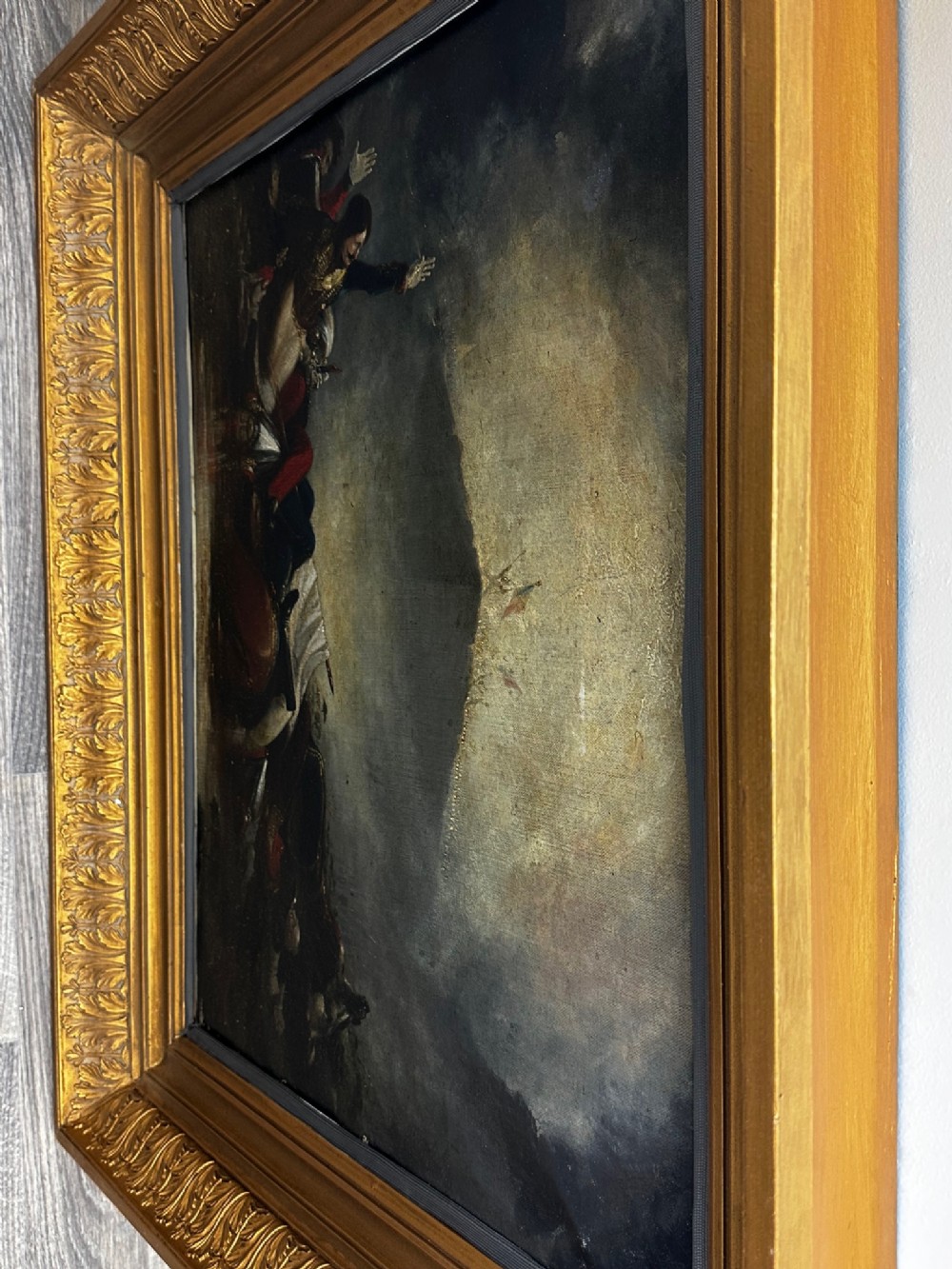
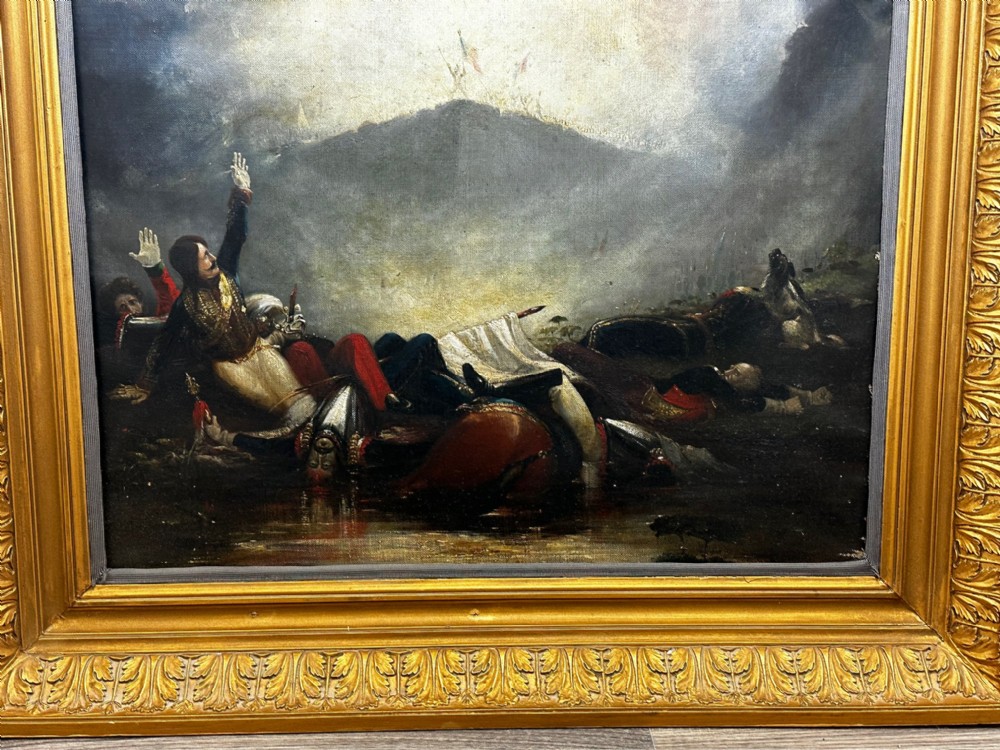
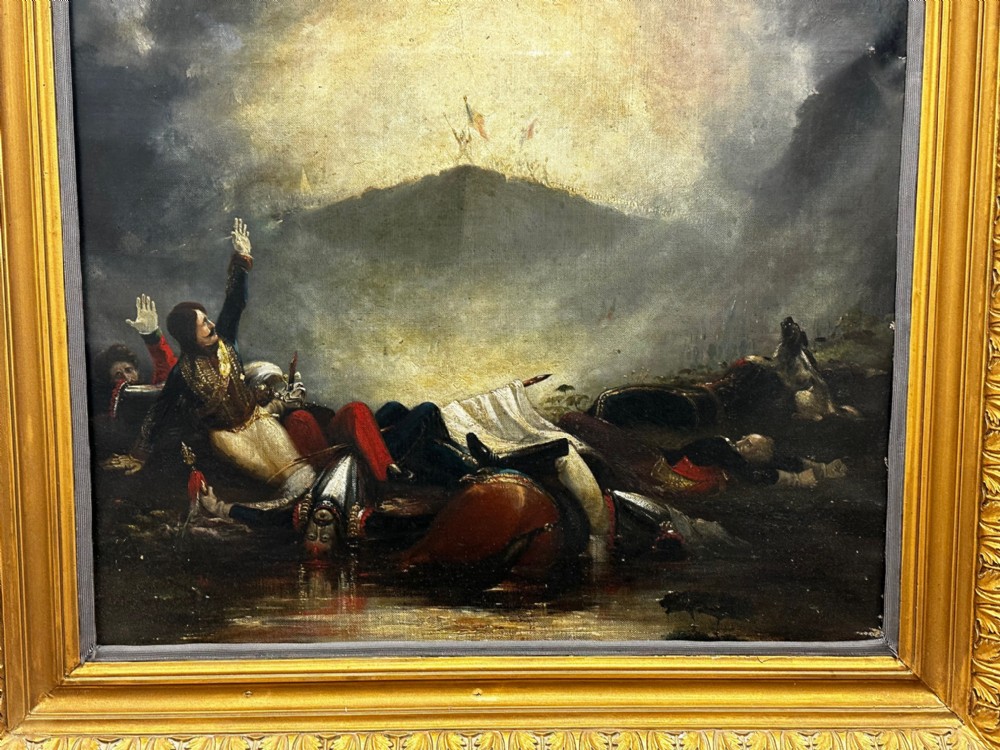
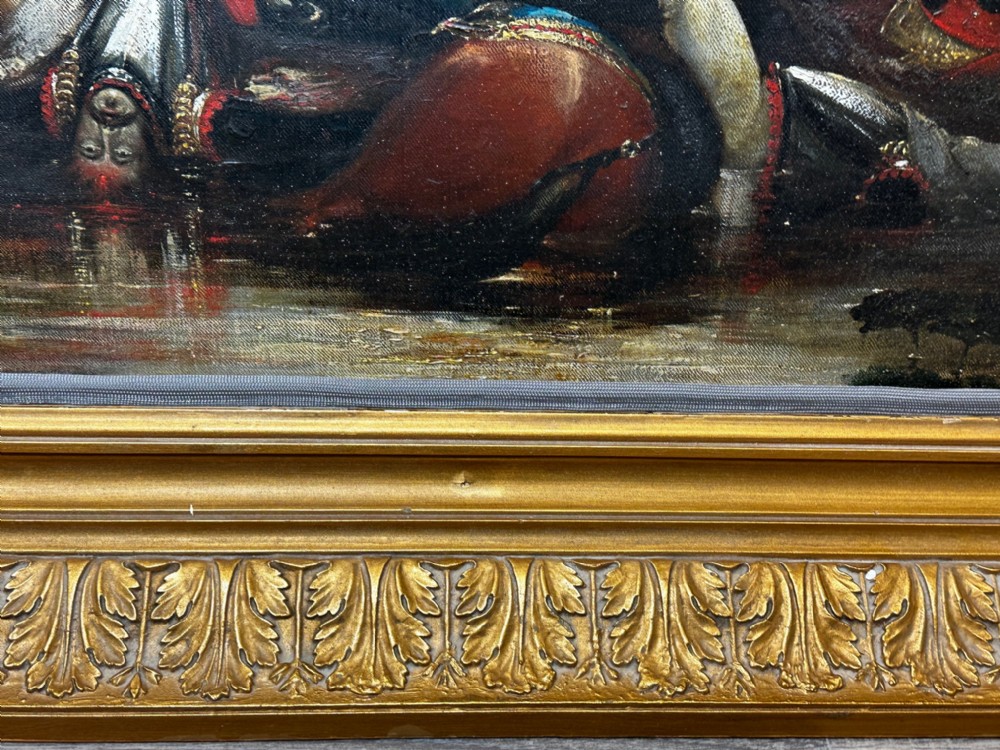
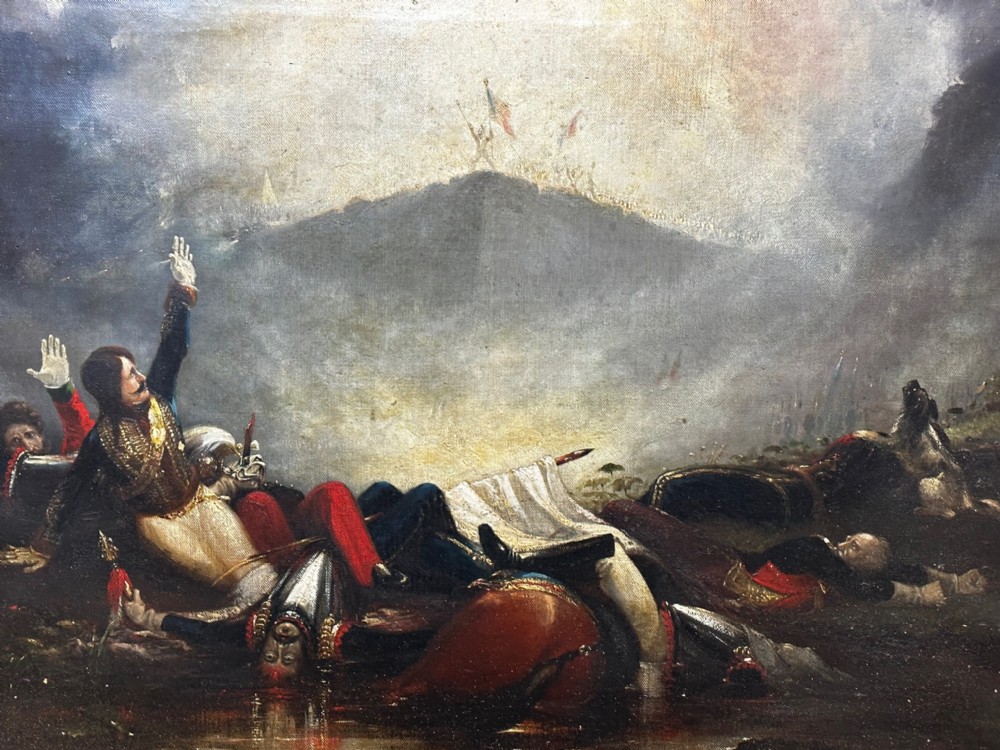
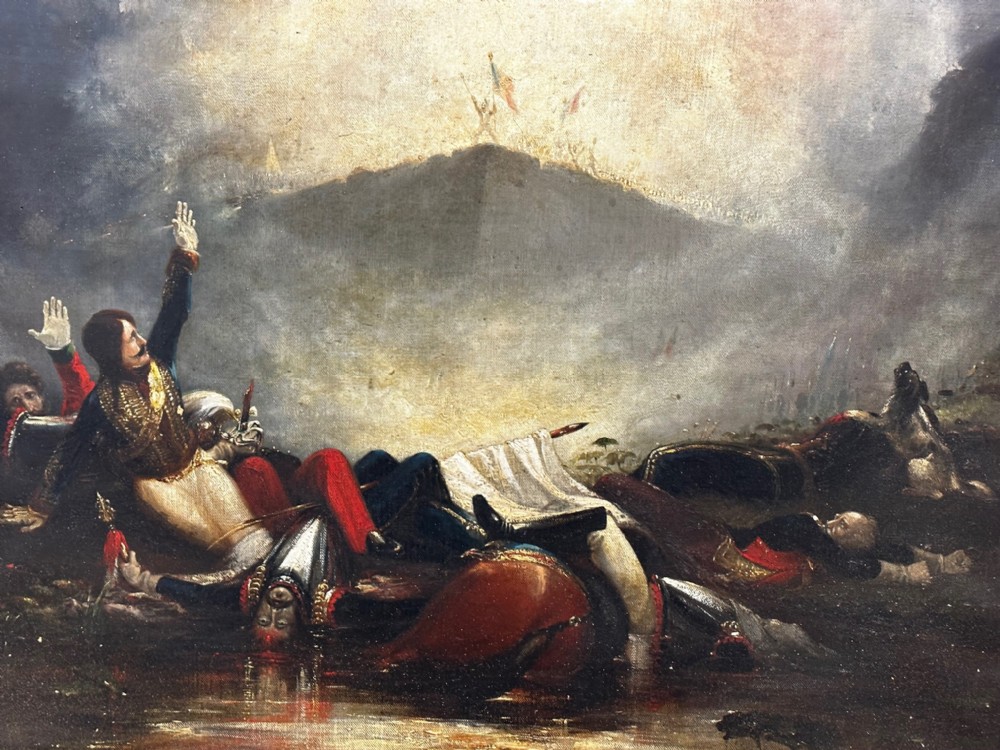
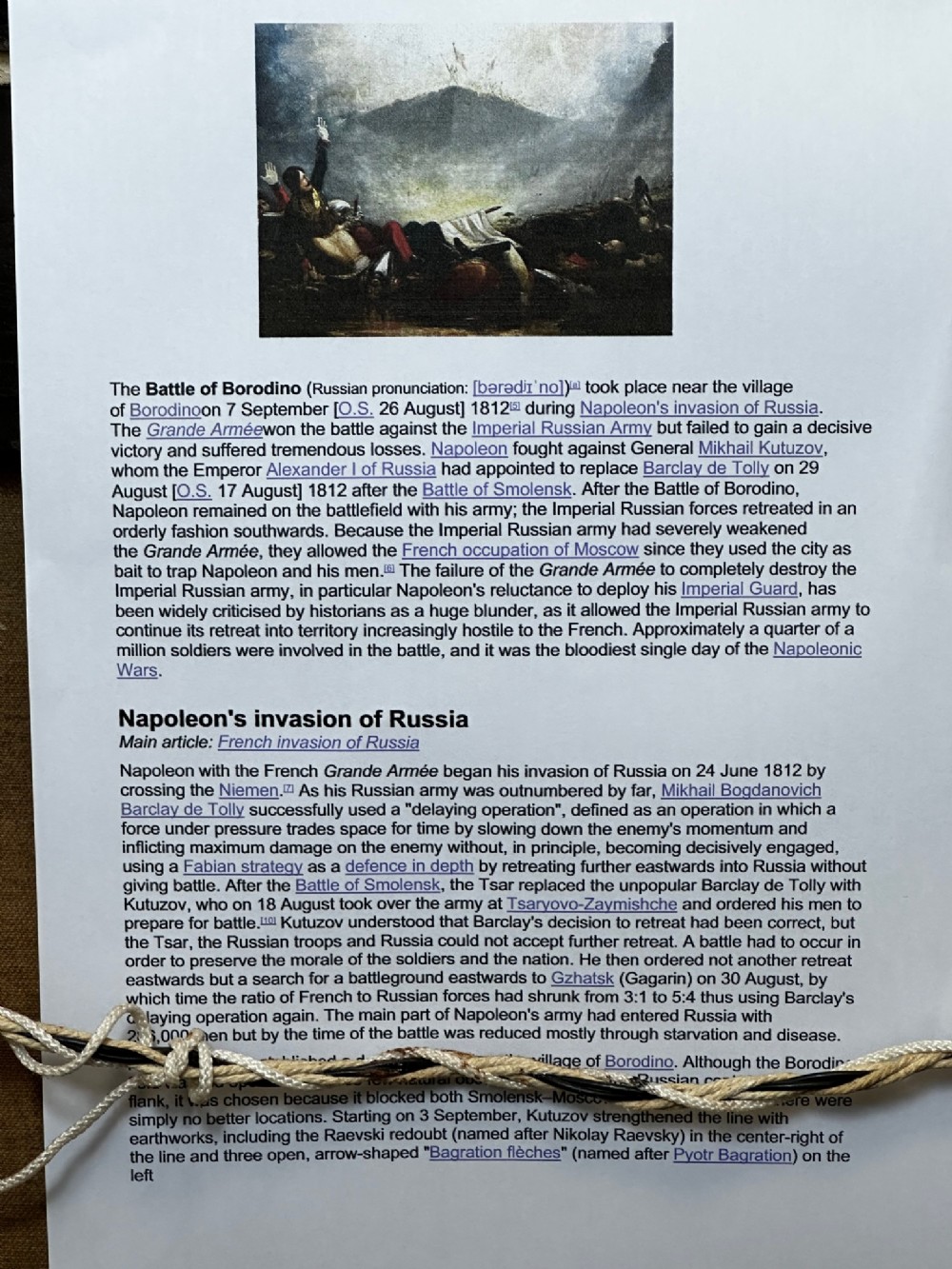
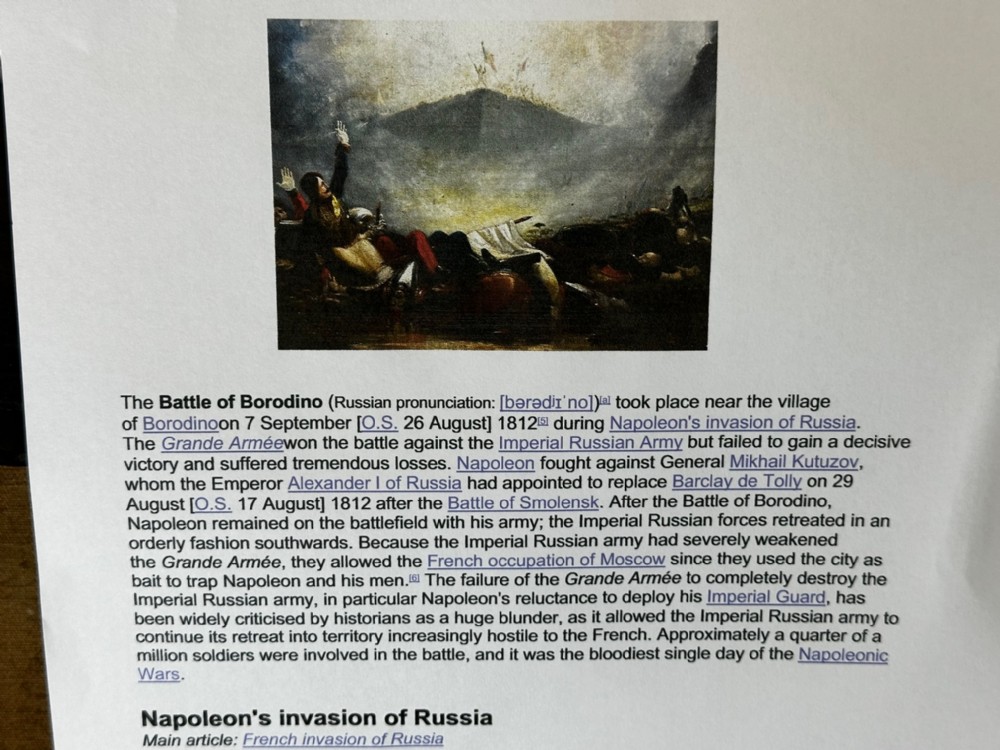
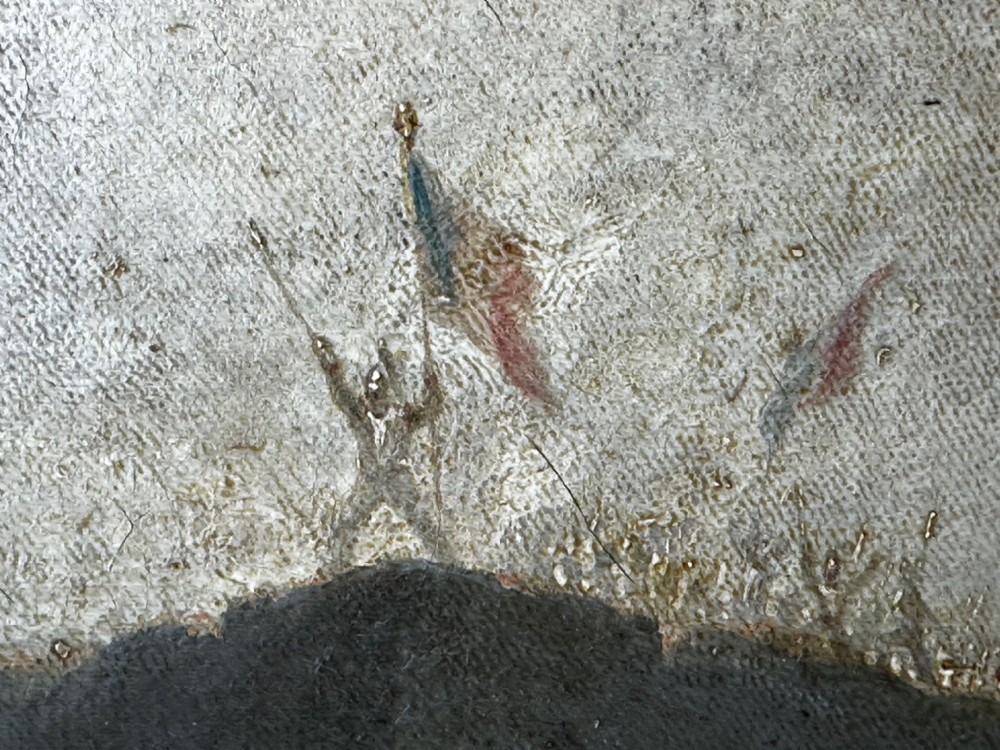
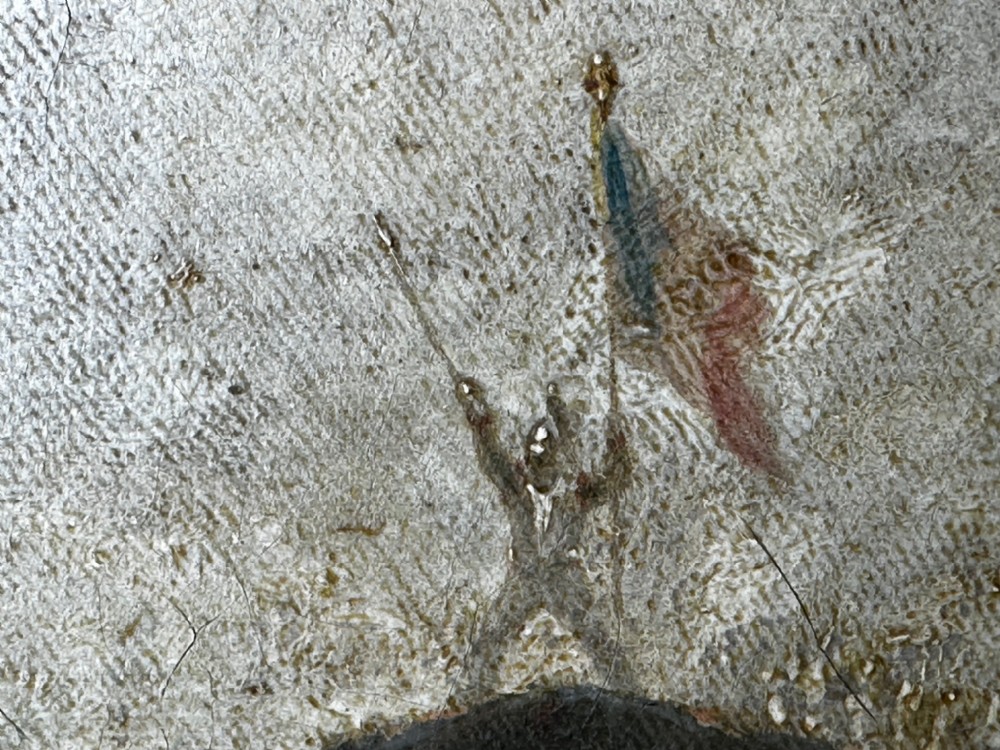
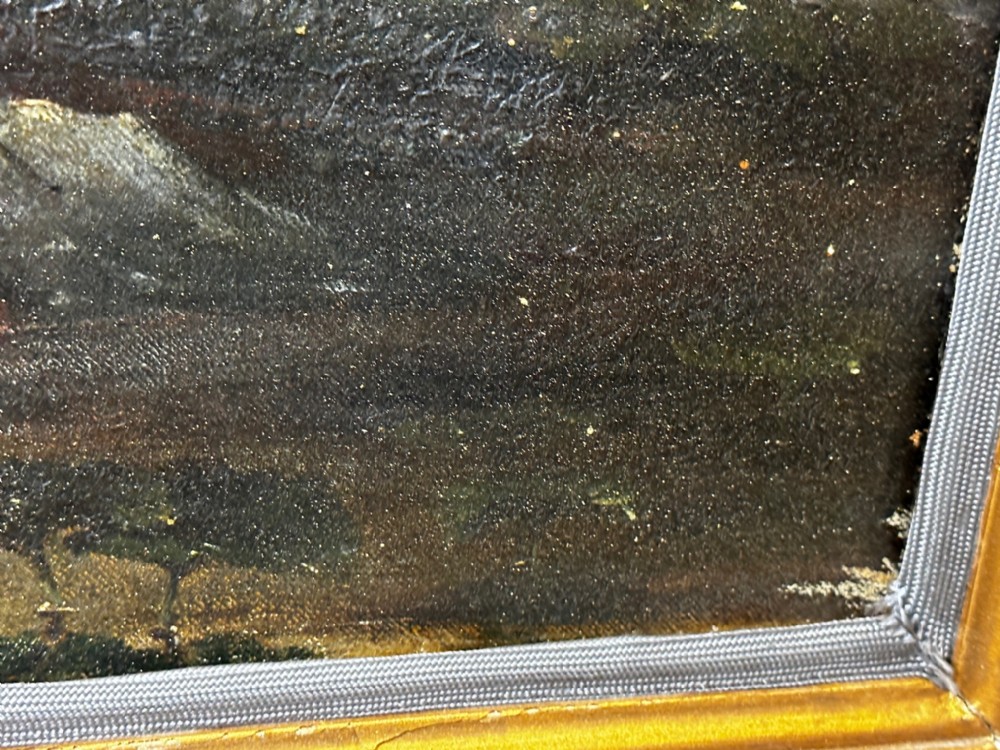
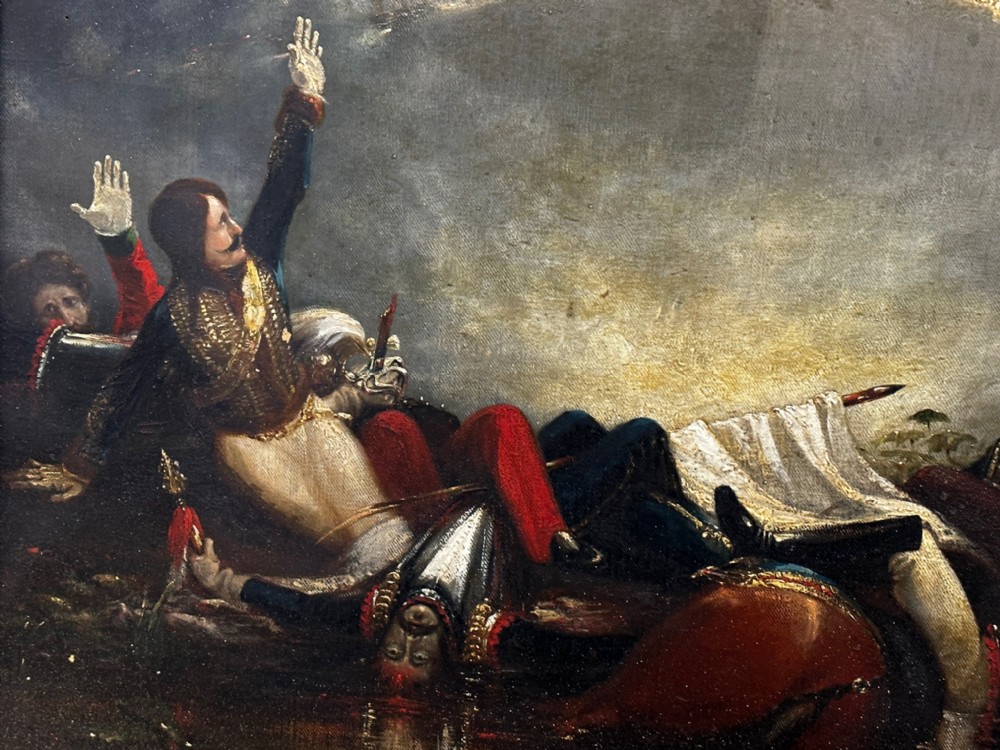
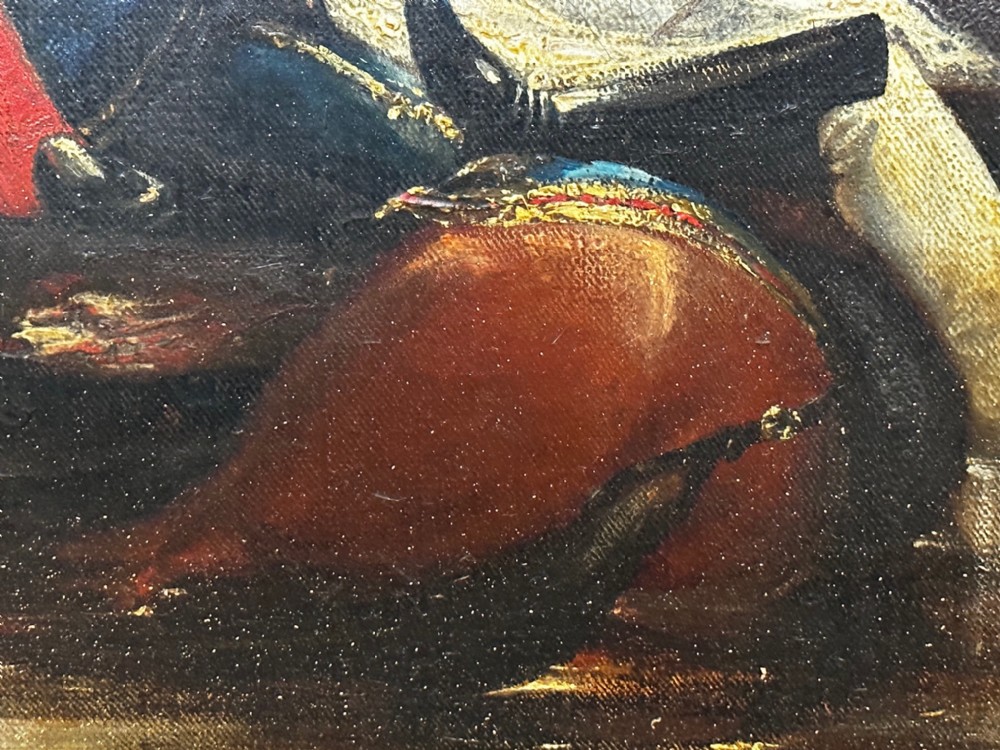
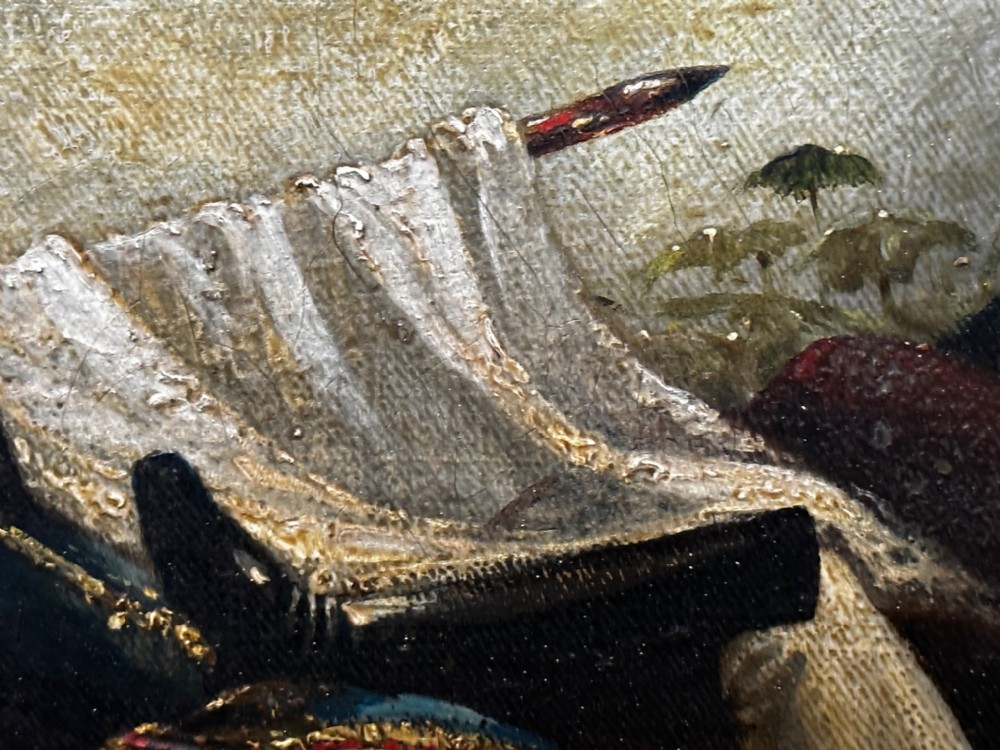
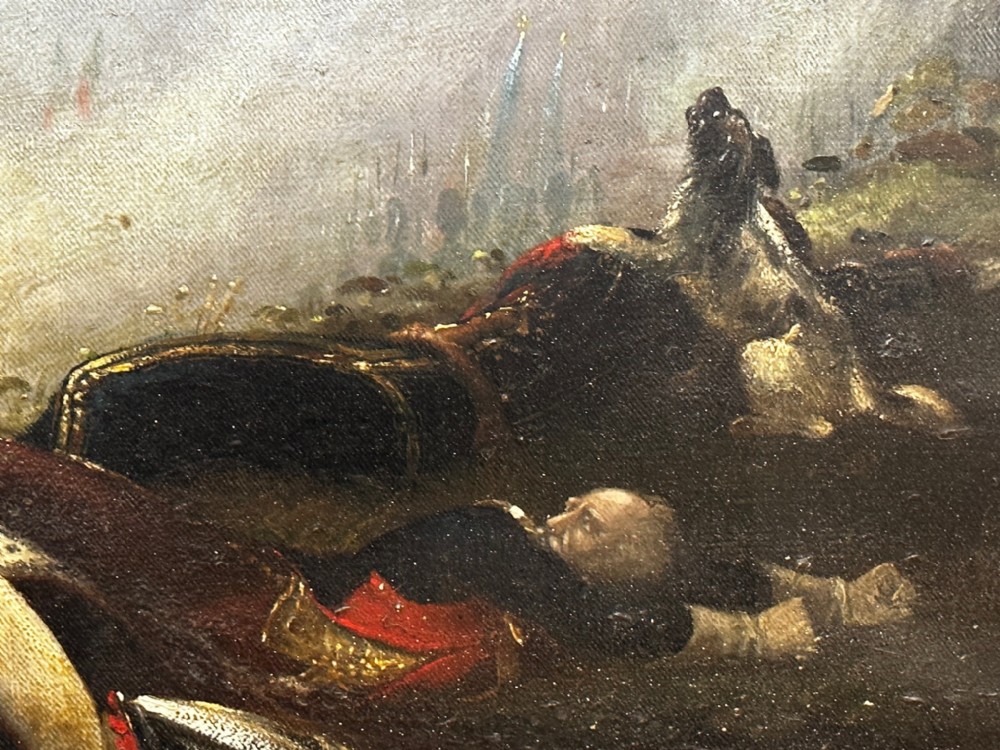
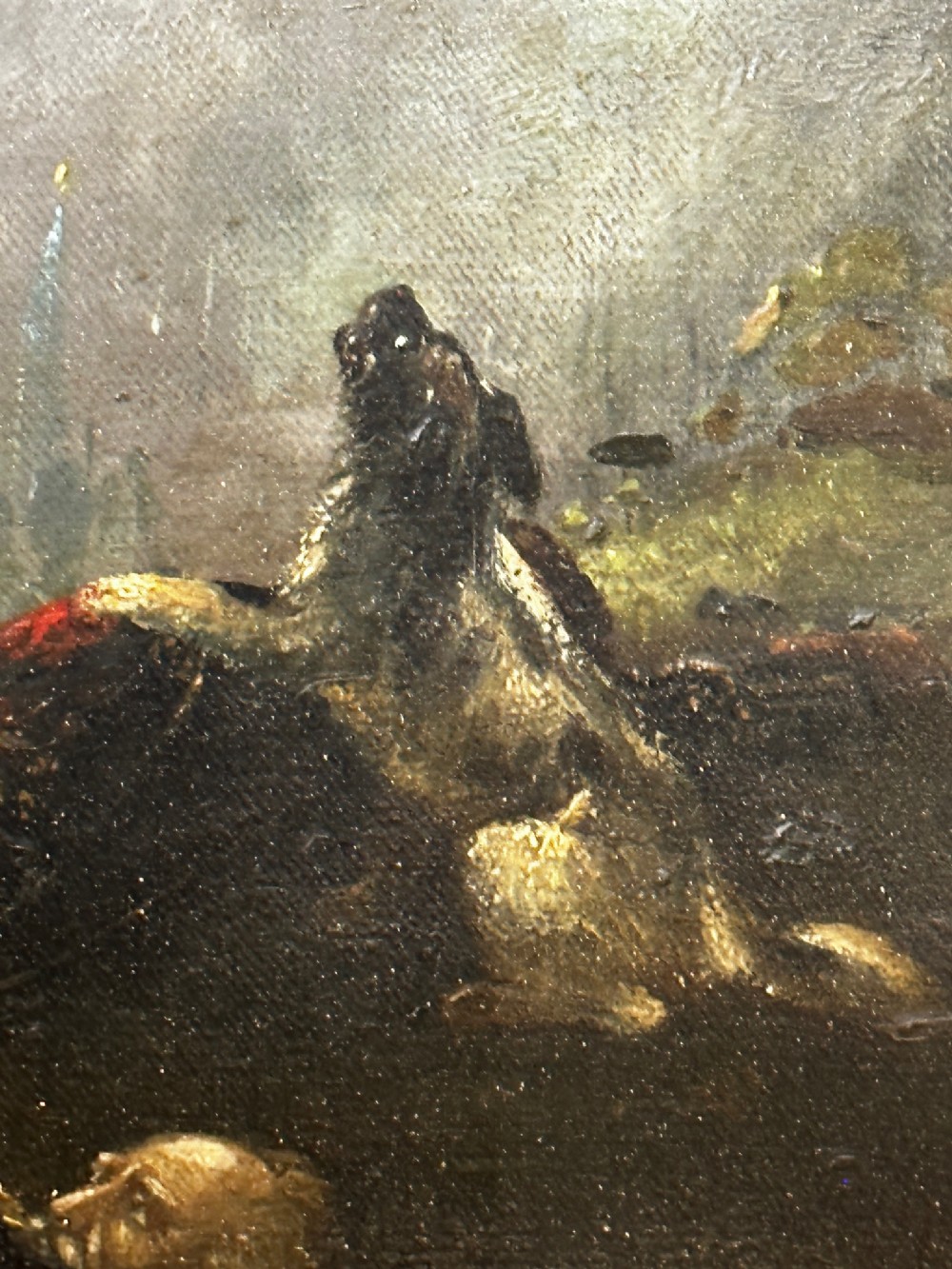
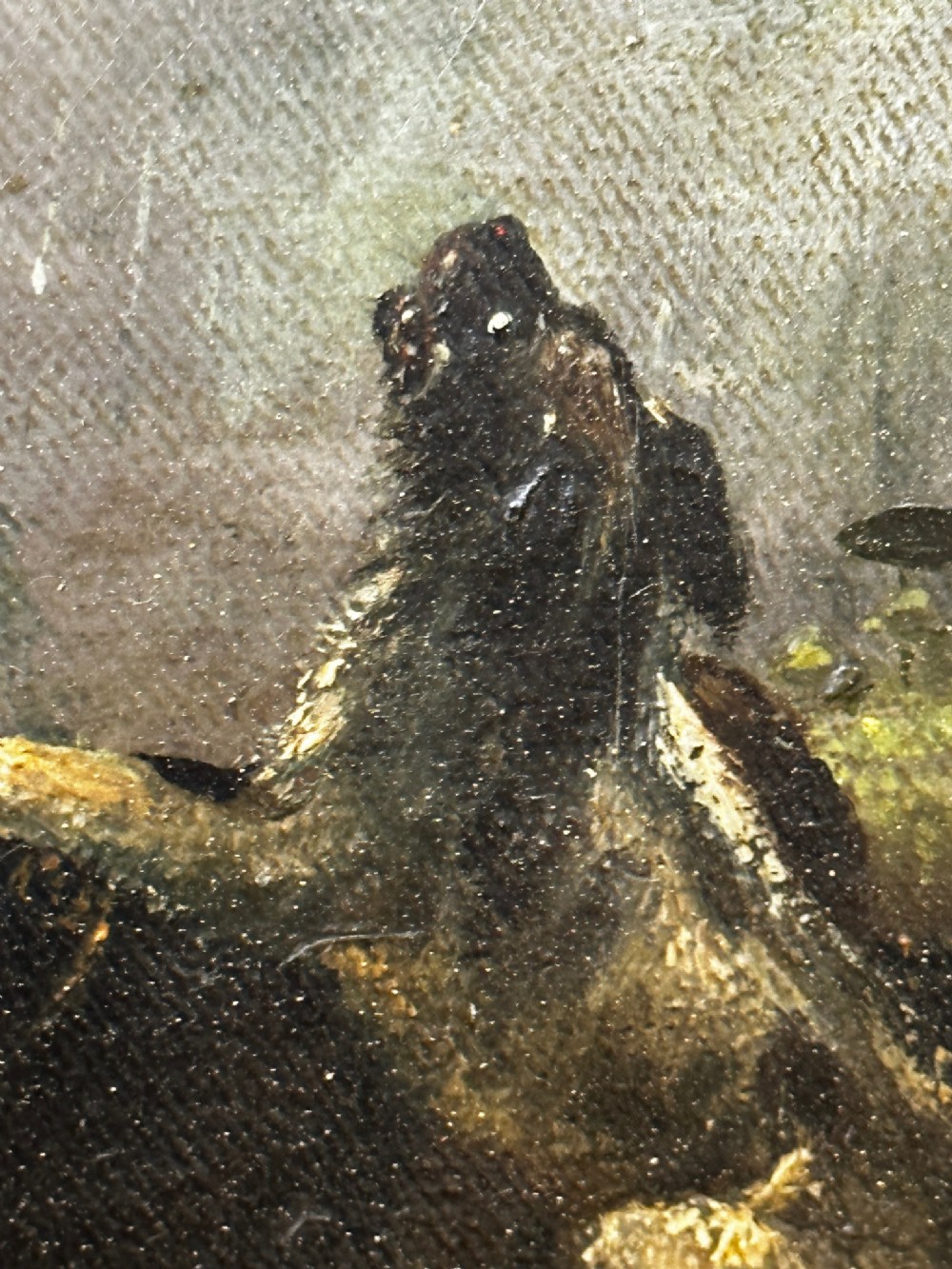
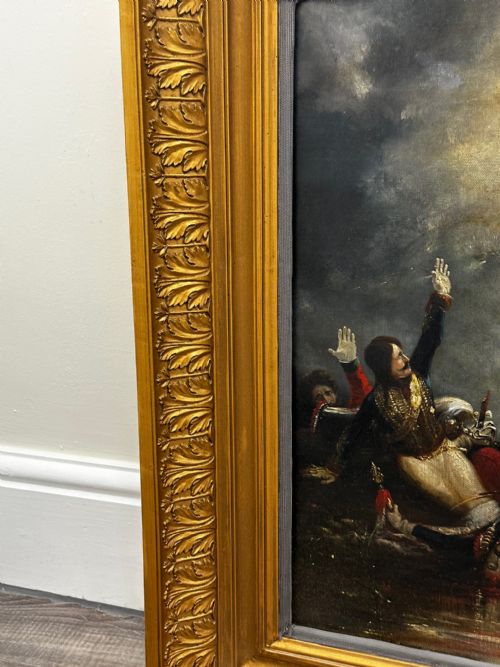
Subject dramatic Military Battle of Borodino scene view. Your first drawn to the foreground the aftermath of the battle, where Napoleonic French mounted Grenadiers of the Imperial Guard have fallen along with fallen horses, a white flag is draped over another fallen officer. 2 injured Grenadiers to the left are alive and each have one hand weating white glove raised in the air and the first is looking towards the hill, as a salute to the French victory. A broken bloodly sword is just next to him which is held be another fallen Grenadier, the other is looking towards the viewer, as in the background a large sloping hill is a Victorious French soldier holding aloft the flag and joyously celebrating victory at the top centre of the hill, with other soldiers and flags behind him. To the right a dog is howling towards the French on the Hill.
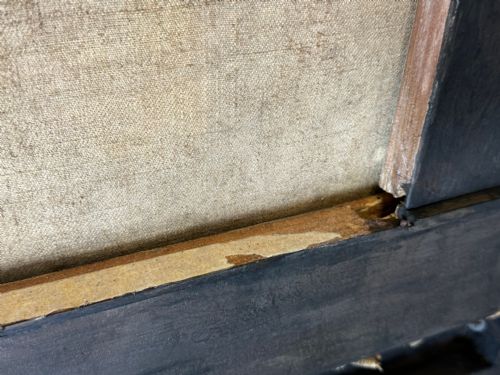
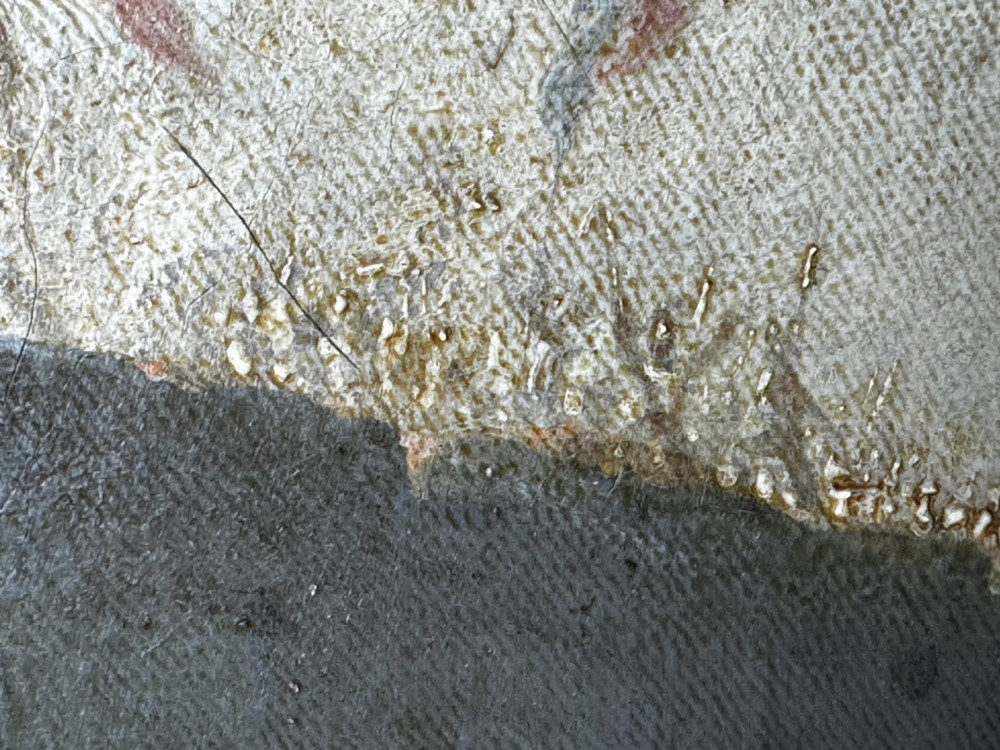
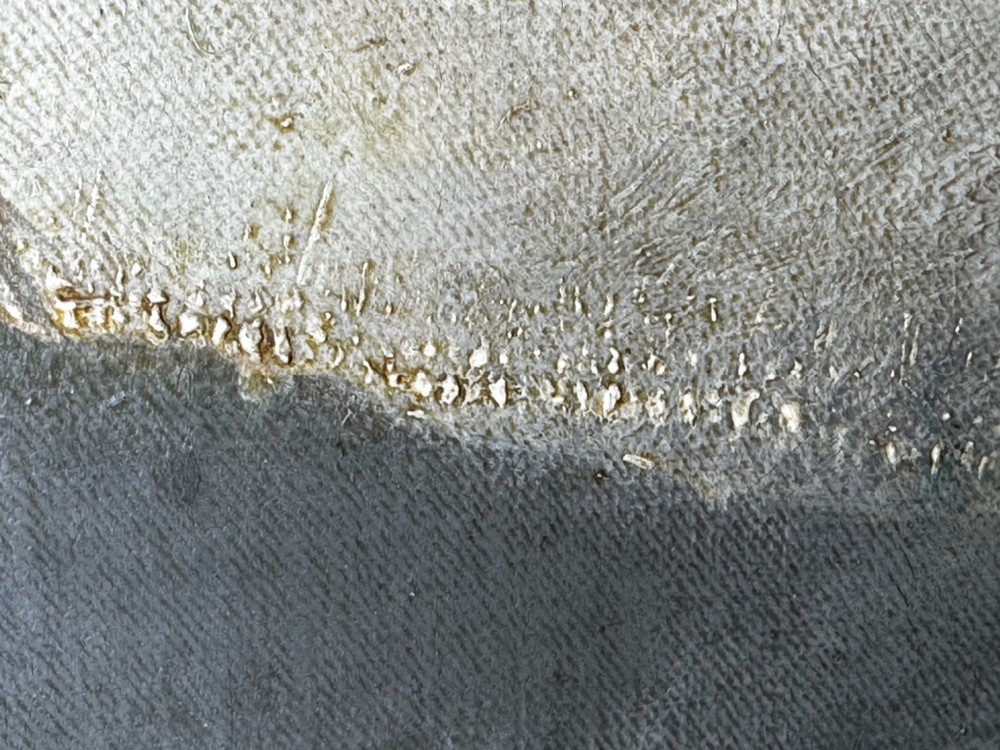
Oil on canvas.
Unsigned.
Circa 1840.
Provenance a letter dated July 1983 from Colonel P.Willing curator at Musée de l'Armée in Paris which is the French army museum which traces French Military conflicts. Confirmed the piece is 19th century c1840 and the engagement depicted in the painting is battle of Borodino.
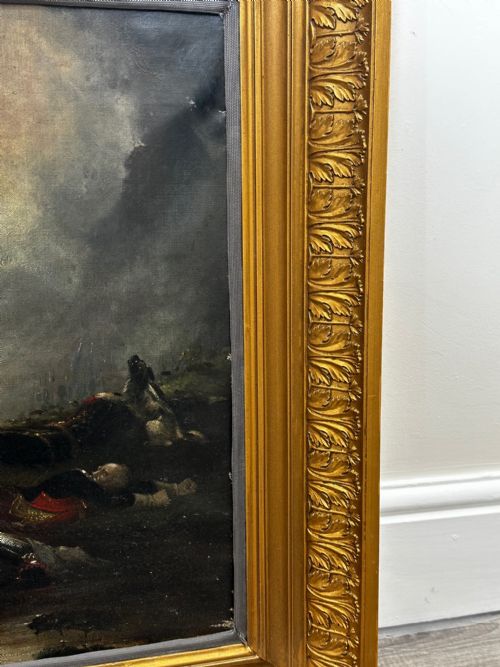
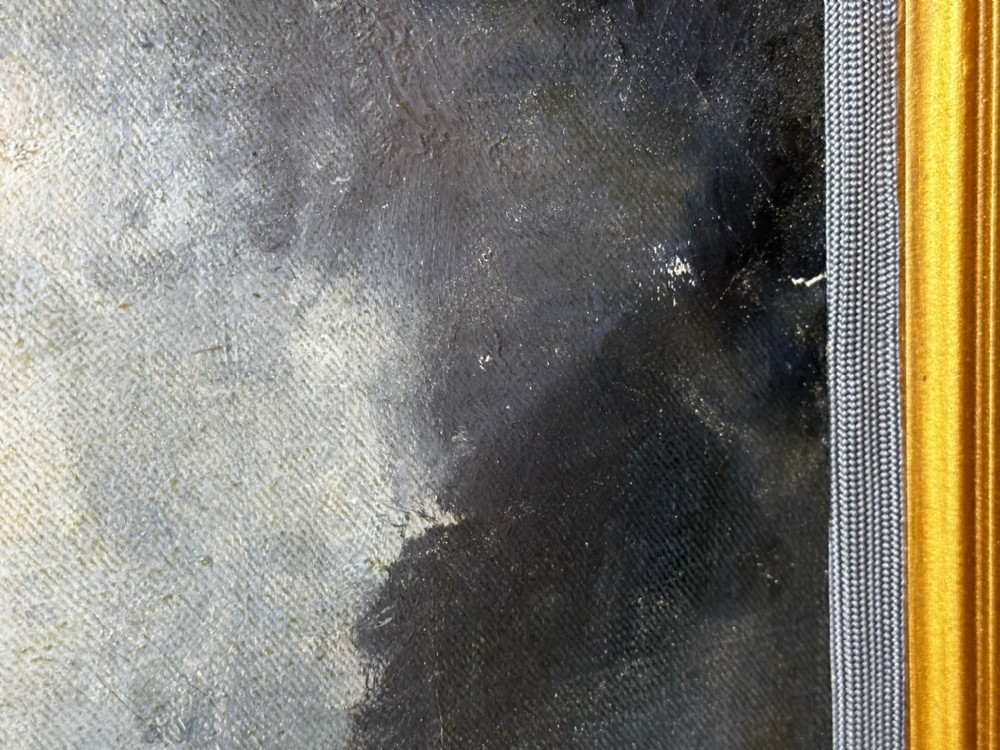
Set in an attractive gilt frame.
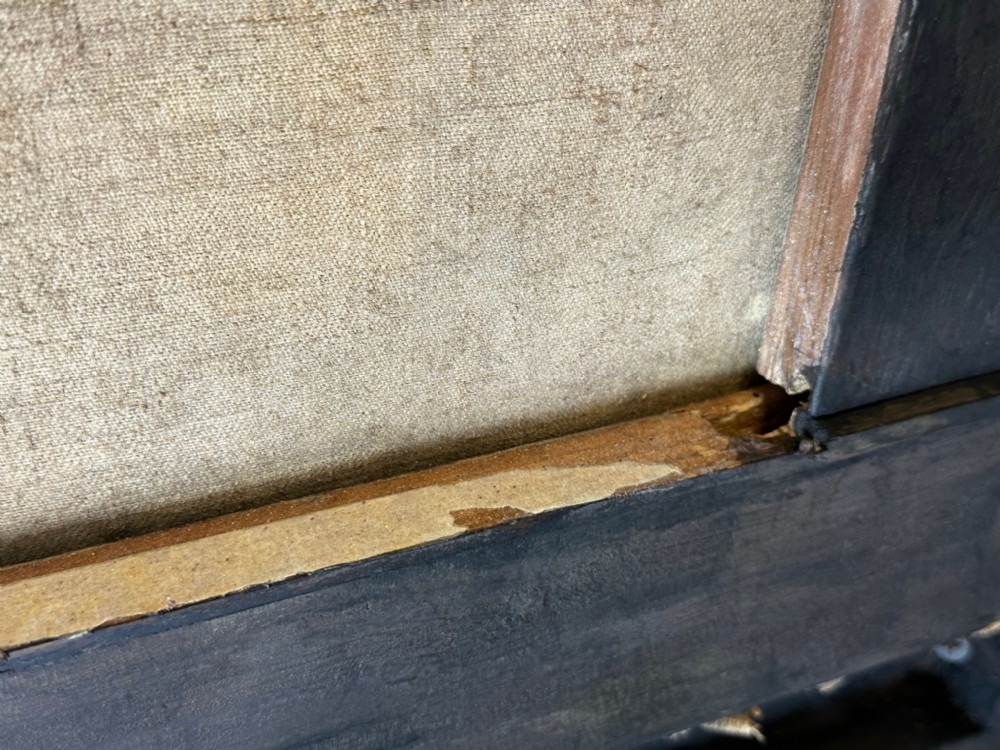
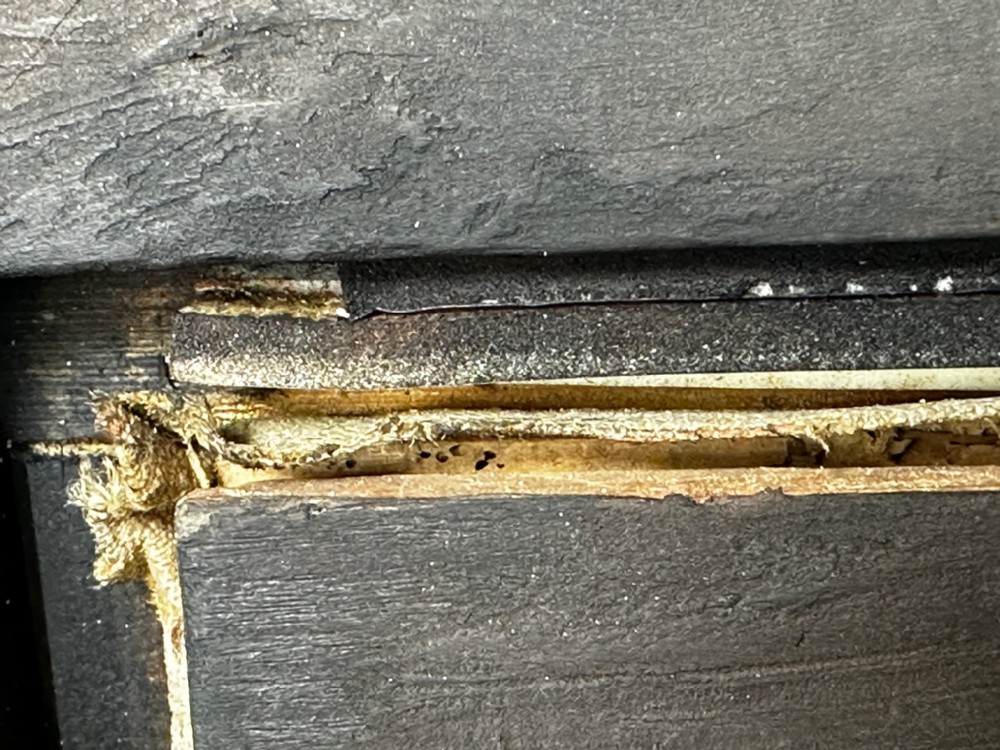
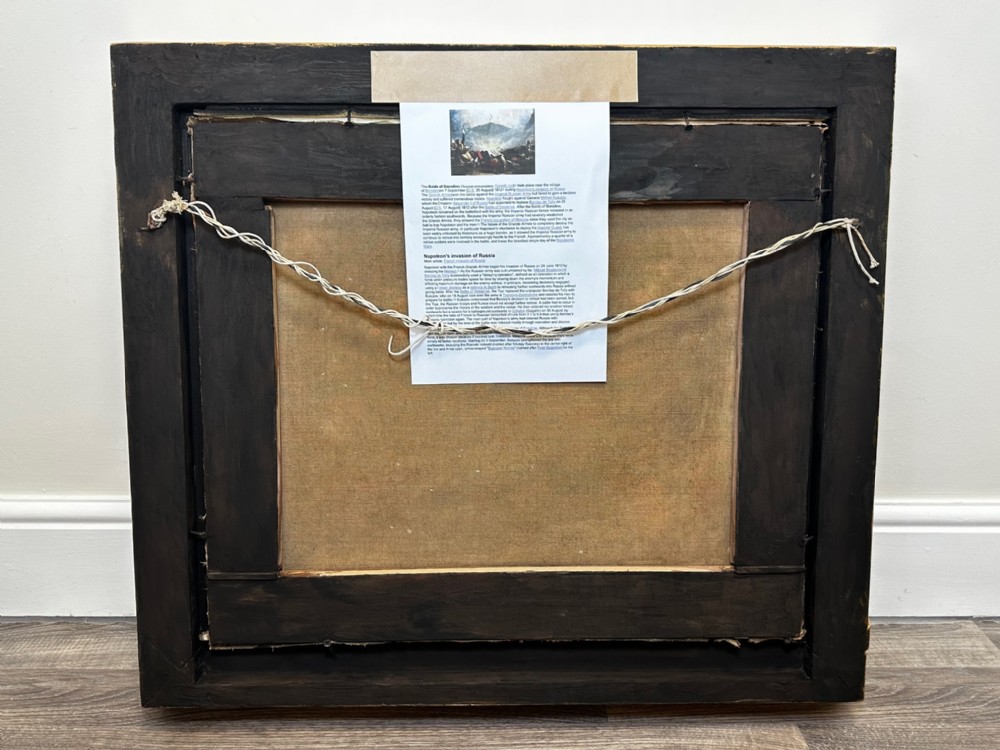
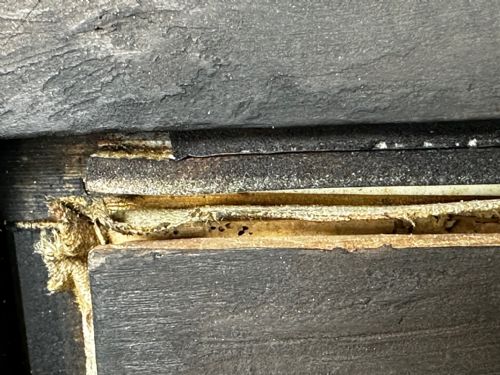
With hanging thread on the back ready for immediate home display.
The Battle of Borodino (Russian pronunciation: [b?r?d??'no])[a] took place near the village of Borodinoon 7 September [O.S. 26 August] 1812 during Napoleon's invasion of Russia. The Grande Arméewon the battle against the Imperial Russian Army but failed to gain a decisive victory and suffered tremendous losses. Napoleon fought against General Mikhail Kutuzov, whom the Emperor Alexander I of Russia had appointed to replace Barclay de Tolly on 29 August [O.S. 17 August] 1812 after the Battle of Smolensk. After the Battle of Borodino, Napoleon remained on the battlefield with his army; the Imperial Russian forces retreated in an orderly fashion southwards. Because the Imperial Russian army had severely weakened the Grande Armée, they allowed the French occupation of Moscow since they used the city as bait to trap Napoleon and his men.The failure of the Grande Armée to completely destroy the Imperial Russian army, in particular Napoleon's reluctance to deploy his Imperial Guard, has been widely criticised by historians as a huge blunder, as it allowed the Imperial Russian army to continue its retreat into territory increasingly hostile to the French. Approximately a quarter of a million soldiers were involved in the battle, and it was the bloodiest single day of the Napoleonic Wars.
Napoleon's invasion of Russia. Main article: French invasion of Russia
Napoleon with the French Grande Armée began his invasion of Russia on 24 June 1812 by crossing the Niemen. As his Russian army was outnumbered by far, Mikhail Bogdanovich Barclay de Tolly successfully used a "delaying operation", defined as an operation in which a force under pressure trades space for time by slowing down the enemy's momentum and inflicting maximum damage on the enemy without, in principle, becoming decisively engaged, using a Fabian strategy as a defence in depth by retreating further eastwards into Russia without giving battle.
After the Battle of Smolensk, the Tsar replaced the unpopular Barclay de Tolly with Kutuzov, who on 18 August took over the army at Tsaryovo-Zaymishche and ordered his men to prepare for battle. Kutuzov understood that Barclay's decision to retreat had been correct, but the Tsar, the Russian troops and Russia could not accept further retreat. A battle had to occur in order to preserve the morale of the soldiers and the nation. He then order
Cheshire Antiques Consultant Ltd has dated this piece to the 19th Century.
Source the historic in 17th, 18th, 19th & 20th century fine arts, painting, sculptures & collectibles
You can view the stock and full dealer information on the Cheshire Antiques Consultant Ltd Profile Page
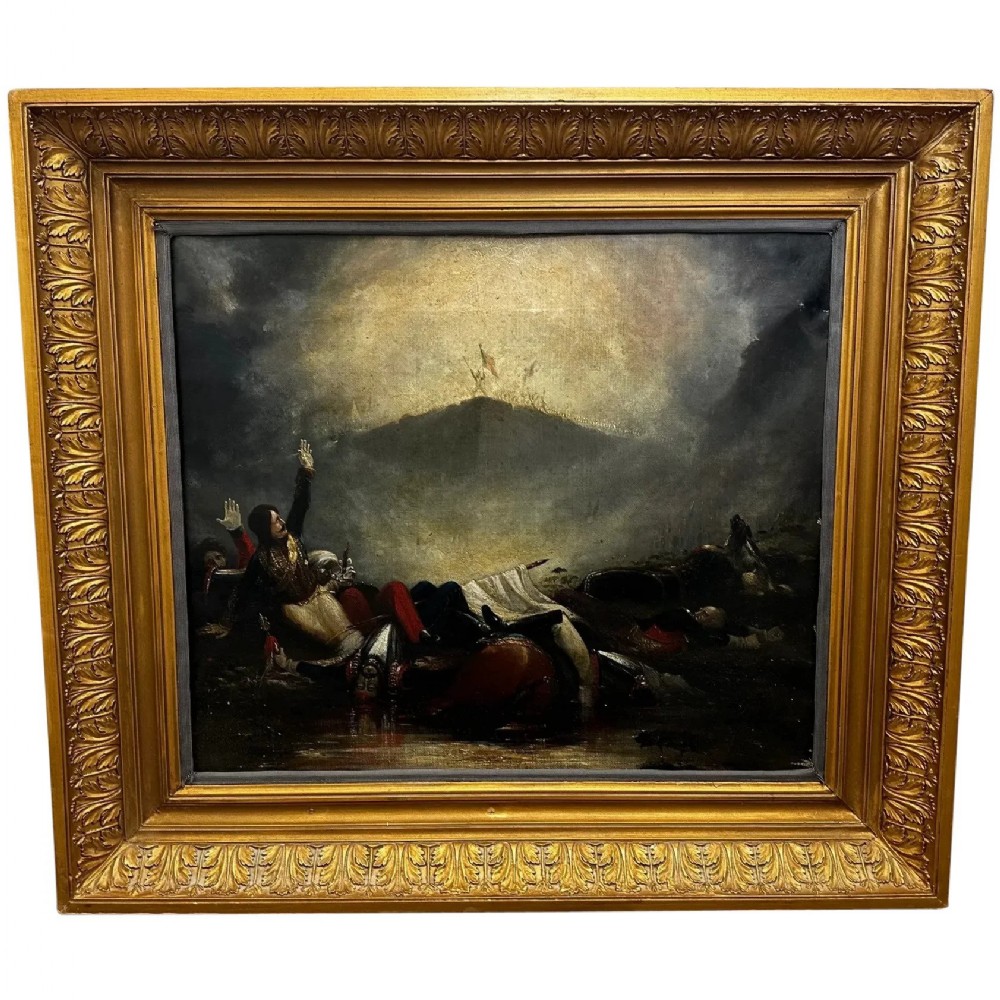
French 19th Century Napoleonic Military Battle Borodino Oil Painting