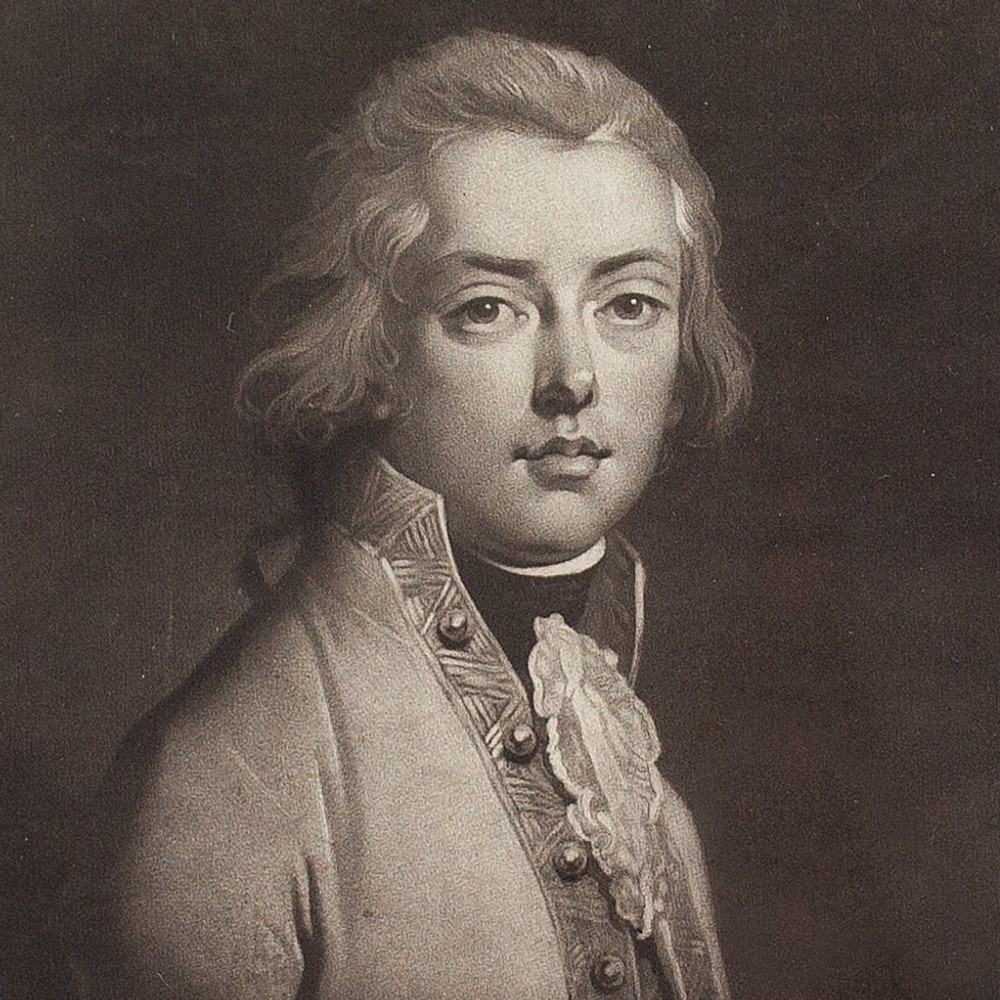
Brave Fine Art has dated this piece to the 18th Century.
As the second son of William V, this dapper young gentleman was destined to life as a ‘spare’. His brother, also William, became King of the Netherlands and Grand Duke of Luxembourg. But rather than afford himself the luxury of a sedentary life courting various prospective maidens, William George Frederick became a respected military leader - amid a violent age of perpetual European conflict.
The tactics of warfare studied in great detail, learning from the fearsome battles of his forefathers - the victories and defeats. Before too long, he faced the French, leading from the front and gaining a reputation for his bravery and camaraderie. As a young man, he inspired with energy and verve. At just 20, his rank had risen to General of the Cavalry but at the cost of a serious gunshot injury to his shoulder. One which would continue to hamper his future endeavours.

In 1795, following the downfall of the Dutch Republic, the young Prince found himself fleeing to Great Britain along with his family where George III (a cousin of his father’s) received them warmly. It was here that he found his true love - Princess Mary (1776-1857), George’s fourth daughter, and their marriage seemed inevitable. However, George III felt it proper that his other daughters should marry first and, hence, they were never wed.

Carrying Mary in his heart, William George Frederick returned to the battlefields to fight staunchly alongside his men. To much acclaim, he fought with a damaged shoulder - receiving various honours for his bravery. But despite cheating death numerous times in battle, it was his kindness that led to his eventual undoing. Following a visit to the sick soldiers nursed at Padua, Italy, he contracted a fever and died - at merely 25, still unwed. Princess Mary married her cousin, the Duke of Gloucester and Edinburgh.

The engraving depicts the Prince in 1797.
Held within a contemporary glazed frame.
Medium: Mezzotint engraving on hand-laid (vergé) paper
Overall size: 14½” x 17½” / 36cm x 44cm
Year of creation: c. 1797
Labels & Inscriptions: Painted by H Jones. Painter to the Emperor of Germany. Engraved by F Green. Prince of Orange Nassau. Major General in the Imperial Service. London published by J Green 701 Oxford Street. 23 January 1797.
Condition: Artwork presents well. Minor creasing. Better in person.
Brave Fine Art has dated this piece to the 18th Century.
Exquisite antique paintings that capture the imagination.
You can view the stock and full dealer information on the Brave Fine Art Profile Page

18th-century Engraving, William George Frederick, Prince of Orange-nassau - Antique Mezzotint Engraving