Brave Fine Art has dated this piece to the 1860s.
As such, he hung Hunt’s works in his own bedroom - alongside his favourite Turners. Today, he remains a vastly underrated contributor to the progression of British art and undoubtedly deserves his place among any of the great pioneers.
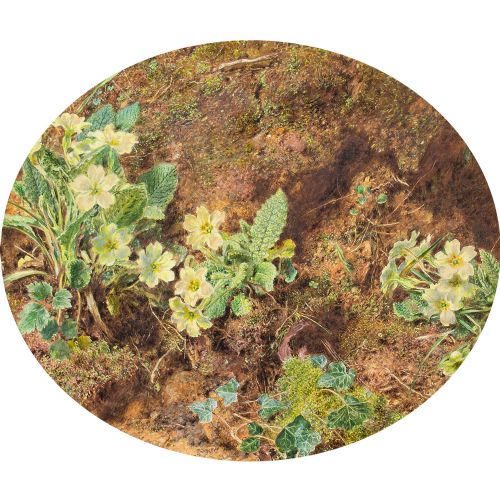
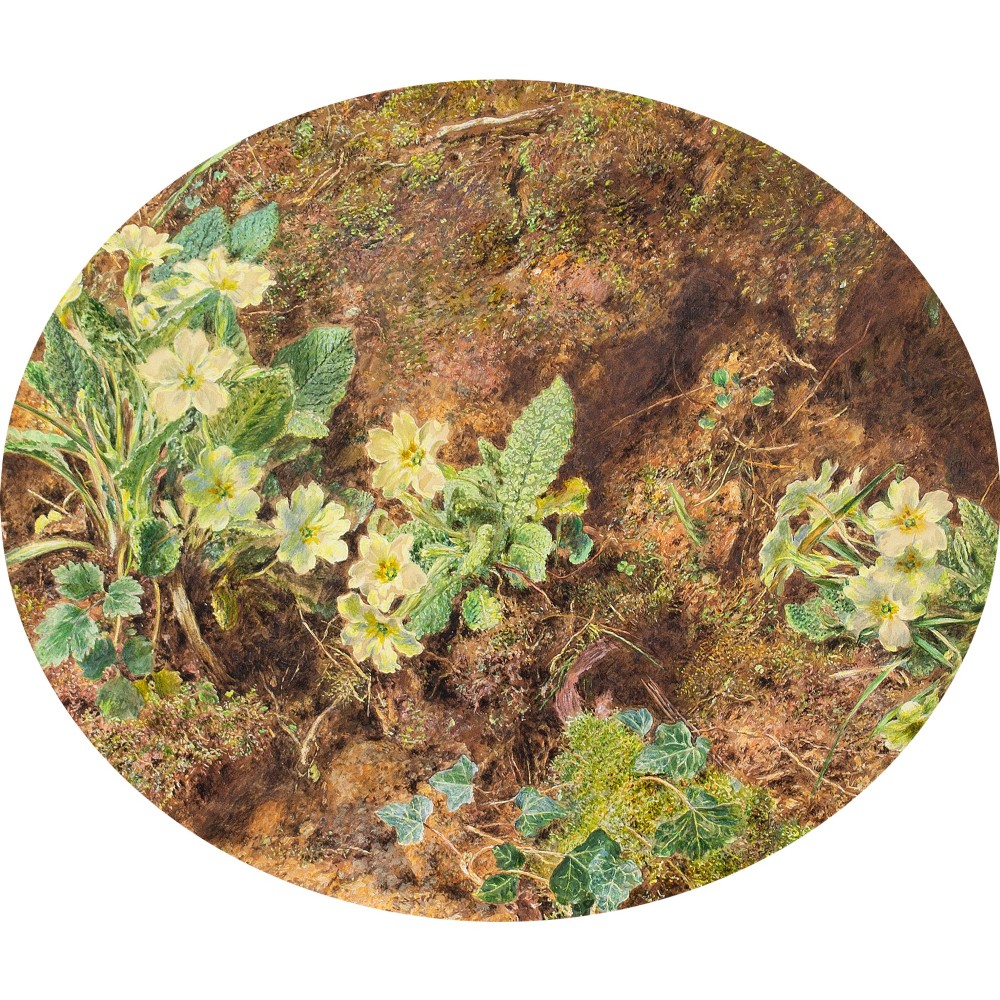
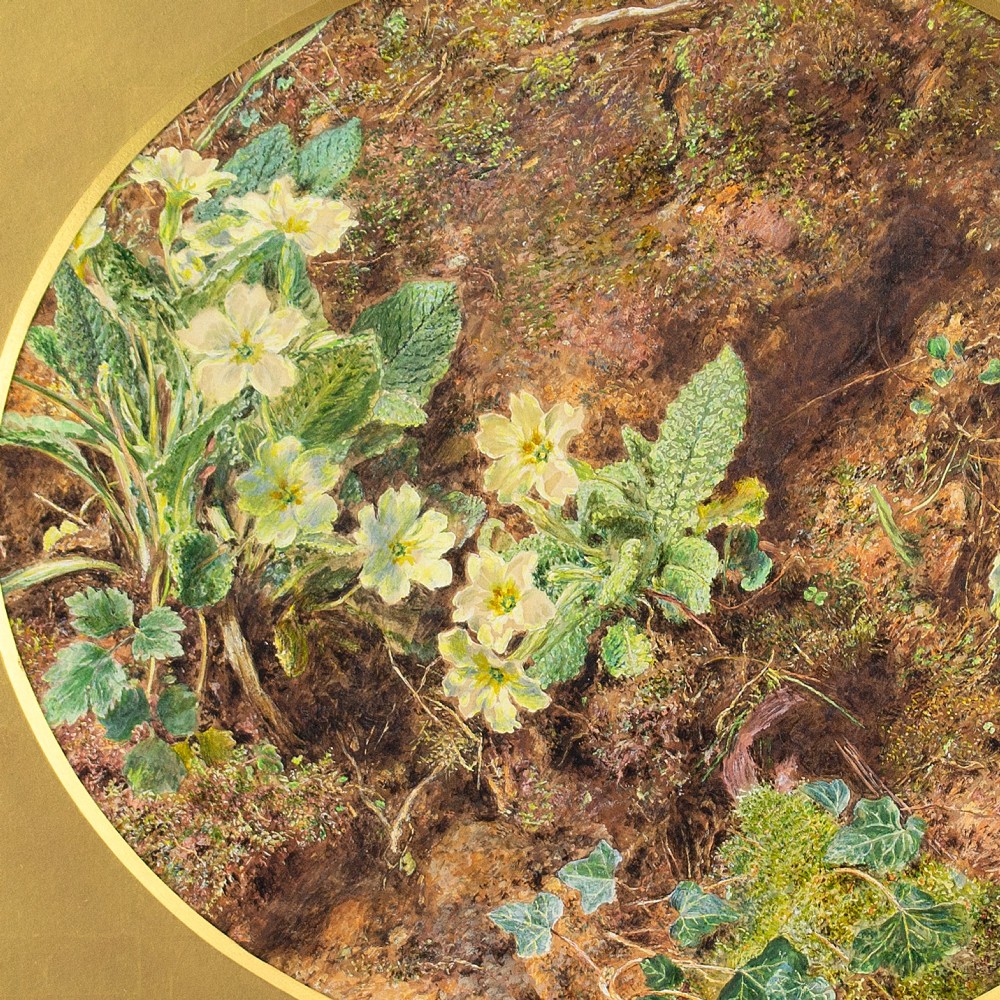
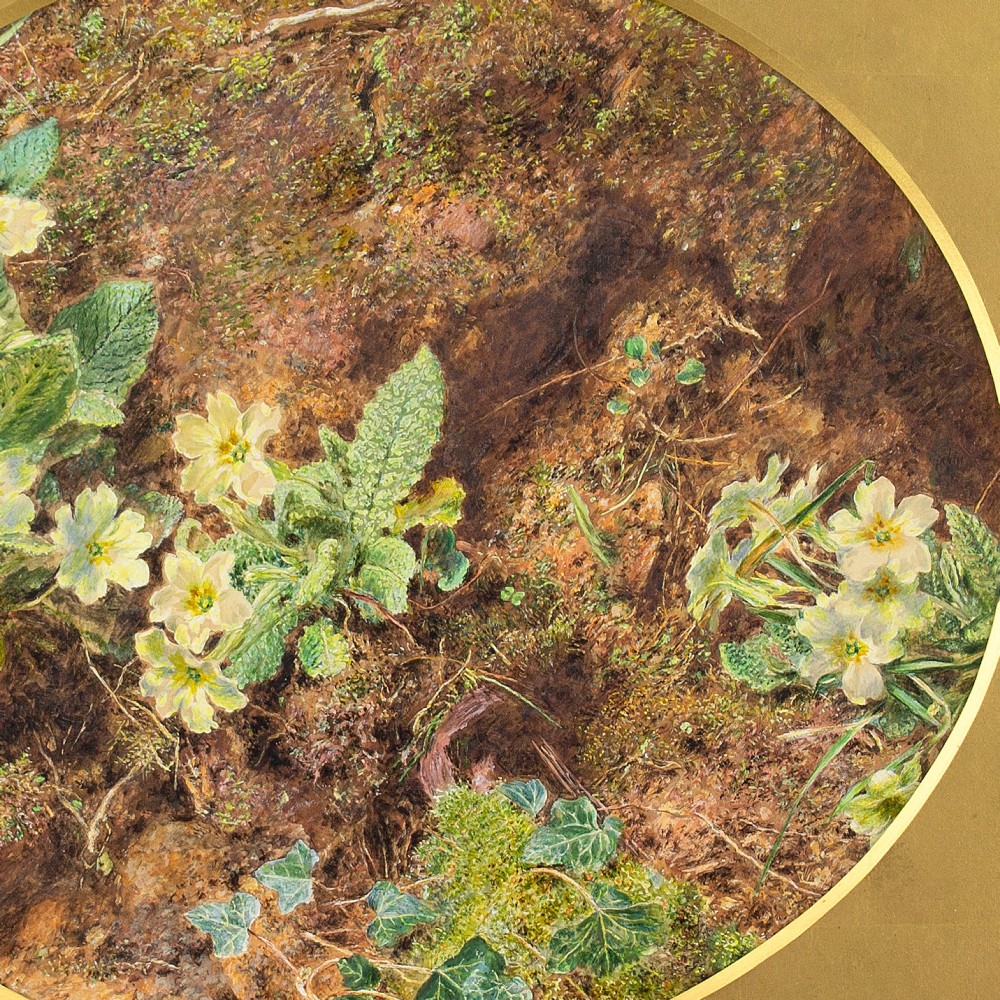
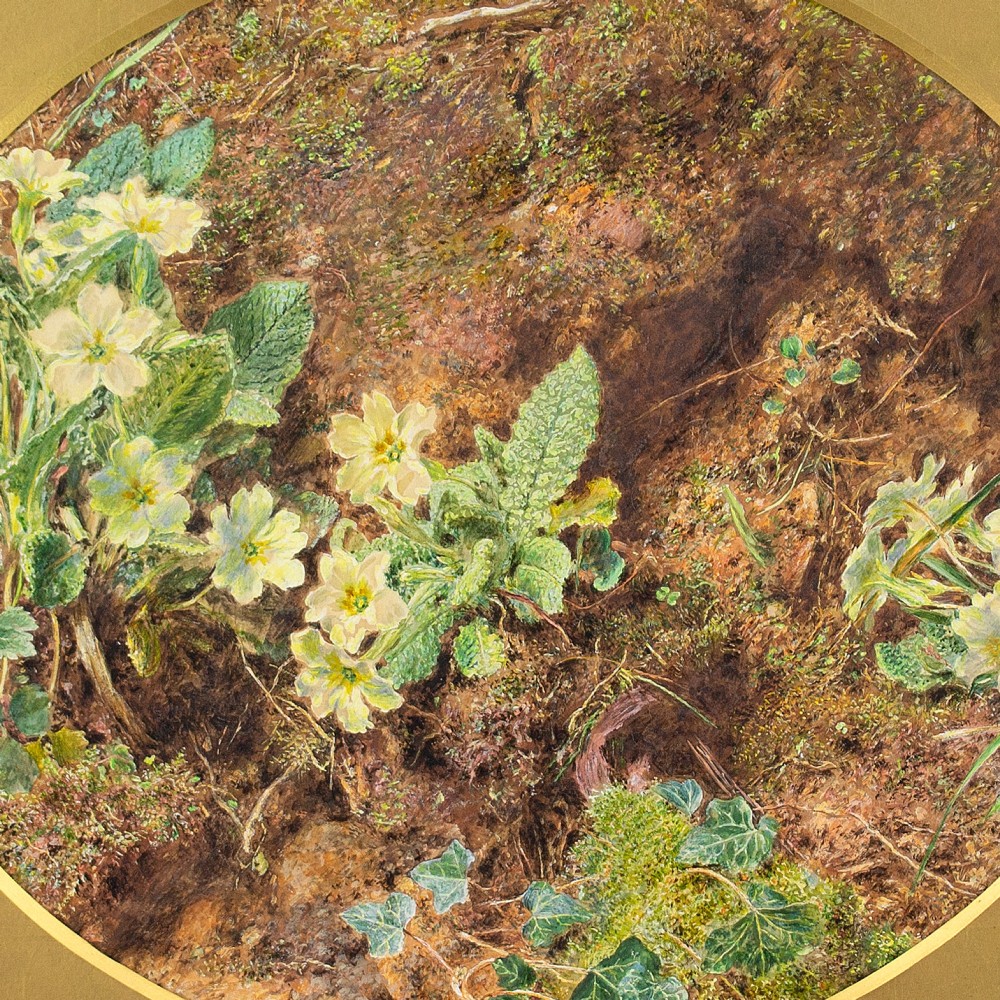
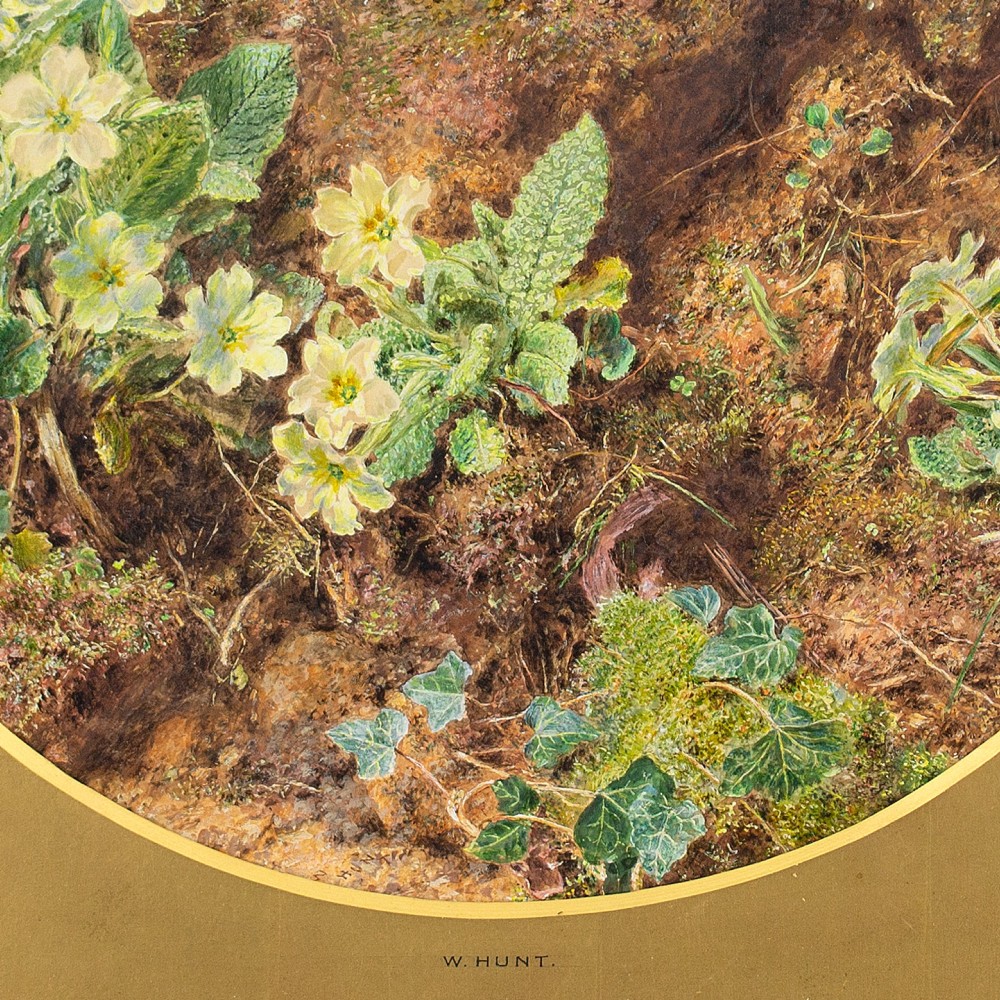
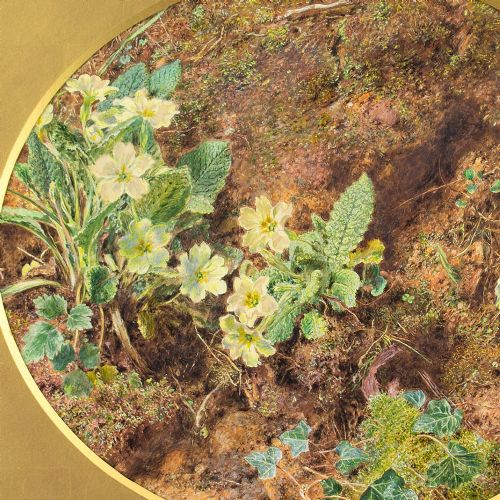
Painted in around 1860, this still life with primroses is characterised by its attention to detail and fine quality. It’s comparable to a similar work at the Tate.
Hunt's fastidiousness for truth resulted in his continuing efforts to push the boundaries of watercolour beyond what many thought possible. As such, he created a new technique involving a hardened ground of opaque bodycolour in Chinese white on which he stippled transparent layers of pigment to achieve greater luminosity of colour. His works seem to glow and, as a result, the Pre-Raphaelites took note - in search of a superior finish. In addition, his stippling technique influenced the French pointillists Jean Seurat (1851–91) and Paul Signac (1863–1935).
Hunt was inundated with commissions, particularly during the later part of his career and exhibited extensively including at the Royal Academy and Exposition Universelle in Paris. His buyers were generally the rising middle classes in the North who sought to adorn their walls with thoroughly British decorative works.
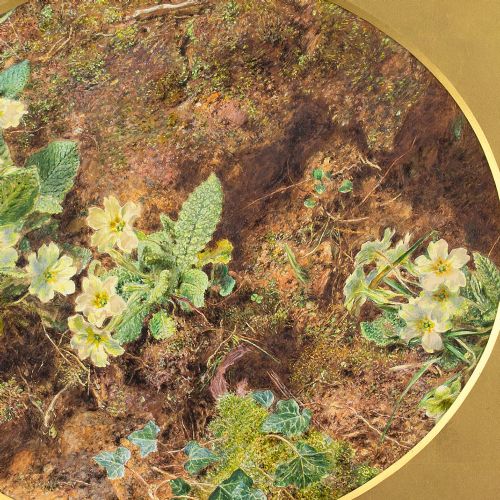
Today, he’s represented in the Victoria and Albert Museum, Tate Gallery, British Museum, The Metropolitan Museum of Art, The National Gallery of Art, Washington, Yale Center for British Art, Birmingham Museum and Art Gallery, Lady Lever Art Gallery, National Portrait Gallery, Ashmolean Museum, Courtauld Institute of Art, Fine Arts Museums of San Francisco, Royal Watercolour Society, among numerous others.
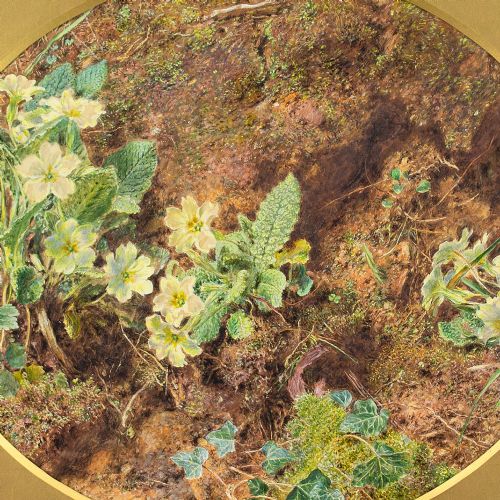
Did you know: William Henry Hunt was nicknamed 'Bird's Nest Hunt' by his fellow artists due to the number of nests he painted.
But, perhaps, despite his remarkable success, his finest quality was modesty and his heartfelt devotion to nature itself. In 1862, aged 72, he stated ‘it is never too late to try and do better’. A line which captures his lifelong efforts to represent nature in all its elusive beauty.
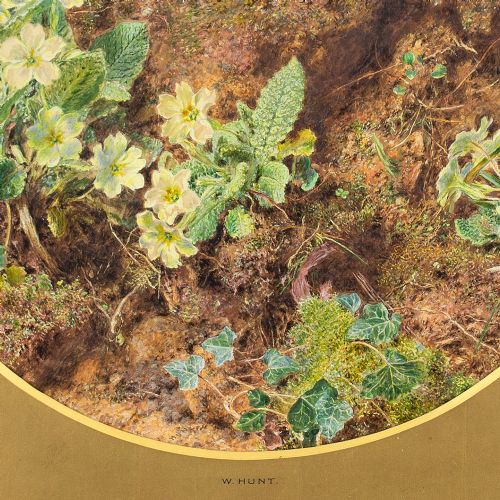
Signed in the lower left and housed within a 19th-century gilt frame, probably original.
Further reading at Sotheby’s.
https://www.sothebys.com/en/articles/william-henry-hunt-master-of-reality
Learn more about William Henry Hunt in our directory.
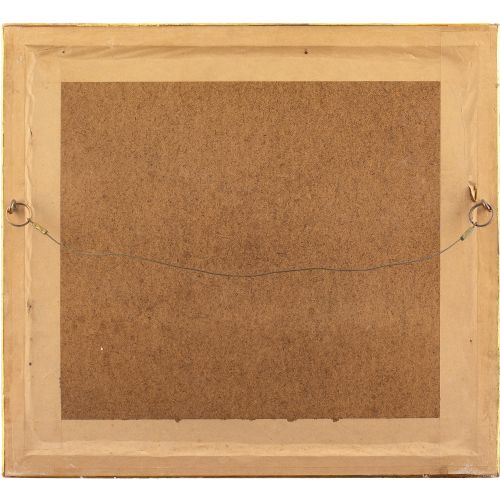
Medium: Watercolour and bodycolour on paper
Overall size: 19½” x 17½” / 49cm x 45cm
Year of creation: c. 1860
Condition: Artwork presents well. Frame with some light wear.
Artist’s auction maximum: £45,000
Brave Fine Art has dated this piece to the 1860s.
Exquisite antique paintings that capture the imagination.
You can view the stock and full dealer information on the Brave Fine Art Profile Page
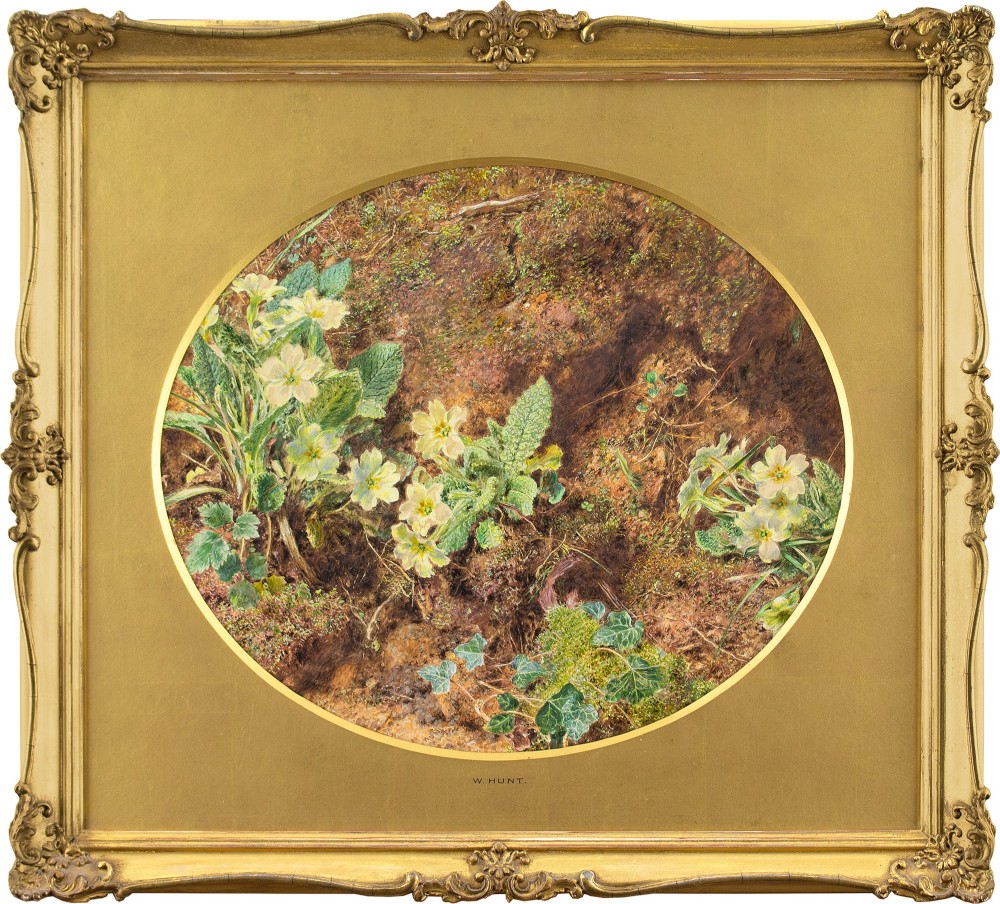
William Henry Hunt Ows, Still Life with Primroses - Antique Watercolour