
Artware Fineart has dated this piece to the 18th Century.
Medium: Oil on canvas
John Hoppner Studio Sale Christie''s May 31st 1823
Viscount Canterbury, 1868.
National Portrait Exhibition 1868, No 11 (incorrectly catalogued as by Sir Thomas Lawrence).
(J Ingamells, English Episcopal Portraits p372 type A1)
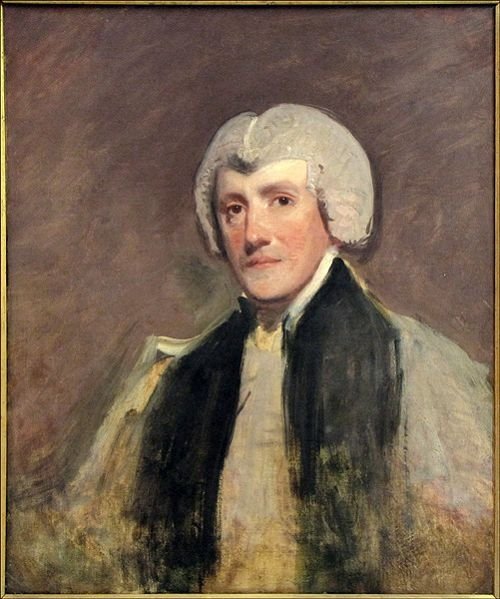
Sutton, Charles Manners - (1755–1828), archbishop of Canterbury, was born Charles Manners on 14 February 1755, the fourth son of Lord George Manners (1723–1783) and his wife, Diana (d. 1767), daughter of Thomas Chaplin of Blankney, Lincolnshire; he was grandson of John, third duke of Rutland. In 1762 his father assumed the additional surname Sutton on inheriting the estates of his maternal grandfather, Robert Sutton, second Baron Lexington. Educated at Charterhouse School, he then matriculated as a pensioner at Emmanuel College, Cambridge, on 1 March 1773; he graduated BA as fifteenth wrangler in 1777, his younger brother, Thomas Manners-Sutton, being at the same time fifth wrangler. He proceeded MA in 1780 and DD in 1792. In 1785 he was presented to the rectory of Averham with Kelham, Nottinghamshire, and also to Whitwell, Derbyshire. Manners-Sutton married in 1778 Mary (d. 1832), daughter of Thomas Thoroton of Screveton, Nottinghamshire. They had two sons and ten daughters.
Preferment was rapid. Manners-Sutton became dean of Peterborough in 1791, in 1792 bishop of Norwich, and—because Norwich had a small income and was a large and expensive diocese—influence at court secured him the deaneries of Windsor and Wolverhampton in 1794, to be held in commendam. He and his wife became great favourites with George III and the royal family. In 1794 he was offered the archbishopric of Armagh, but he declined the appointment. At Norwich, Manners-Sutton was a conscientious and well-liked diocesan bishop. He was the first bishop of Norwich consistently to undertake all his ordinations in Norwich. He was hospitable and generous to charities. He dined with his clergy after his visitations and treated them with wine, ‘a bottle between two’ (Diary of a Country Parson, 3.367). He separated confirmations from visitations. After a confirmation James Woodforde, rector of Weston Longueville, noted that his niece, ‘Miss Woodforde [was] much pleased … with the Bishop's very agreeable and affable, as well as polite and sensible behaviour’ (ibid., 4.141). In his visitations he demonstrated a keen interest in matters of contemporary concern to the church—the employment of curates; the administration of baptism, schools, and almshouses; and disputes over tithe payments—and he asked for
any other Matters relating to your Parish of which it may be proper to give me Information, Or any proposal to make whereby the Glory of God and the Good of his Church may be promoted, and this Diocese better ordered, and ourselves mutually aiding and assisting each other in the Discharge of our respective Duties. (Visitation inquiries, 1801, Norwich RO, NDR VIS 39/17)
During the threat of French invasion in 1803 Manners-Sutton urged the clergy to warn the poor of the risks a French occupation might have for them, but he advised the clergy against joining militias or defensive corps. At Norwich, Manners-Sutton seems to have got into financial difficulties, despite the additional revenues of the deanery of Windsor, and he was criticized for extravagance.
Artware Fineart has dated this piece to the 18th Century.
You can view the stock and full dealer information on the Artware Fineart Profile Page
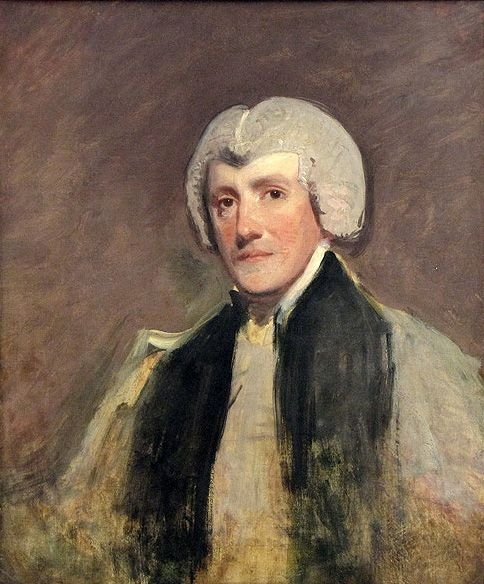
Portrait of Charles Manners-sutton, Dd. 1755-1828 , Archbishop of Canterbury by John Hoppner, Ra (1758-1810)