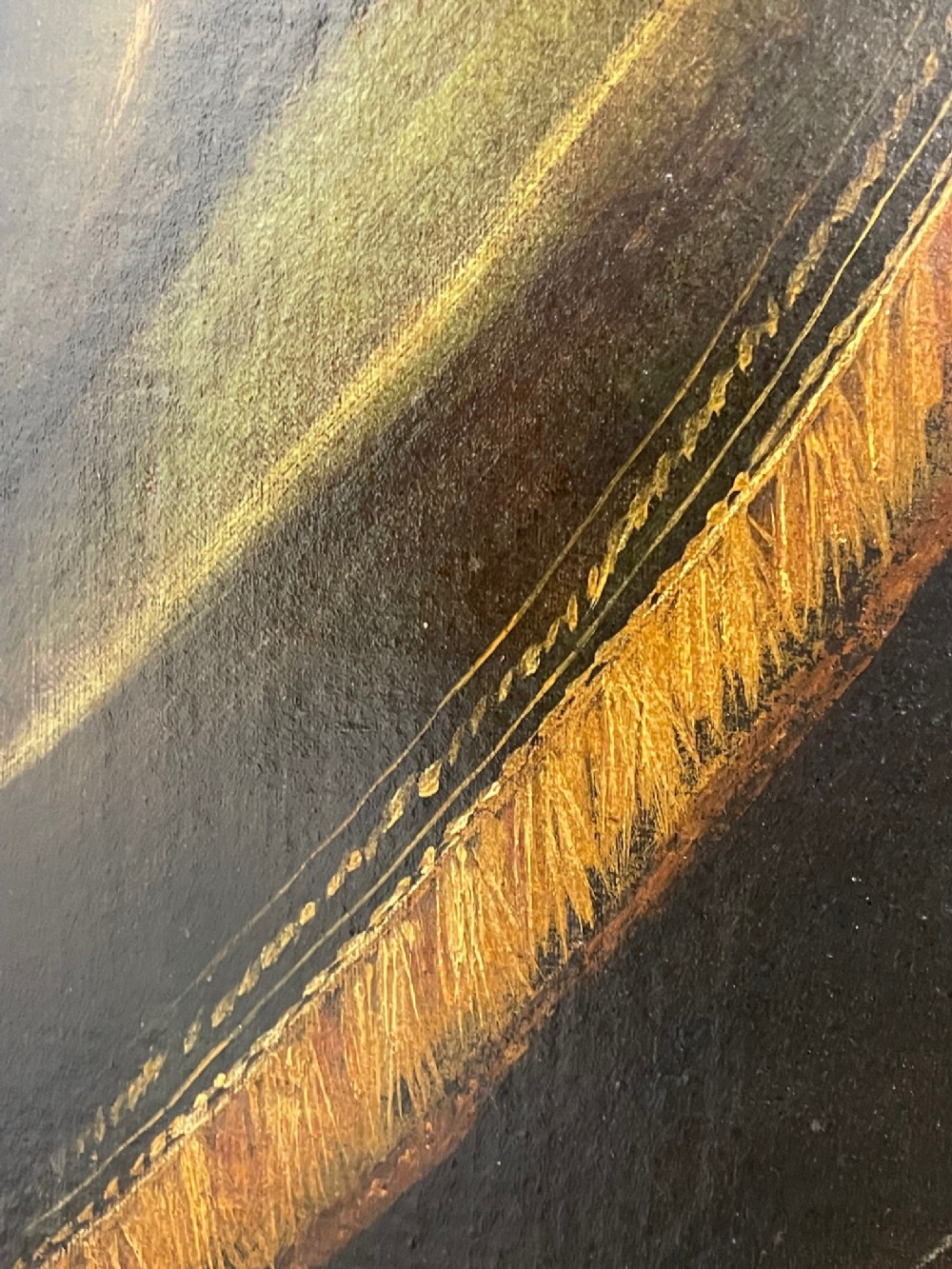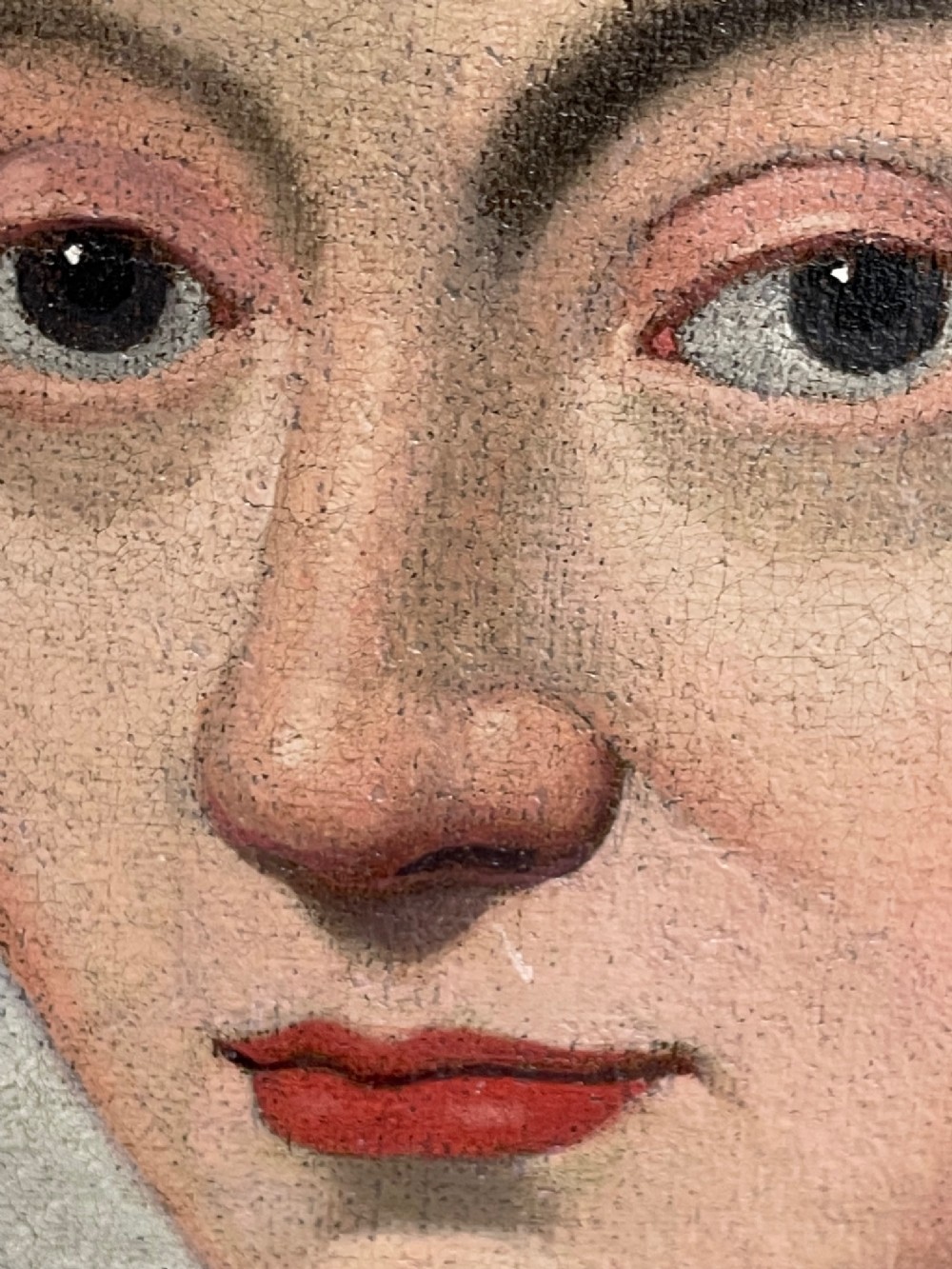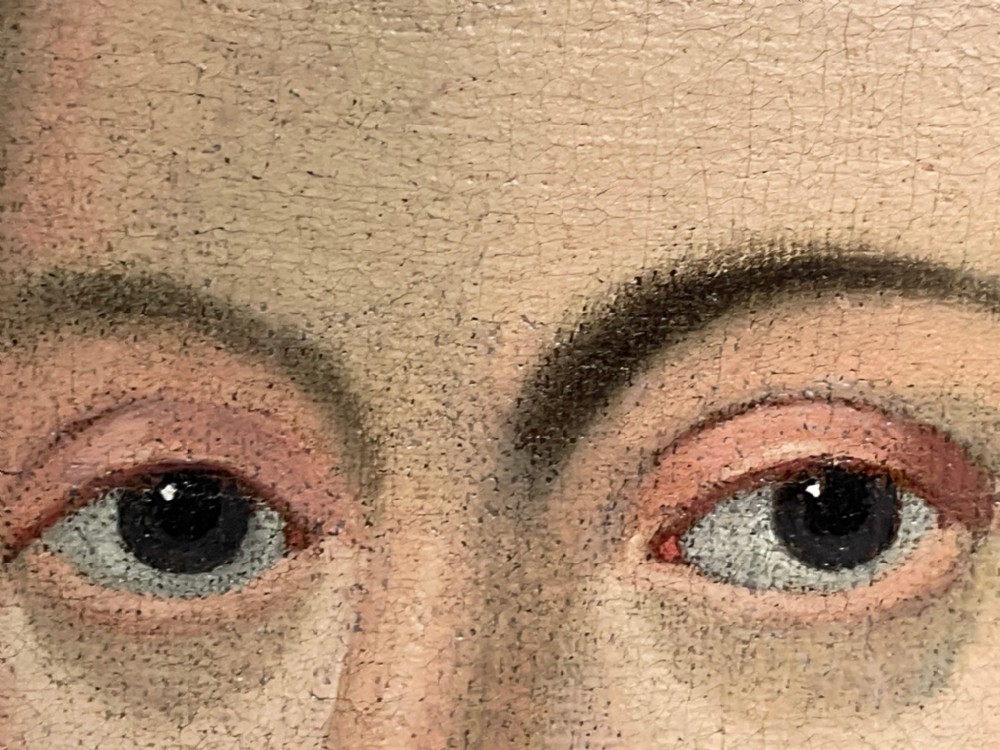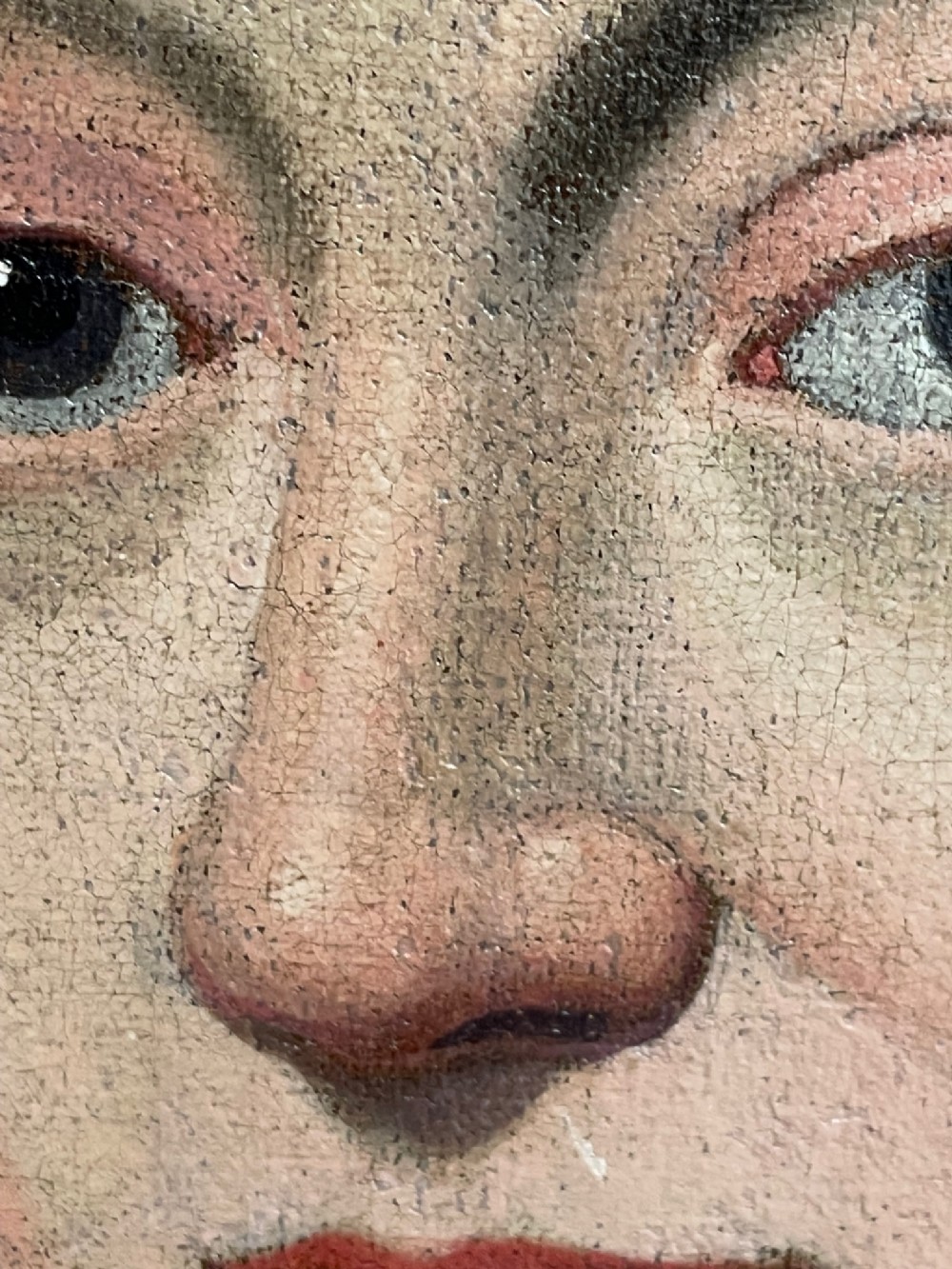
Cheshire Antiques Consultant Ltd has dated this piece to the Before 1700 period.
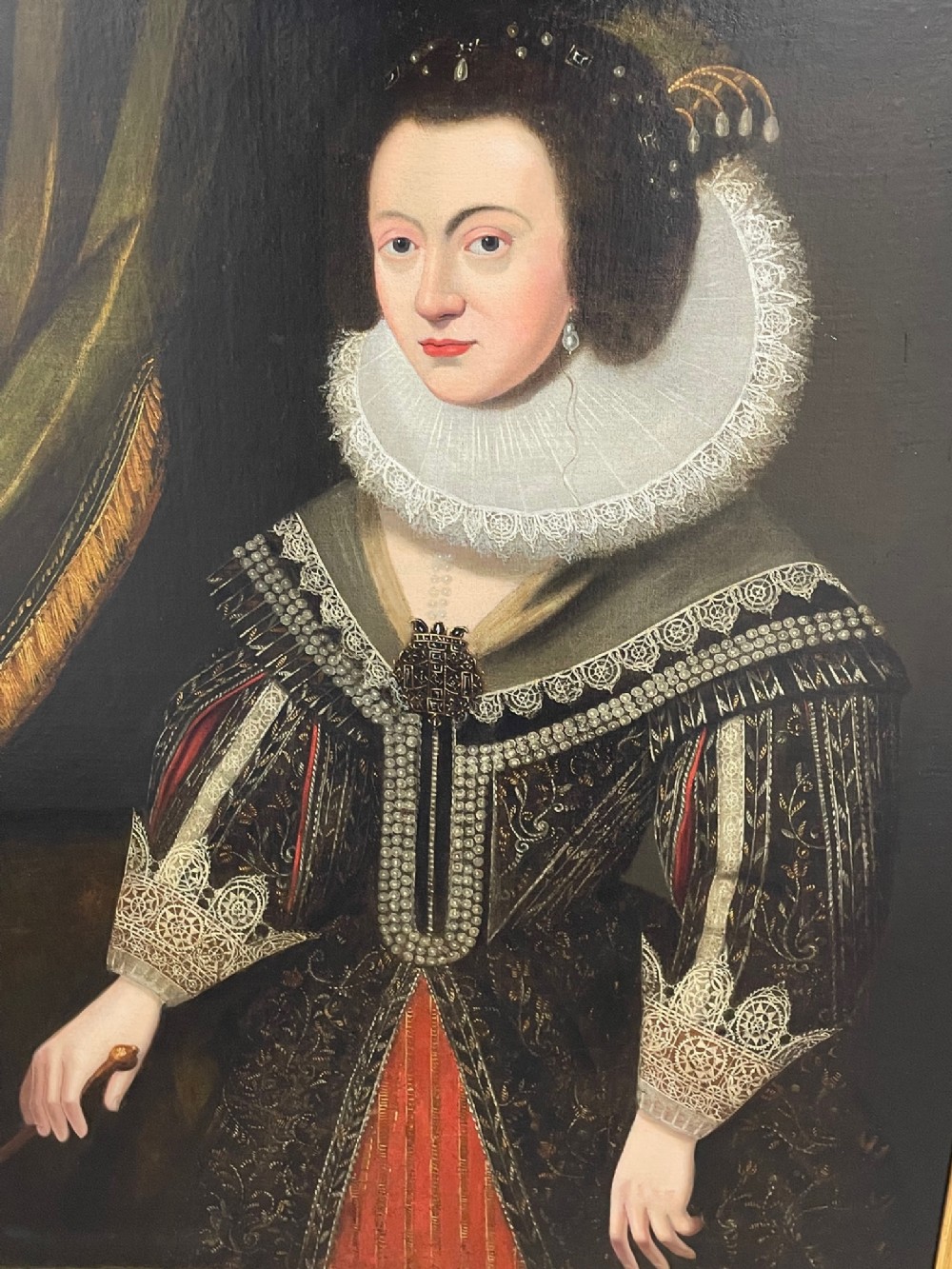
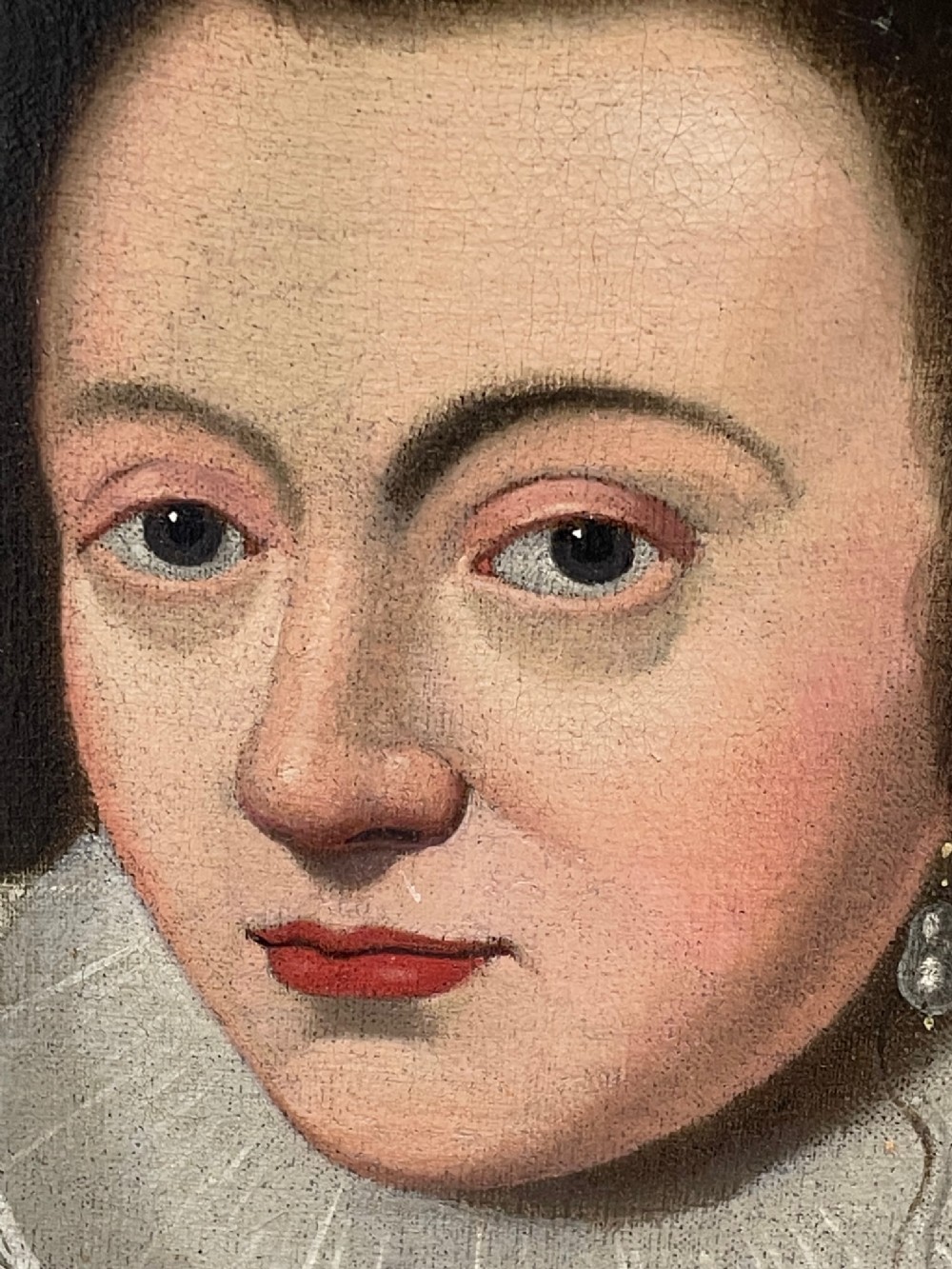
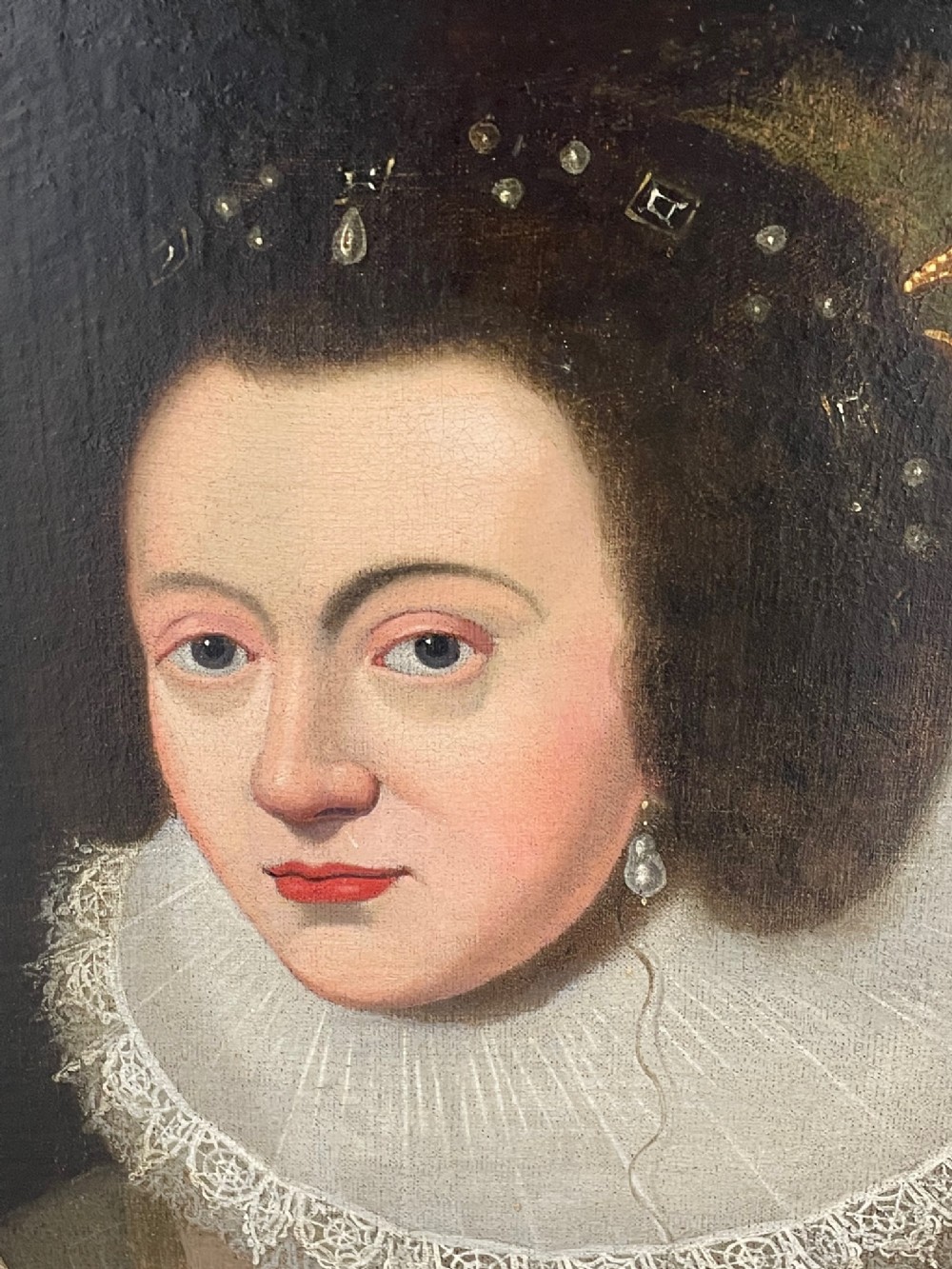
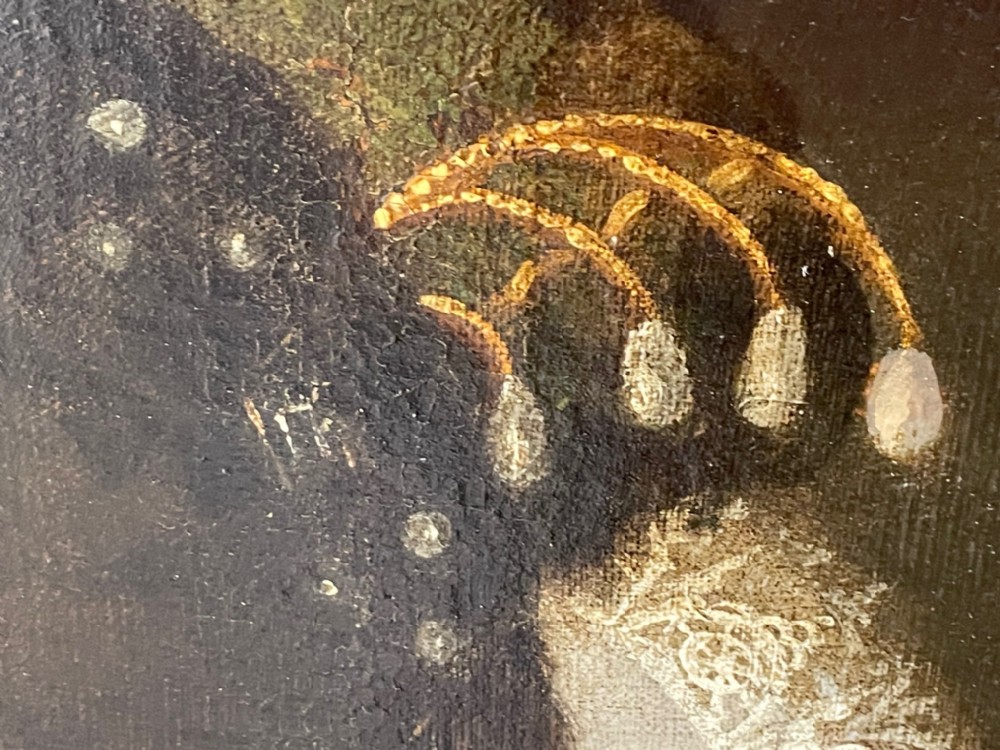
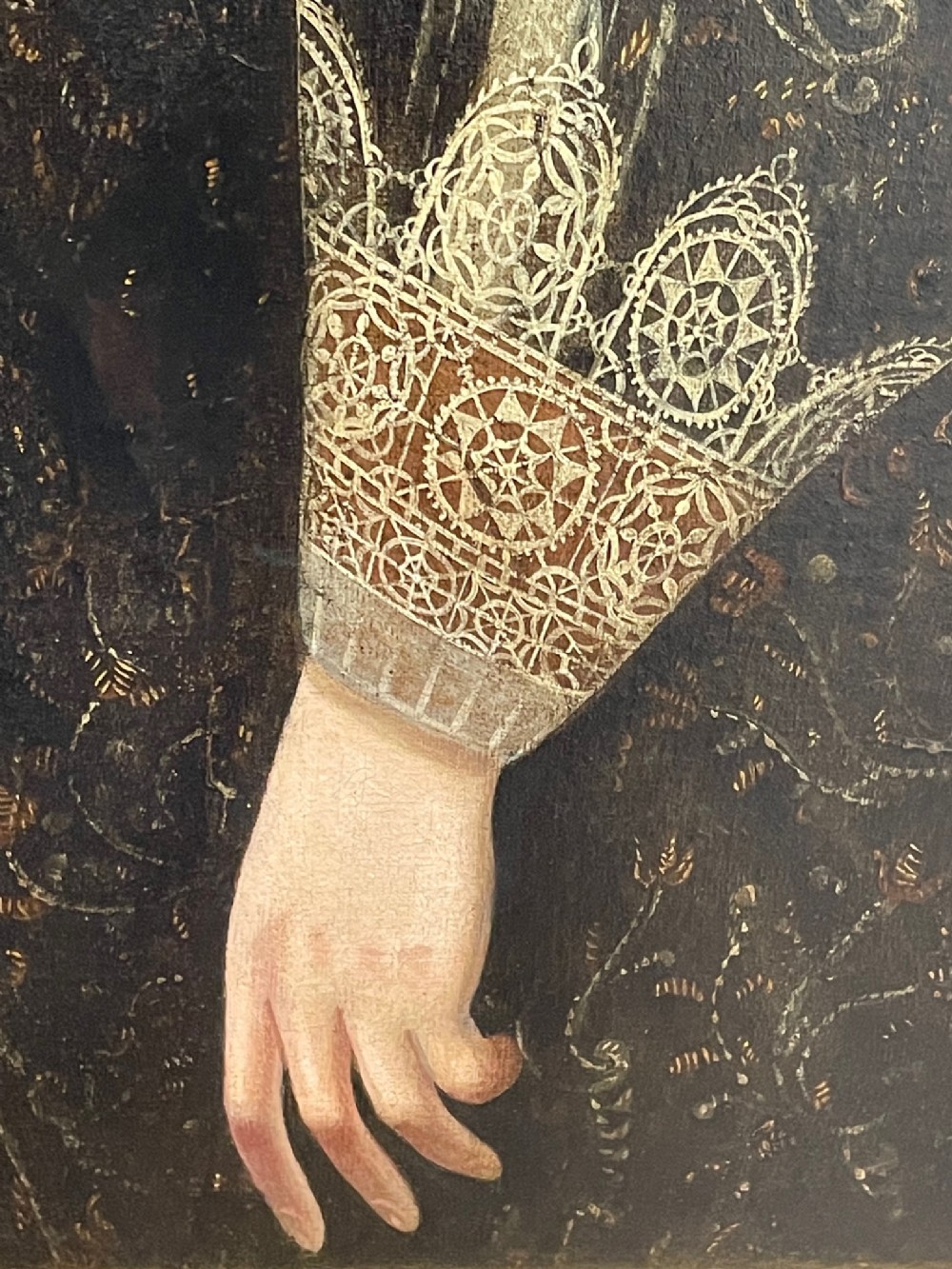
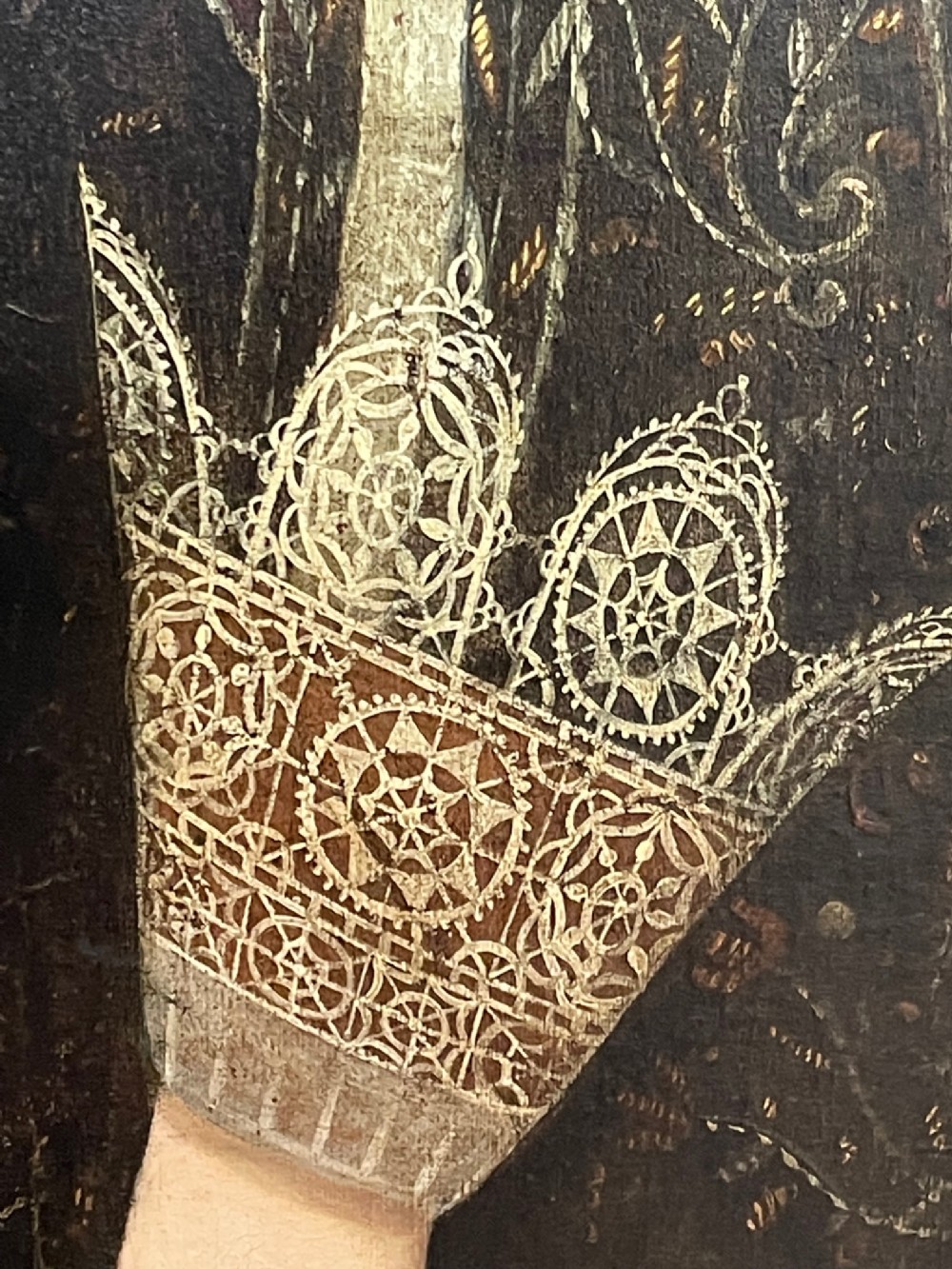
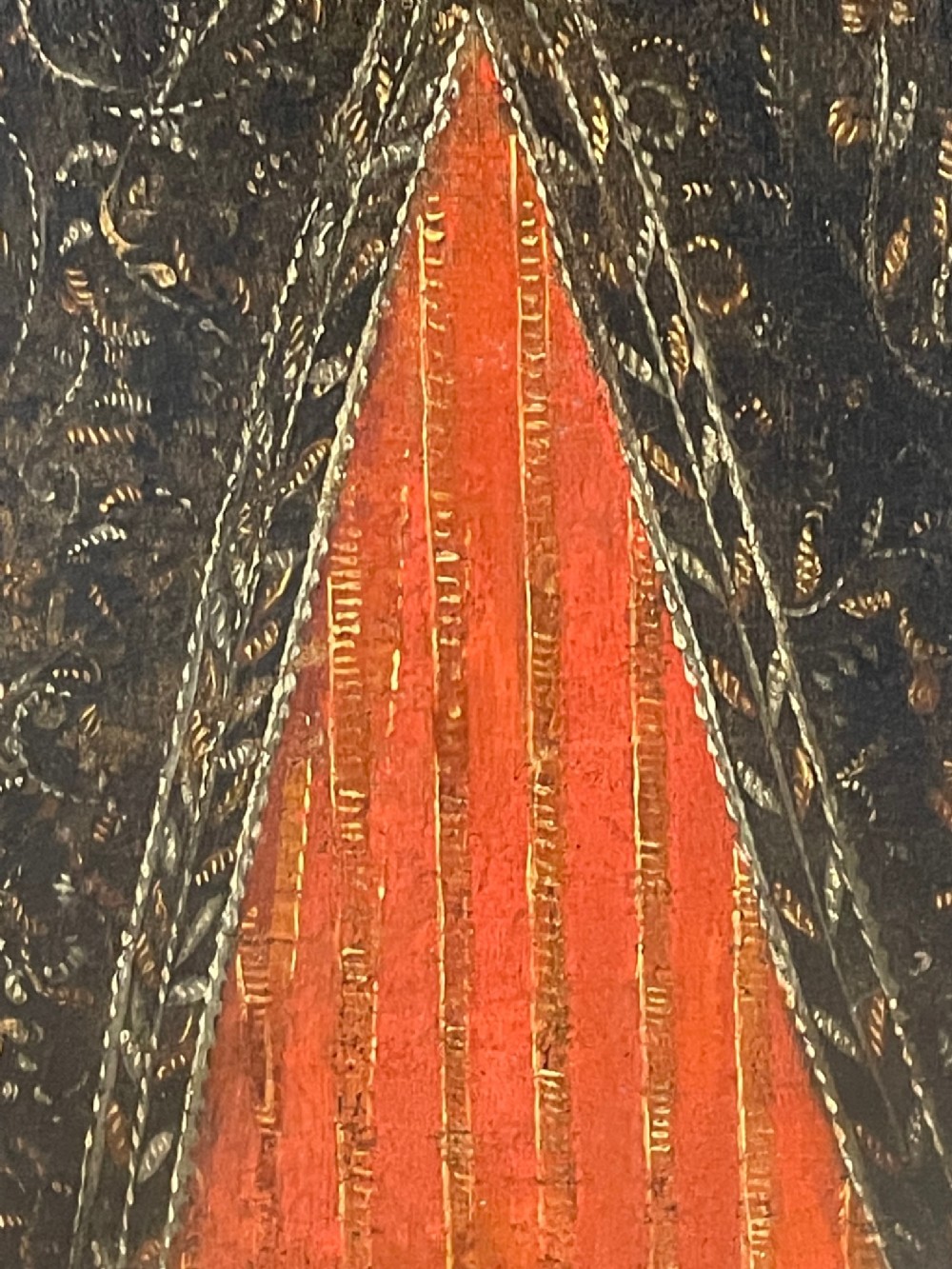
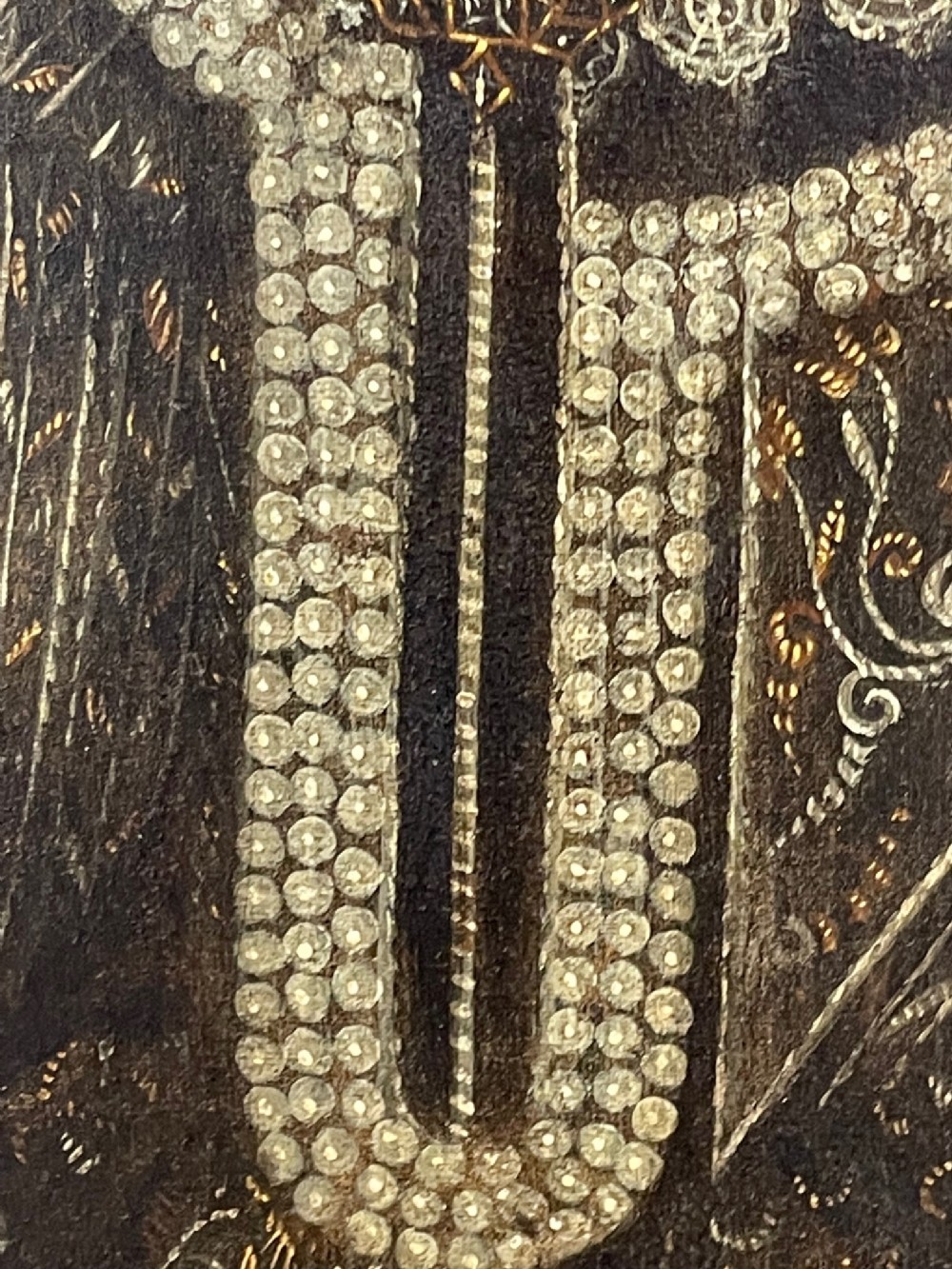
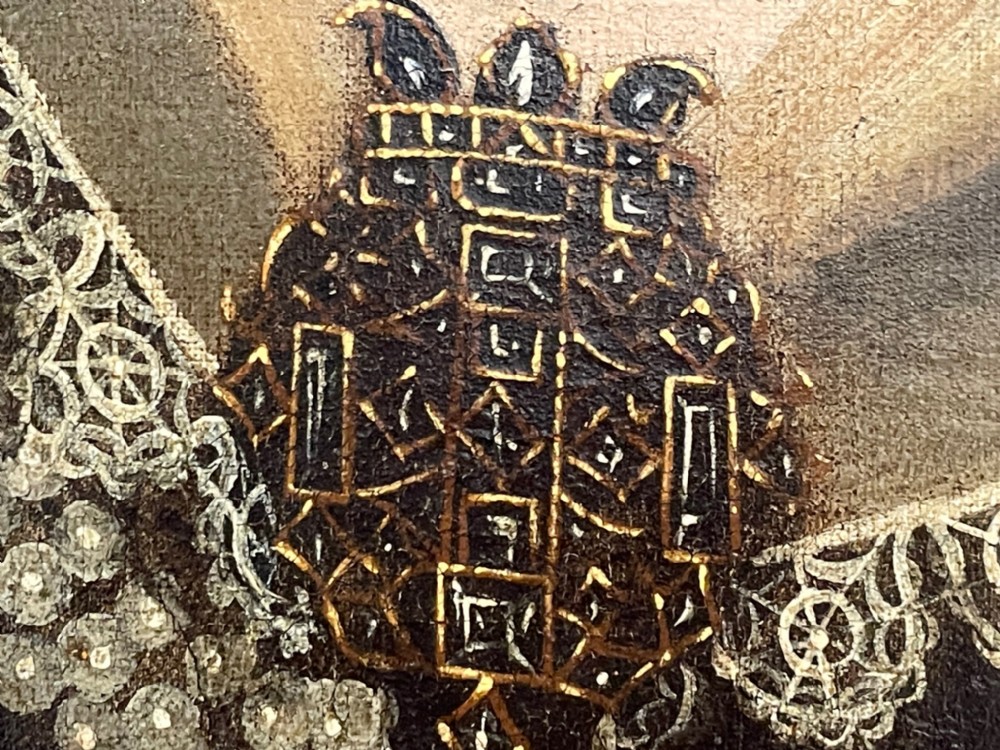
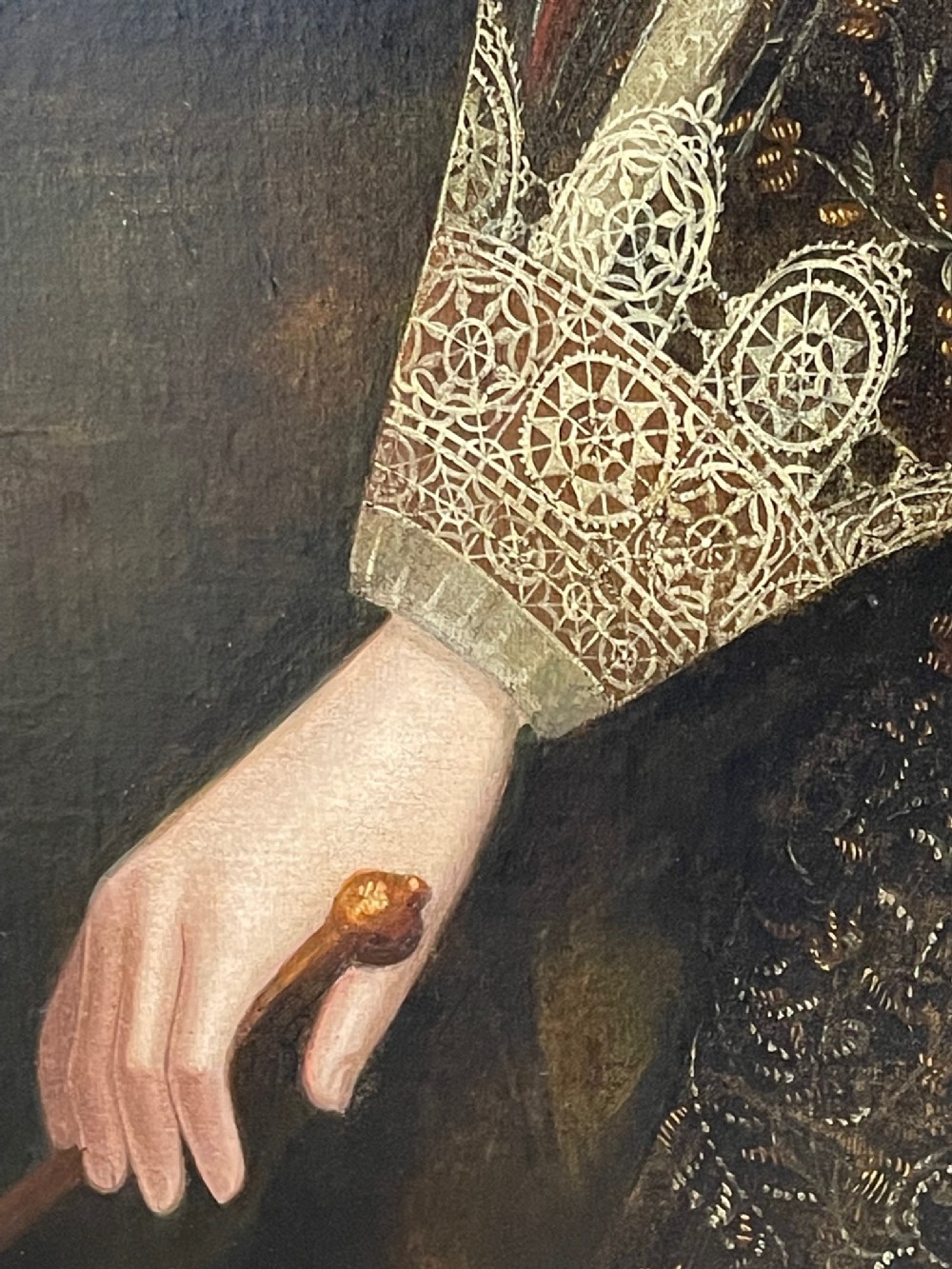
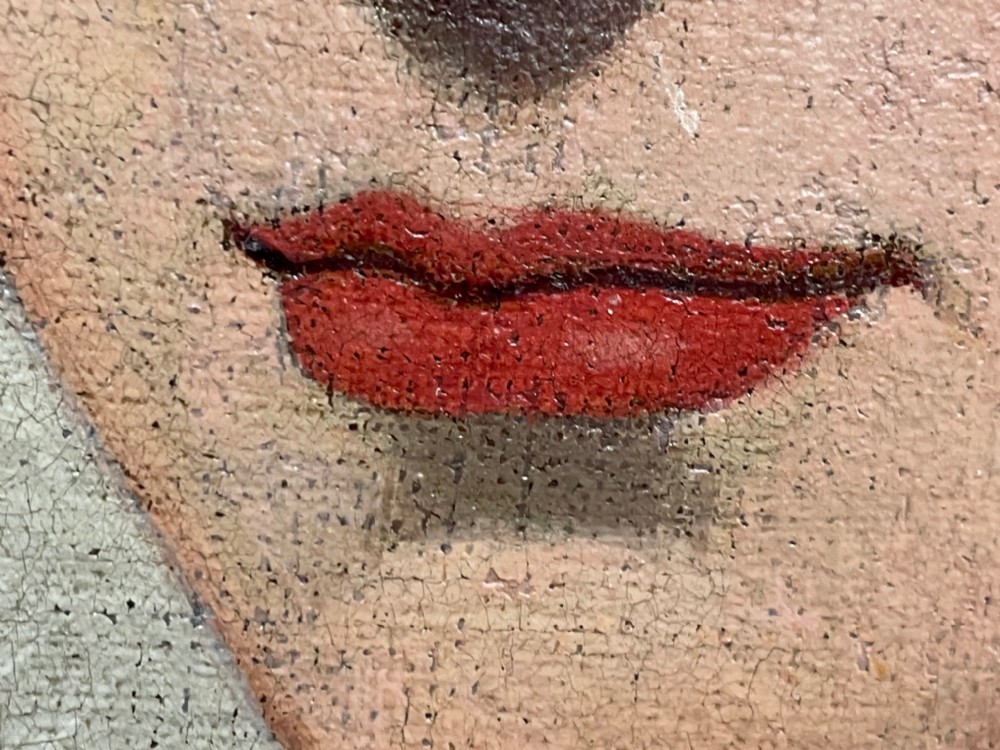
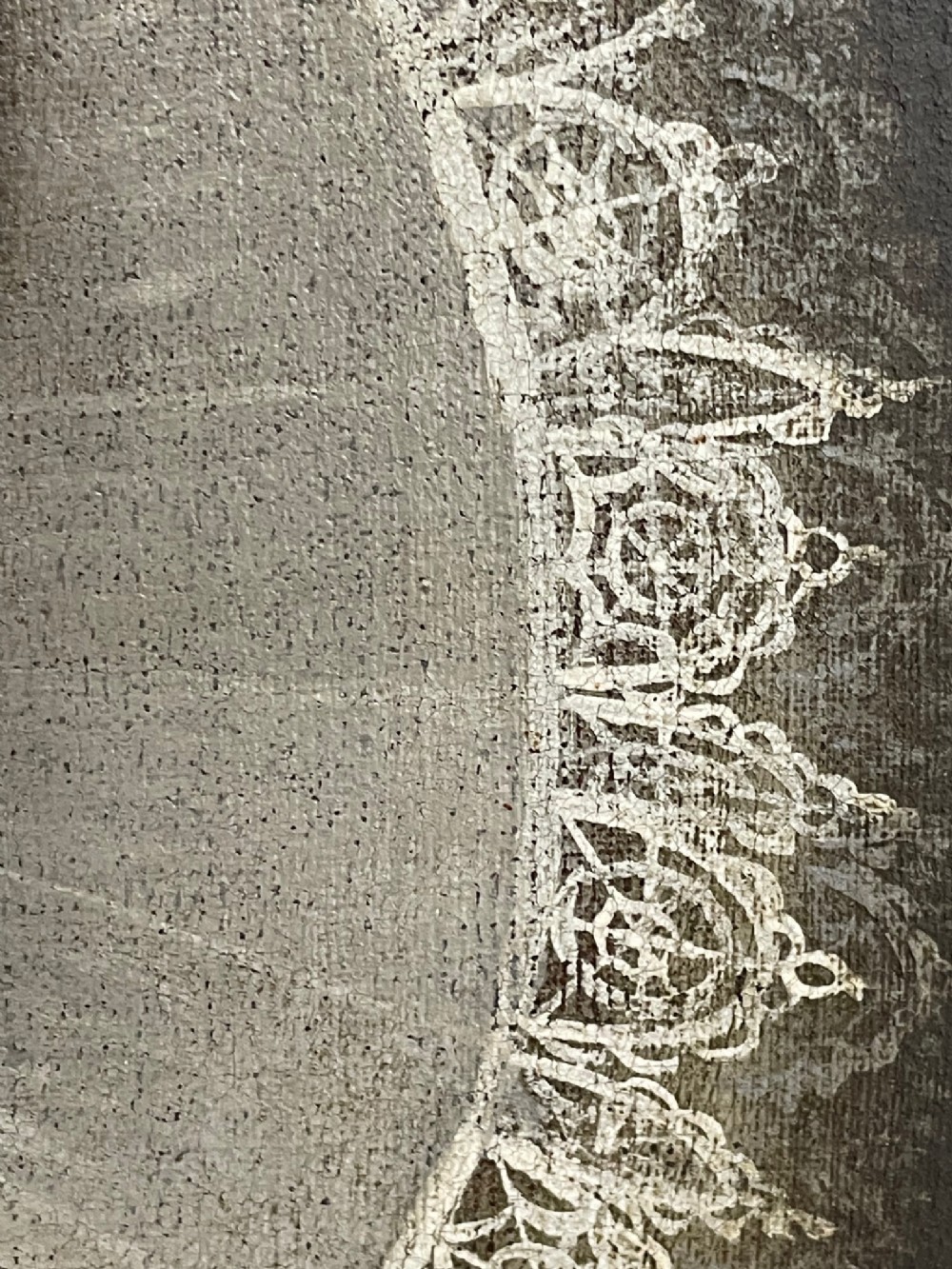
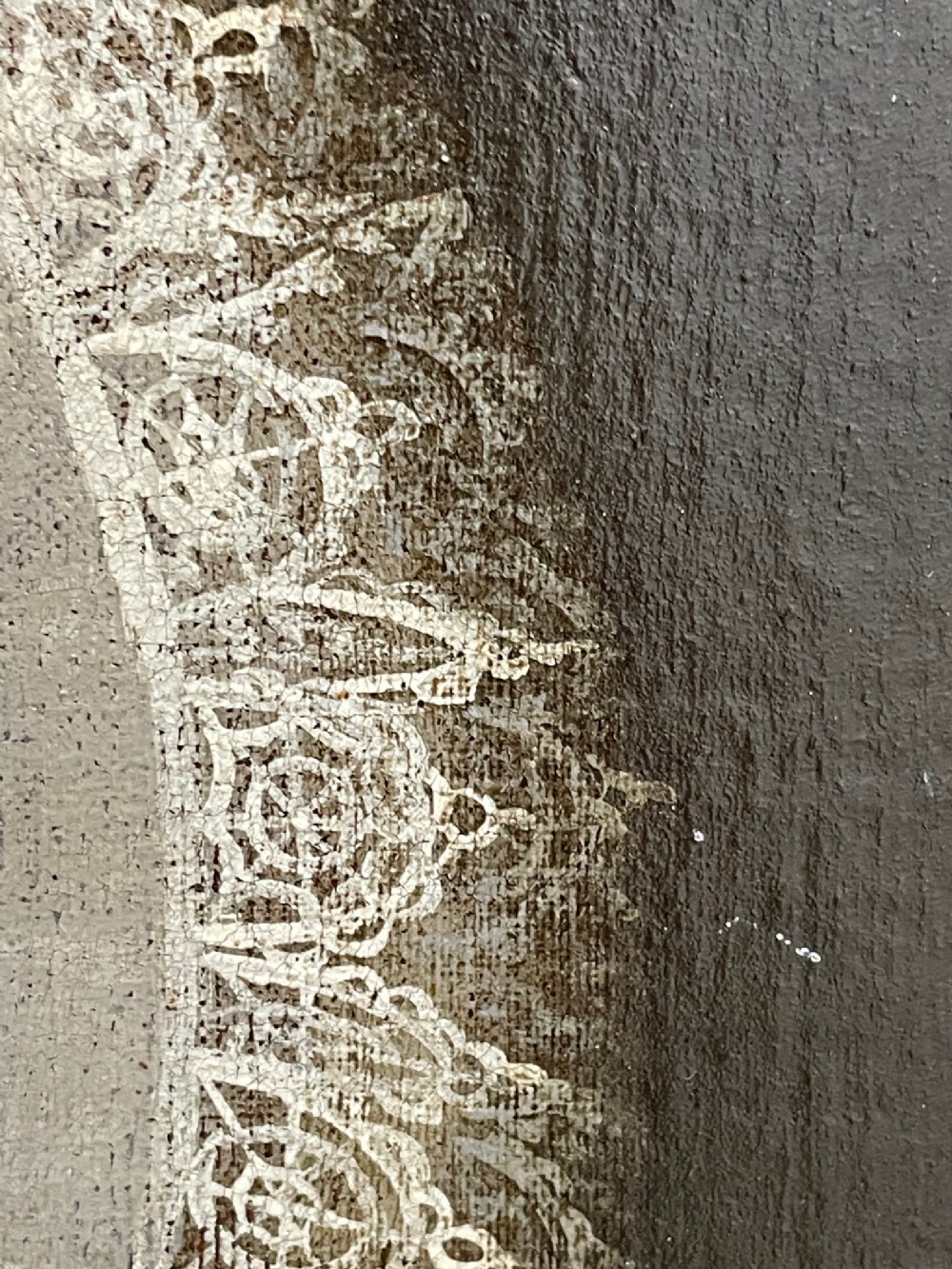
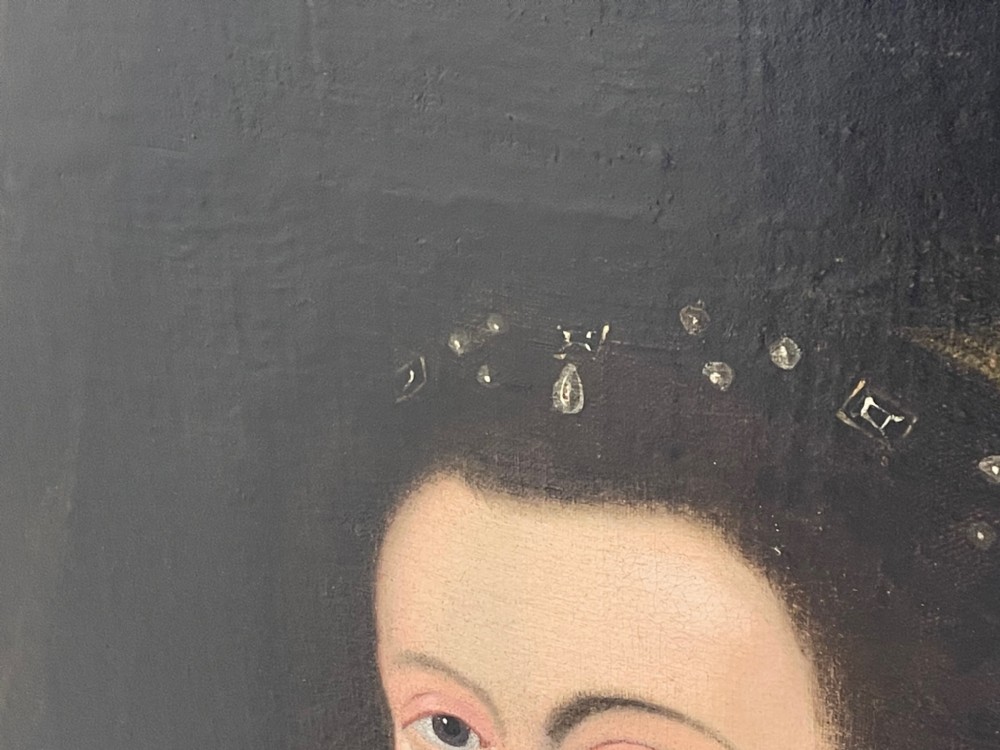
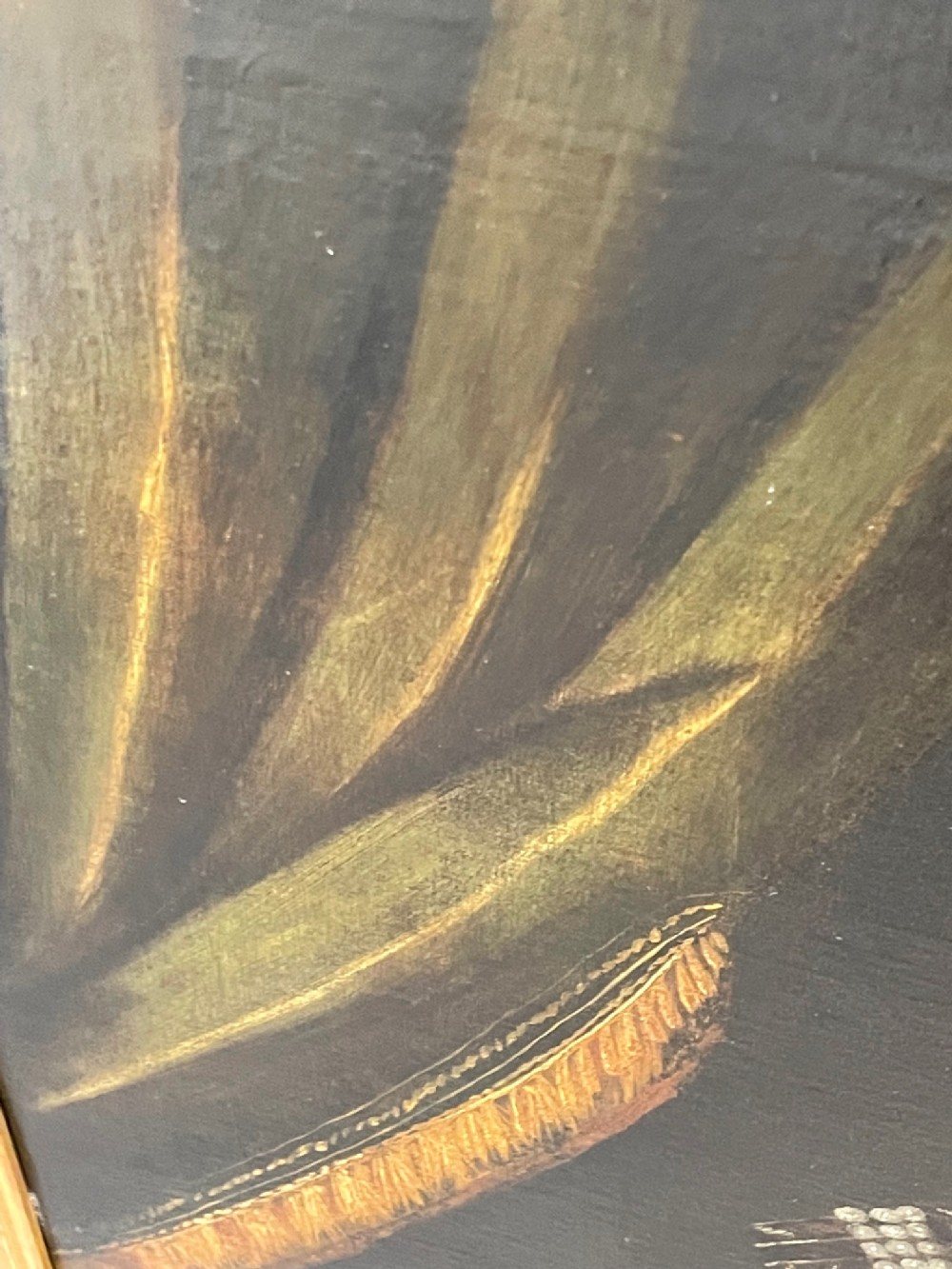
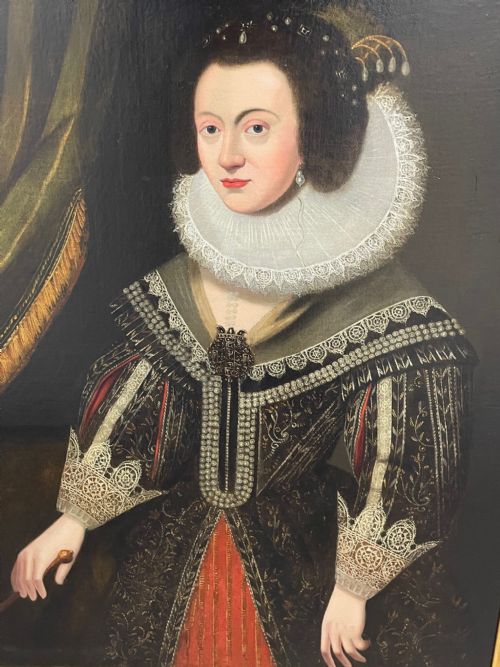
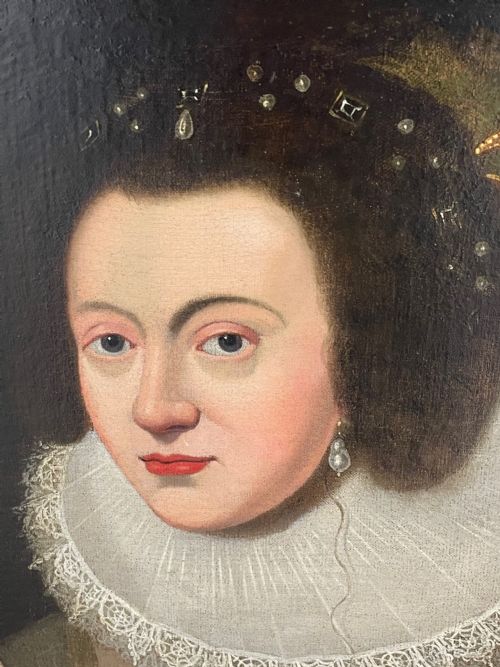
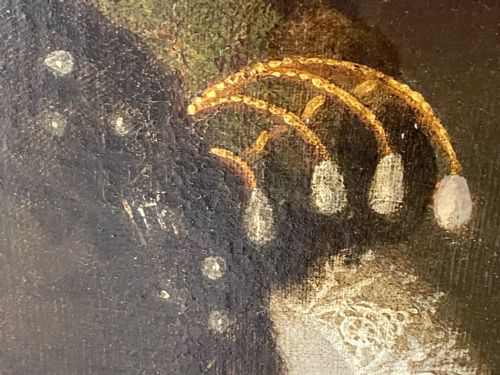
Wearing her fine costume with beautiful lace frills and pearls, she is projecting such beauty, confidence and her high status authority power in her pose.
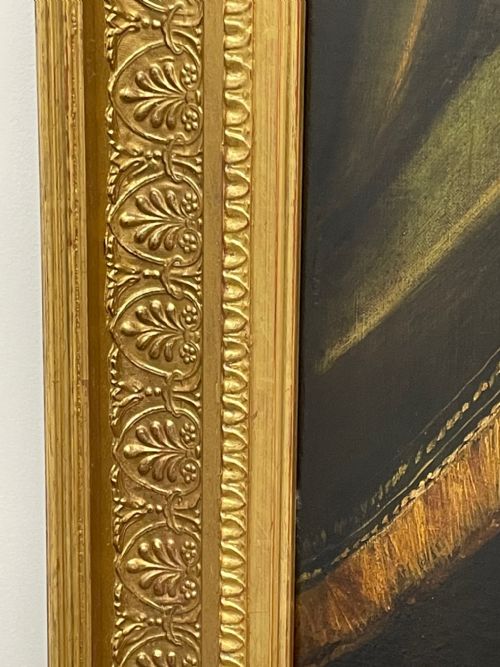
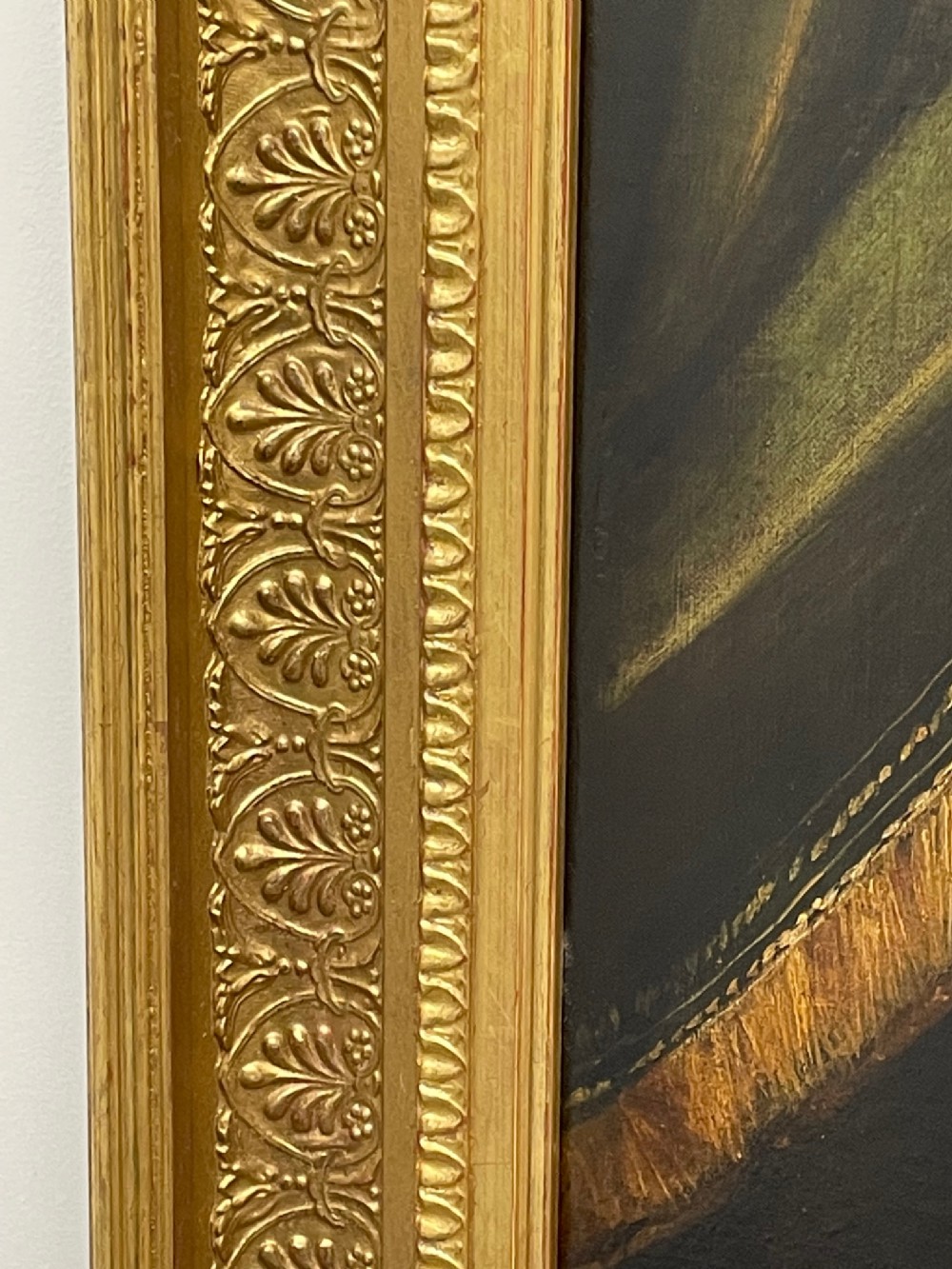
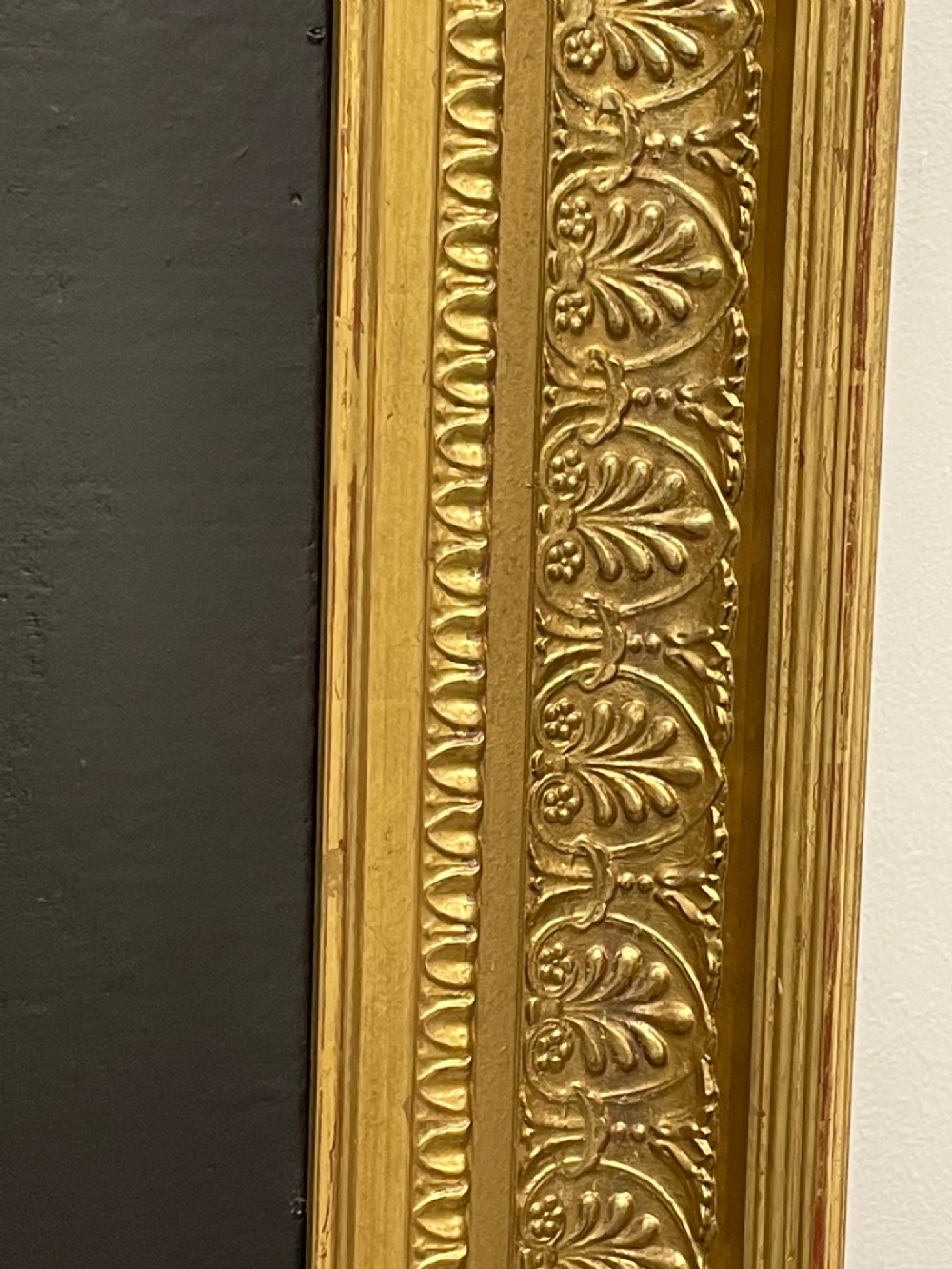
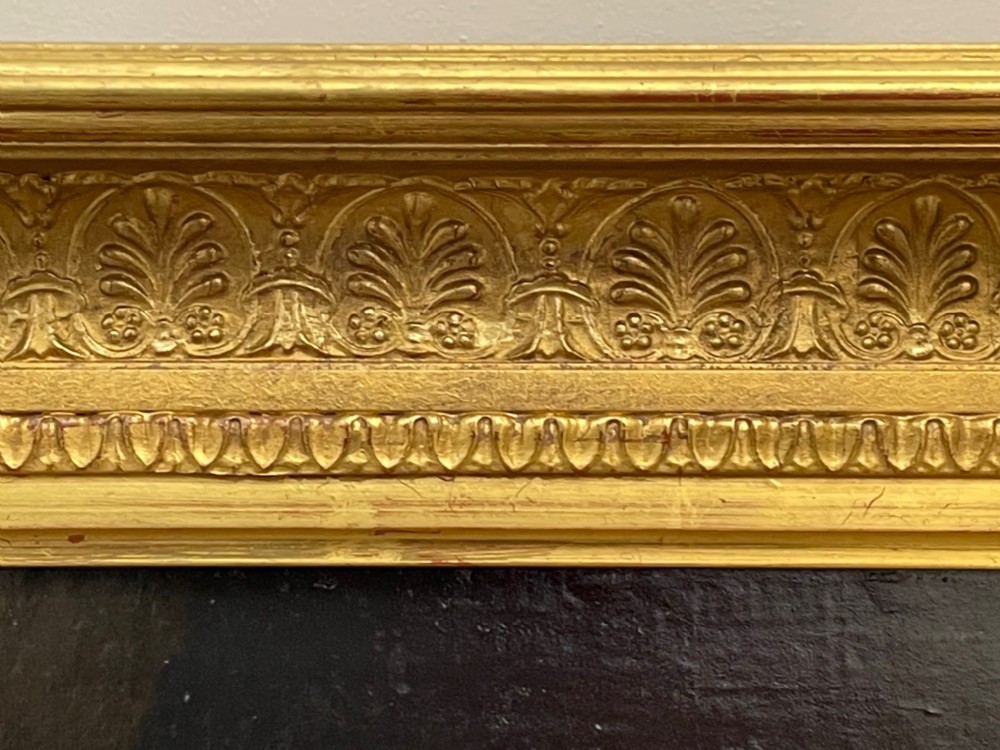
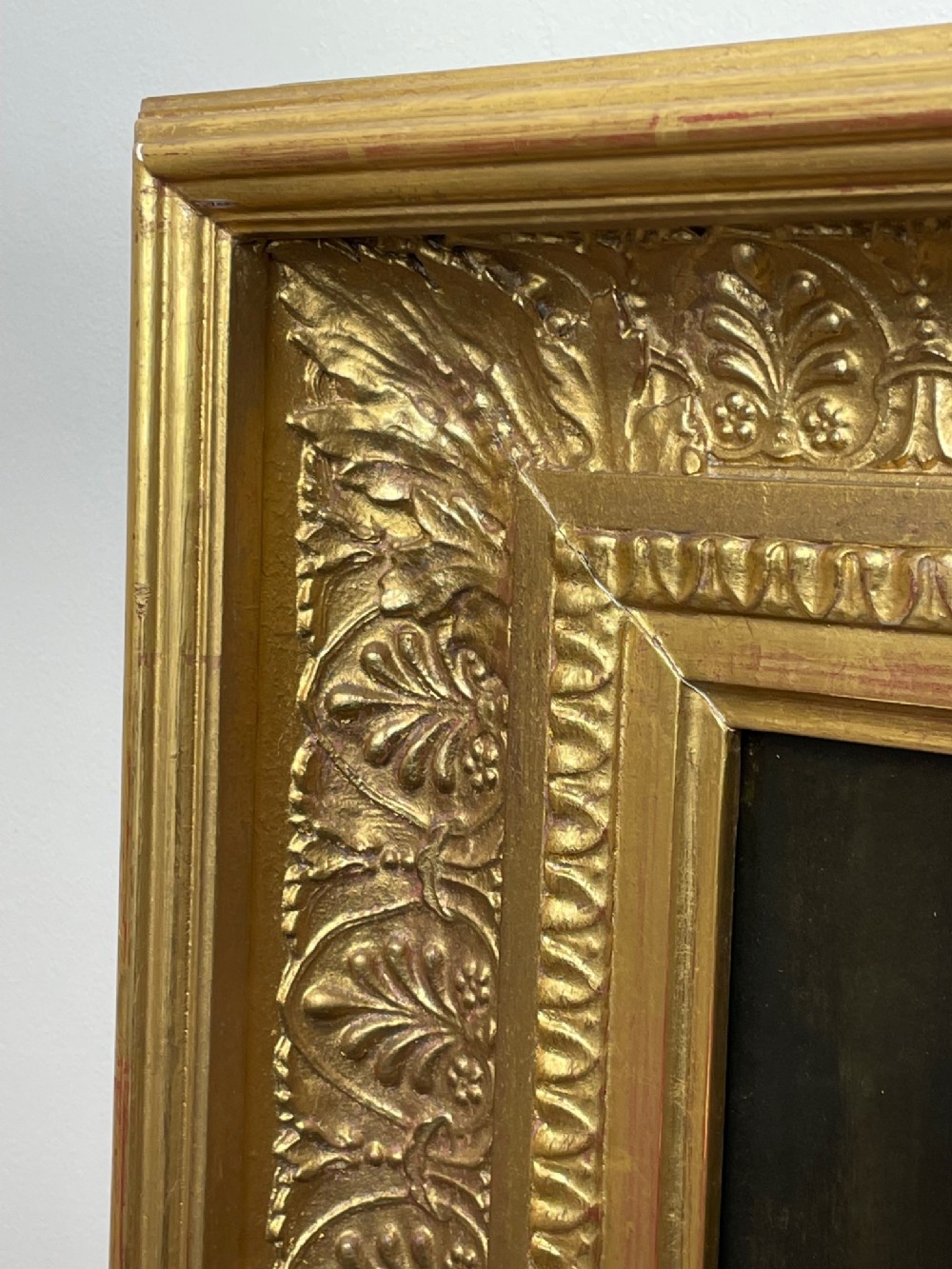
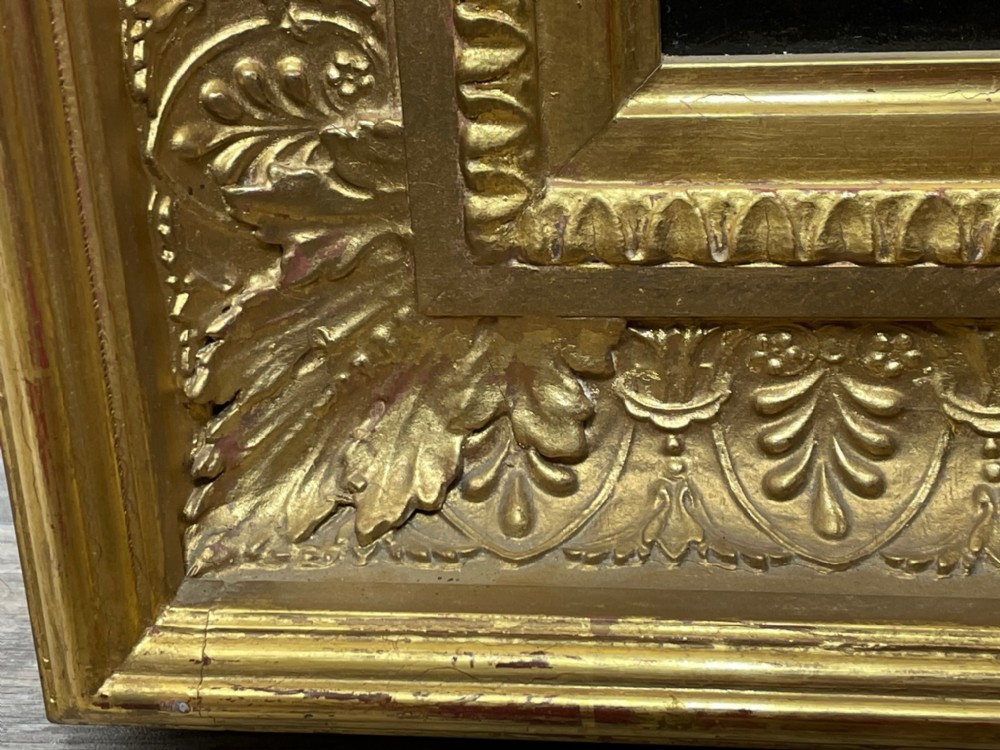
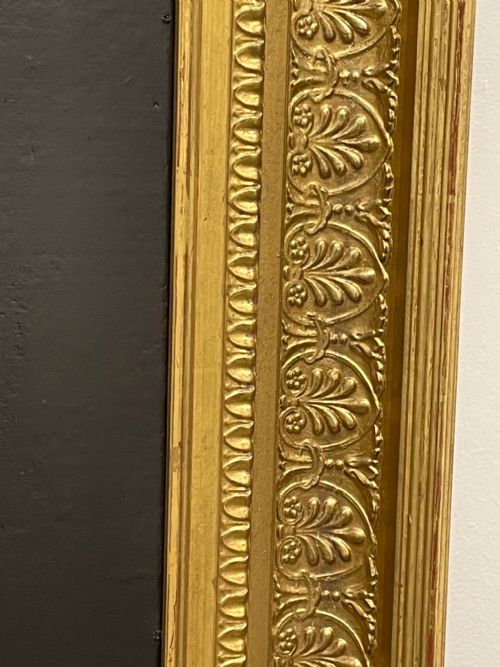
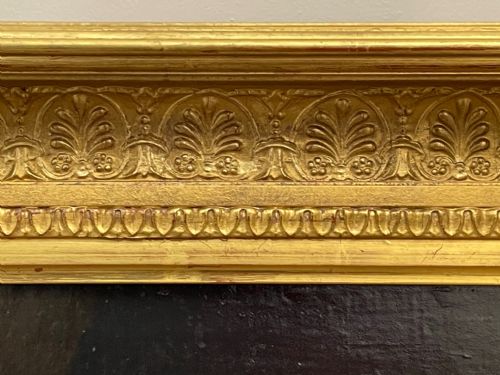
Presented in a magnificent gilt frame.
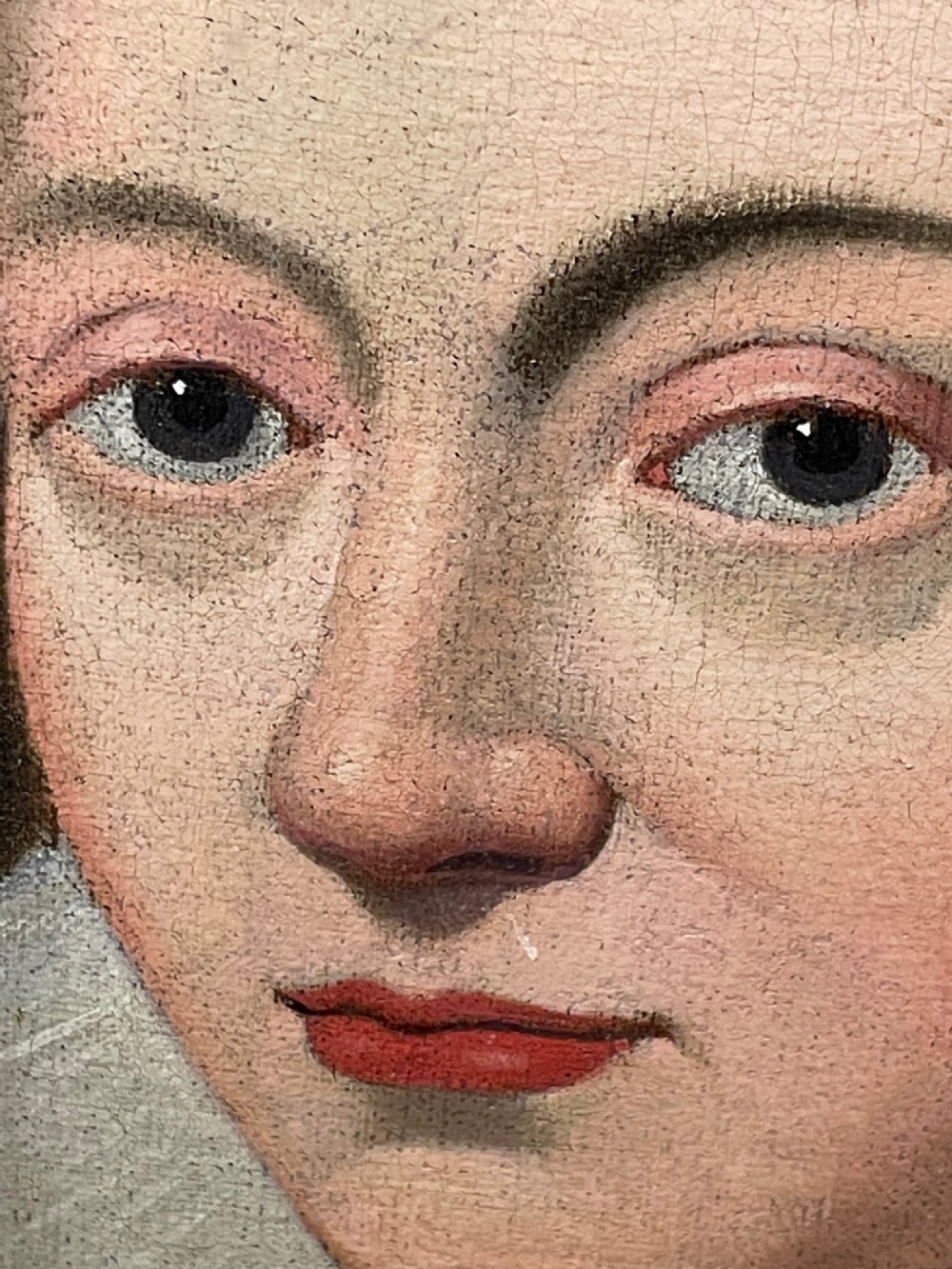
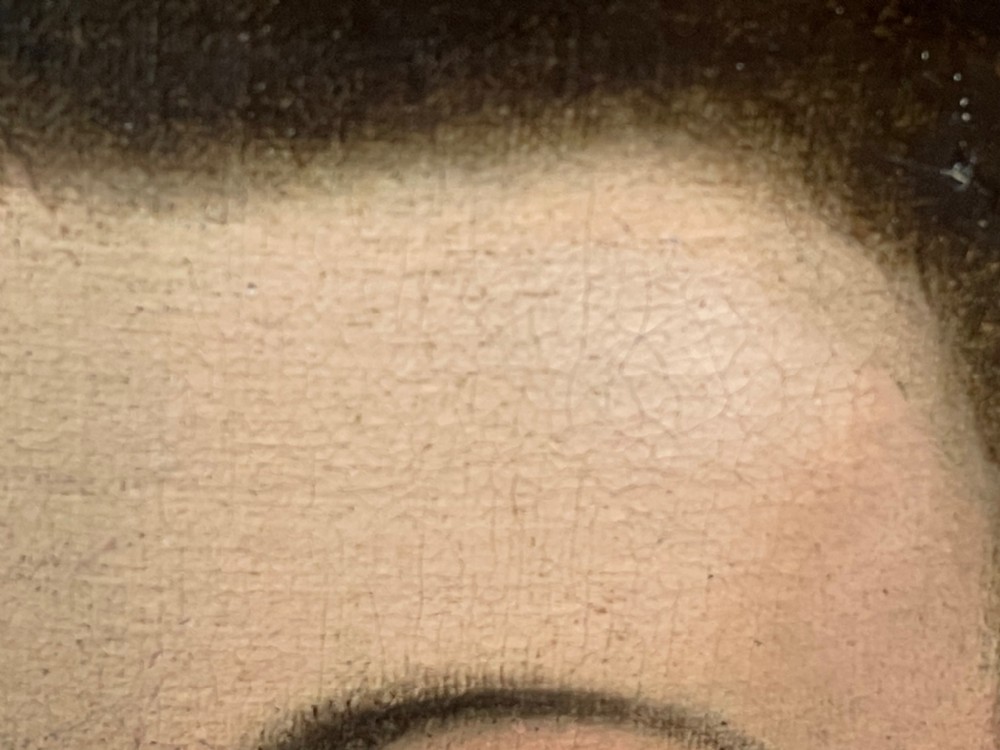
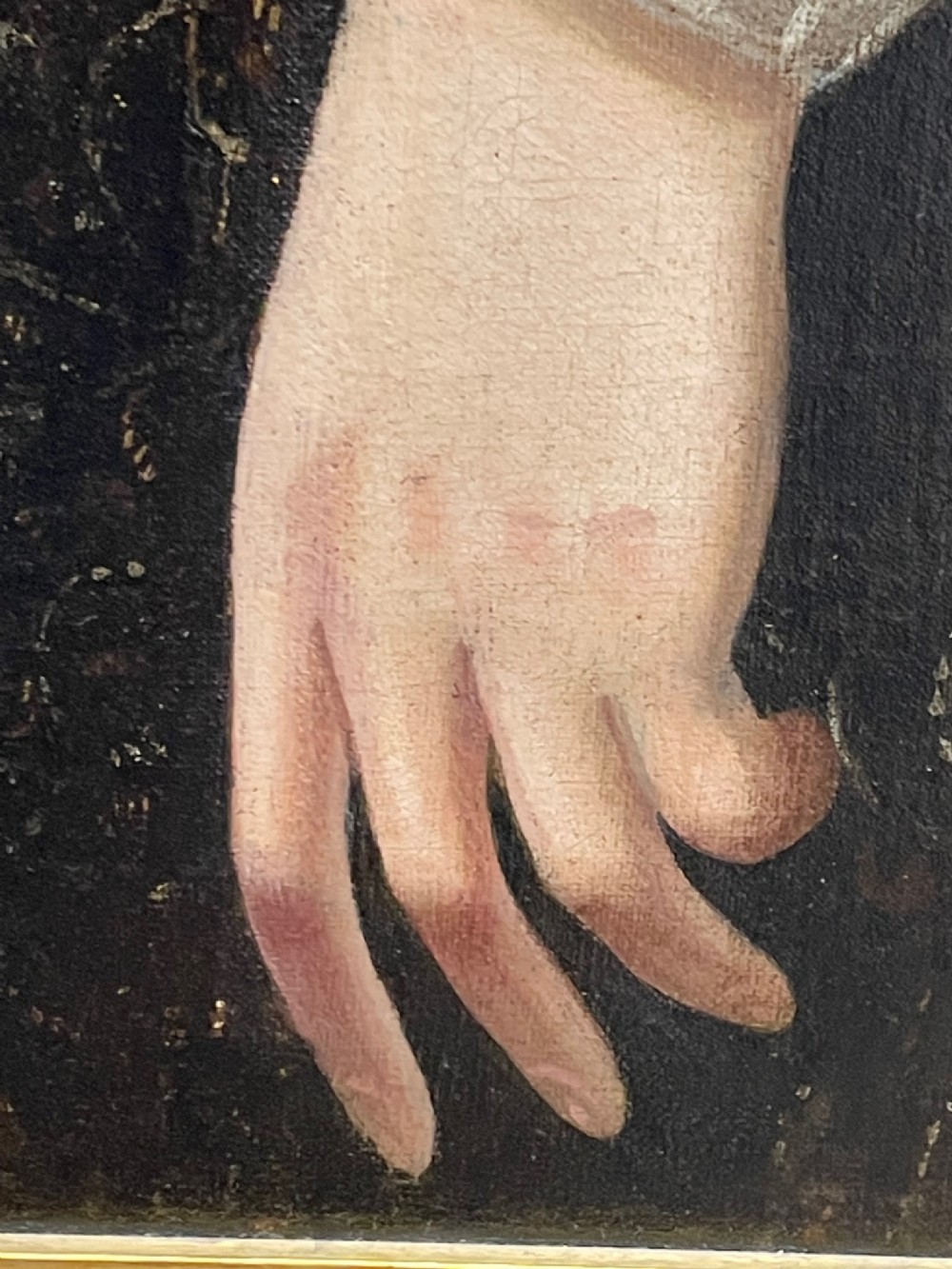
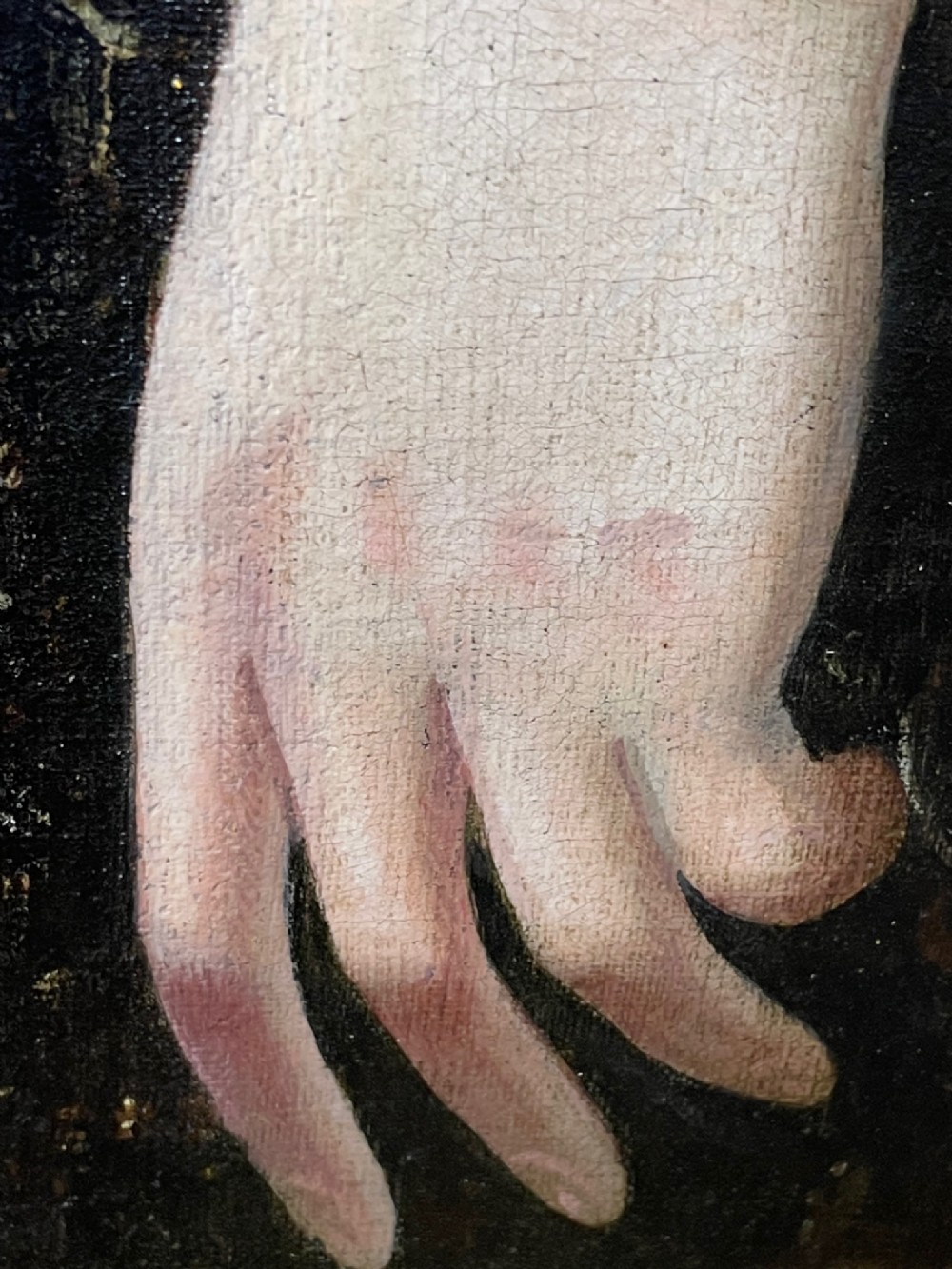
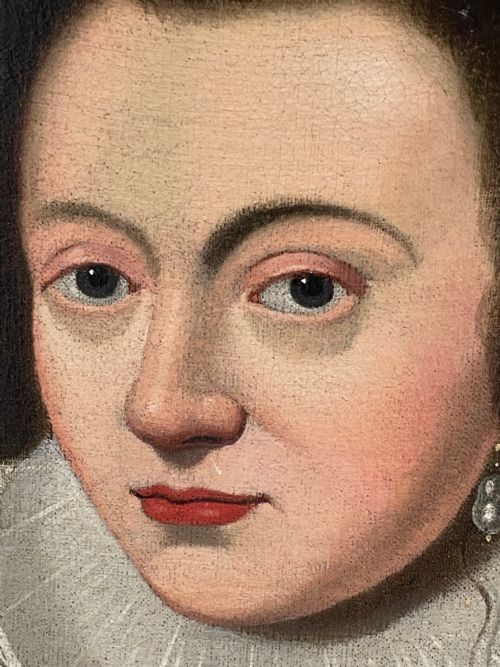
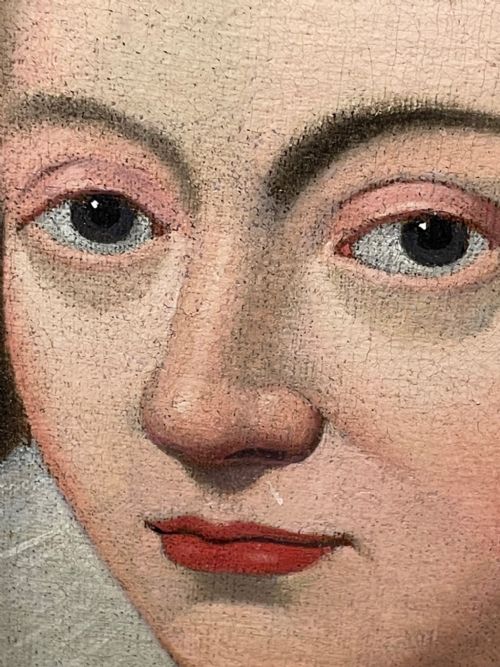
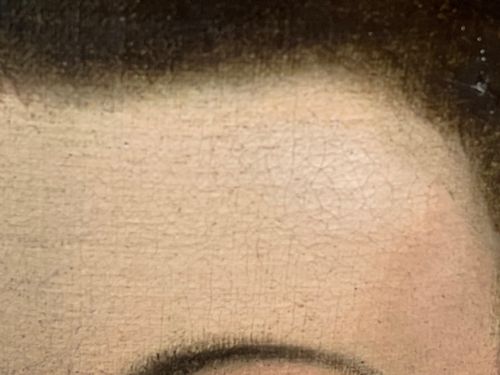
Oil on canvas.
Historically significant portrait of Elizabeth Stuart Queen of Bohemia (born Elizabeth Stuart, August 19 1596 to February 13 1662) was a Scottish born Queen of Bohemia. As well as being Queen of Bohemia, she was also titled Electress of Palatine and Princess Elizabeth Stuart of Scotland Elizabeth was the oldest daughter of King James VI of Scotland (later, James I of England) and his wife, Anne of Denmark.
Her brother was Charles I. She was Queen of Bohemia only for a few months so she is sometimes called "The Winter Queen". Elizabeth was born at Falkland Palace in Fife, Scotland.[1] Her father gave her the name Elizabeth to make Queen Elizabeth I of England happy. The Queen had no children. James wanted her to choose him to be King of England when she died.
She later agreed and James VI became King James I of England (as well as Wales and Ireland) in 1603. Elizabeth Stuart now had a higher status. This meant meant that more important men would want to marry her.
On February 14 1613, Elizabeth married Frederick V. He was the Elector of the Palatinate. She moved to his court at Heidelberg. Frederick was the leader of an important group of Protestant princes, called the Evangelical Union. James wanted Elizabeth to marry someone from this group so he could have a stronger friendship with them.
In 1619, Frederick was asked to become King of Bohemia. He and Elizabeth moved to Prague. There was also strong fighting between different religious groups there. After only a few months of being King, Frederick had to leave the country. Because she was queen for such a short time, Elizabeth is sometimes called ‘The Winter Queen’. She was also called ‘Queen of Hearts’ because many people liked her.
Elizabeth and Frederick later lived in exile in The Hague. They could not return to Bohemia. Frederick died in 1632 and Elizabeth lived in Holland for most of the rest of her life. After her brother’s son, Charles, became King of England and Scotland, she went to London to see him. She died there in 1662, when she was 65 years old.
Works like this rare become available for public sale.
Unsigned.
Sir Godfrey Kneller, 1st Baronet (1646 – 1723) Kneller was born Gottfried Kneller in the Free City of Lübeck , the son of Zacharias Kniller. Kneller studied in Leiden, but became a pupil of Ferdinand Bol and perhaps Rembrandt himself in the 1660s. He was in Rome and Venice between 1672 and 1675, settling in England in 1676 for the remainder of his life.
Kneller was soon employed at Court and rapidly became the most successful portraitist during the late 17th and early 18th centuries. His work exuberantly expresses the spirit of the English Baroque, and his style greatly influenced other artists. He enjoyed the office of Principal Painter to the King, at first jointly with John Riley (d.1691), from shortly after the accession of William and Mary in 1688 until his death.
Kneller founded a studio which produced portraits en masse and to a formulaic model which started with a sketch of the face with details added later, this was helped somewhat by the penchant for wig wearing amounts gentlemen of the time. He was knighted in 1692 and became a baronet in 1715, he died of fever in 1723 and his remains were interred in the church of St. Mary's in Twickenham.
Hanging wire thread and bracket mounts on the back ready for home display.
Circa during 17th c
Cheshire Antiques Consultant Ltd has dated this piece to the Before 1700 period.
Source the historic in 17th, 18th, 19th & 20th century fine arts, painting, sculptures & collectibles
You can view the stock and full dealer information on the Cheshire Antiques Consultant Ltd Profile Page
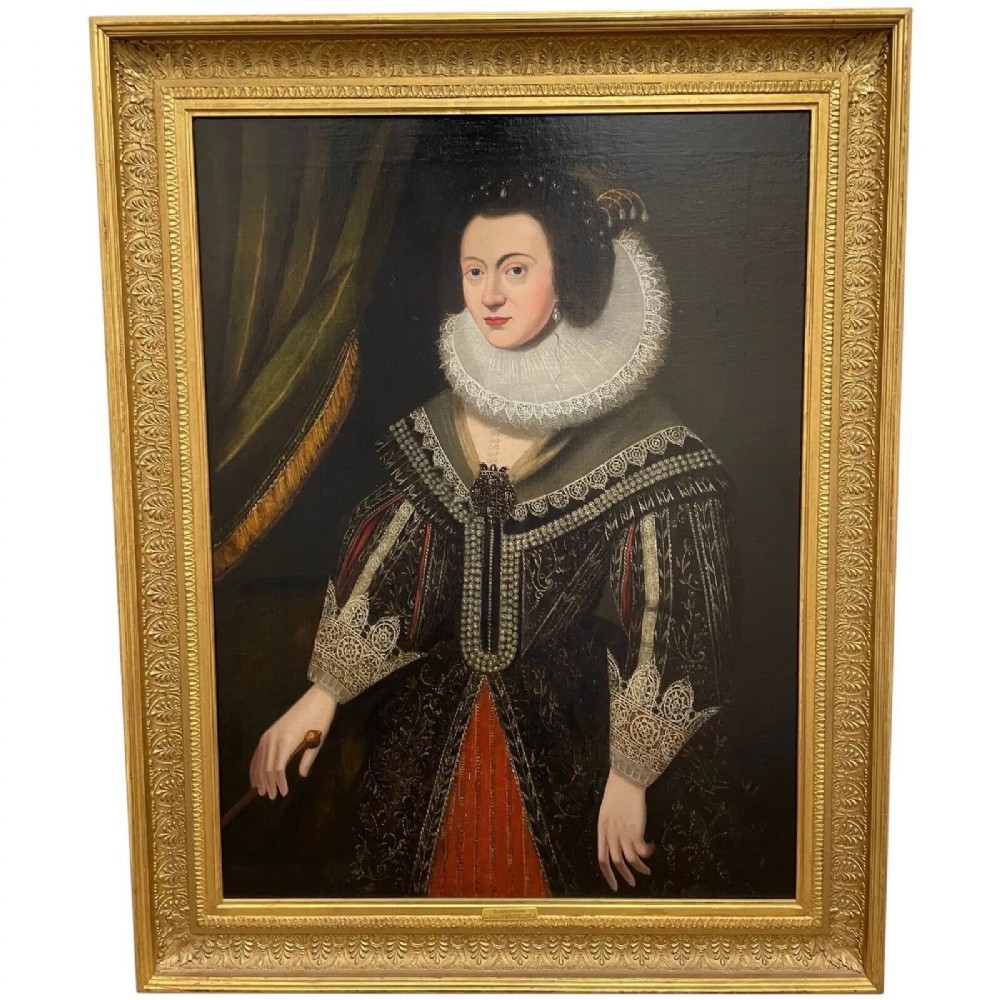
Oil Painting Portrait Elizabeth of Bohemia Circle of Godfrey Kneller