Cheshire Antiques Consultant Ltd has dated this piece to the 1920s.
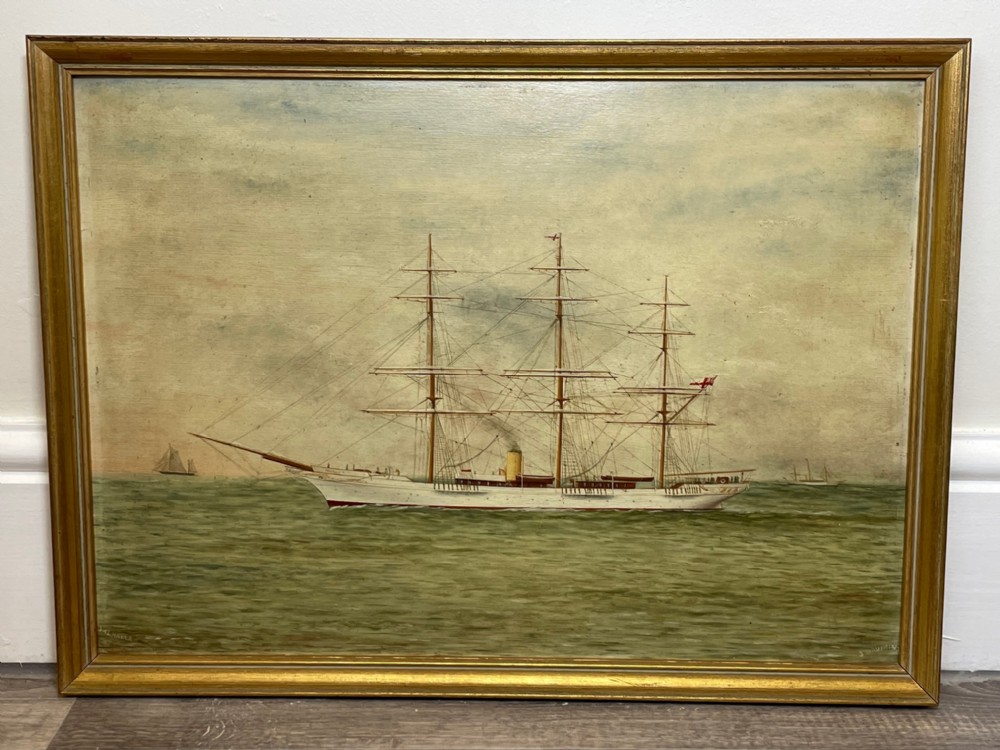
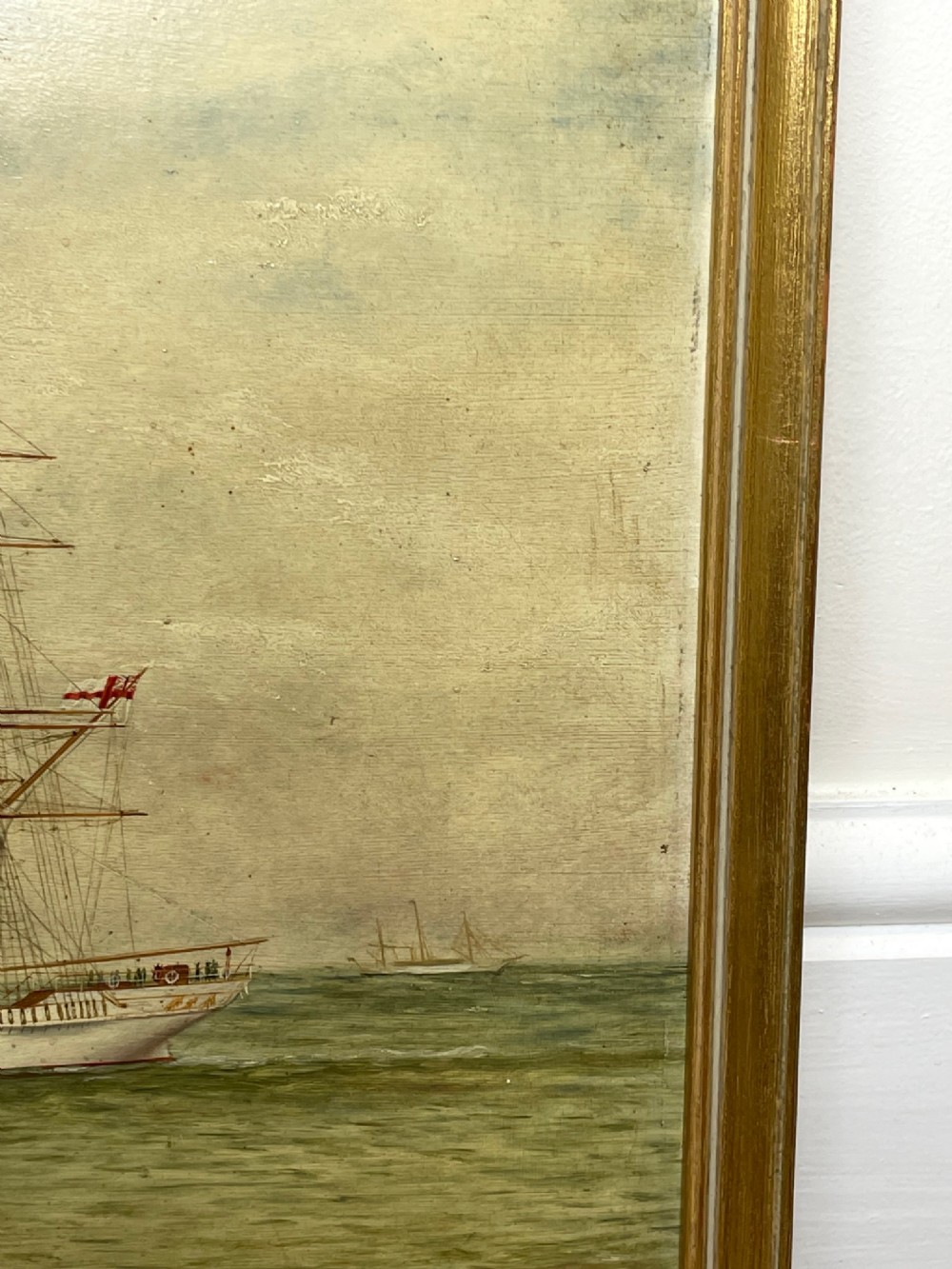
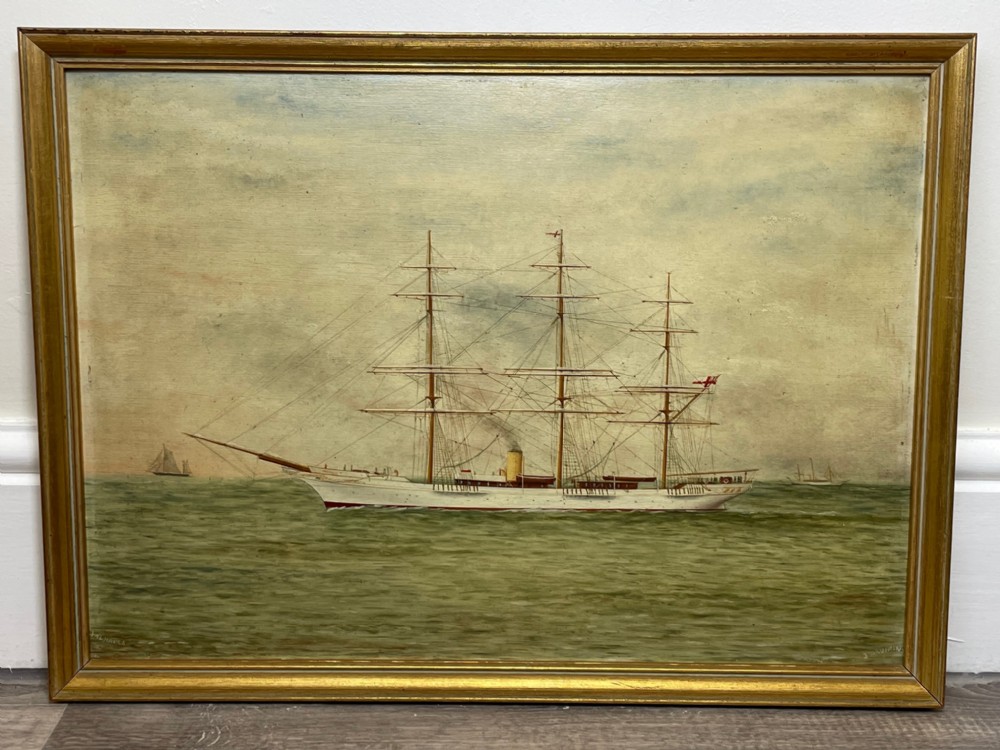
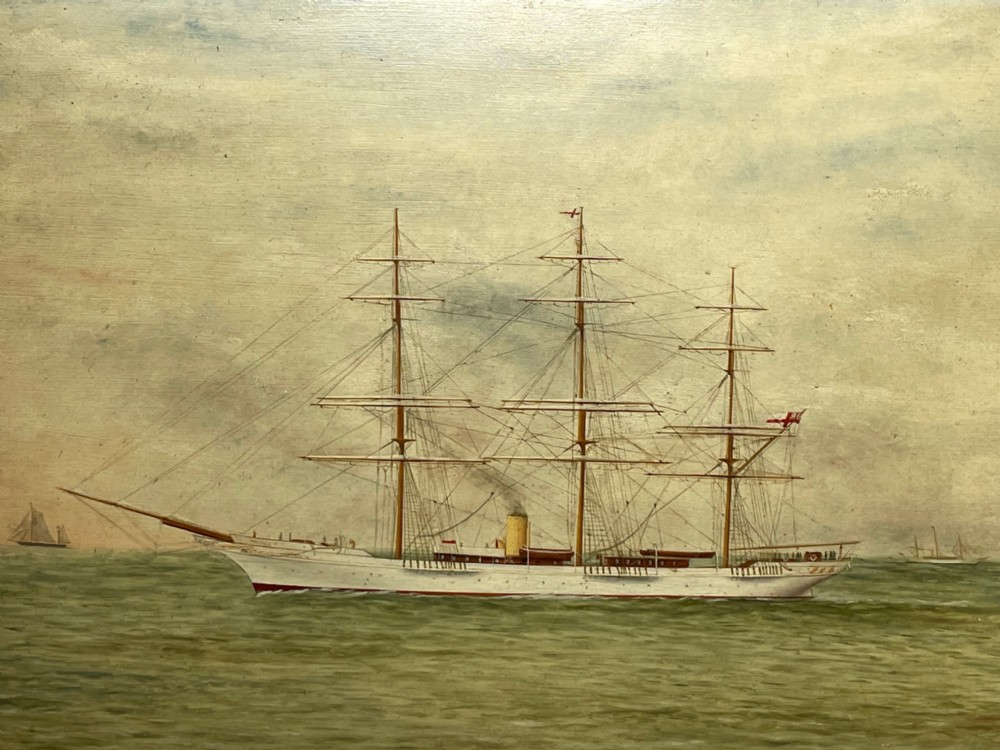
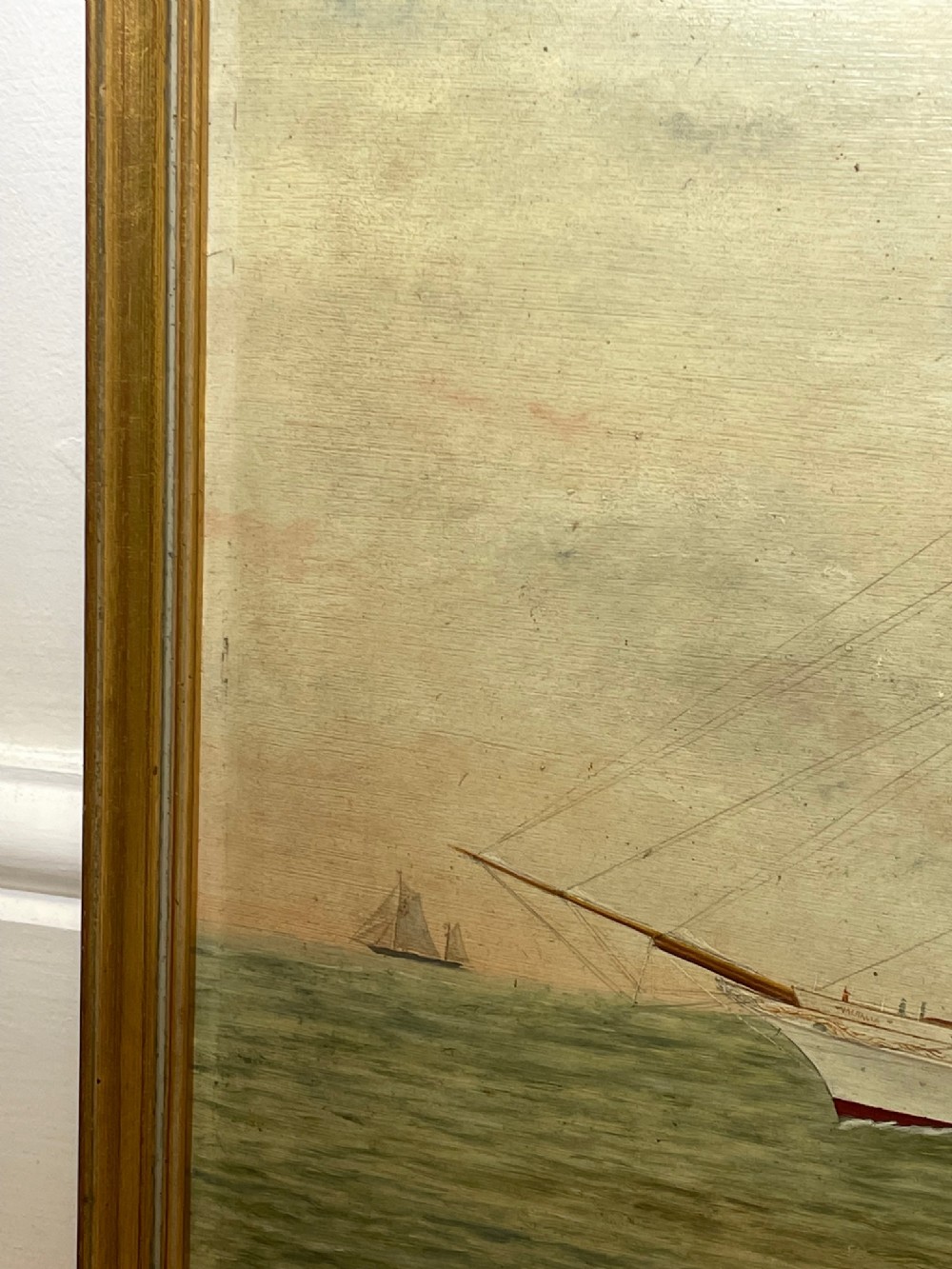
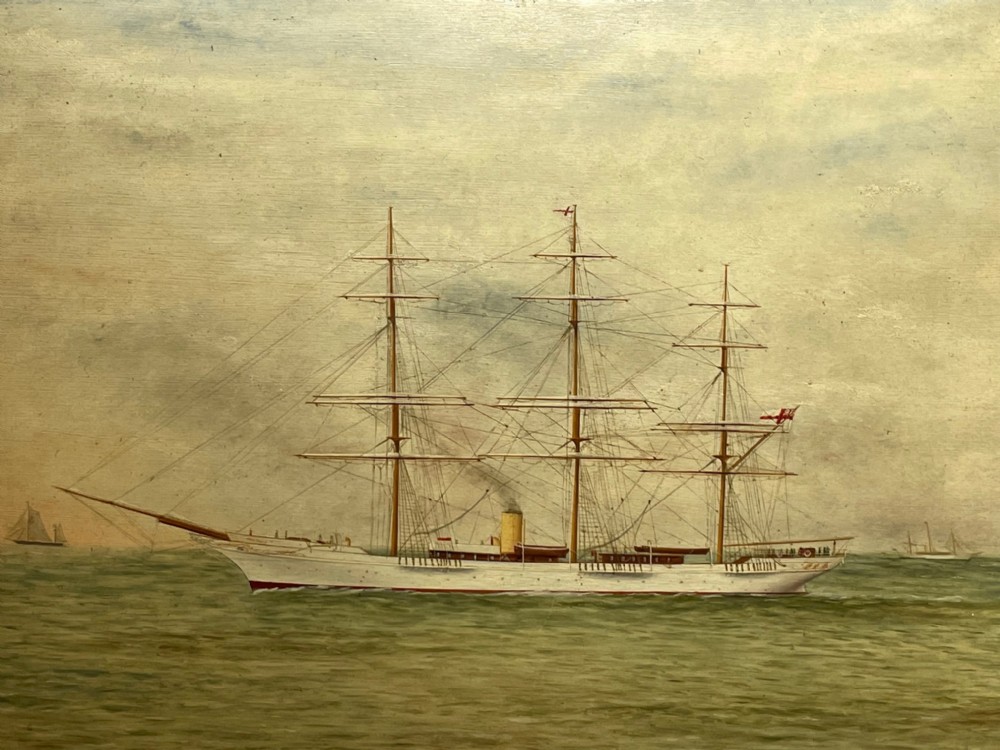
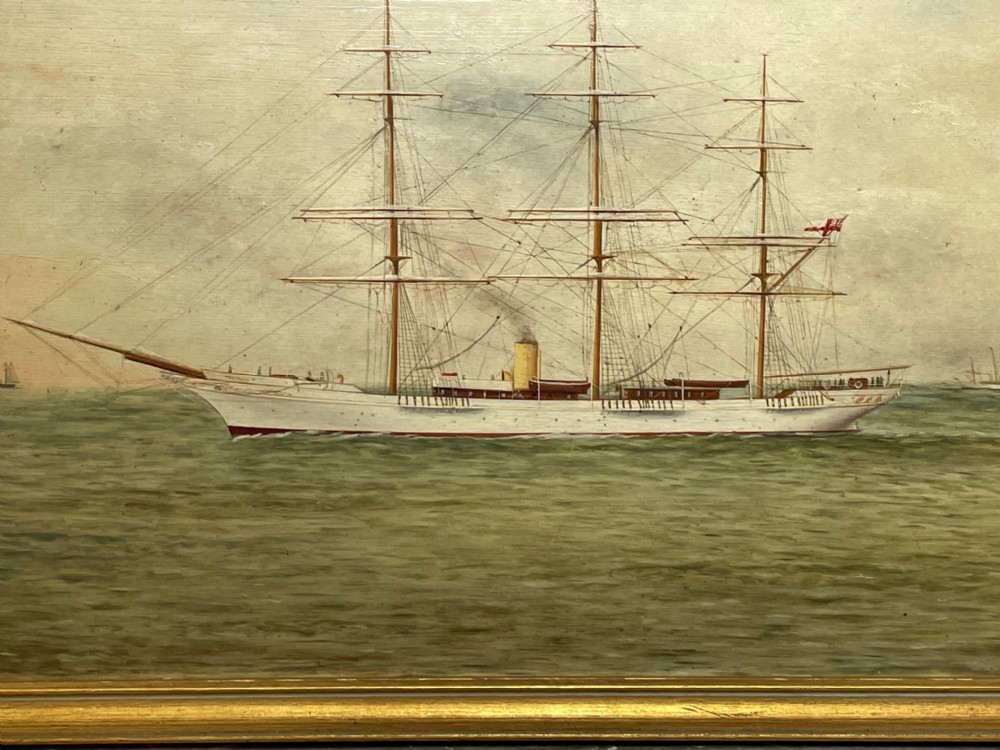
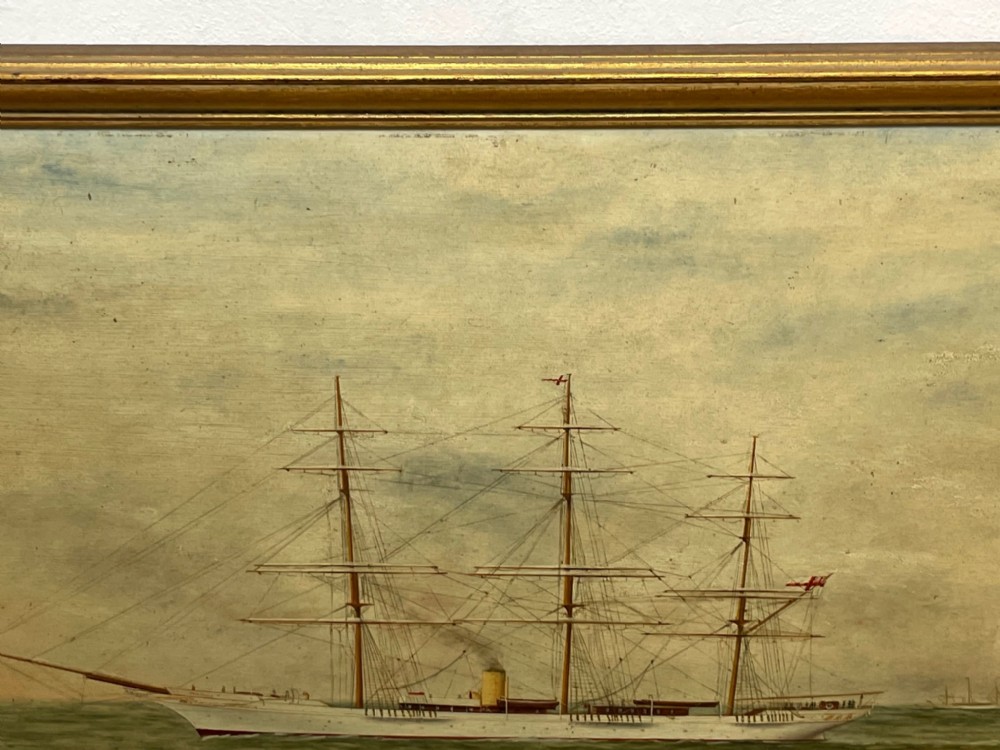
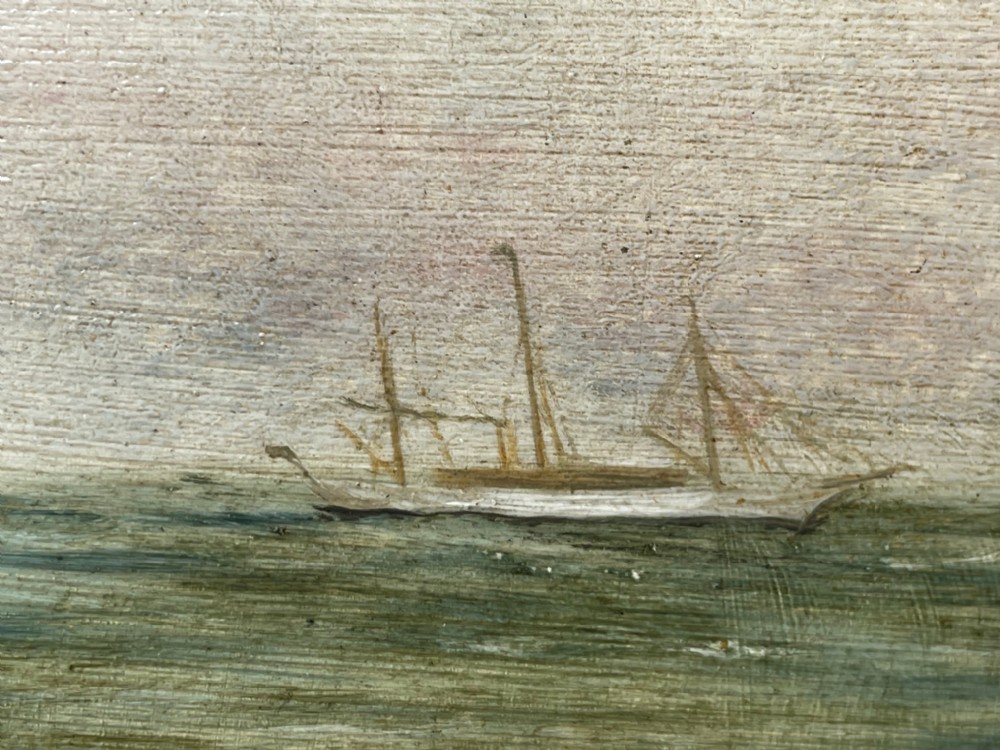
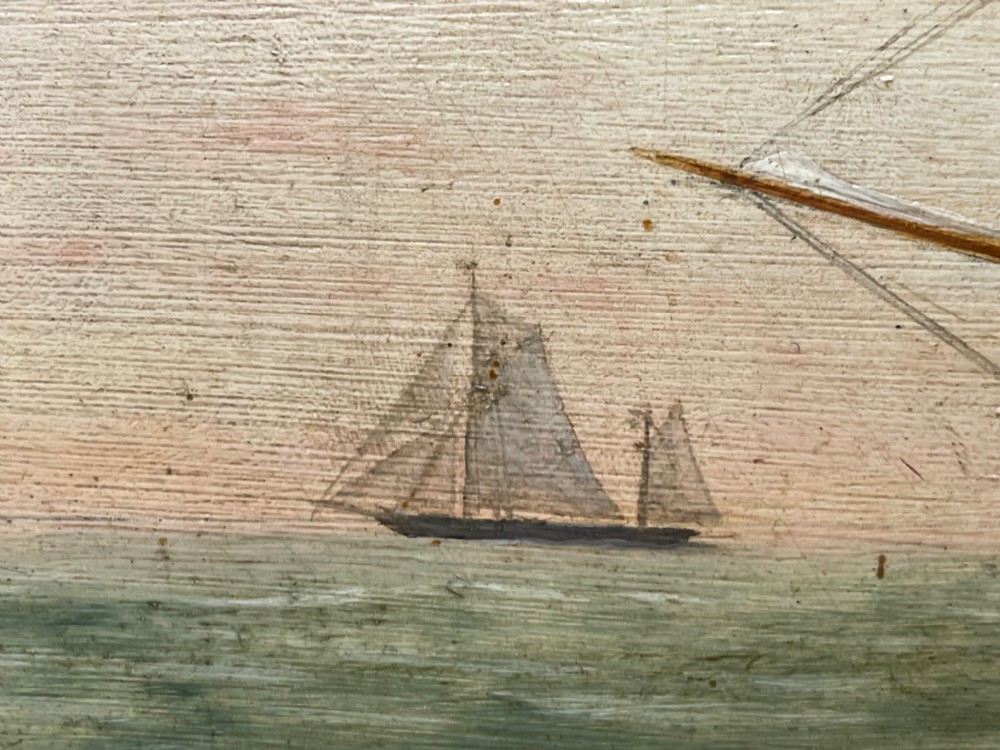
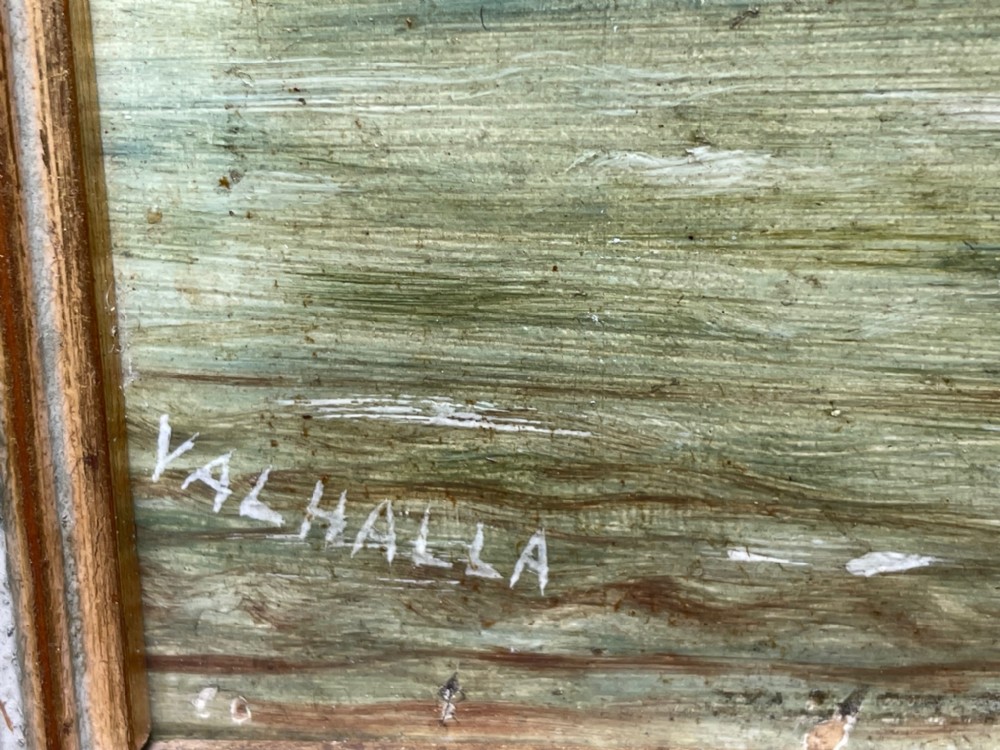
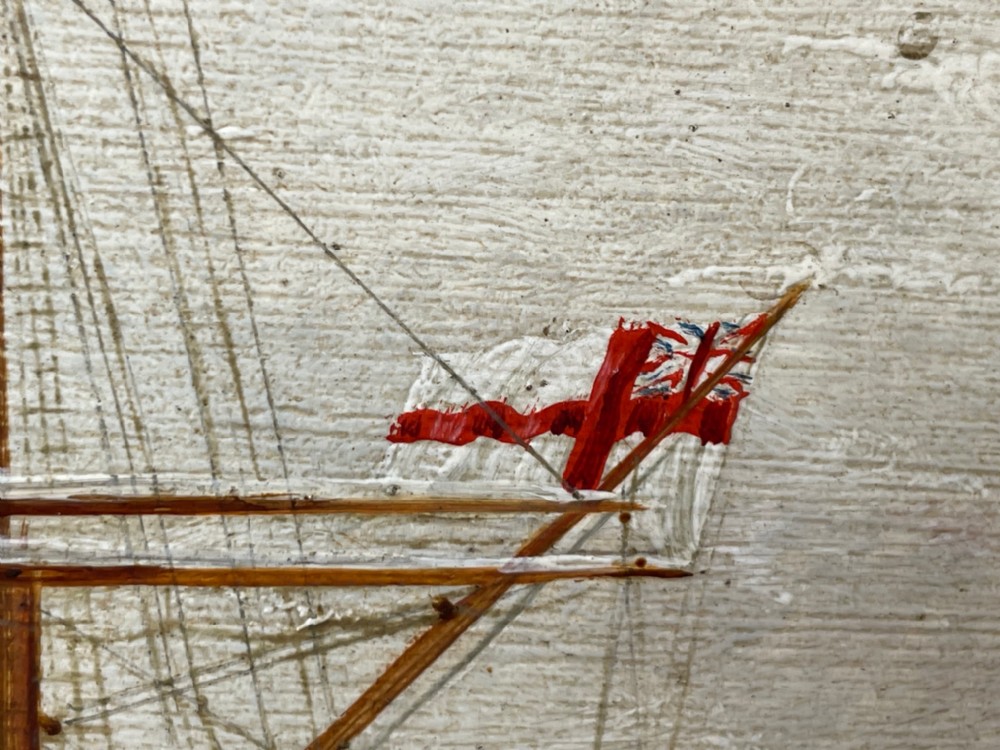
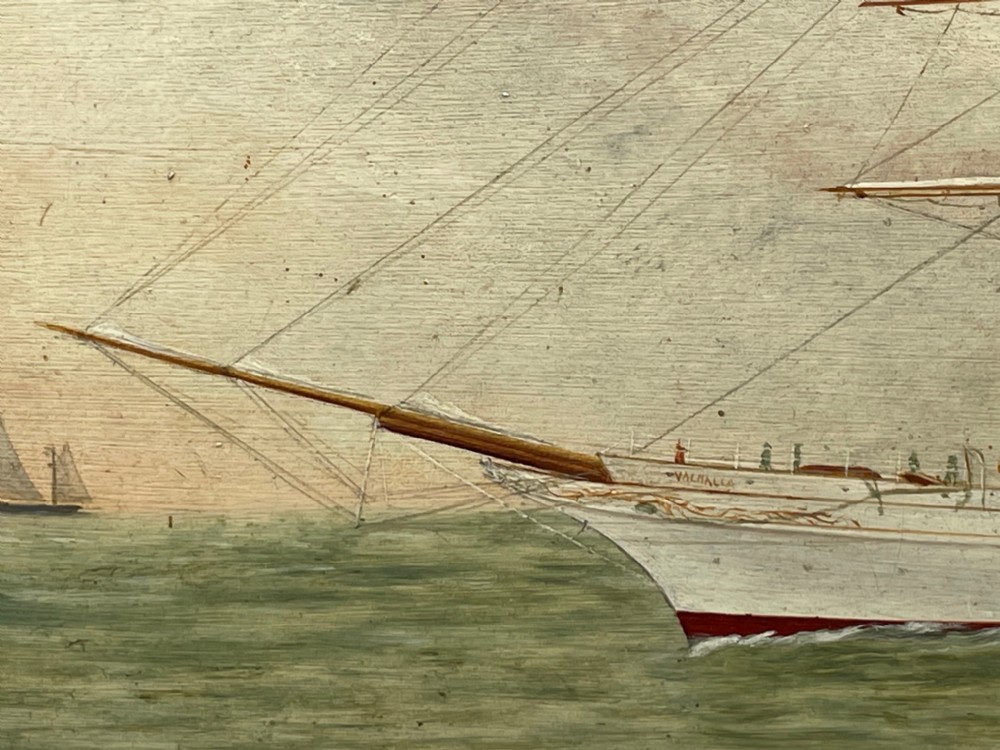
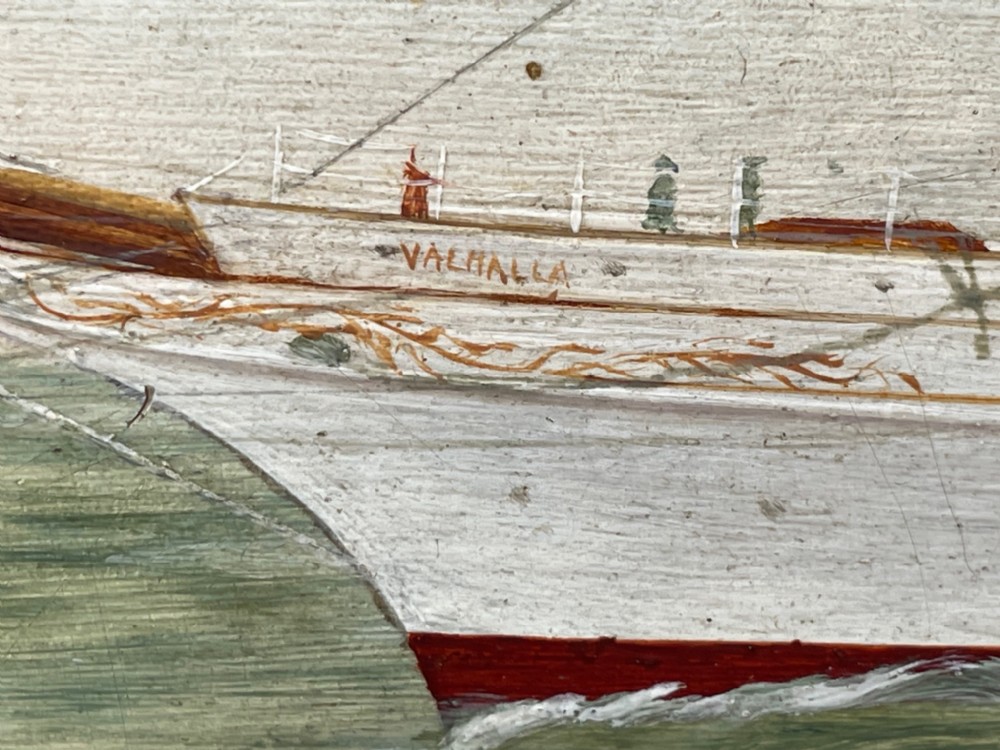
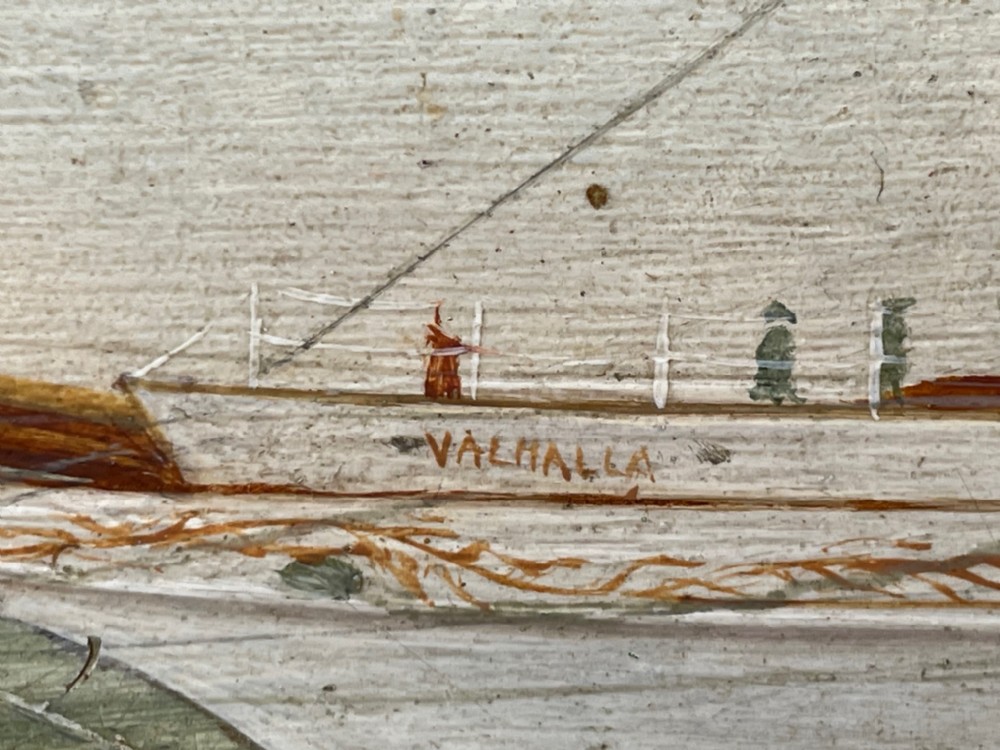
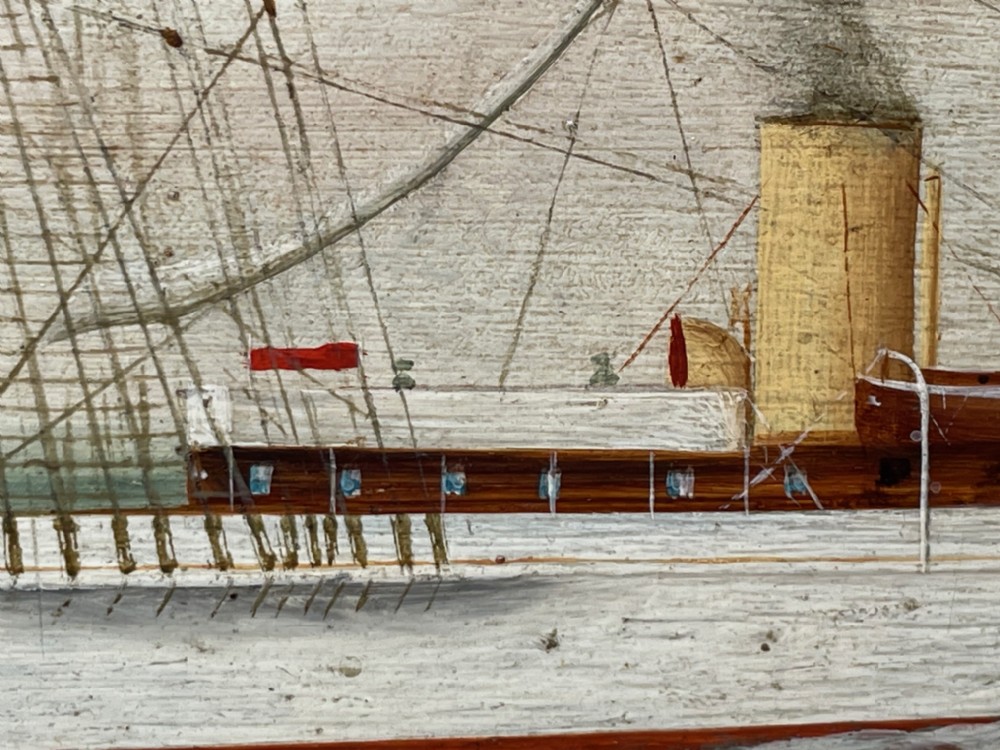
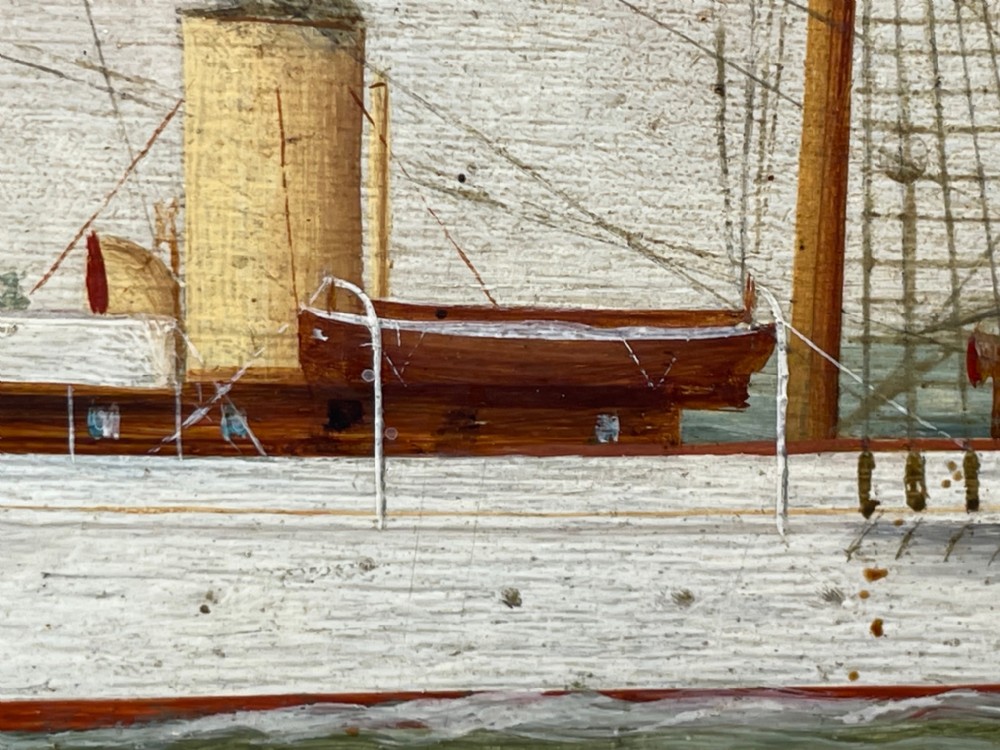
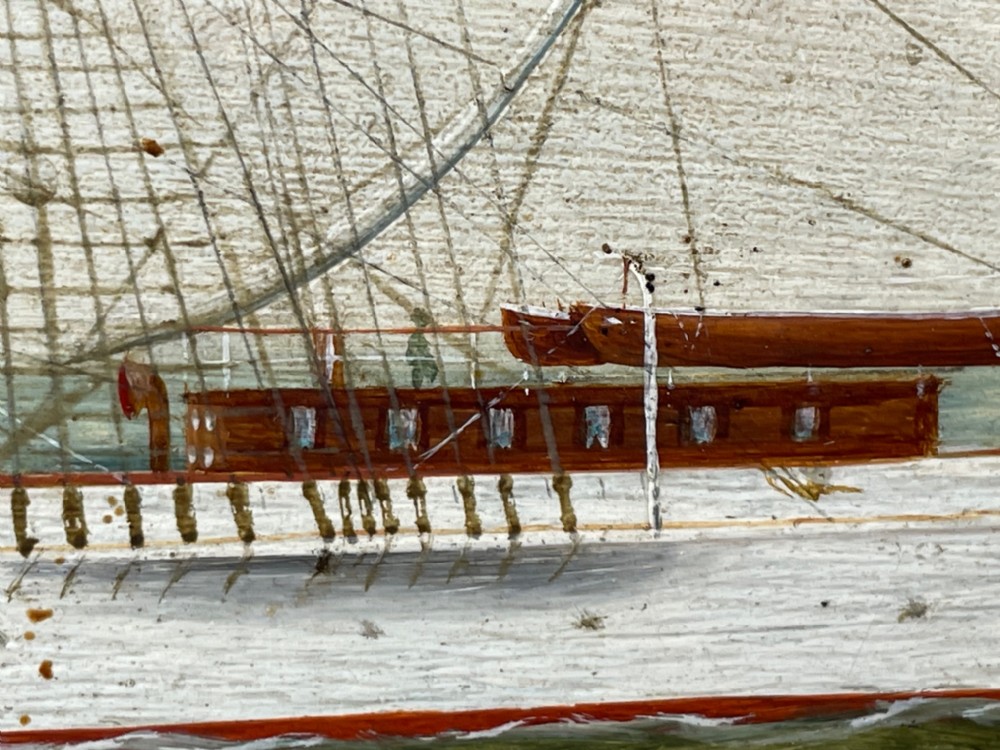
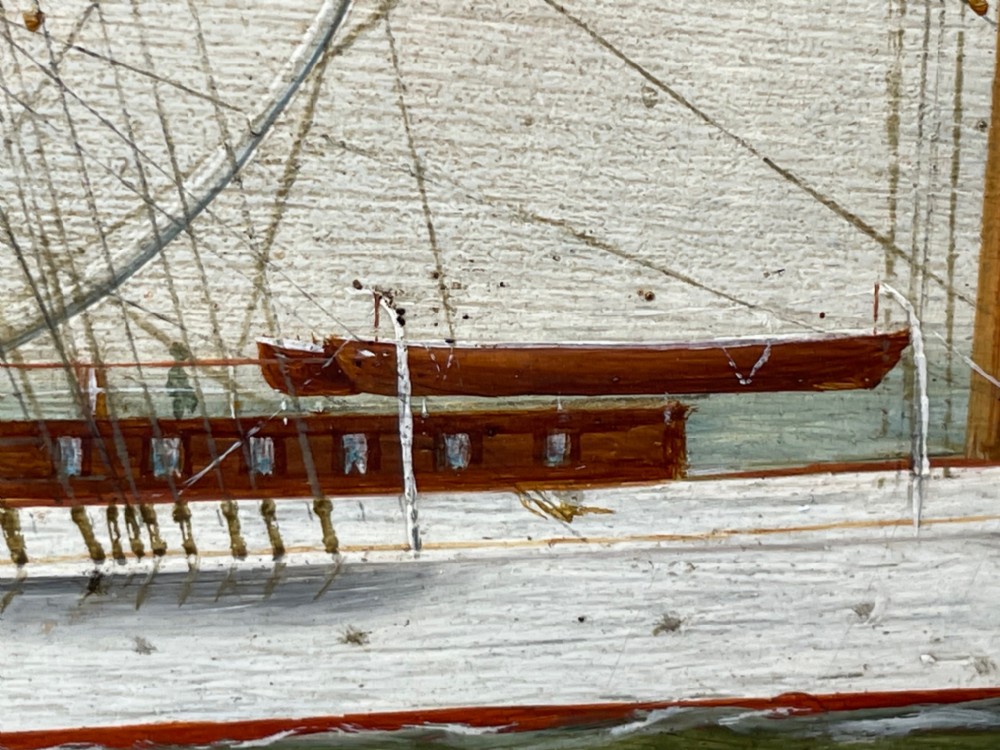
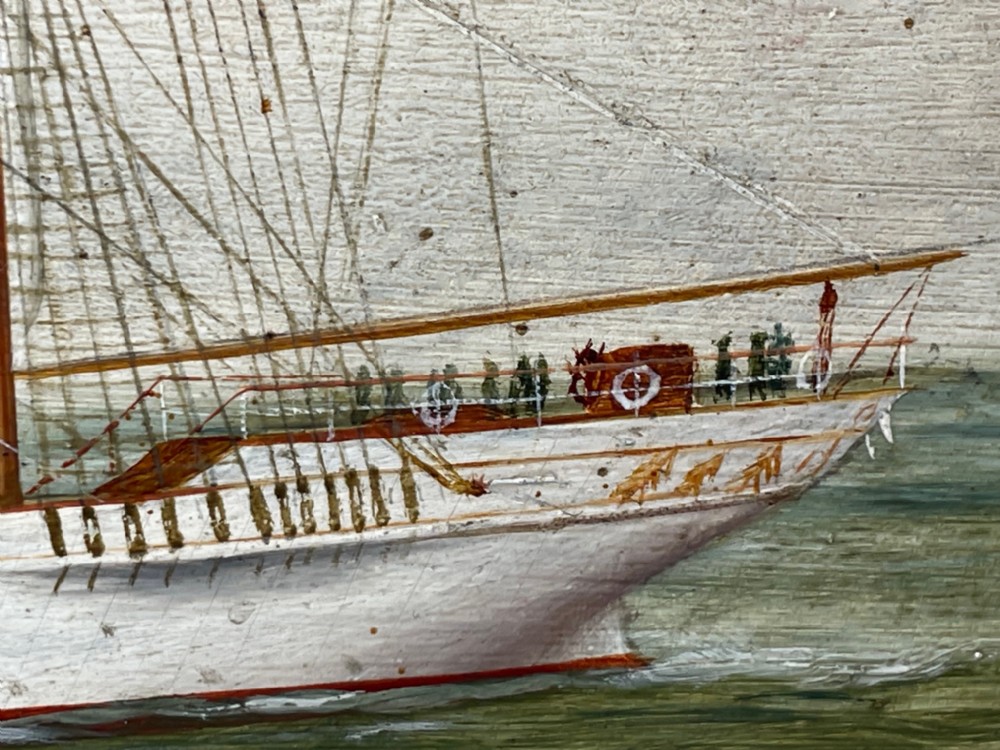
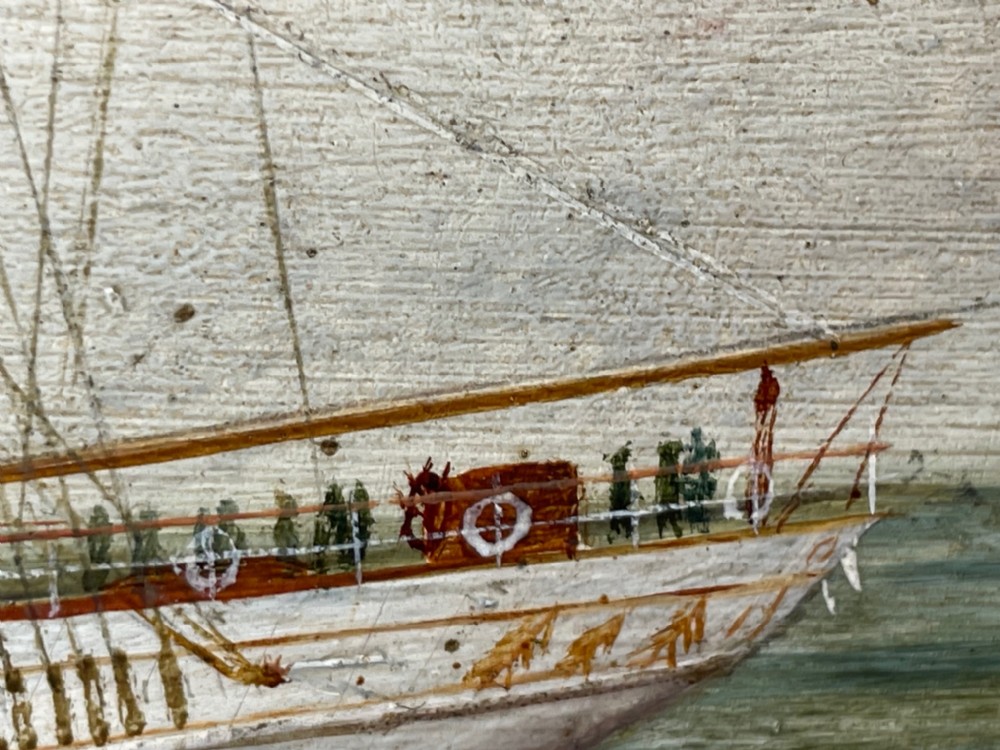
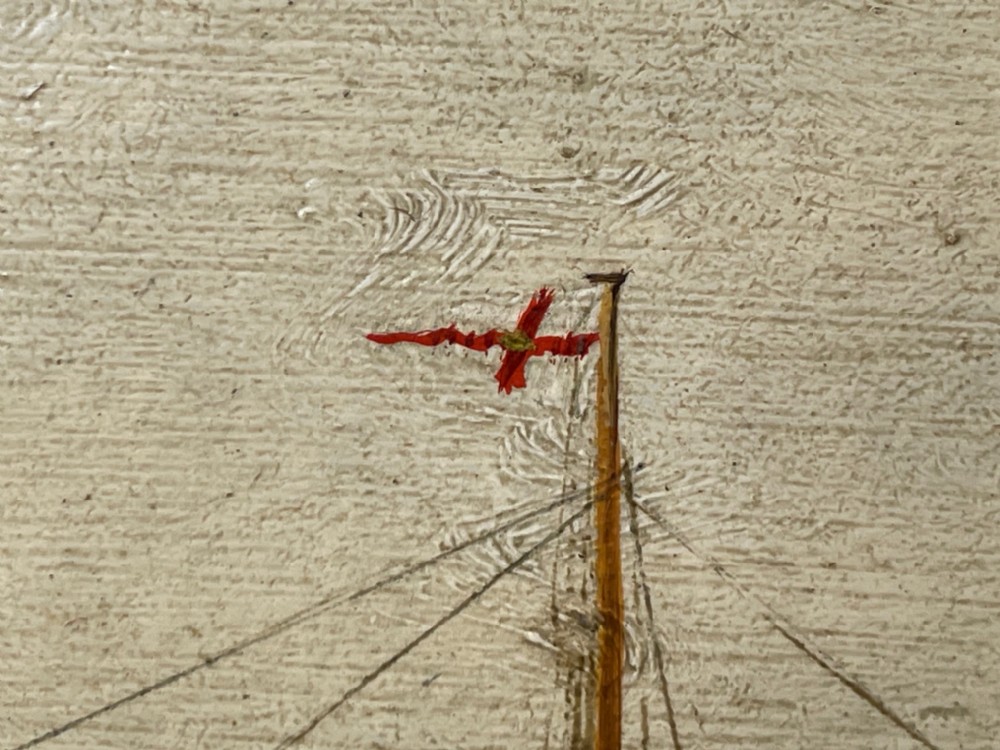
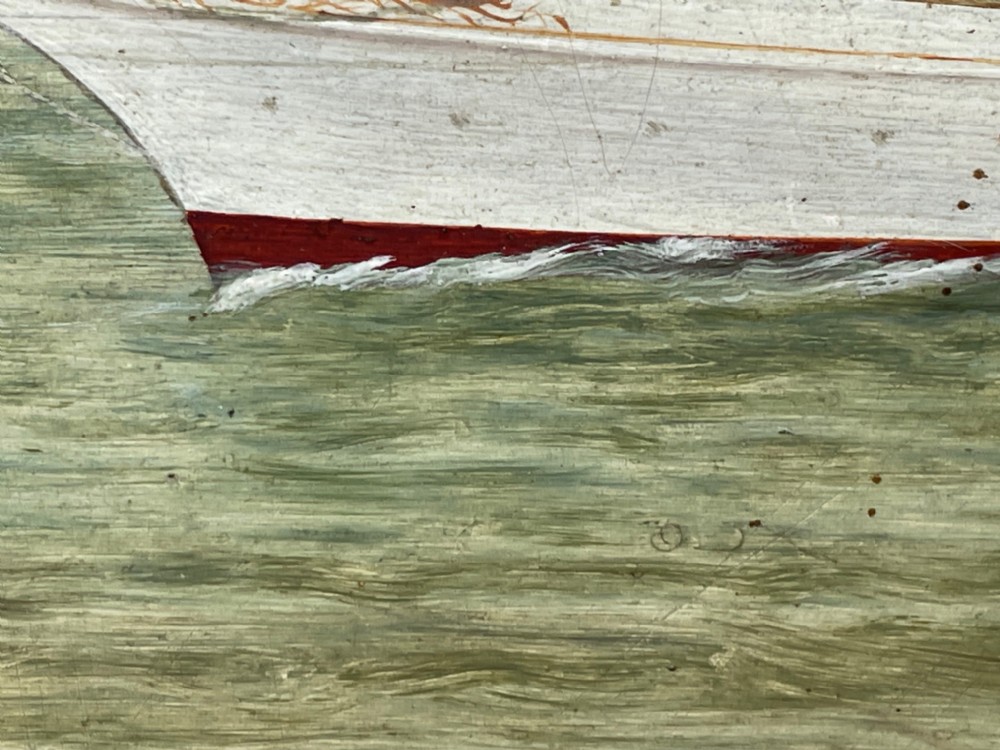
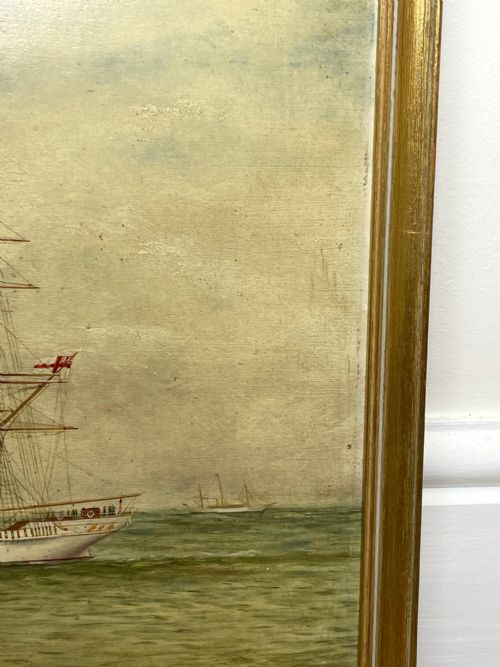
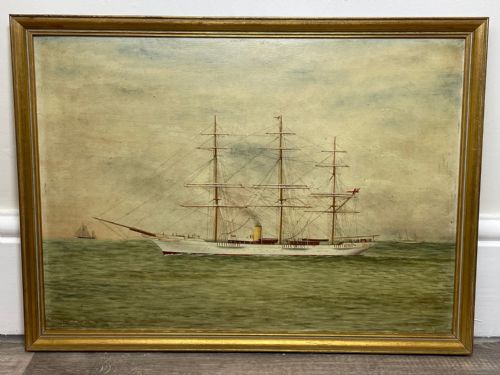
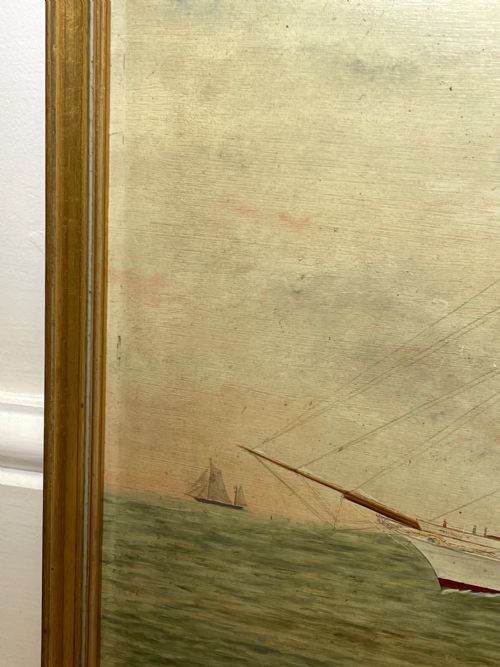
Subject seascape marine portrait of the famous known auxillary steam yacht Valhalla, in full side profile view on the high seas, steaming along relative choppy high seas, you can see smoke billowing out of the funnel, you can see the rigging and all of the sails are tied down. Having 3 masts, you can see figures on deck to the bow and stern and lifeboats along the side, at the stern you can see the Saint George with Union Jack flag, also above at the top of the middle mast is a saint George flag flying high. You can also see the name of the yacht on the bow Valhalla., in the background further back you can view other sailing racing yachts
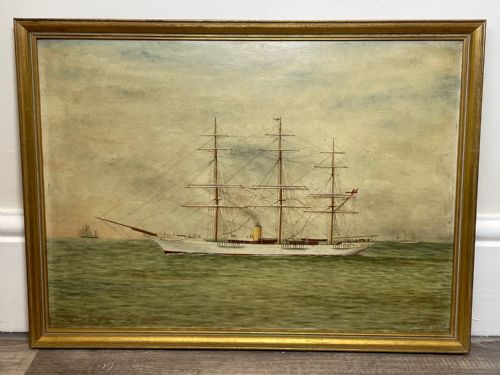
Oil on board.
Circa early 20th century.
Set in a beautiful decorative gilt frame.
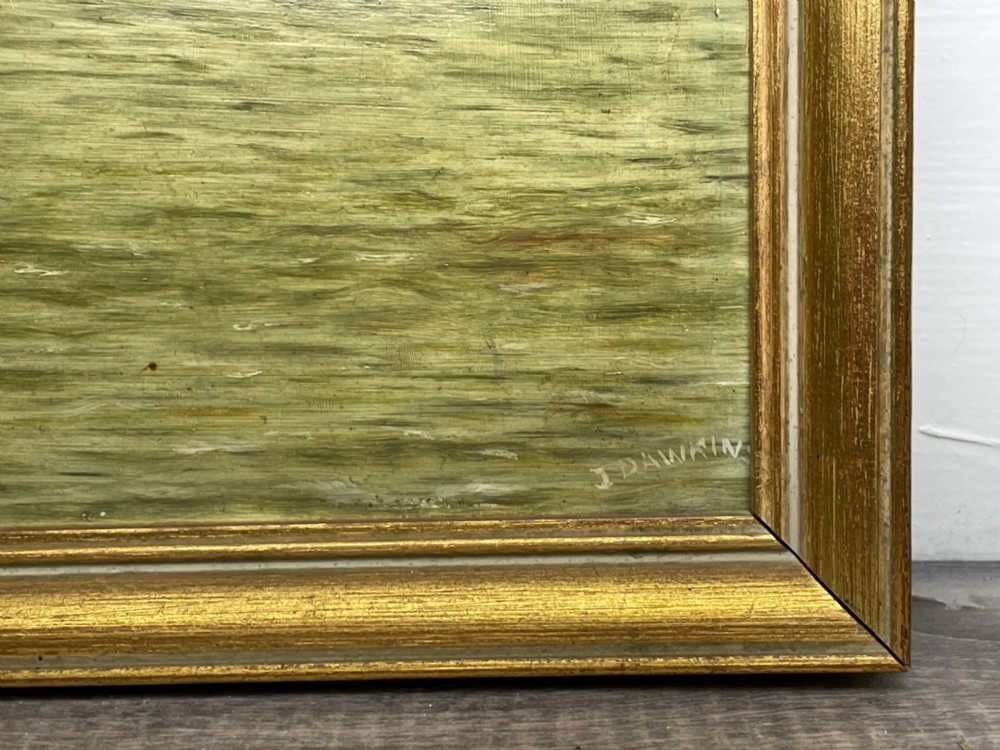
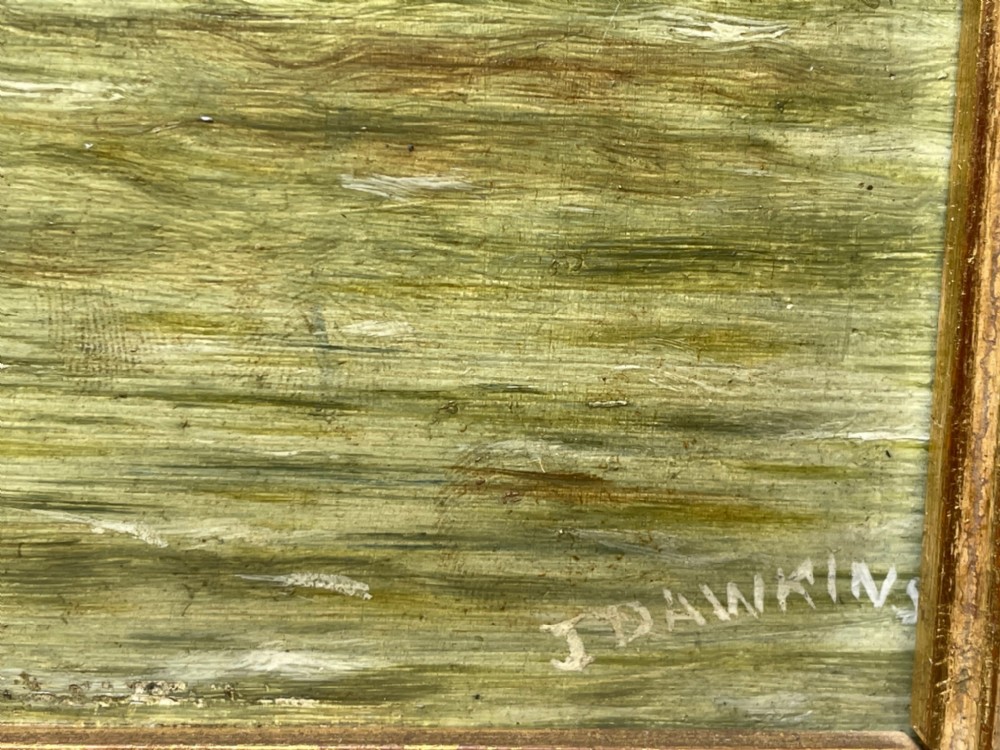
Signed by the British artist J Dawkins bottom right.
Valhalla RYS was a steam yacht, much admired in her day for her beauty and unusual rigging.
She had several owners, most notably Joe Laycock a trans-Atlantic racing yachtsman and Olympian, and Lord Crawford, who employed her as a research vessel on three major voyages from 1902 to 1908, which resulted in the book Three Voyages of a Naturalist : Being an Account of Many Little-Known Islands in Three Oceans Visited by the 'Valhalla' R.Y.S., by M.J. Nicoll, published in 1908. During the Great War she served with the Royal Navy as a part of the Eastern Mediterranean fleet's Aegean Squadron during the Gallipoli campaign. After the War she became a French-owned fruit carrier, before being wrecked off Cape St. Vincent in 1922.
Her first owner was Capt. J. F. Laycock of Bawtry, Portsmouth, a British Army officer and Olympic sailor. Laycock, was a member of the Royal Yacht Squadron at Cowes,[2] he commissioned Ramage & Ferguson of Leith in 1892 to build him a Steel Auxiliary 3 masted Steam Yacht. Laycock had envisioned his own private clipper ship, a 3/4 sized version of the Cutty Sark. He drew up some basic outline plans, and handed them over to Mr. W. C. Storey, who produced detailed plans for both the yacht, and its auxiliary power unit. The design had its critics, however once built, she was found to have excellent sailing qualities. She is believed by many to have been the finest example of a steam auxiliary ever built.
Launched from the Victoria Shipyard on 20 October 1892. At 1,218 tons gross, she sailed for Southampton for fitting out. She was the only British steam yacht to carry a full ship rig and was originally rigged as a privateer with stun’s’ls. Her ward room, gun-room, and armoury after the manner of RN vessels of century before. Her complement was 96 hands.
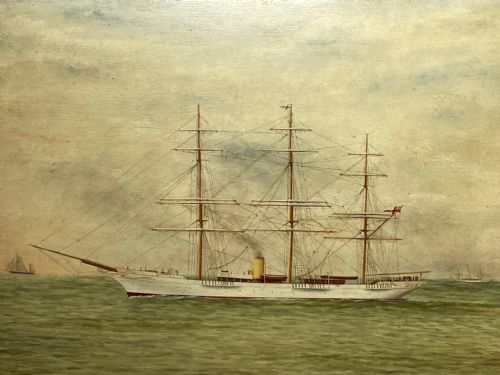
Laycock had the yacht fitted with two Hotchkiss cannons and a Maxim machine gun. Most of the crew were ex Royal Navy and she had aboard a selection of rifles, pistols and cutlasses. For her maiden voyage of 9,632 miles; Laycock and ten idlers embarked from Southampton on 22 March 1893 for Madeira, around the Mediterranean (stopping off at Cannes for a family wedding), Constantinople, the Black Sea to Sevastopol and back to Cowes. Laycock later in 1894, had the firm of Howard Cox privately publish The Log of the Valhalla which covers this voyage in detail.
He took her to Newport, Rhode Island for the America's cup of 1895-1896, and gave Lord Dunraven a lift home via New York on 28 September 1895. The race was notable for Dunraven's allegations of cheating by the winning American yacht, Defender (1895 yacht). Dunraven had been racing the British keel cutter Valkyrie III.
Ownership by Lord Crawford
James Lindsay, 26th Earl of Crawford ( 1847–1913), registered her in London in 1902. Like Laycock, he too was a member
Cheshire Antiques Consultant Ltd has dated this piece to the 1920s.
Source the historic in 17th, 18th, 19th & 20th century fine arts, painting, sculptures & collectibles
You can view the stock and full dealer information on the Cheshire Antiques Consultant Ltd Profile Page
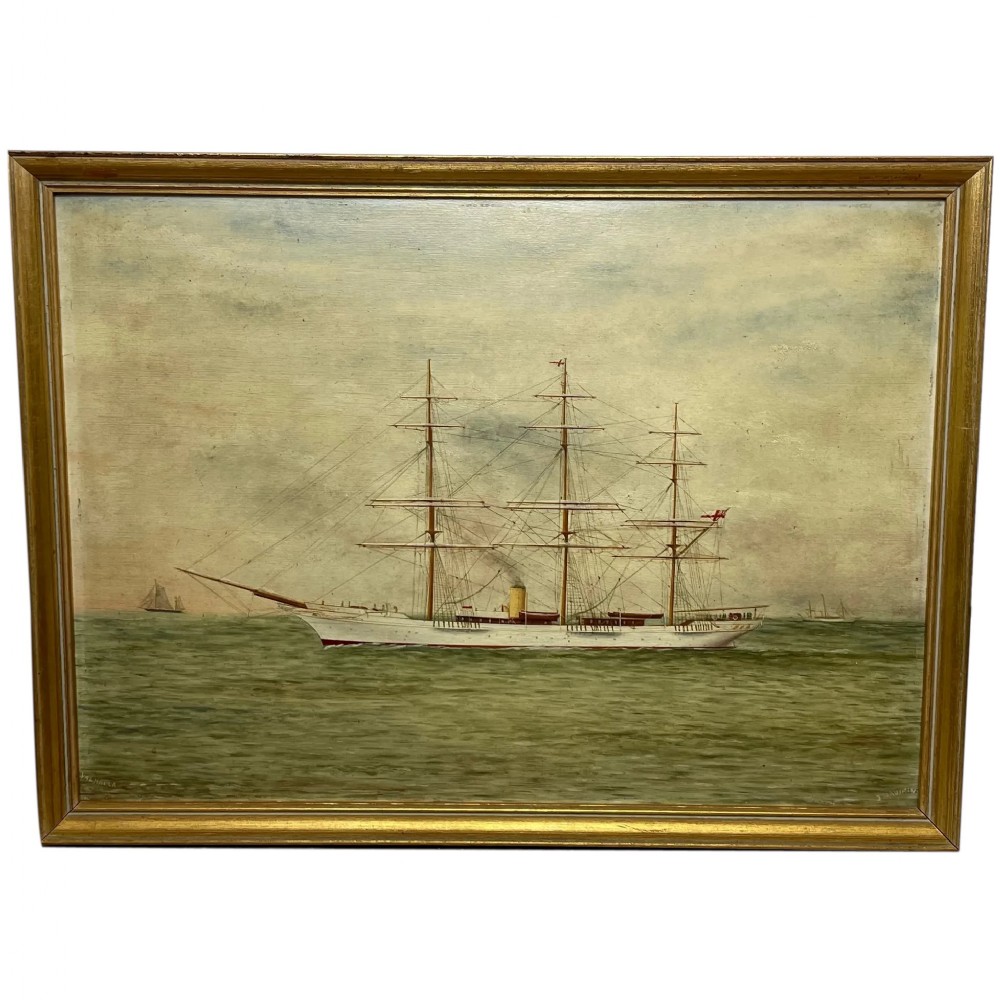
Oil Painting Steam Yacht Valhalla in the Kaisers Transatlantic Race