3,830  PAGES BROWSED TODAY PAGES TODAY 0 ANTIQUES UPLOADED TODAYNEW ARRIVALS
LATEST STOCK
Sort Order
Items Per Page
Browse Categories
Sort order
Items per page
ID #SA922252
SOLD
Email
Save
Early Victorian Aneroid Barometer on Carved Oak Stand by Frederick Cox, London
Jason Clarke Antiques
sold SA922252
Sorry, but this item has been sold.
Jason Clarke Antiques

Jason Clarke Antiques

Sellingantiques Verified Since Jul 2015
View Dealers Stock Page
Id #SA922252
PDF SHARE
SAVE

Early Victorian Aneroid Barometer on Carved Oak Stand by Frederick Cox, London

19th century
Description

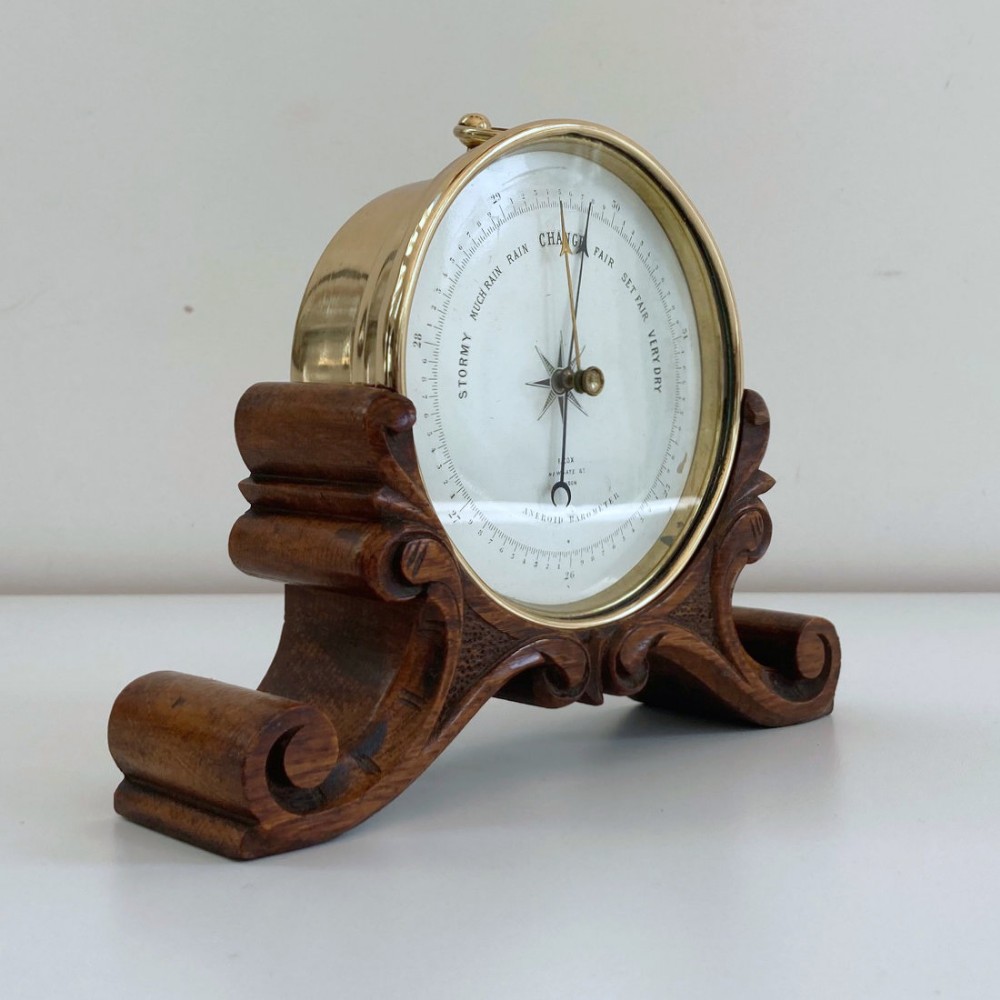
For sale, an early Victorian aneroid barometer on carved oak stand by Frederick Cox of Newgate Street, London.

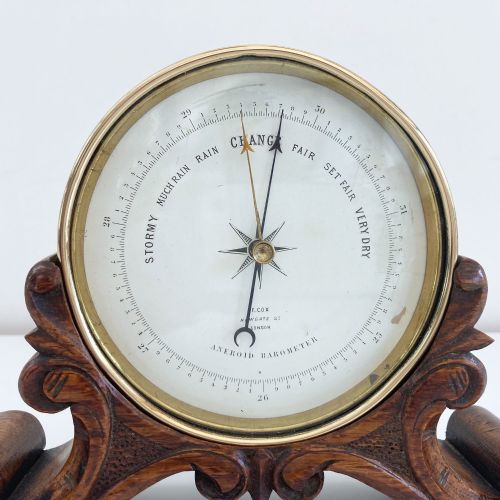
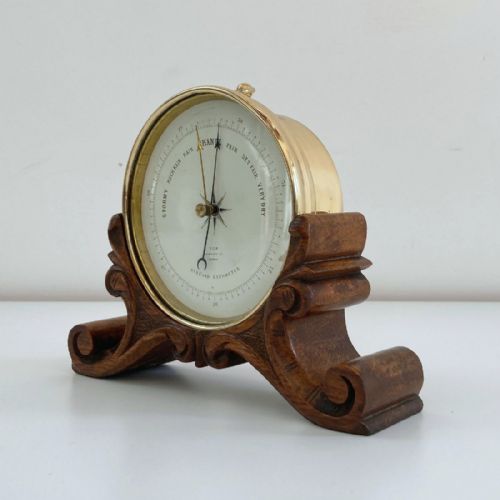
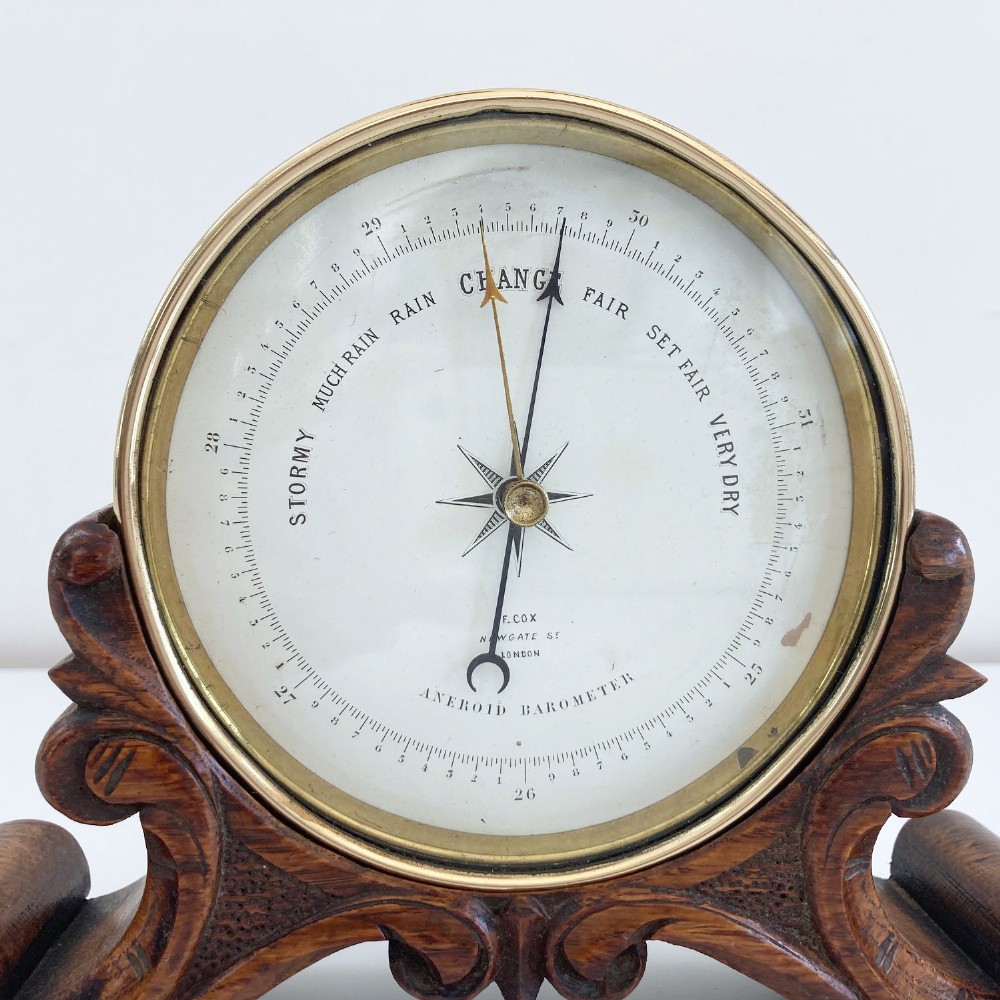
Comprised of a 4.5” card dial containing a large scale measuring 25 to 31 inches of barometric pressure divided to tenths of an inch. The top half of the scale is provided with Vidi type weather indications, the centre with a seven-pointed star motif and the base printed with the retailer, “F. Cox Newgate St, London” and the words, “aneroid barometer”. The blue steel indicator hand is finished with a crescent moon design and the brass setting hand. Although unmarked, this example, owing to its style and like many of the period would have been imported from France from famous firms such as Naudet.
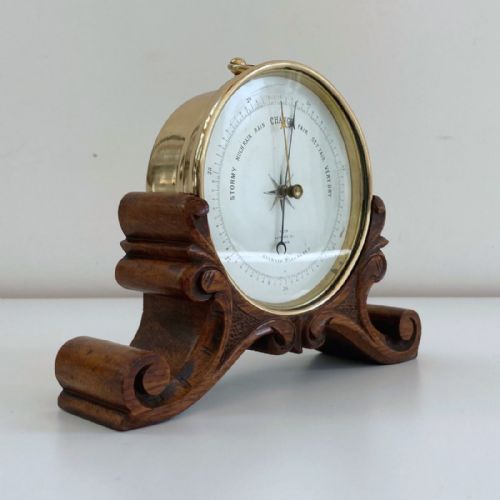
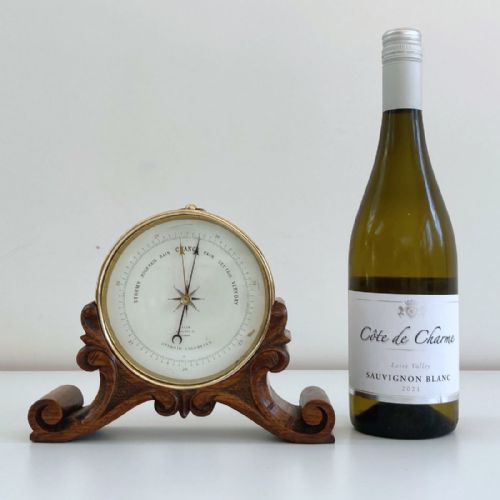
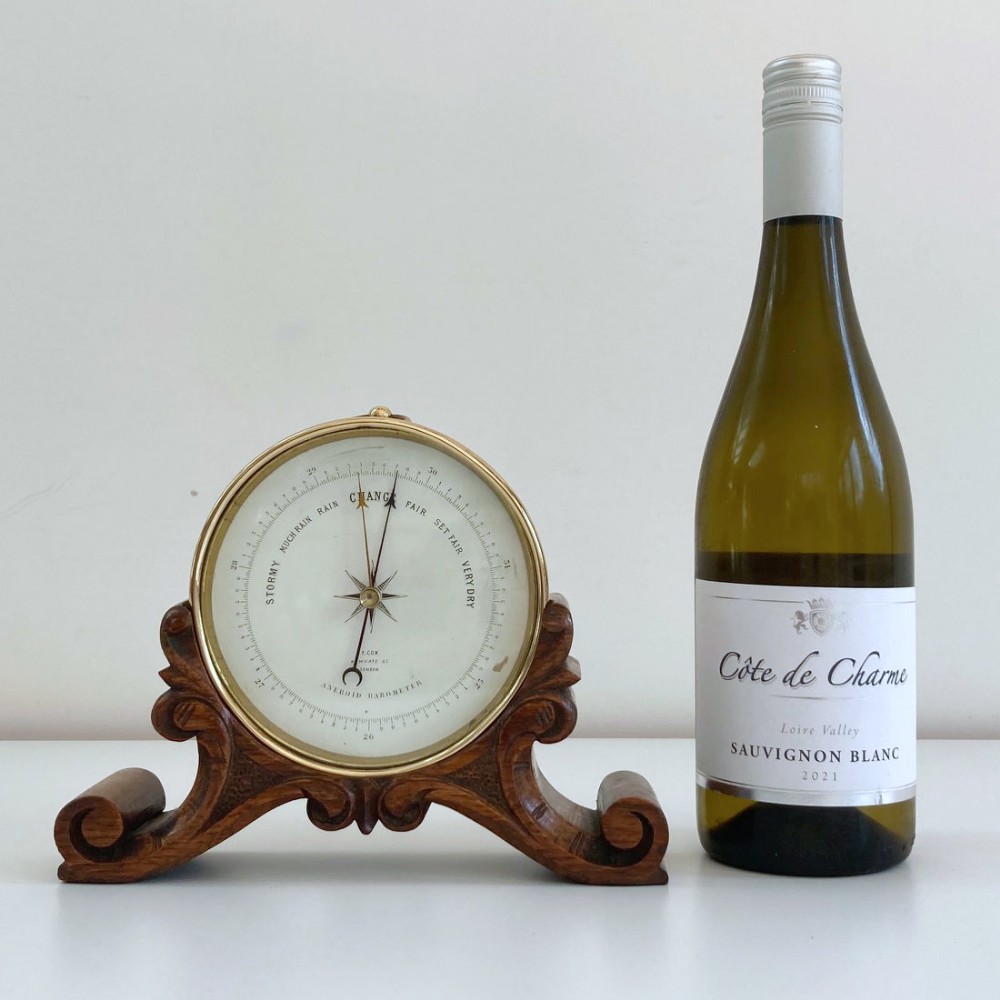
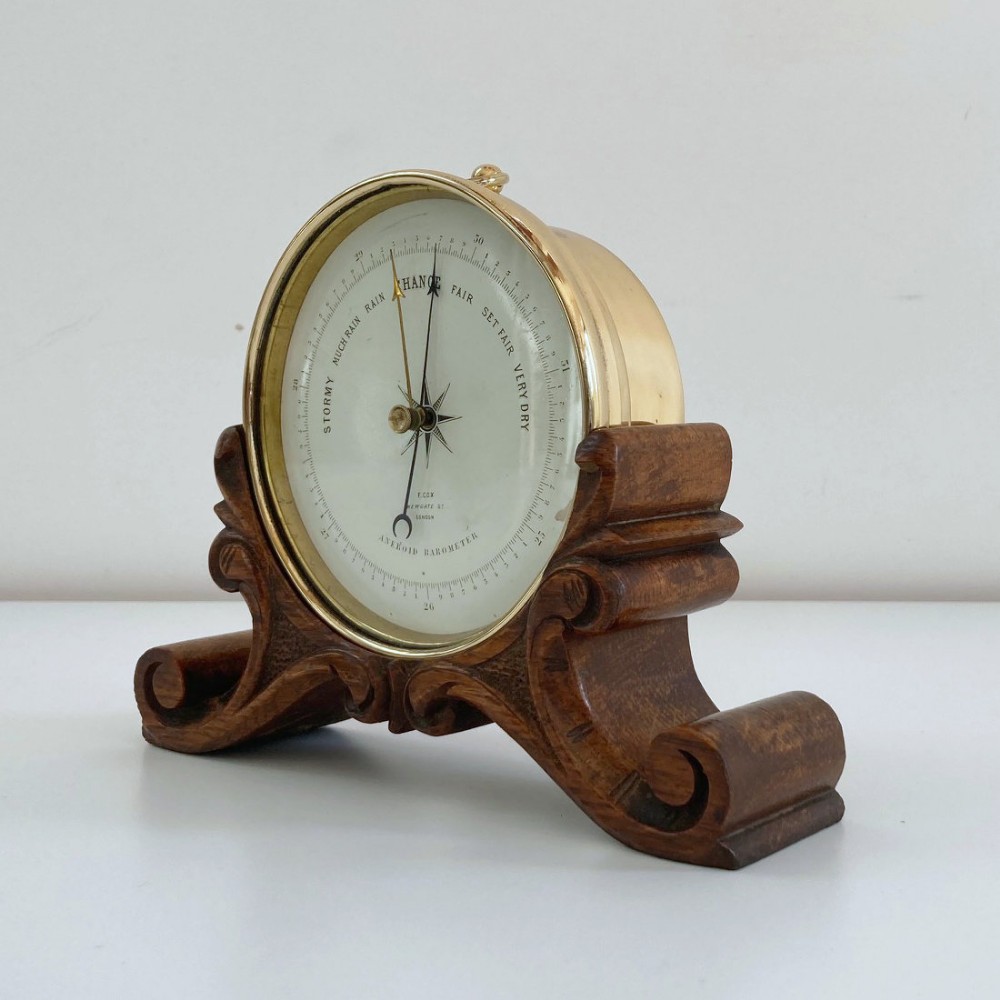
The elegantly sized oak base is superbly executed with floral scroll motifs emanating from either side of the barometer. This style is perhaps the most aesthetically pleasing of the Victorian stands and (in my view at least), provides the most appropriate proportions without overwhelming the instrument.
The retailer, Frederick James Cox was born in 1834 in Shoreditch, the son of optician, Frederick Cox. Cox’s adverts of the 1870’s proudly state that the company had been established for, “upwards of 120 years” but given that their beginnings seem to have been in Essex, it is unclear whether the family moved their business to London, or, as was common practice, they bought an established business and changed the name. Nevertheless, Cox was most likely apprenticed to his Father and joined the business as a partner.
The company’s earliest known trading address was at 22 Skinner Street in 1856, where alongside their optician & instrument making business, they began the manufacture of photographic equipment. Cox was clearly a keen proponent of the new science and released a hugely popular pamphlet named, “A Compendium of Photography” which underwent revisions until 1873.
The company remained there until its premises were consumed by the development of Holborn Viaduct, a circumstance which also affected the fledgling business of Negretti & Zambra. Whilst Negretti eventually took on new premises in this development, the Cox business moved a short distance South to 26 Ludgate Hill where they remained until 1882 and where after the firm of H & EJ Dale (electrical & scientific apparatus manufacturers) took over.

The company’s premises at 100 Newgate Street are somewhat of a mystery and records for the Cox business at that site are vague about their tenure. My initial suspicion is that the Father & Son ran separate sites of the same business, but their close proximity seemed not to make a huge amount of business sense until you consider that The London School of Photography had premises at 103 Newgate Street during this time. The inter-use of F Cox & FJ Cox is also cause to suggest that they may have been separate but both were certainly retailing a wide range of scientific instruments at the time including photographic equipment. I must concede on the establishment date however I suspect that both premises were sold in 1882.

FJ Cox was certainly a wealthy man at the time of the sale of the London premises. He is listed as residing at The Laurels in Dulwich in 1881 and is recorded as an Optician in Eastbourne by 1891 for which extant examples of his products are known. He was retired by 1901 and died in Eastbourne in 1907. Like many others at the time, his move to the coast may have been prompted by health reasons.

Circa 1860

Physical Dimensions
Height
16cm (6.30")
Width
21cm (8.27")
Depth
5.5cm (2.17")
Declaration

Jason Clarke Antiques has dated this piece to the 1860s.

Reference Numbers
Sellingantiques Reference
SA922252
Description
For sale, an early Victorian aneroid barometer on carved oak stand by Frederick Cox of Newgate Street, London.

Comprised of a 4.

5” card dial containing a large scale measuring 25 to 31 inches of barometric pressure divided to tenths of an inch.
Jason Clarke Antiques

The top half of the scale is provided with Vidi type weather indications, the centre with a seven-pointed star motif and the base printed with the retailer, “F. Cox Newgate St, London” and the words, “aneroid barometer”. The blue steel indicator hand is finished with a crescent moon design and the brass setting hand. Although unmarked, this example, owing to its style and like many of the period would have been imported from France from famous firms such as Naudet.

fig 1. Early Victorian Aneroid Barometer on Carved Oak Stand by Frederick Cox, London

The elegantly sized oak base is superbly executed with floral scroll motifs emanating from either side of the barometer. This style is perhaps the most aesthetically pleasing of the Victorian stands and (in my view at least), provides the most appropriate proportions without overwhelming the instrument.

fig 2. Early Victorian Aneroid Barometer on Carved Oak Stand by Frederick Cox, London

The retailer, Frederick James Cox was born in 1834 in Shoreditch, the son of optician, Frederick Cox. Cox’s adverts of the 1870’s proudly state that the company had been established for, “upwards of 120 years” but given that their beginnings seem to have been in Essex, it is unclear whether the family moved their business to London, or, as was common practice, they bought an established business and changed the name. Nevertheless, Cox was most likely apprenticed to his Father and joined the business as a partner.

fig 3. Early Victorian Aneroid Barometer on Carved Oak Stand by Frederick Cox, London

The company’s earliest known trading address was at 22 Skinner Street in 1856, where alongside their optician & instrument making business, they began the manufacture of photographic equipment. Cox was clearly a keen proponent of the new science and released a hugely popular pamphlet named, “A Compendium of Photography” which underwent revisions until 1873.

fig 4. Early Victorian Aneroid Barometer on Carved Oak Stand by Frederick Cox, London

The company remained there until its premises were consumed by the development of Holborn Viaduct, a circumstance which also affected the fledgling business of Negretti & Zambra. Whilst Negretti eventually took on new premises in this development, the Cox business moved a short distance South to 26 Ludgate Hill where they remained until 1882 and where after the firm of H & EJ Dale (electrical & scientific apparatus manufacturers) took over.

The company’s premises at 100 Newgate Street are somewhat of a mystery and records for the Cox business at that site are vague about their tenure. My initial suspicion is that the Father & Son ran separate sites of the same business, but their close proximity seemed not to make a huge amount of business sense until you consider that The London School of Photography had premises at 103 Newgate Street during this time. The inter-use of F Cox & FJ Cox is also cause to suggest that they may have been separate but both were certainly retailing a wide range of scientific instruments at the time including photographic equipment. I must concede on the establishment date however I suspect that both premises were sold in 1882.

FJ Cox was certainly a wealthy man at the time of the sale of the London premises. He is listed as residing at The Laurels in Dulwich in 1881 and is recorded as an Optician in Eastbourne by 1891 for which extant examples of his products are known. He was retired by 1901 and died in Eastbourne in 1907. Like many others at the time, his move to the coast may have been prompted by health reasons.

Circa 1860

Height
16cm (6.30")
Width
21cm (8.27")
Depth
5.5cm (2.17")
Date of Manufacture

Jason Clarke Antiques has dated this piece to the 1860s.

Reference Numbers
Sellingantiques Ref
SA922252
Jason Clarke Antiques
Sellingantiques verified Since Jul 2015
Dealer Profile

You can view the stock and full dealer information on the Jason Clarke Antiques Profile Page

PDF SHARE
SAVE
Early Victorian Aneroid Barometer on Carved Oak Stand by Frederick Cox, London
1 / 5
Archive I Early Victorian Aneroid Barometer on Carved Oak Stand by Frederick Cox, London
Early Victorian Aneroid Barometer on Carved Oak Stand by Frederick Cox, London
Archive II Early Victorian Aneroid Barometer on Carved Oak Stand by Frederick Cox, London View II
Archive III Early Victorian Aneroid Barometer on Carved Oak Stand by Frederick Cox, London View III
Archive IV Early Victorian Aneroid Barometer on Carved Oak Stand by Frederick Cox, London View IV
Archive V Early Victorian Aneroid Barometer on Carved Oak Stand by Frederick Cox, London View V
Enlarged Archival View
Telephone 07815 046645
Location
Newbury
Berkshire
United Kingdom
Verified Since Jul 2015
Items For Sale 80
Items Sold 607
Jason Clarke Antiques
Verified Since Jul 2015
View Dealer Info
Location: Newbury, Berkshire, United Kingdom
Verified
Jul 2015
For Sale
80
Sold
607
Early Victorian Aneroid Barometer on Carved Oak Stand by Frederick Cox, London
Ref: SA922252
Early Victorian Aneroid Barometer on Carved Oak Stand by Frederick Cox, London
Detail View 1
Detail View 2
Detail View 3
Detail View 4
Archival Detail
Every single antique dealer on our platform is individually approved by our internal team. We verify their professional trade history, ethical standards, and photographic quality to ensure a secure, high-standard buying environment. Upon joining, every dealer agrees to a strict 9-point code of conduct. While issues can occasionally arise, our dealers typically resolve them swiftly and directly with the buyer. In fact, since our founding in 2002, Sellingantiques has only had to step in to help resolve an issue on roughly five occasions—a true testament to the quality of our dealers and their dedication to your happiness.
Our dealers are highly experienced in packing and shipping fragile, high-value antiques. Because you are in direct contact with the dealer, you will be able to easily go through all available shipping and insurance options together to ensure your item arrives safely.
Antiques are the ultimate green purchase. By choosing historical pieces over newly manufactured goods, you completely eliminate the carbon footprint of modern mass production while preserving exceptional, timeless craftsmanship.
items
Add keywords to the filter
Price
£100
£250000
Era
Movements
Material
Origin
Stock Location
Freshness
Online Payments
Categories