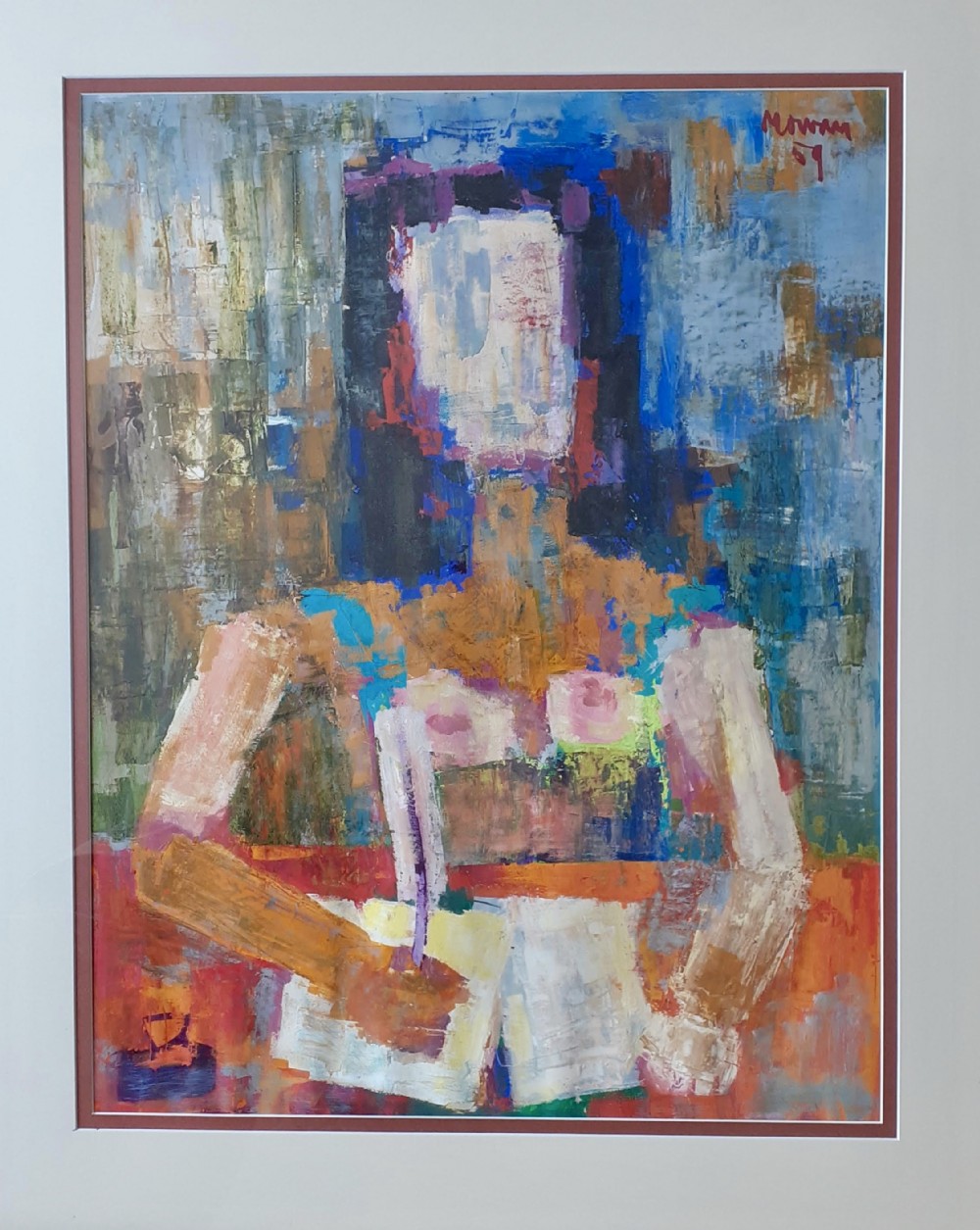
Skippings Fine Arts has dated this piece to the 1950s.
It is traditional painting - but with a significant twist!
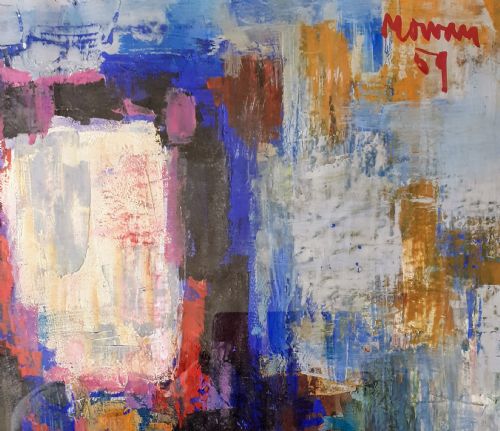
The artwork was painted with a razor. As art historian Agnes Humbert explains: “Morvan, like all painters, uses brushes, but he prefers the humble razor blade. Not only does he use it to spread his paint, but to equalise it, to treat it. Having reached the final stage, he still uses a razor to apply thin transparent glazes here and there. Mprvan prefers to use pure color, as it comes out of the tube. The use of the razor blade allows him to play happily with the various layers of paint (...) His clever scrapings give the material of his works a very special flavour. »
Jean Jacques Morvan was in Morlaix, Brittany, into a family of sailors in 1928. He experienced the German occupation as a young man, and in 1944, as member of a rescue team, was an active witness to the fighting for the liberation of Paris.
The following year, he took part in assisting and escorting deportees on their return from the camps. This subjected him to impressions that would never leave him.
Morvan entered the National School of Decorative Arts with Raoul Pradier , Michel de Gallard and Paul Rebeyrolle in 1945. At the same time, he followed his second calling, that of an actor, for a long time.
He was selected for the Critics' Prize in 1951 and 1956, and for the prize for the magazine Le Peintre in 1956. From 1959, he divided his time between Paris where he worked at the Montmartre-aux-artistes city of artists and Brittany.
Morvan collaborated with Albert Camus on the review, Temoins 5, and widely exhibited nationally and internationally both at salons and in galleries. Retrospective Exhibitions of the artist are still regualrly taking place in Europe.
Works by Morvan can be found in numerous French Museums, including the National Museum of Modern Art (Georges Pompidou Centre), and the
City of Paris Museum of Modern Art.
Internationally, works by the artist are held by the Vatican Museum in Rome, the
Folkwang Museum in Essen, the Neuchâtel Museum of Art and History, as well as in museums in Switzerland, Indonesia, Spain and Cameroon
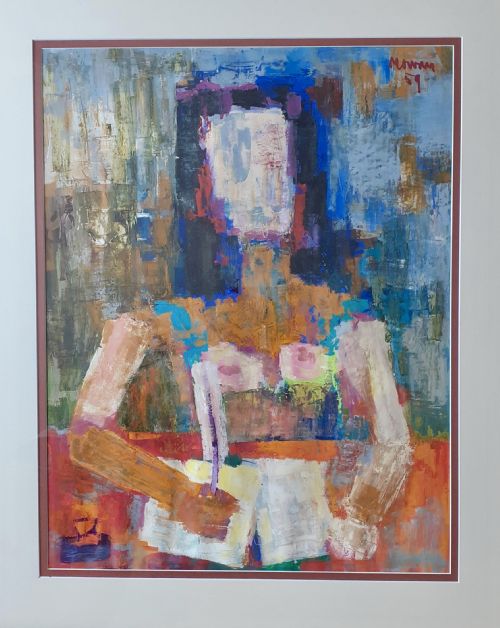
Our gouache on paper measures 62 x 49 cm unframed, is a wonderful example of Morvan's dating from his most creative period. The artwork is signed and dated 1959 at the lower right.
Framing options are available.
Skippings Fine Arts has dated this piece to the 1950s.
Modern french & continental pictures selected by a former french auction house expert
You can view the stock and full dealer information on the Skippings Fine Arts Profile Page
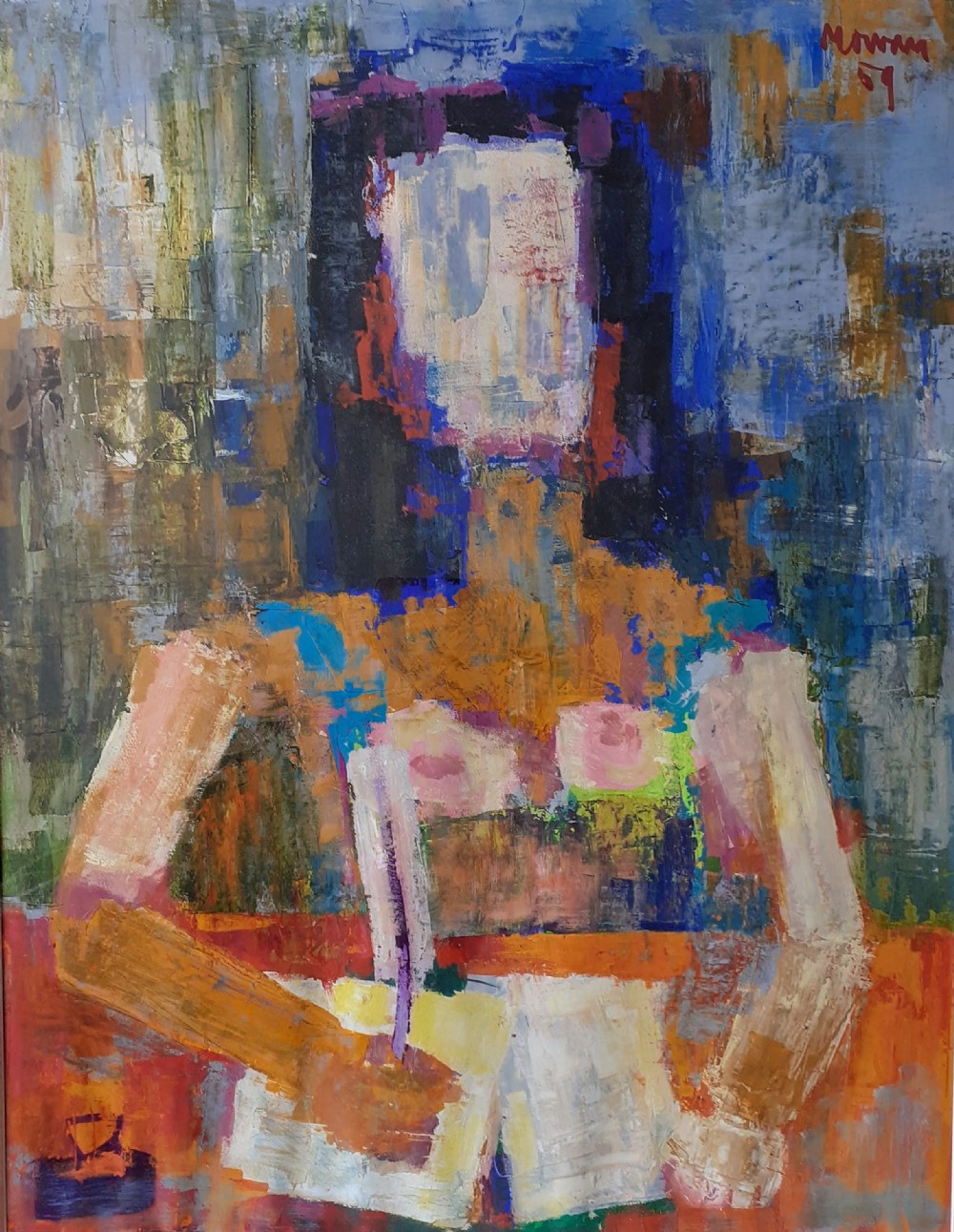
Woman Writing a Letter 1959 Fauve Coloured Cubist Mid Century Modernist New Paris Gouache on Paper Painting