

Period Portraits has dated this piece to the 18th Century.
The handsome sitter is positioned in a stone hallway against drapery. He leans upon a table where his black and tan dog is seated and he pets it with both hands. With his body rotated towards us Bissett gazes wistfully at the viewer.
Burton wears the traditional attire of an 18th century gentleman of substance.
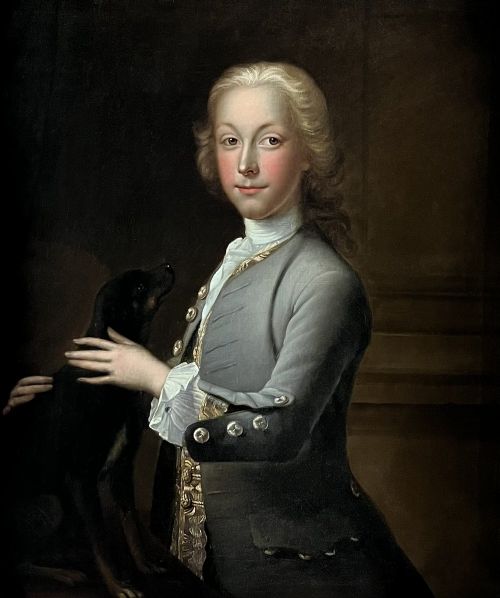
Philippe Mercier (1689 – 1760)
Mercier was an artist of French Huguenot descent who was active in England for most of his working life, Mercier is considered one of the first practitioners of the Rococo style, and is credited with influencing a new generation of 18th-century English artists.[2]
The artist was born c.?1689–1691 in Berlin and studied painting in the city and and later under Antoine Pense, who had arrived in Berlin in 1710. Later, he travelled in Italy and France before arriving in London—"recommended by the Court at Hannover"—probably in 1716. He married in London in 1719 and lived in Leicester Fields.

He was appointed principal painter and librarian to the Prince and Princess of Wales and while he was in favour he painted various portraits of royalty, and no doubt many of the nobility and gentry. Of the royal portraits, those of the Prince of Wales and of his three sisters, painted in 1728, were all engraved in mezzotint by John Simon, and that of the three elder children of the Prince of Wales byJohn Faber the younger in 1744. This last (entitled Playing Soldiers[5]) was a typical piece of Mercier's composition, the children being made the subject of a spirited, if somewhat childish, allegory in their game of play. Prince George is represented with a firelock on his shoulder, teaching a dog his drill, while his little brother and sister are equally occupied in a scene that is aptly used to point a patriotic moral embodied in some verses subjoined to the plate, of which the concluding couplet is as follows:

Illustrious Isle where either sex displays
Such early omens of their future praise!
Faber also engraved six plates of "Rural Life" after Mercier, and several other subjects of his have survived him.
In 1733, Mercier painted a Portrait of 'Frederick, Prince of Wales, playing a violoncello, and his Sisters'. National Portrait Gallery, London. There is an alternative version of the painting in the Royal Collection. In the painting 'The Sense of Hearing', 1744, women are playing violin, violoncello, harpsichord, and flute. Yale Collection for British Art.

Mercier became involved in a scandal, at some point, lost favour and left London around 1740. He settled in York where he practised portrait painting for over ten years, before returning to London in 1751. In 1752, Mercier went to Portugal at the request of several English merchants. He did not long remain there, however, but came back to London, where he died in 1760.

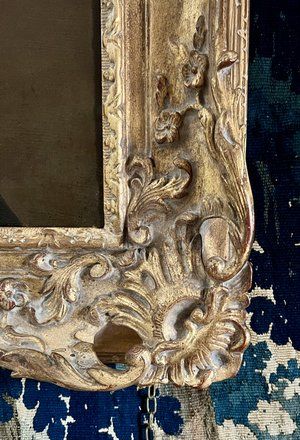
This fine work is in an excellent state of conservation and is ready to hang in in a richly hand carved and gilded antique rococo style frame, which is itself a work of art.
Higher resolution images on request.
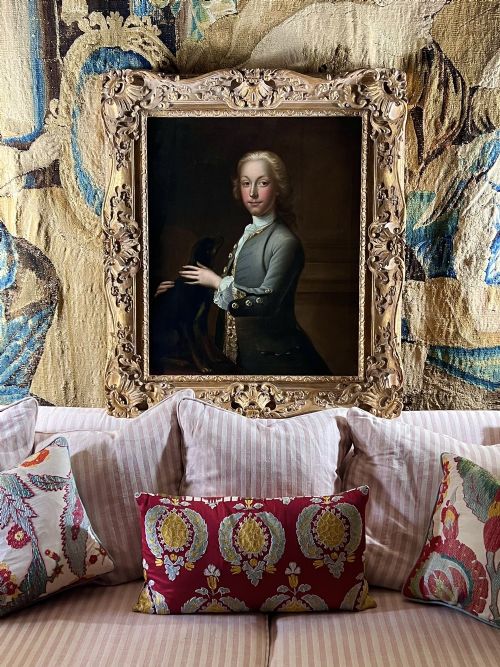
Worldwide shipping available.
Canvas: 30" x 25" / 76cm x 64cm.
Frame: 37" x 32" / 94cm x 81cm.
Price: £7950
Period Portraits has dated this piece to the 18th Century.
Specialist dealer in portraits from the 17th century to the 20th century. Our stock includes quality oil paintings, drawings, and mezzotints
You can view the stock and full dealer information on the Period Portraits Profile Page
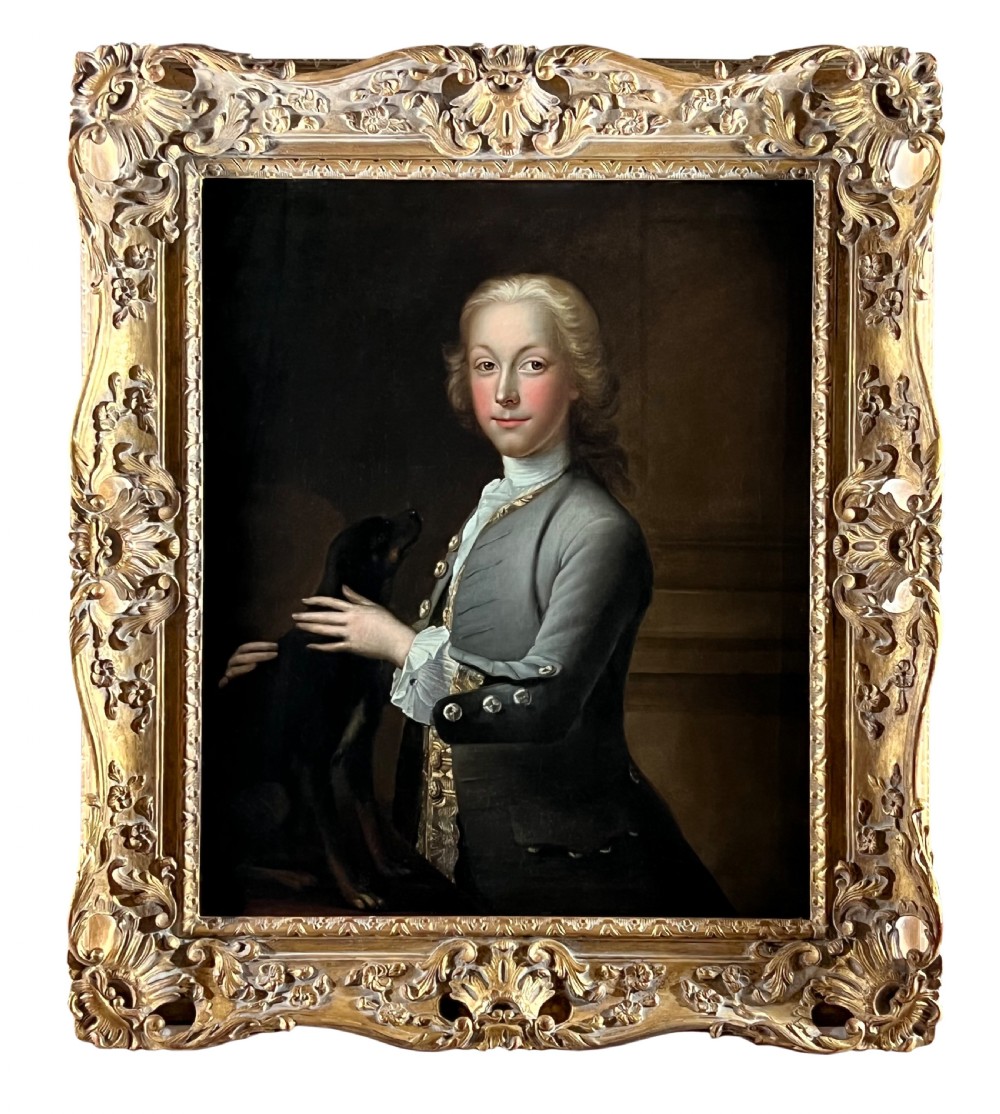
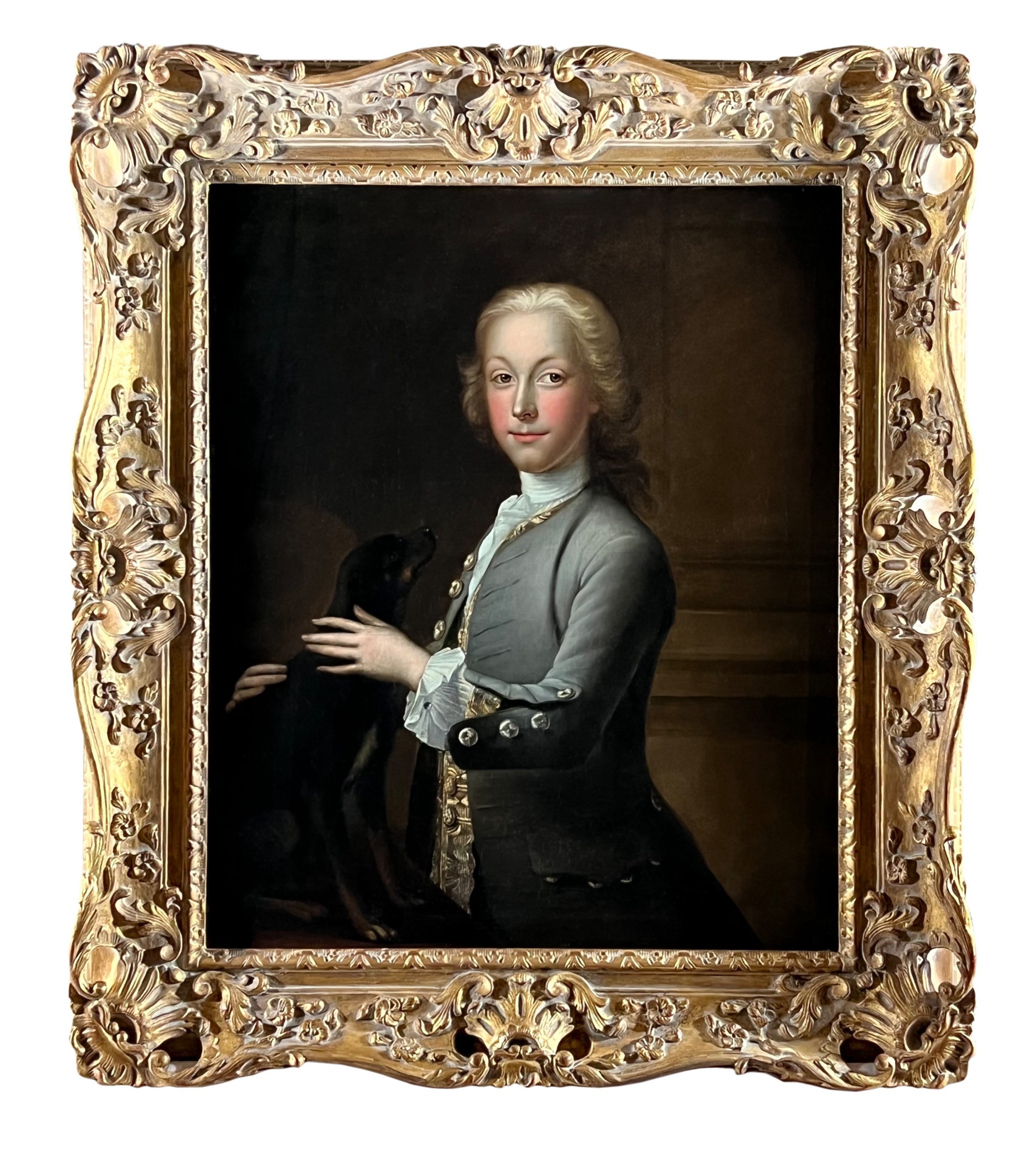
18th Century English Portrait of Bissett Burton and His Hound - Circle of Philippe Mercier.