
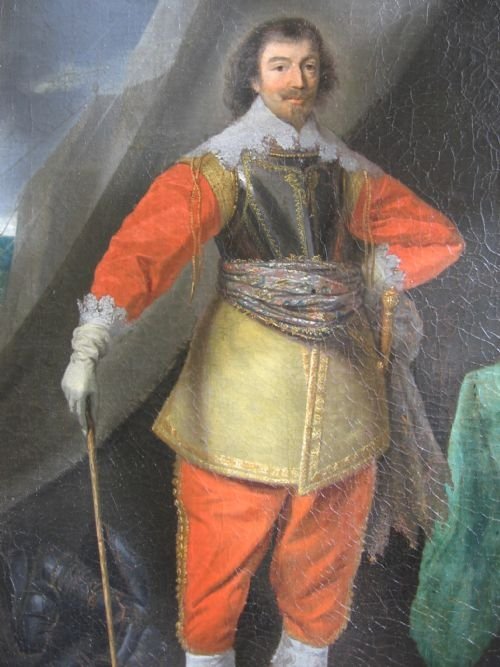
In this elegant portrait, an exquisite version 'in little' of a life-size Court painting, the Earl stands outside a campaign tent wearing his breastplate, his helmet to his left and the rest of his armour to his right.
(The 'cabinet' in the 17th century was a small, intimate room in which were kept items important to the owner,and only their closest friends would be admitted).
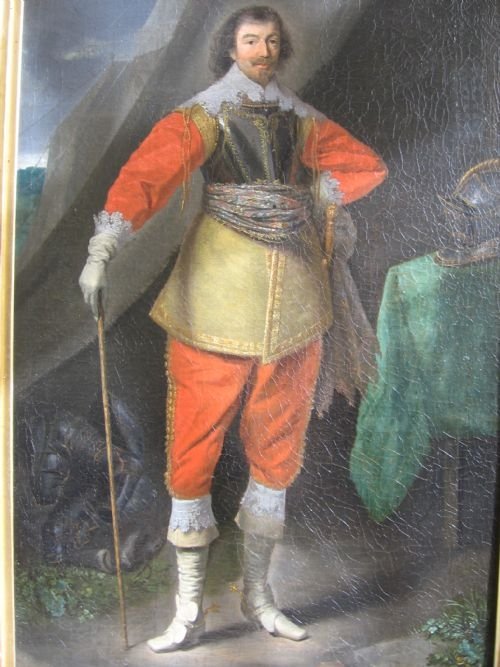
ROBERT RICH, 2nd Earl of Warwick, 1587-1658.
He was knighted at the coronation of King James I in July 1603 and succeeded as the second Earl of Warwick in March 1619. His inheritance made him one of the most powerful landowners in the kingdom, with extensive estates in Essex and property in London. During the 1620s and '30s, Warwick was active in colonial ventures in New England and the West Indies. He also financed several privateering expeditions against the Spaniards.
He was involved in the colonisation of America, associated with the foundation of New Plymouth, Massachusetts, Connecticut, and later of Rhode Island (1644).
A staunch Puritan, Warwick became increasingly alienated from Court life.
Although he was appointed to the King's Privy Council in April 1641, Warwick was a leading critic of the Earl of Strafford and was active in his prosecution. After King Charles fled from London early in 1642, Parliament appointed Warwick Lord-Lieutenant of Essex.
In March 1642, Parliament appointed Warwick Lord High Admiral against the King's wishes. His appointment was popular in the fleet and ensured Parliament's control of the navy. Under Warwick's command, the navy intercepted ships carrying supplies to the Royalists and supported military operations on land, notably at the siege of Hull in 1643 and Lyme 1644.
At the beginning of the Second Civil War in May 1648, a naval revolt broke out against the appointment of the Leveller Thomas Rainsborough as vice-admiral, and a number of warships defected to the Royalists. Warwick was re-appointed Lord Admiral and sent to ensure the loyalty of the remaining ships. In August 1648, he confronted a Royalist fleet commanded by the Prince of Wales in the shallow waters of the Thames estuary.
In February 1649, Warwick's admiralty commission was revoked. He retired from public life until the establishment of Cromwell's Protectorate with its anti-Spanish foreign policy, of which he approved. In June 1657, Warwick carried the sword of state during Cromwell's second inauguration as Lord-Protector. The following November, his grandson and heir Robert Rich married Cromwell's daughter Frances. Warwick died in April 1658, his death greatly lamented by Cromwell.
Daniël Mijtens (Delft, c. 1590 – The Hague, 1647/48), known in England as DANIEL MYTENS the Elder, was a Dutch portrait painter who spent the central years of his career working in England. He was born in Delft into a family of artists and trained in The Hague, possibly in the studio of Van Mierevelt.
SIZE: 29.5 x 20.25 inches inc. frame
PROVENANCE: Rushbrooke Hall, Suffolk until the
contents sale of 1919.
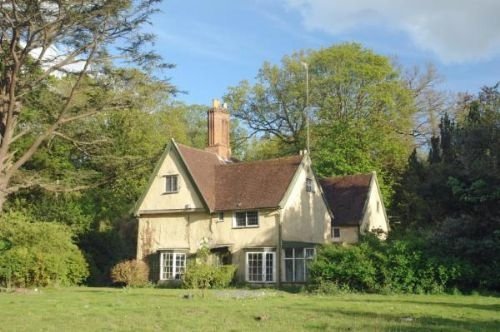
Nowton Cottage, Suffolk until 2010.
Verso: old label: 'Francis Collins from Great Portland Street. Picture Cleaner to his Royal Highness the Duke of York'
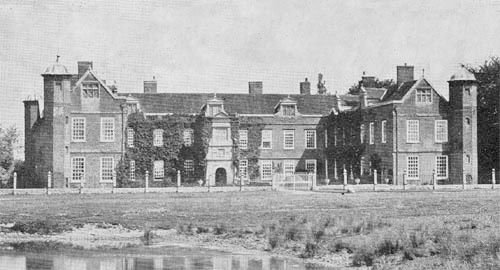
IMAGE 4: Rushbrooke Hall, home to generations of the Jermyn family, was Suffolk's largest and finest moated Tudor mansion. Used for housing troops during the war, it suffered a mysterious fire, and was demolished without permission in 1961. Pevsner called it a capital loss, a tragic disruption of the post-war Suffolk landscape.
IMAGE 5: Nowton Cottage is an eight bedroomed 17th c timber framed house standing in 5 acres.
Roy and nadine precious: specialists in portraiture from the 16th to the 20th century. Established in 1972.
You can view the stock and full dealer information on the Roy Precious - Antiques & Fine Art Profile Page
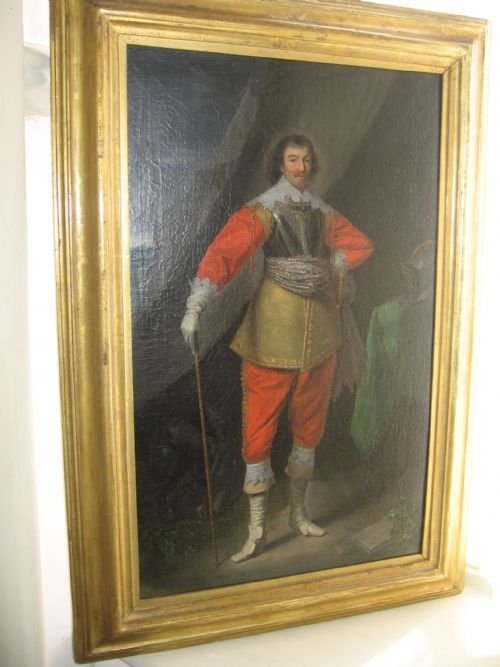
Sold....portrait of Robert Rich, 2nd Earl of Warwick C.1630/5; Follower of Daniel Mytens