3,835  PAGES BROWSED TODAY PAGES TODAY 0 ANTIQUES UPLOADED TODAYNEW ARRIVALS
LATEST STOCK
Sort Order
Items Per Page
Browse Categories
Sort order
Items per page
ID #SA898302
SOLD
Email
Save
Early Victorian Platinum Scale Stick Barometer by John Newman, 122 Regent Street London
Jason Clarke Antiques
sold SA898302
Sorry, but this item has been sold.
Jason Clarke Antiques

Jason Clarke Antiques

Sellingantiques Verified Since Jul 2015
View Dealers Stock Page
Id #SA898302
PDF SHARE
SAVE

Early Victorian Platinum Scale Stick Barometer by John Newman, 122 Regent Street London

19th century
Description

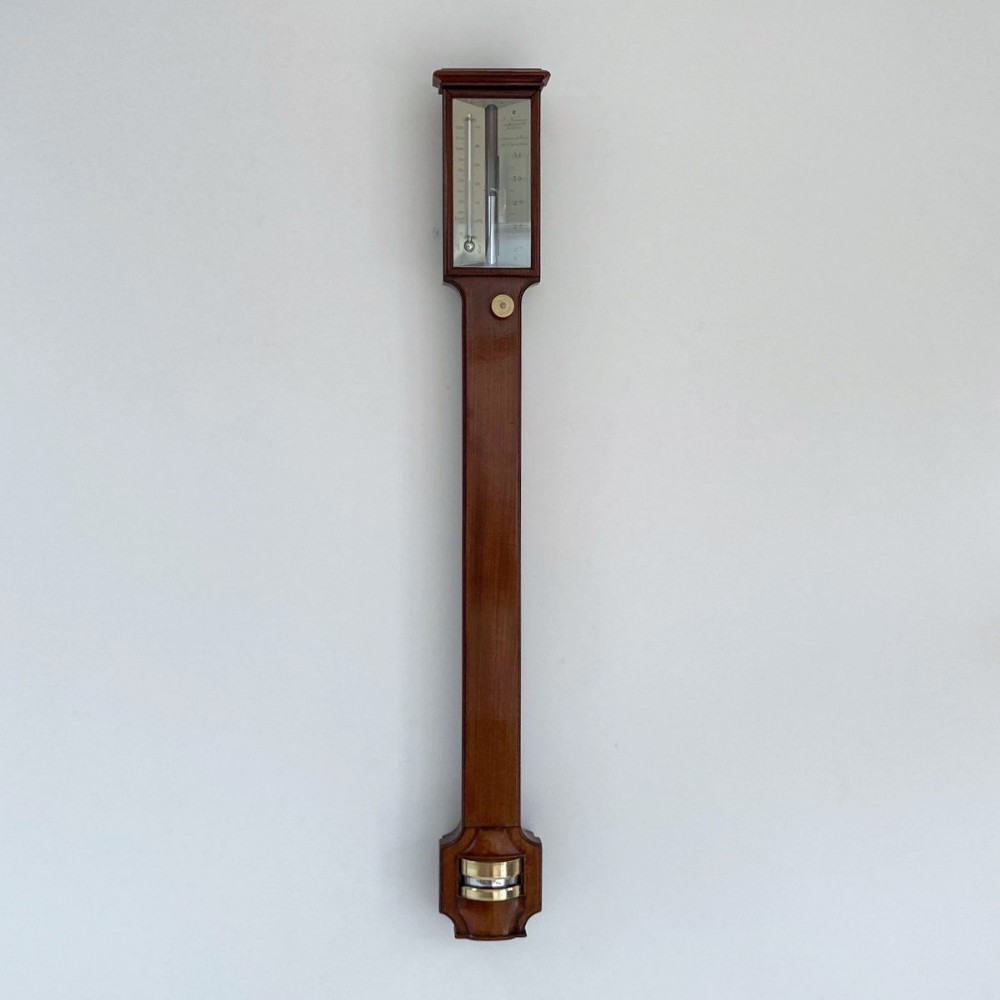
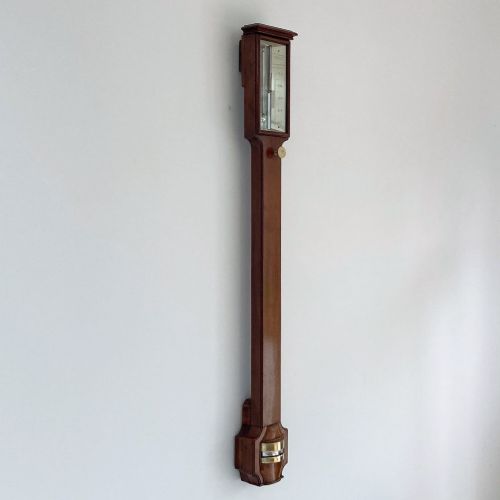
For sale, a very rare early Victorian mahogany stick barometer by J Newman of 122 Regent Street, London with platinum scale.

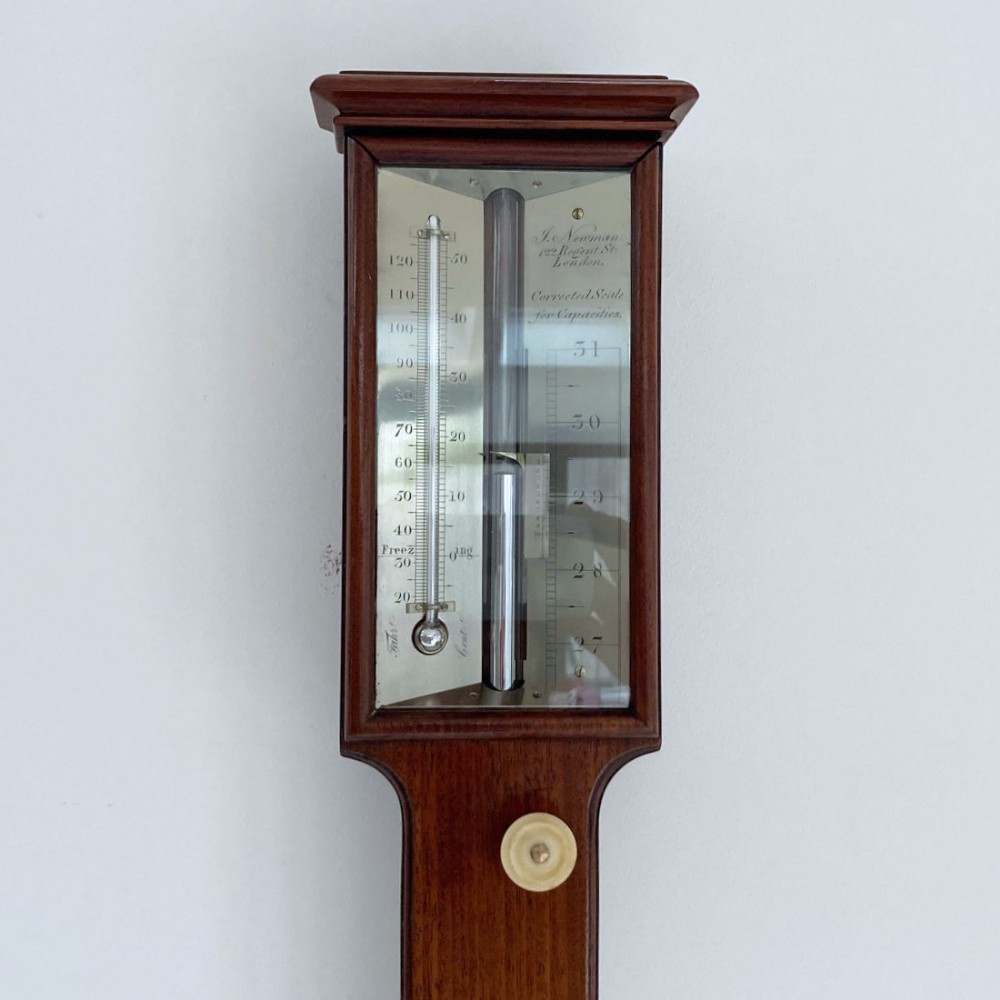
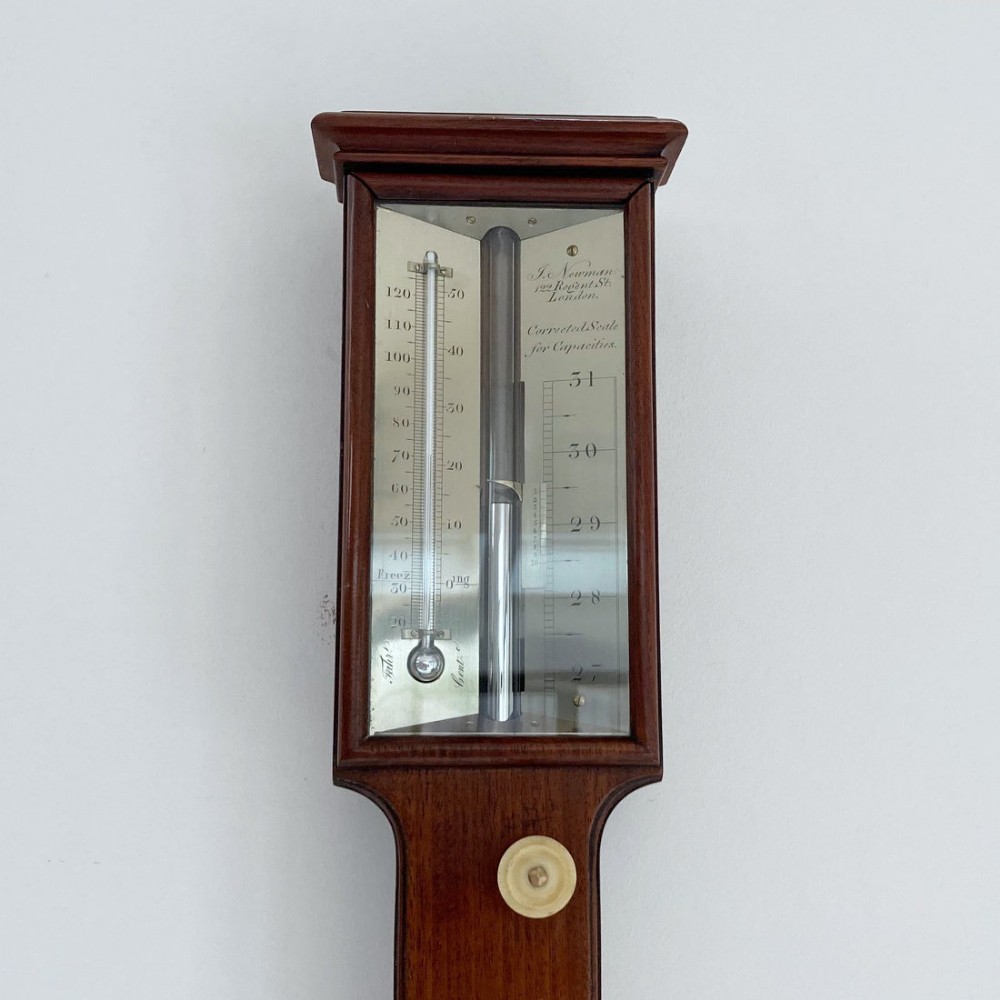
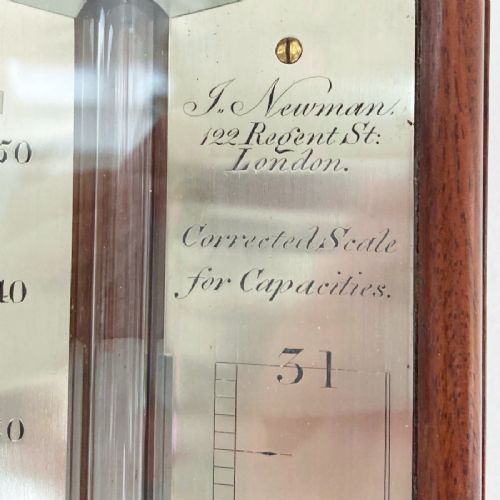
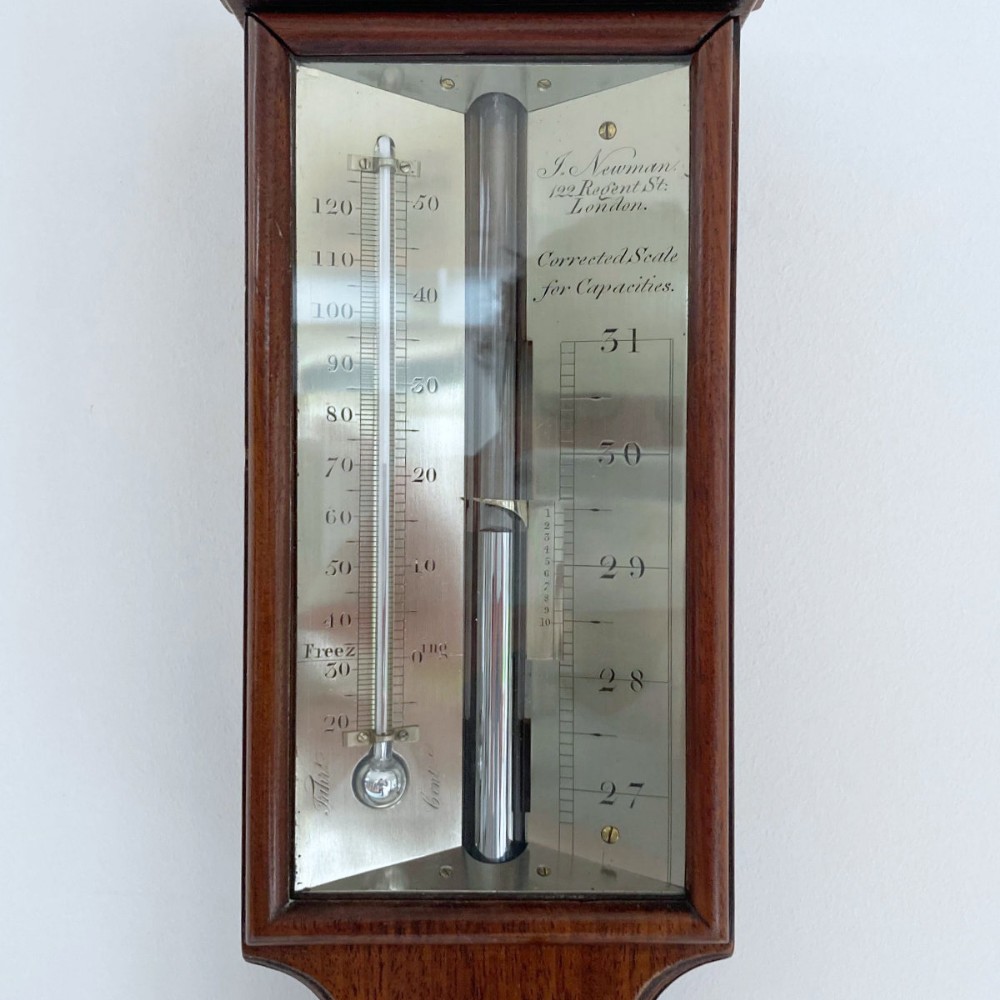
Undoubtedly the finest example of an early Victorian domestic barometer that I have encountered. On aesthetic consideration it represents the more serious style of this period with a horizontal, graduated pediment and rectangular glazed scale front. Behind is a two-part inverted scale plate with thermometer over a Fahrenheit and Centigrade on the left, and barometer scale on the right. The scale measures 27 to 31 inches of barometric pressure with a slide Vernier attached to the edge, operated by the set key below. Engraved above the barometer scale, it states, “Corrected Scale for Capacity” and above the maker’s name of J Newman, 122 Regent St, London.
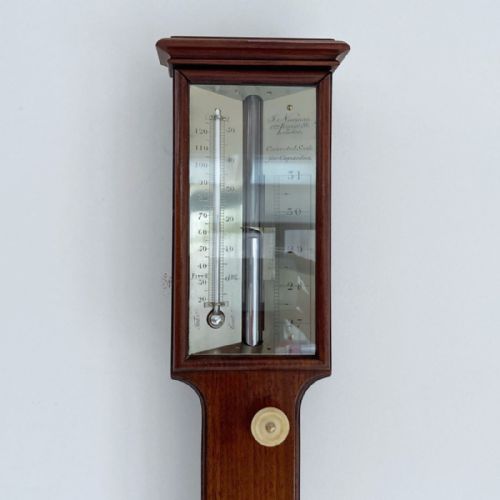
All are beautifully executed, but the material used for the scale immediately point to this being a unique domestic example. Instead of silvered brass as one would expect, the plates are comprised of platinum which is easily discernible from the bright lustre and the lack of any associated tarnish. They remain as bright as they would have been at the date of manufacture.
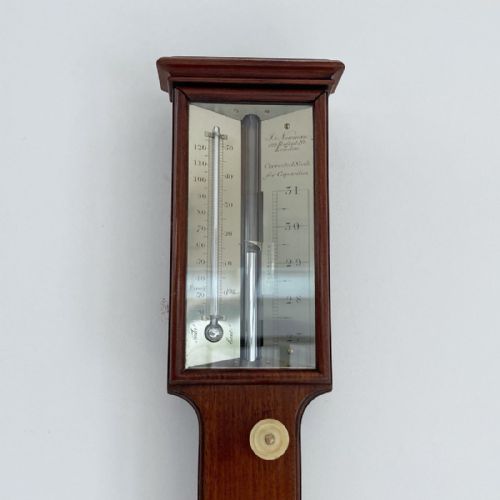
During this period, Newman was considered the most respected maker of meteorological instruments and the use of this material was not merely for decorative purpose. The refinement of platina or platinum was mastered by the prolific scientist and innovator, William Hyde Wollaston in the early 1800’s and small-scale production, allowed Wollaston a very good source of income until his death in 1825. Sales of the metal were initially managed by the famous London instrument maker, William Cary where it was primarily used in the formation of crucibles for chemical experimentation however, in the 1840’s, the Royal Society were still investigating this relatively new material as Wollaston did not divulge his refinement techniques until much later.
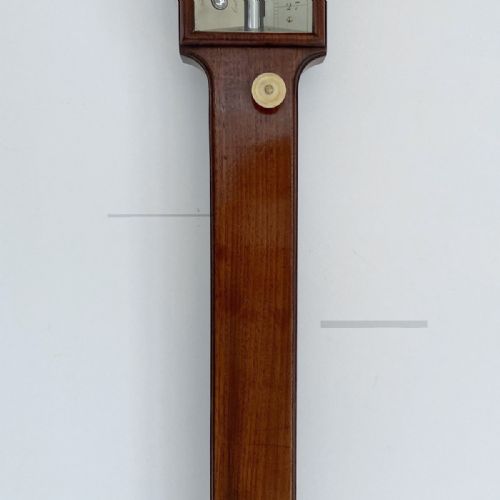
Following Wollaston’s demise, numerous experimental uses were considered for a material that was proven to be supremely heat resistance and resistant to corrosion. A reason why it was readily employed as a material for manufacturing touch holes for black powder arms at this time. Newman presumably employed platinum as a means of temperature compensation and for durability. The Royal Society employed him in the creation of a station barometer where platinum scales were also employed, and this is undoubtedly a domestic version devised upon similar principles.
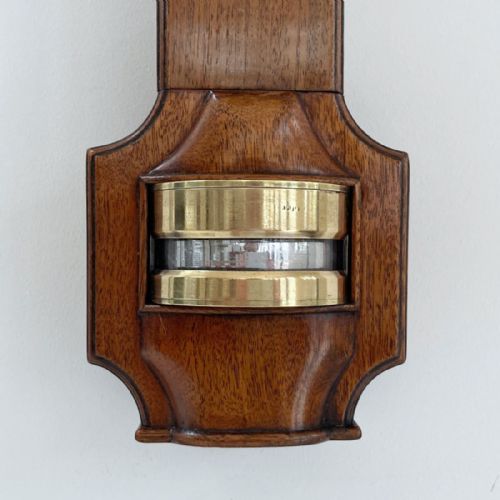
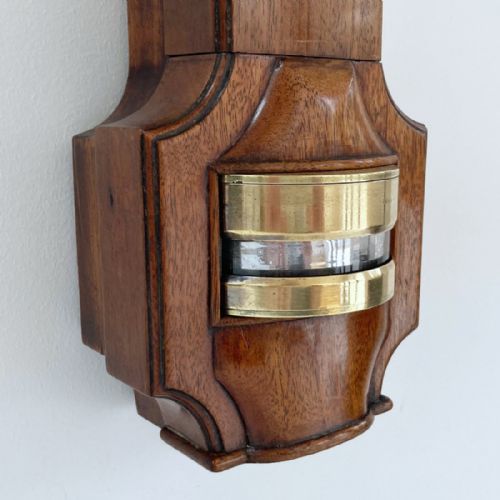
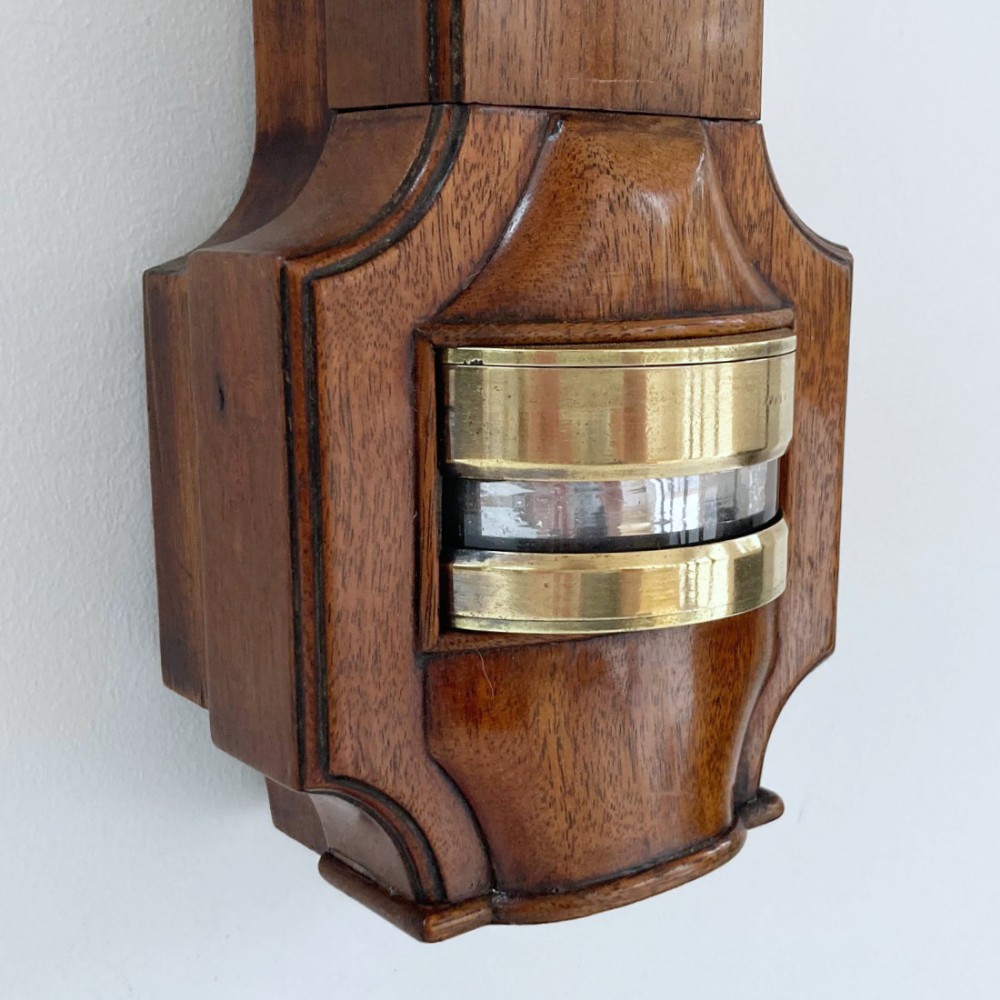
The trunk of the barometer is similarly understated in design, with a simple reeded edge and choice mahogany being the only decorative attention, but upon reaching the cistern it is again obvious that this is no ordinary example. The plain cistern block is carved in simple relief at the front to accentuate a circular brass cistern case which protrudes through the cover, the centre of which is comprised of glass, showing the quick silver contained within.
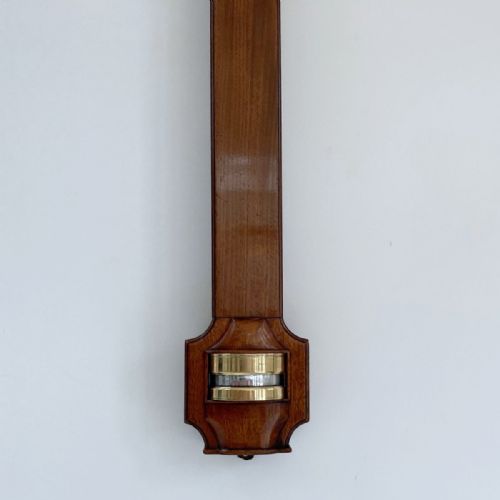
Its relationship to the Fortin barometer and the new station barometer Newman had created for the Royal Society is striking and its invention was as a result of Newman’s lack of trust in the durability of the standard leather cistern base which had; and continued to exist for years. In 1833, Newman created an iron cistern for portable barometers with similar attributes, however this cistern is comprised of a two-piece brass cylinder with glass tube and glass base incorporated inside. It’s similarity to the design of the Royal Society Station barometer is unmistakeable.
The corrected scale for capacities mentioned on the scale above is also worthy of mention, as it relates to the inter-relationship between the level of quick silver in the cistern and the associated level in the tube. With Newman’s understanding of the differences of capacity between these two elements, the associated scale engraving would have been minutely adjuste

Physical Dimensions
Height
94cm (37.01")
Width
12cm (4.72")
Depth
9cm (3.54")
Declaration

Jason Clarke Antiques has dated this piece to the 1850s.

Reference Numbers
Sellingantiques Reference
SA898302
Description
For sale, a very rare early Victorian mahogany stick barometer by J Newman of 122 Regent Street, London with platinum scale.

Undoubtedly the finest example of an early Victorian domestic barometer that I have encountered.

On aesthetic consideration it represents the more serious style of this period with a horizontal, graduated pediment and rectangular glazed scale front.
Jason Clarke Antiques

Behind is a two-part inverted scale plate with thermometer over a Fahrenheit and Centigrade on the left, and barometer scale on the right. The scale measures 27 to 31 inches of barometric pressure with a slide Vernier attached to the edge, operated by the set key below. Engraved above the barometer scale, it states, “Corrected Scale for Capacity” and above the maker’s name of J Newman, 122 Regent St, London.

fig 1. Early Victorian Platinum Scale Stick Barometer by John Newman, 122 Regent Street London

All are beautifully executed, but the material used for the scale immediately point to this being a unique domestic example. Instead of silvered brass as one would expect, the plates are comprised of platinum which is easily discernible from the bright lustre and the lack of any associated tarnish. They remain as bright as they would have been at the date of manufacture.

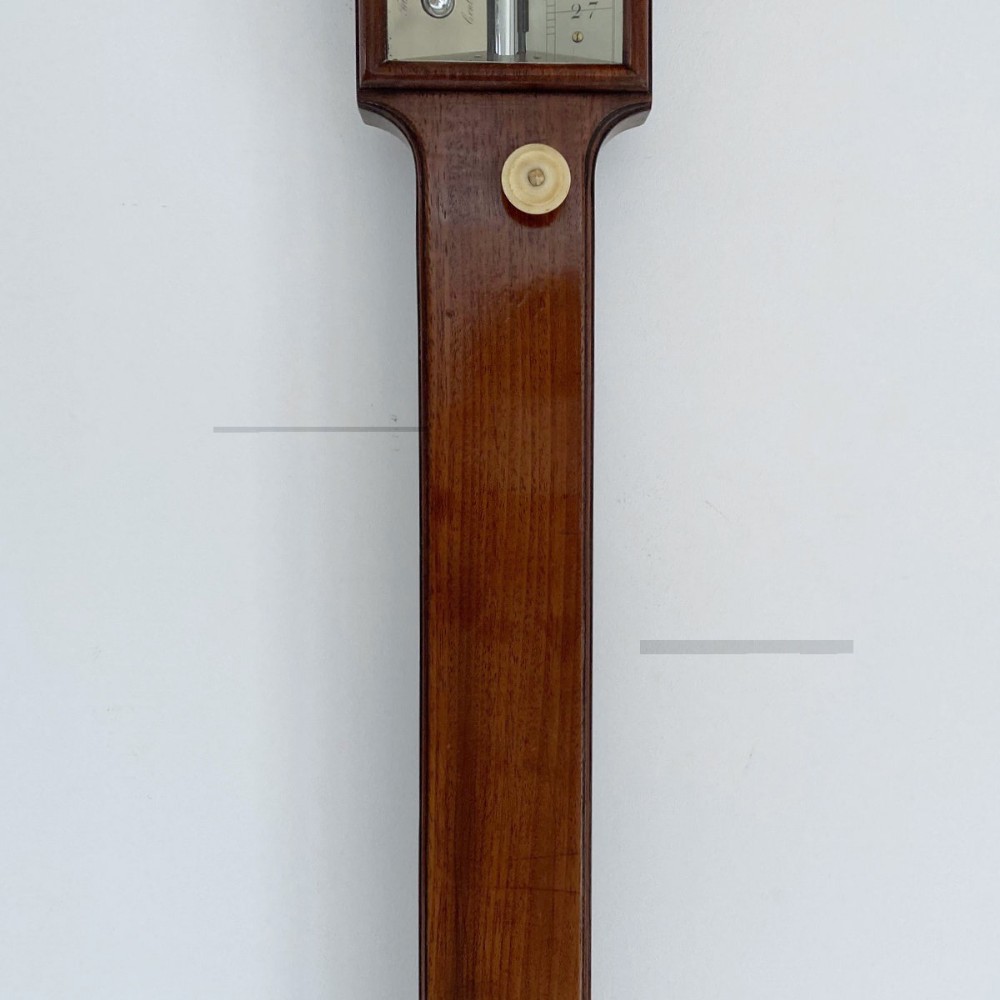
fig 2. Early Victorian Platinum Scale Stick Barometer by John Newman, 122 Regent Street London

During this period, Newman was considered the most respected maker of meteorological instruments and the use of this material was not merely for decorative purpose. The refinement of platina or platinum was mastered by the prolific scientist and innovator, William Hyde Wollaston in the early 1800’s and small-scale production, allowed Wollaston a very good source of income until his death in 1825. Sales of the metal were initially managed by the famous London instrument maker, William Cary where it was primarily used in the formation of crucibles for chemical experimentation however, in the 1840’s, the Royal Society were still investigating this relatively new material as Wollaston did not divulge his refinement techniques until much later.

fig 3. Early Victorian Platinum Scale Stick Barometer by John Newman, 122 Regent Street London

Following Wollaston’s demise, numerous experimental uses were considered for a material that was proven to be supremely heat resistance and resistant to corrosion. A reason why it was readily employed as a material for manufacturing touch holes for black powder arms at this time. Newman presumably employed platinum as a means of temperature compensation and for durability. The Royal Society employed him in the creation of a station barometer where platinum scales were also employed, and this is undoubtedly a domestic version devised upon similar principles.

fig 4. Early Victorian Platinum Scale Stick Barometer by John Newman, 122 Regent Street London

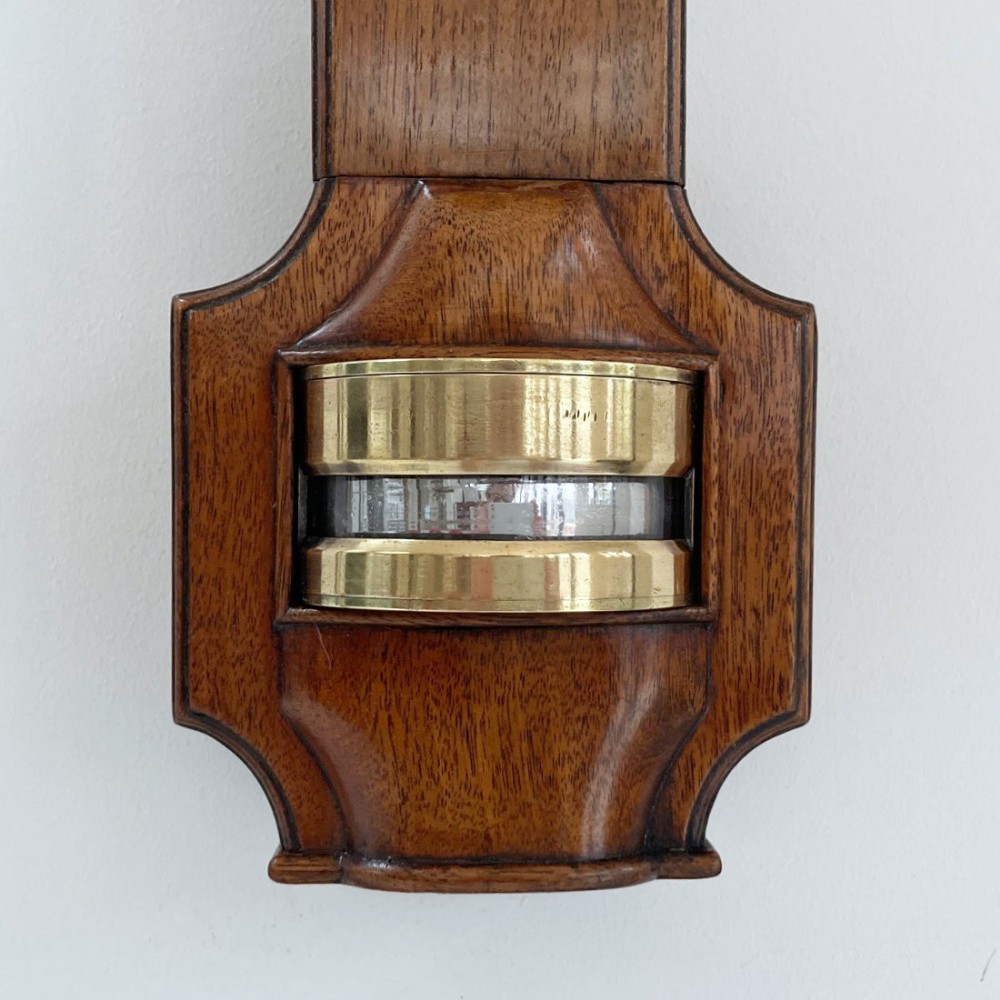
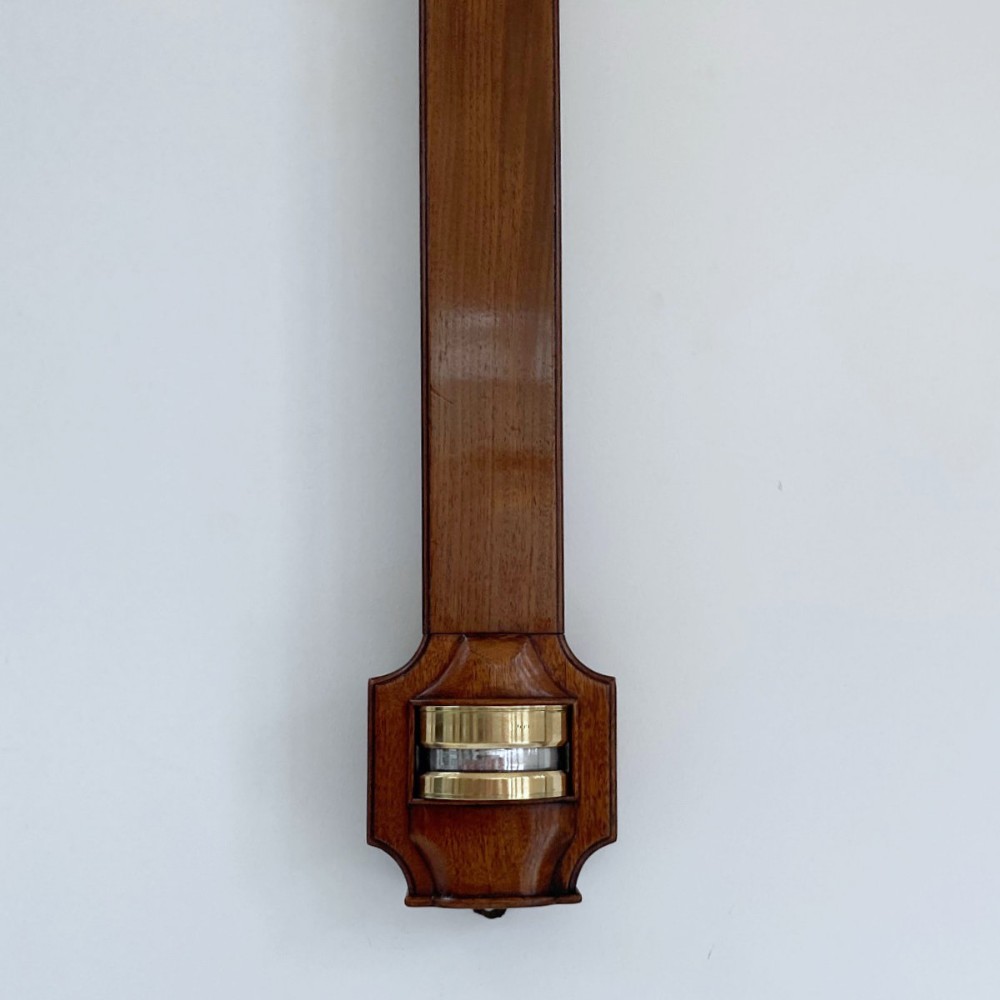
The trunk of the barometer is similarly understated in design, with a simple reeded edge and choice mahogany being the only decorative attention, but upon reaching the cistern it is again obvious that this is no ordinary example. The plain cistern block is carved in simple relief at the front to accentuate a circular brass cistern case which protrudes through the cover, the centre of which is comprised of glass, showing the quick silver contained within.

fig 5. Early Victorian Platinum Scale Stick Barometer by John Newman, 122 Regent Street London

Its relationship to the Fortin barometer and the new station barometer Newman had created for the Royal Society is striking and its invention was as a result of Newman’s lack of trust in the durability of the standard leather cistern base which had; and continued to exist for years. In 1833, Newman created an iron cistern for portable barometers with similar attributes, however this cistern is comprised of a two-piece brass cylinder with glass tube and glass base incorporated inside. It’s similarity to the design of the Royal Society Station barometer is unmistakeable.

fig 6. Early Victorian Platinum Scale Stick Barometer by John Newman, 122 Regent Street London

The corrected scale for capacities mentioned on the scale above is also worthy of mention, as it relates to the inter-relationship between the level of quick silver in the cistern and the associated level in the tube. With Newman’s understanding of the differences of capacity between these two elements, the associated scale engraving would have been minutely adjuste

Height
94cm (37.01")
Width
12cm (4.72")
Depth
9cm (3.54")
Date of Manufacture

Jason Clarke Antiques has dated this piece to the 1850s.

Reference Numbers
Sellingantiques Ref
SA898302
Jason Clarke Antiques
Sellingantiques verified Since Jul 2015
Dealer Profile

You can view the stock and full dealer information on the Jason Clarke Antiques Profile Page
PDF SHARE
SAVE
Early Victorian Platinum Scale Stick Barometer by John Newman, 122 Regent Street London
1 / 10
Archive I Early Victorian Platinum Scale Stick Barometer by John Newman, 122 Regent Street London
Early Victorian Platinum Scale Stick Barometer by John Newman, 122 Regent Street London
Archive II Early Victorian Platinum Scale Stick Barometer by John Newman, 122 Regent Street London View II
Archive III Early Victorian Platinum Scale Stick Barometer by John Newman, 122 Regent Street London View III
Archive IV Early Victorian Platinum Scale Stick Barometer by John Newman, 122 Regent Street London View IV
Archive V Early Victorian Platinum Scale Stick Barometer by John Newman, 122 Regent Street London View V
Archive VI Early Victorian Platinum Scale Stick Barometer by John Newman, 122 Regent Street London View VI
Archive VII Early Victorian Platinum Scale Stick Barometer by John Newman, 122 Regent Street London View VII
Archive VIII Early Victorian Platinum Scale Stick Barometer by John Newman, 122 Regent Street London View VIII
Archive IX Early Victorian Platinum Scale Stick Barometer by John Newman, 122 Regent Street London View IX
Archive X Early Victorian Platinum Scale Stick Barometer by John Newman, 122 Regent Street London View X
Enlarged Archival View
Telephone 07815 046645
Location
Newbury
Berkshire
United Kingdom
Verified Since Jul 2015
Items For Sale 80
Items Sold 607
Jason Clarke Antiques
Verified Since Jul 2015
View Dealer Info
Location: Newbury, Berkshire, United Kingdom
Verified
Jul 2015
For Sale
80
Sold
607
Early Victorian Platinum Scale Stick Barometer by John Newman, 122 Regent Street London
Ref: SA898302
Early Victorian Platinum Scale Stick Barometer by John Newman, 122 Regent Street London
Detail View 1
Detail View 2
Detail View 3
Detail View 4
Detail View 5
Detail View 6
Detail View 7
Detail View 8
Detail View 9
Archival Detail
Every single antique dealer on our platform is individually approved by our internal team. We verify their professional trade history, ethical standards, and photographic quality to ensure a secure, high-standard buying environment. Upon joining, every dealer agrees to a strict 9-point code of conduct. While issues can occasionally arise, our dealers typically resolve them swiftly and directly with the buyer. In fact, since our founding in 2002, Sellingantiques has only had to step in to help resolve an issue on roughly five occasions—a true testament to the quality of our dealers and their dedication to your happiness.
Our dealers are highly experienced in packing and shipping fragile, high-value antiques. Because you are in direct contact with the dealer, you will be able to easily go through all available shipping and insurance options together to ensure your item arrives safely.
Antiques are the ultimate green purchase. By choosing historical pieces over newly manufactured goods, you completely eliminate the carbon footprint of modern mass production while preserving exceptional, timeless craftsmanship.
items
Add keywords to the filter
Price
£100
£250000
Era
Movements
Material
Origin
Stock Location
Freshness
Online Payments
Categories