Jason Clarke Antiques has dated this piece to the 1910s.
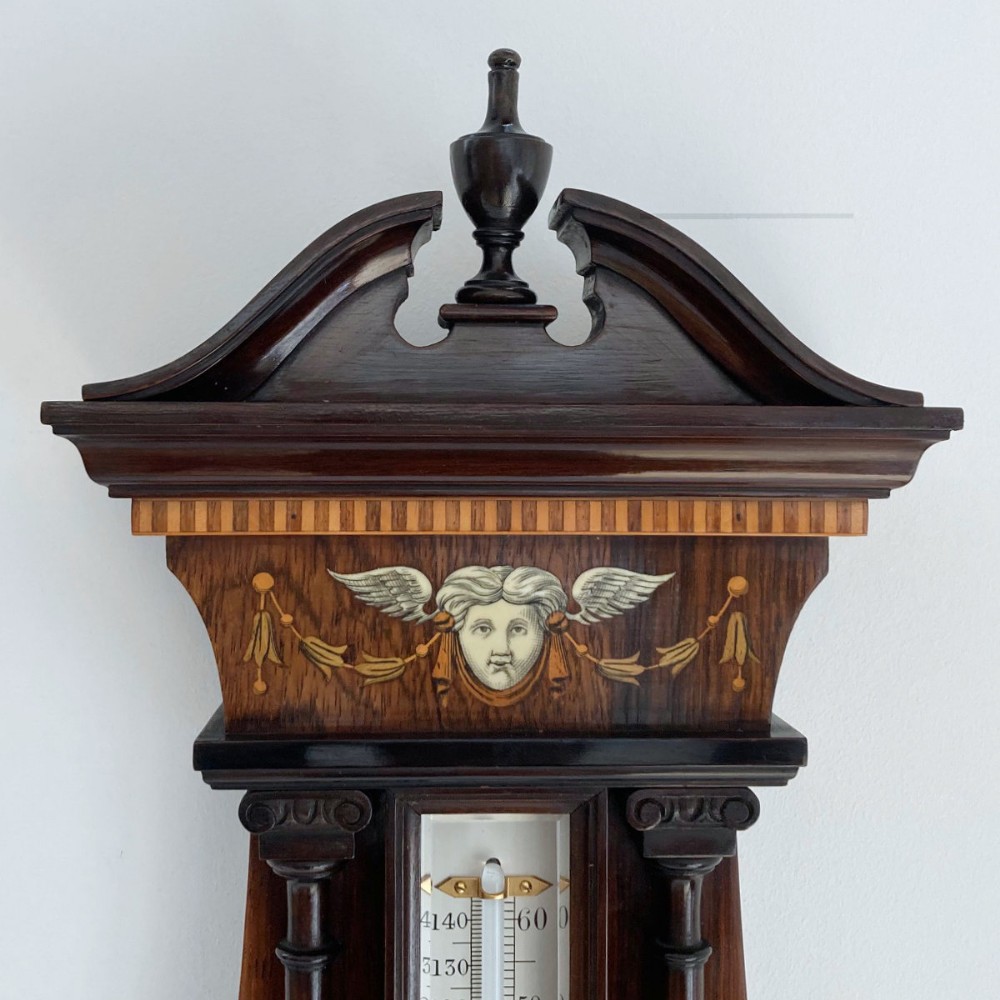
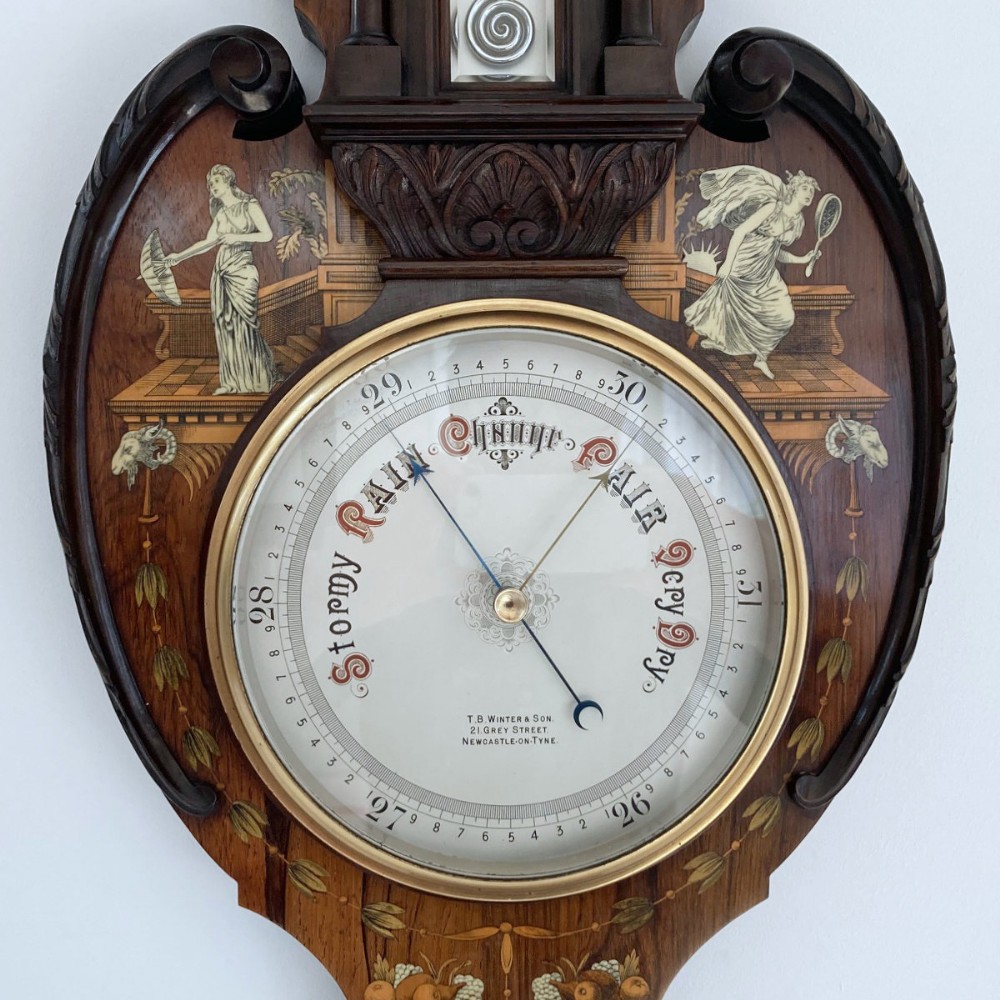
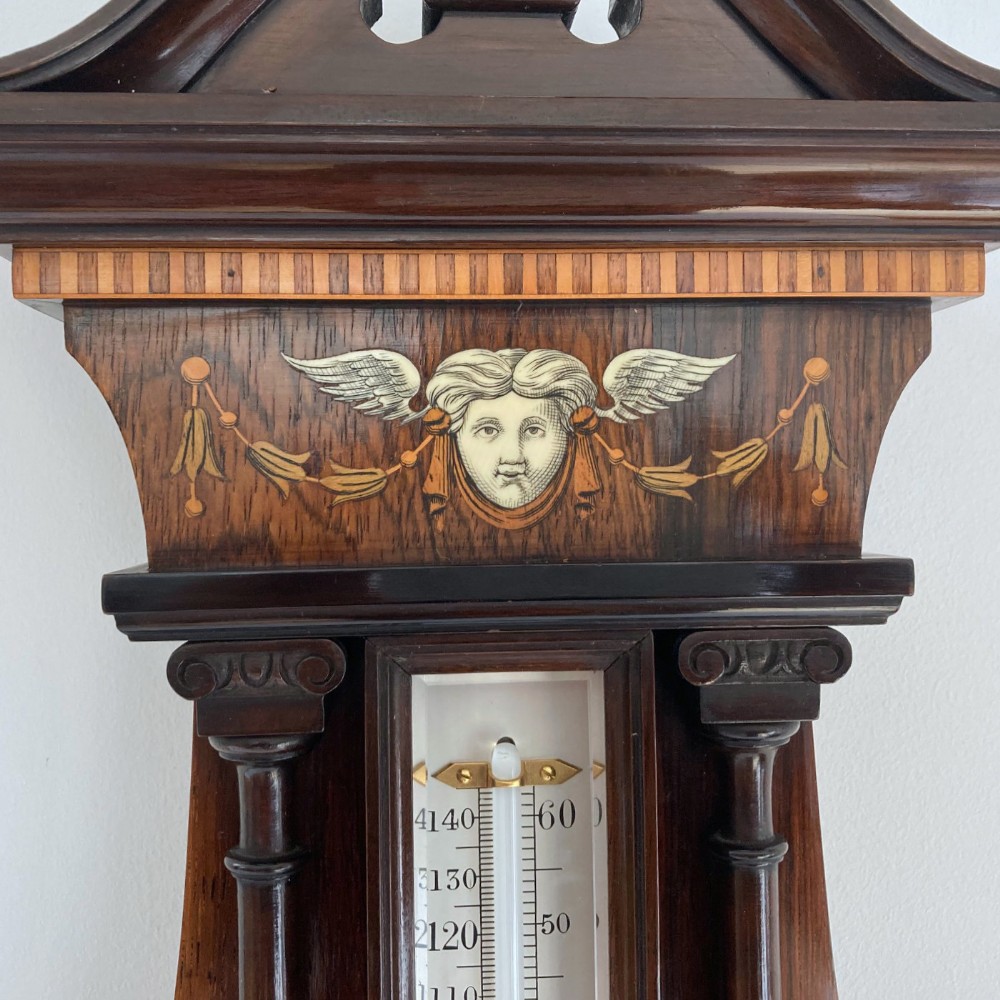
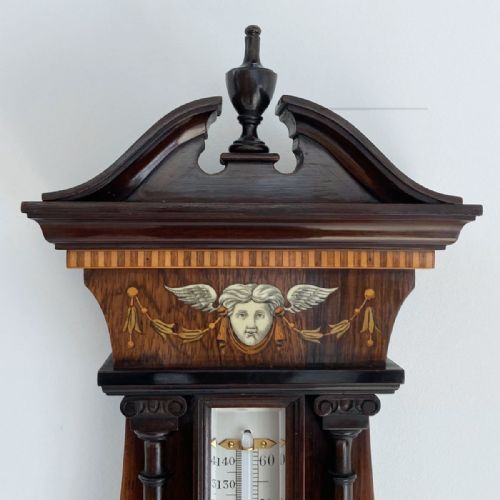
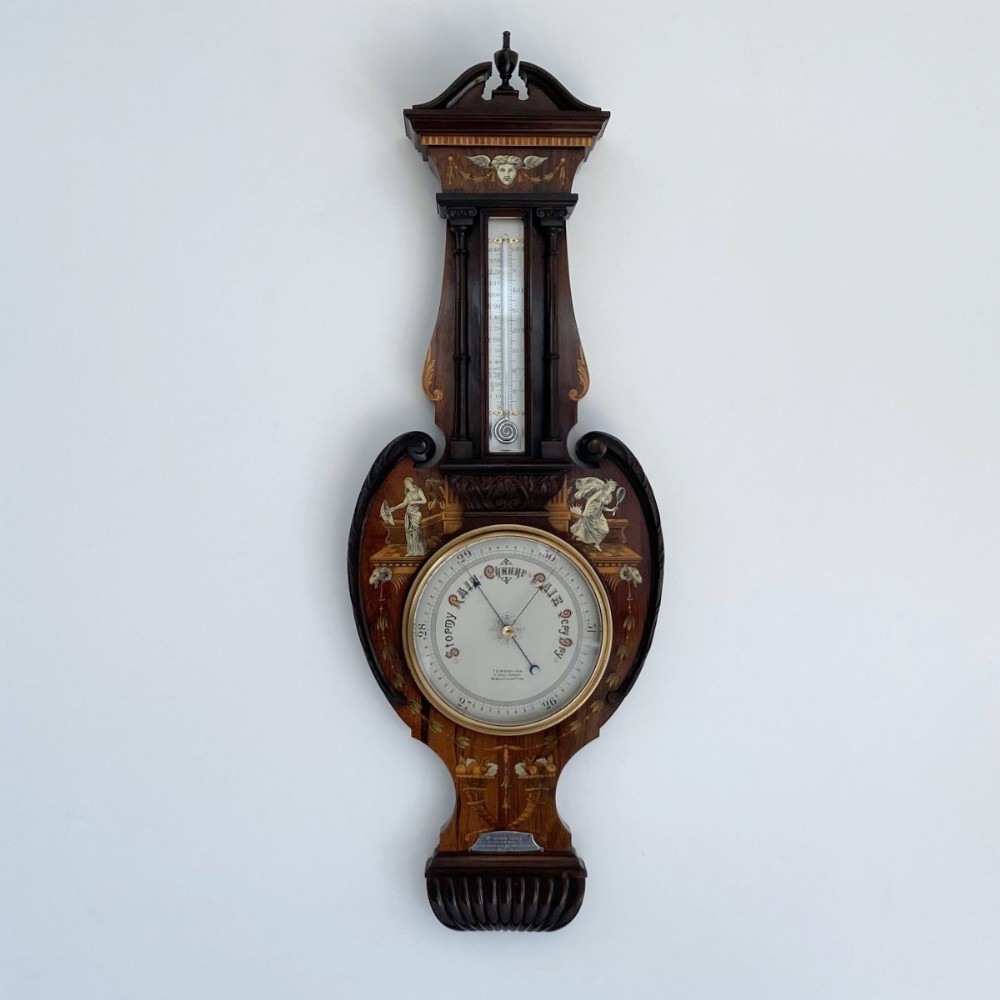
Comprised of a solid mahogany body overlaid with a rich rosewood veneer, the top is adorned with a carved swan neck pediment and central finial of urn design above an intricate inlay and penwork motif of a winged cherub with a draped oat beard design either side.
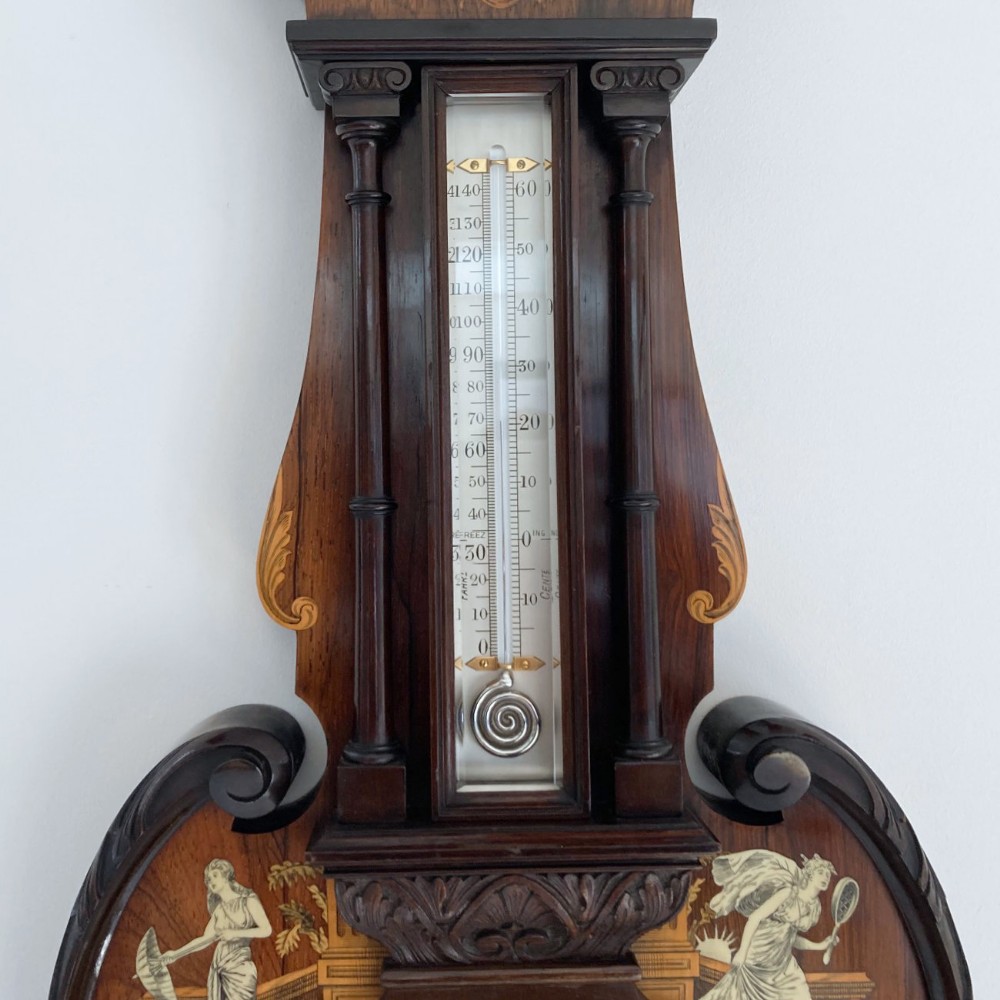
The silvered scale shows temperature readings for both Centigrade and Fahrenheit and has a superb thermometer with a French type spiral bulb. The thermometer case has a glazed front and is framed on either side with classical styled columns with Ionic capitals. The case is surmounted at the base on an anthemion carved relief pediment.
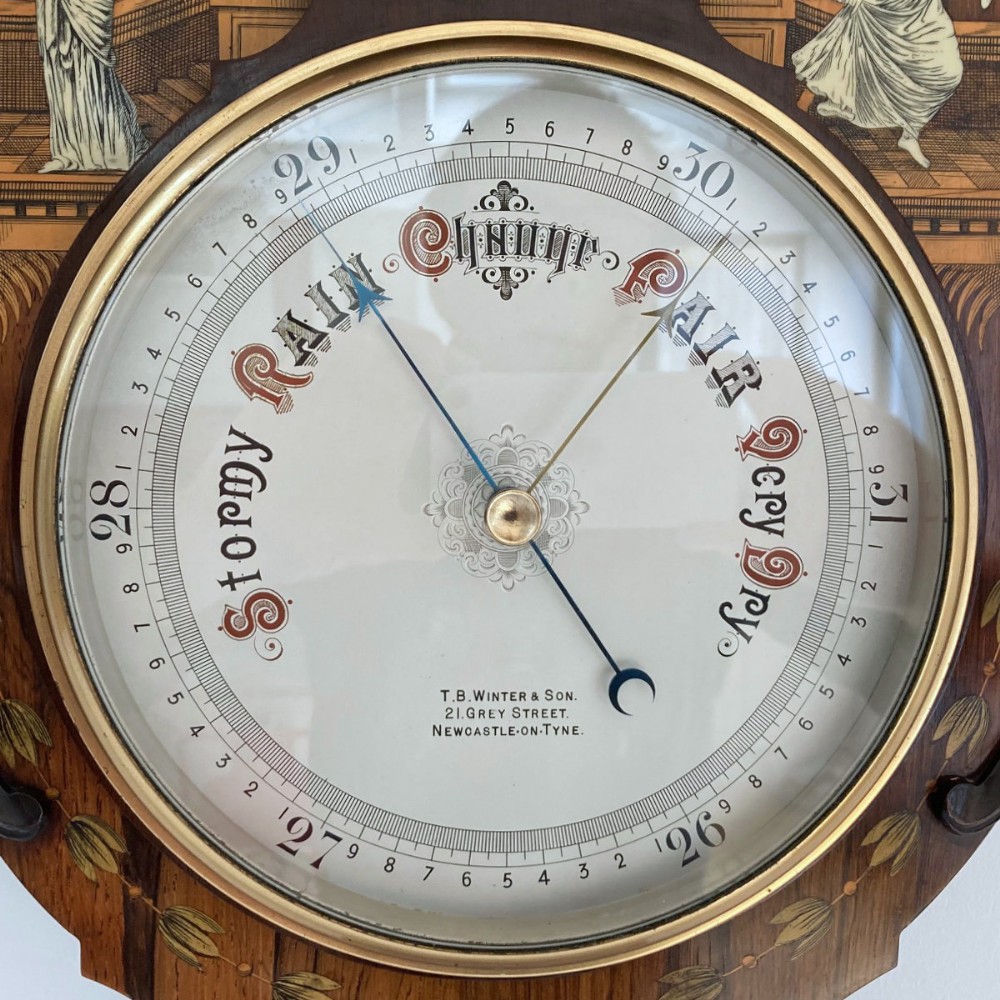
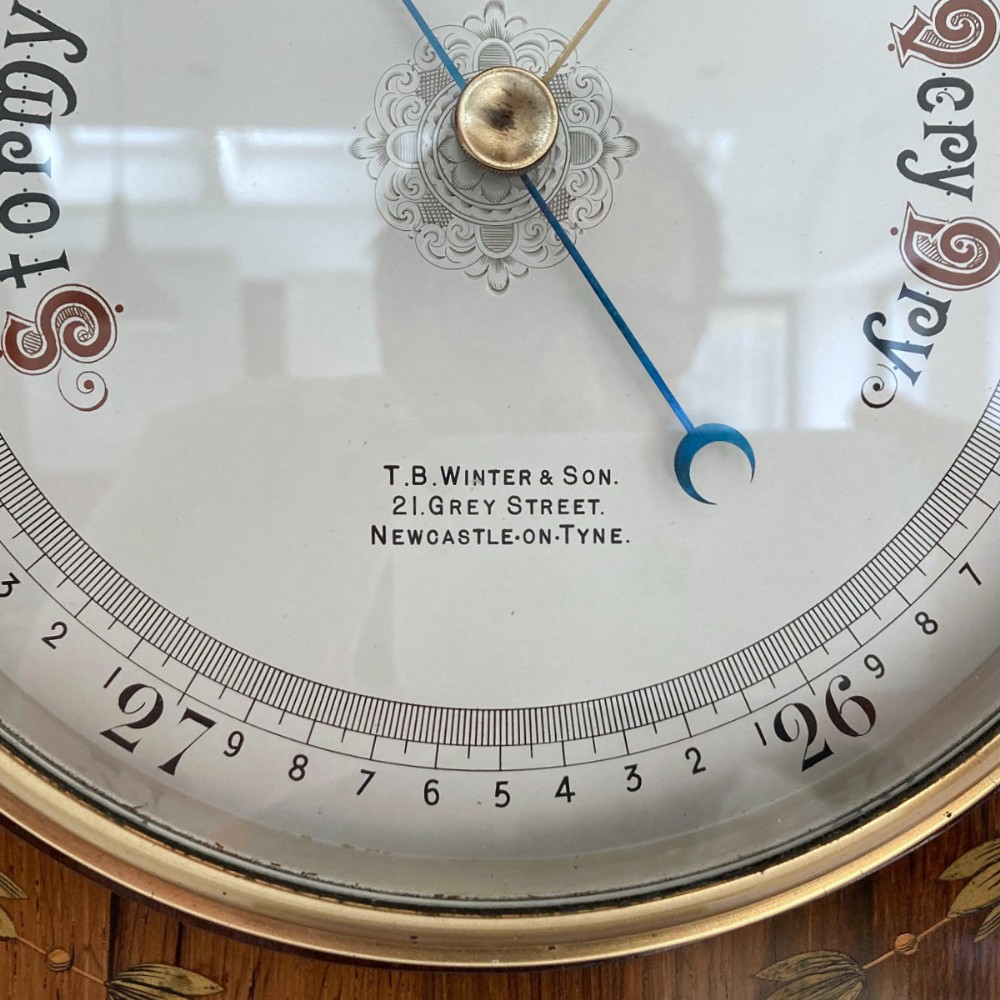
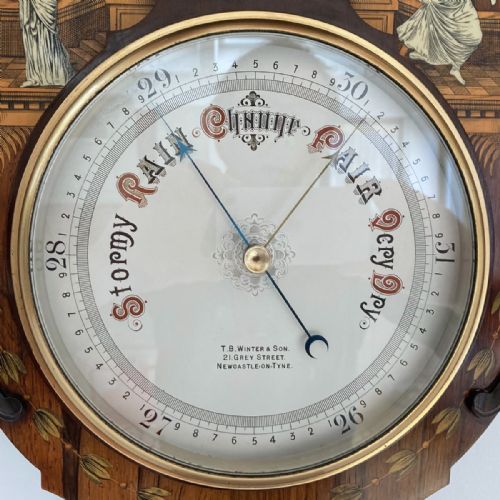
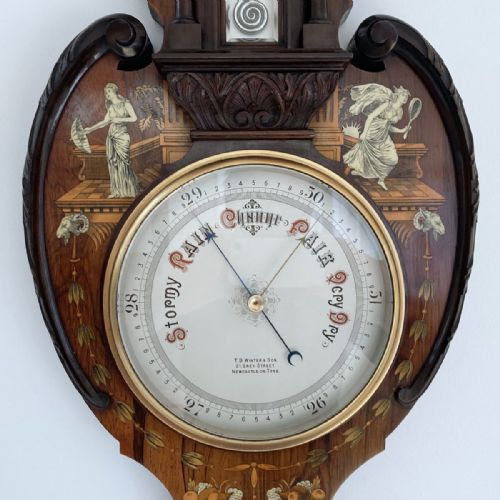
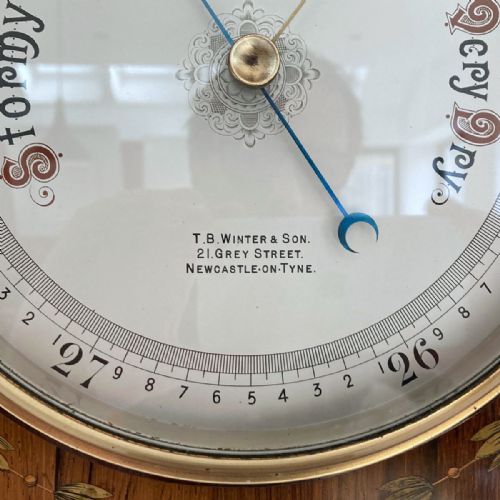
The main body is formed in an unusual classical urn shape with wide shoulders and carved relief scrolls at either side. The centre has a splendid raised eight-inch dial with pressure readings for 26 to 31 inches around the outer circumference and beautifully engraved weather indications with black and red wax infil. The centre of the dial has an intricate engine turned floral design and the maker, TB Winter & Son, 21 Grey Street, Newcastle on Tyne at the base.
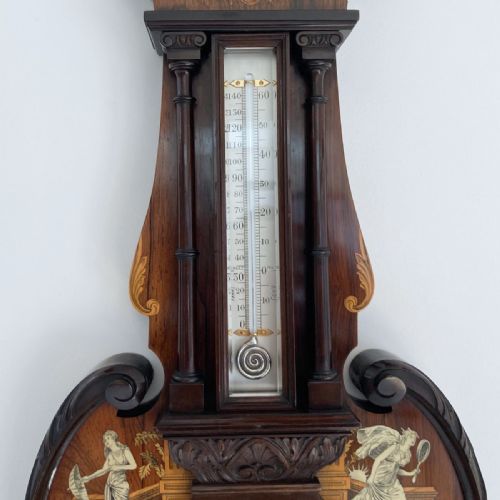
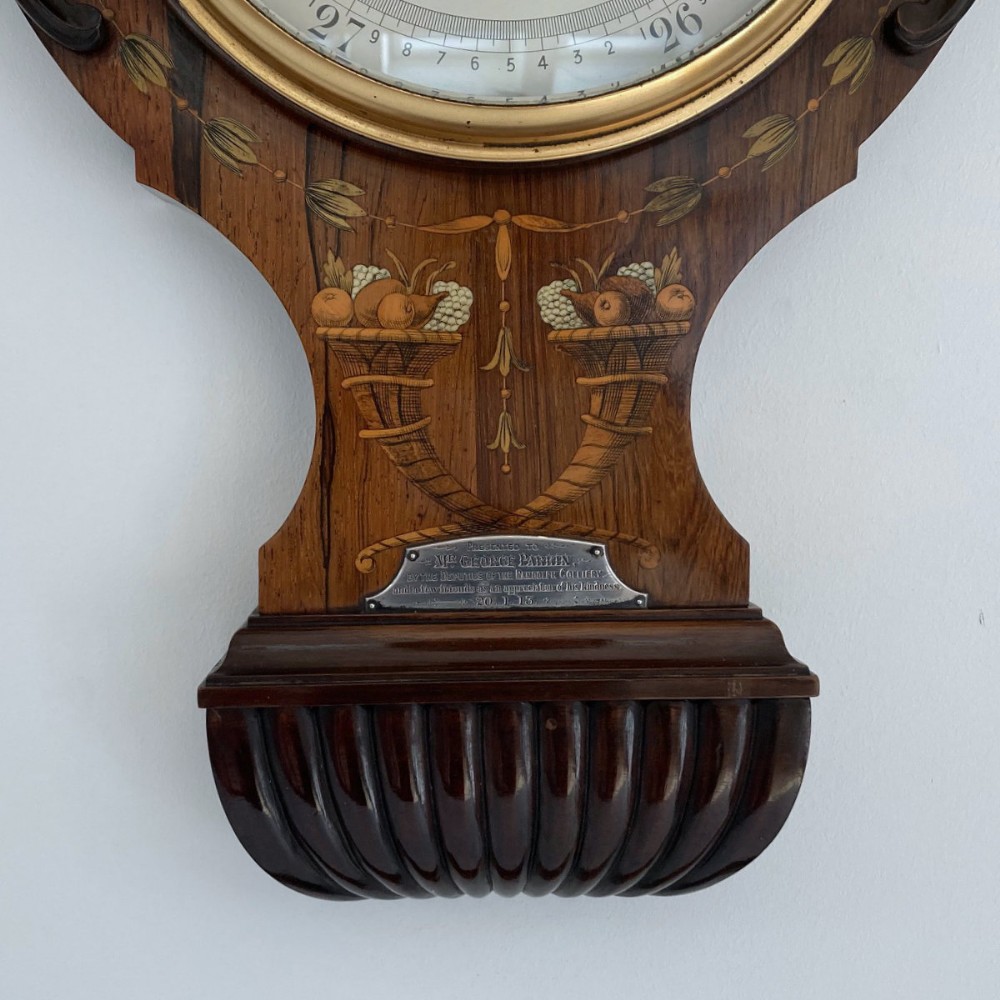
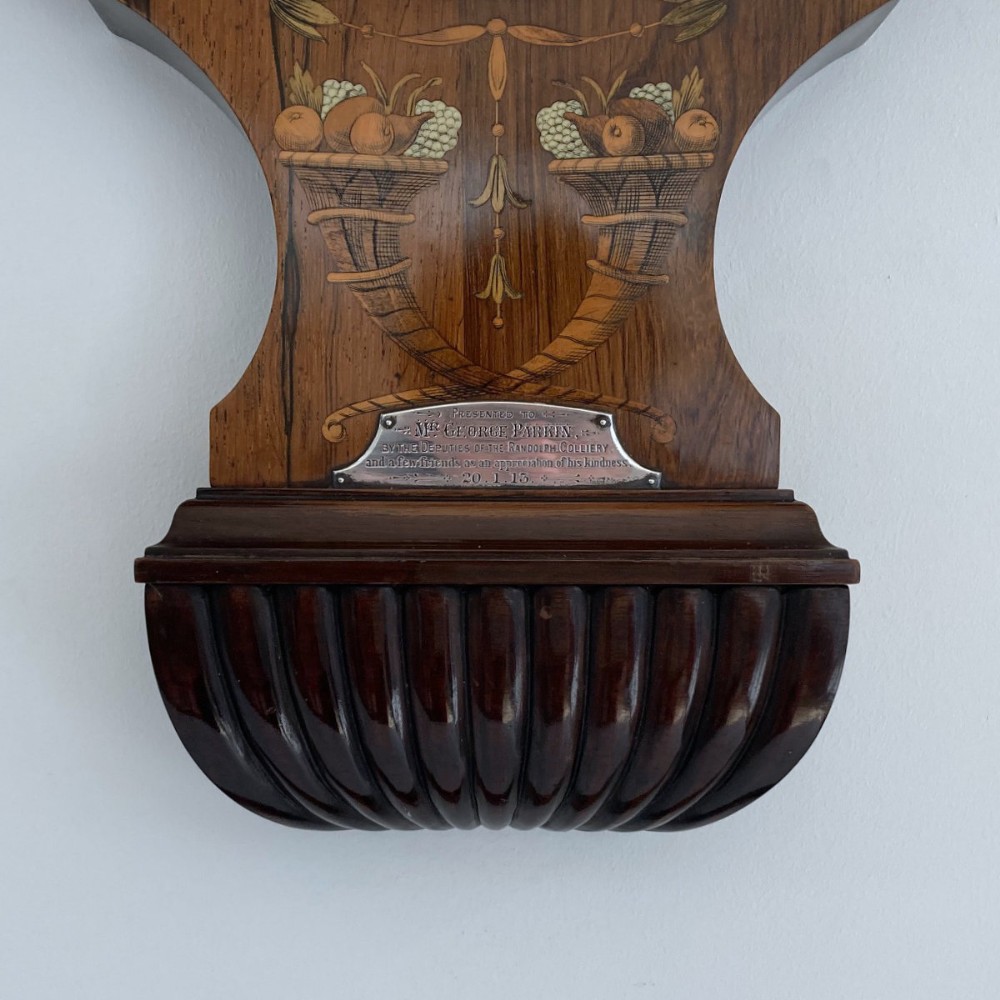
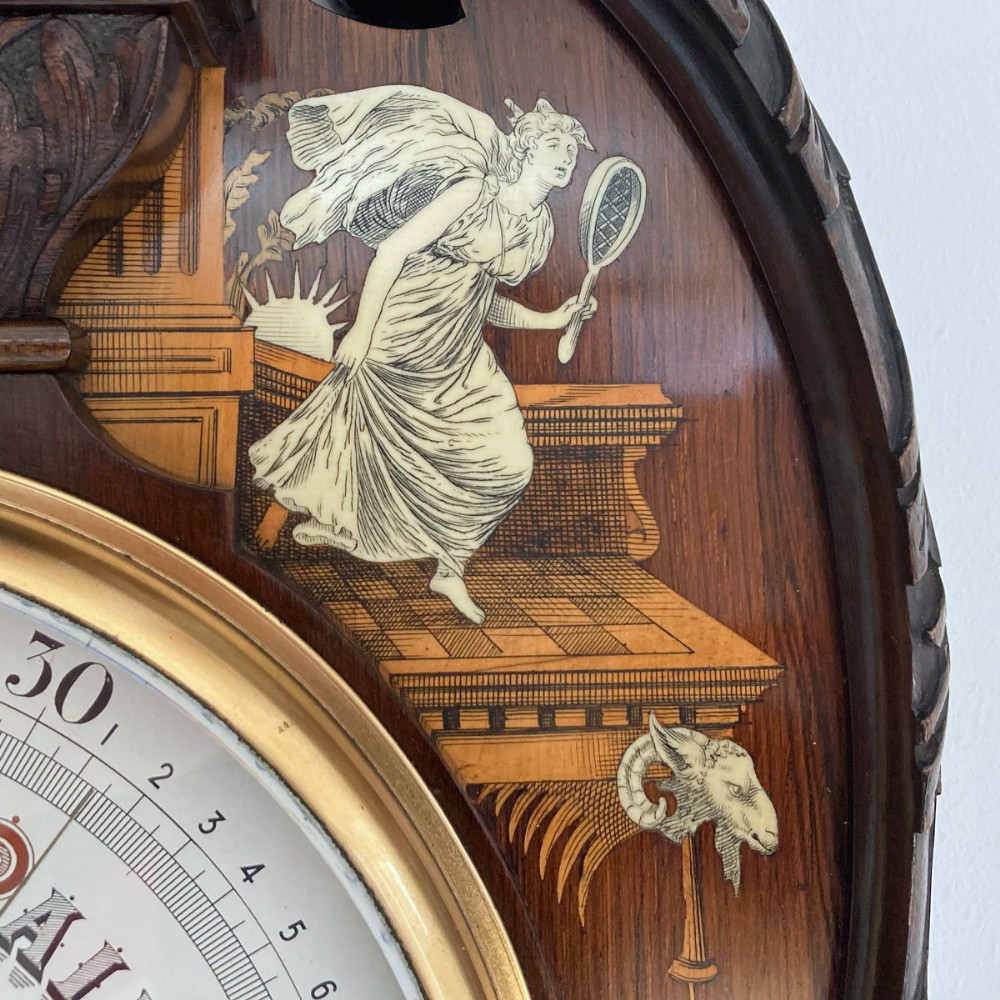
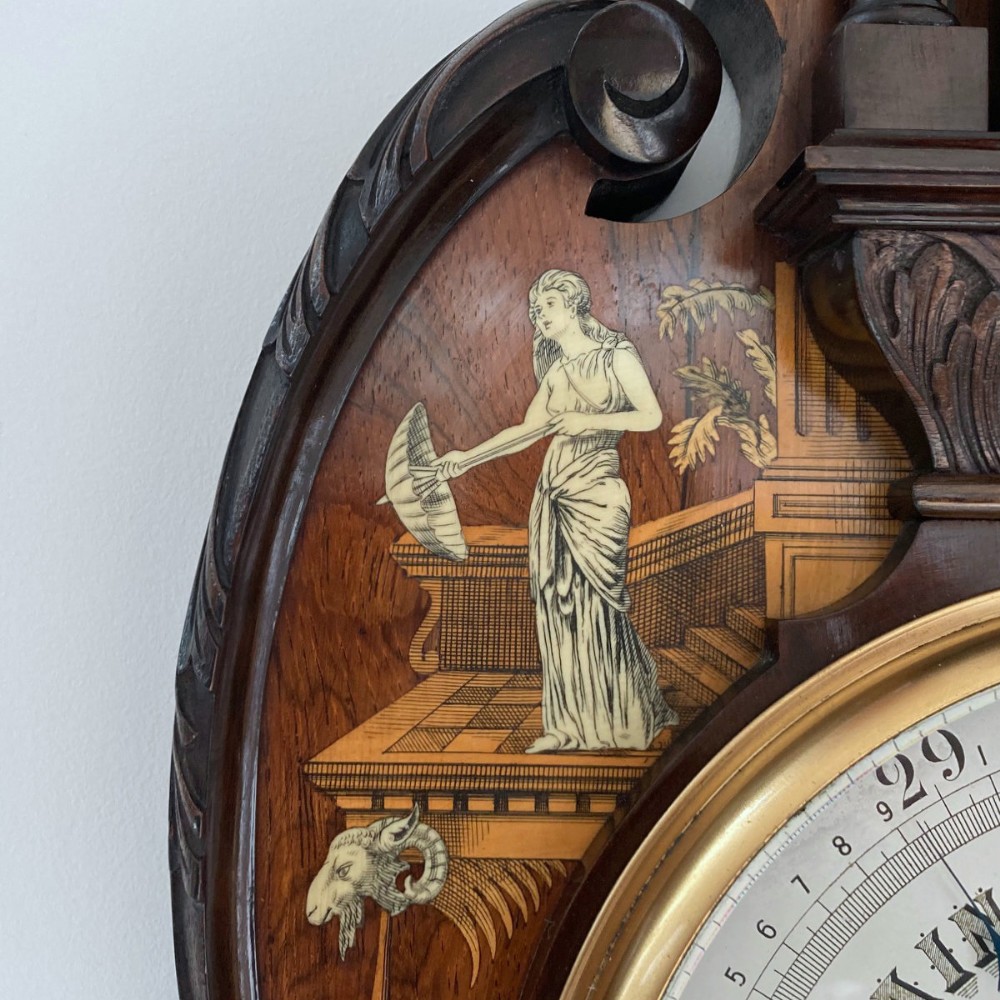
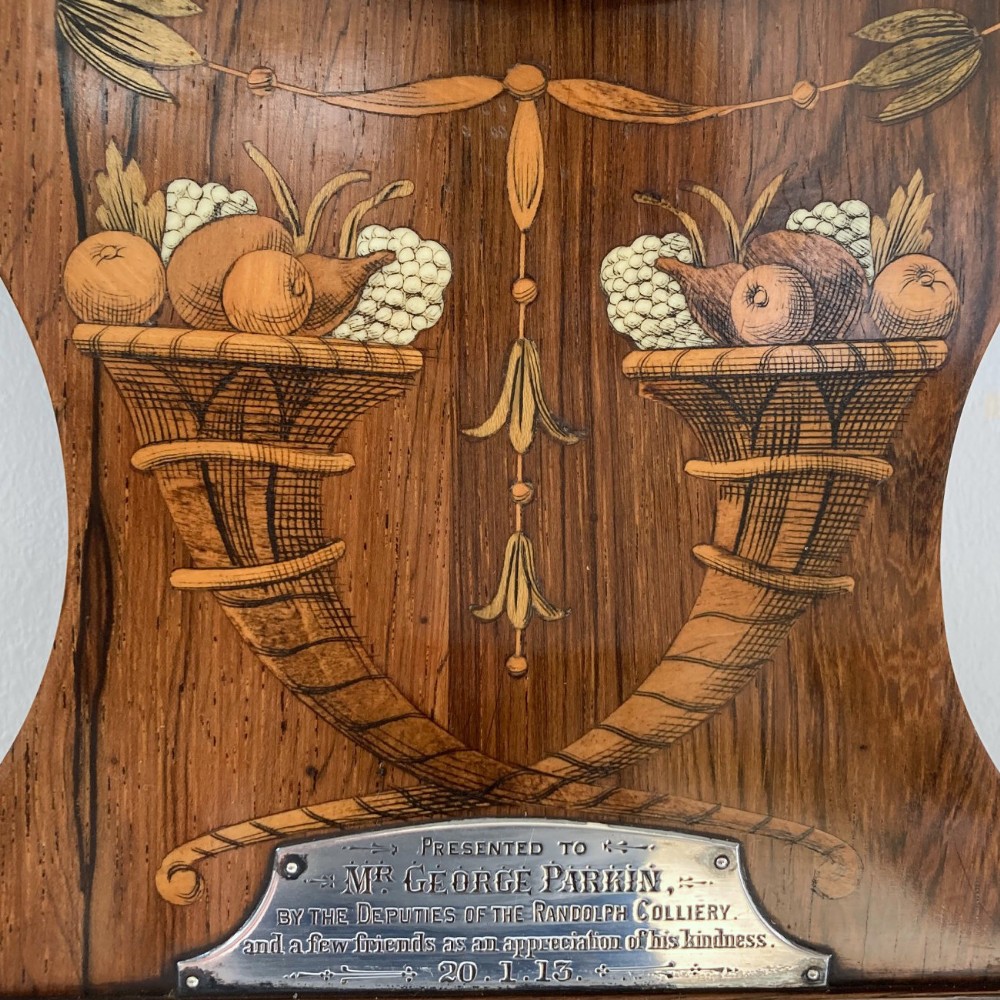
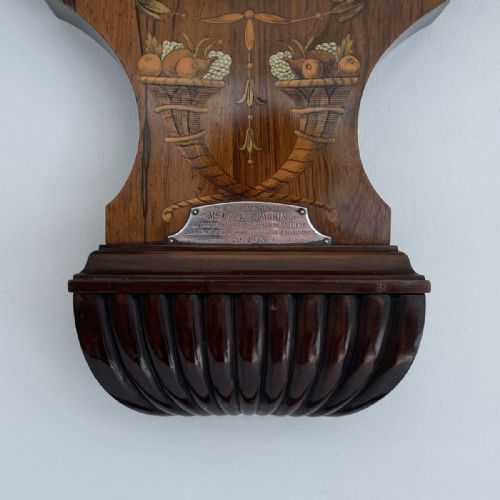
The centre of the body is a masterpiece of inlay and penwork set into the main rosewood veneer. The top has two classical female figures depicting weather conditions and are placed either side of a reeded classical column support and chequer board platform. The underside of the platform has two ram’s heads with oat beard drapes surrounding the barometer dial and terminated at the base with two cornucopia, the symbol of wealth, abundance, fertility and nourishment.
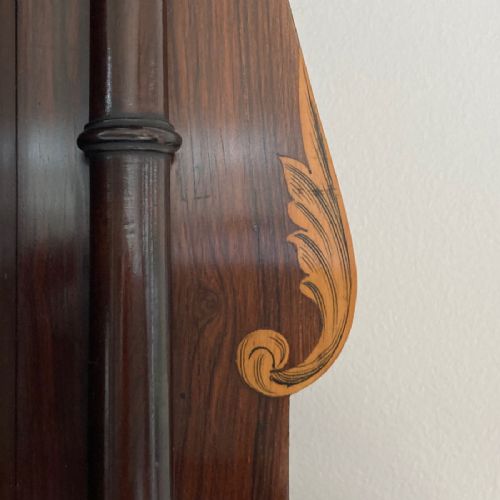
The base is completed with a carved and reeded mahogany end piece which completes the framing of the body and draws the eye back up to the masterful inlay adorning the centre of this superb instrument.
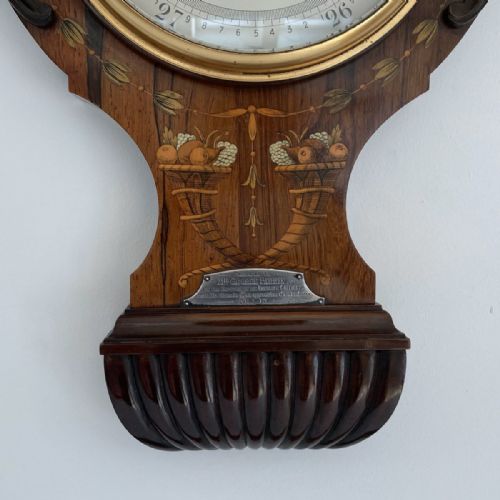
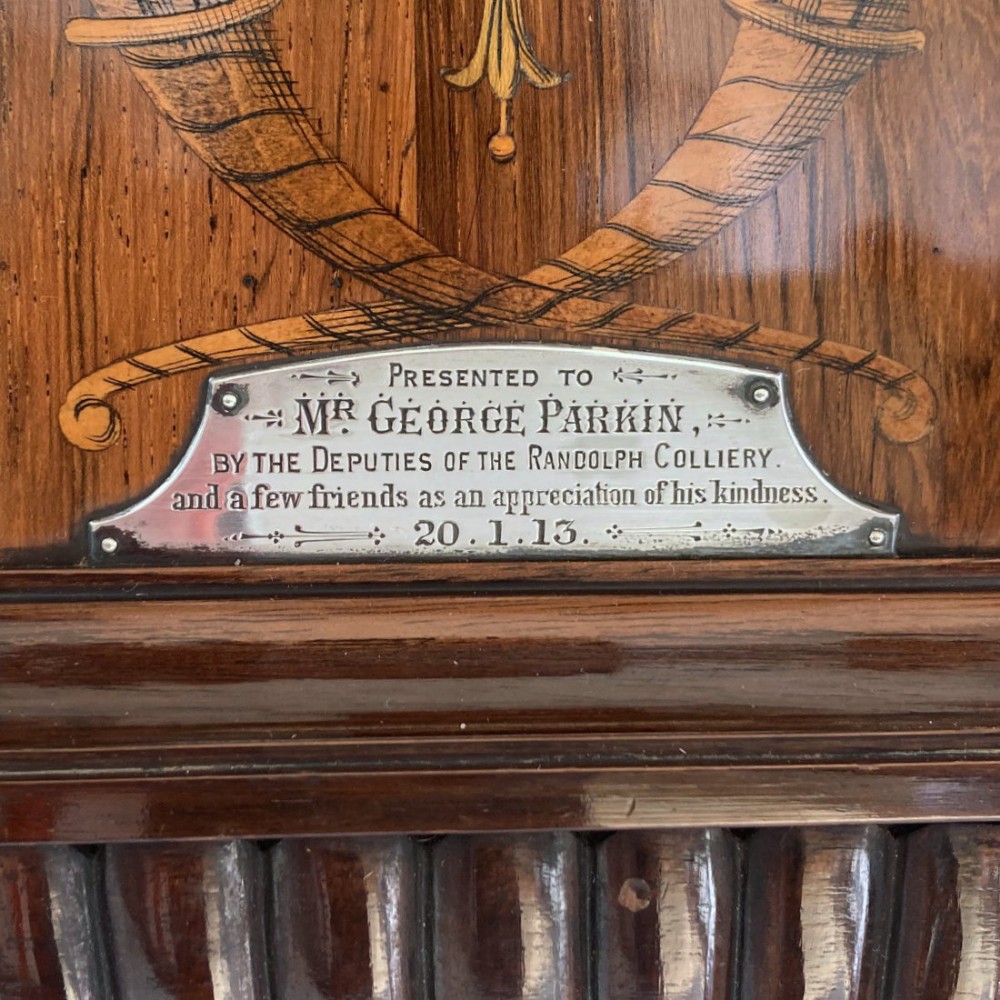
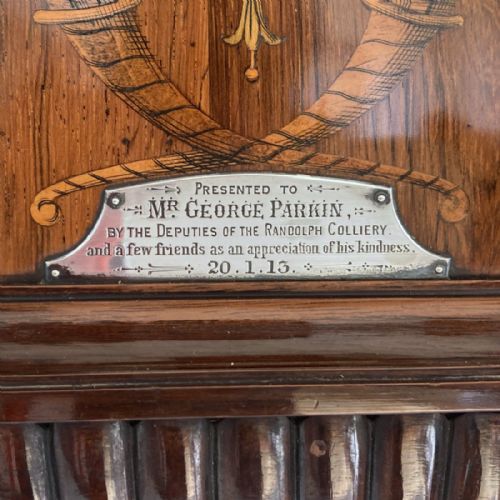
A silver plaque with a dedication is affixed at the top of this section providing both the owner’s name and the date on which it was presented:
“Presented to Mr George Parkin by the Deputies of the Randolph Colliery and a few friends as an appreciation of his kindness. – 20.01.13.”
The Randolph Colliery was situated thirteen miles south of Durham and was opened by The North Bitchburn Coal company in 1893. The 1910’s saw the height of the mine’s production with 793 miners working underground and 242 staff working above. The records show a George Parkin acting as Under Manager to the colliery from 1910 and remaining in the same position until the 1930s.
The following (for which I am indebted to the kind research of a longstanding customer and friend) appeared in the The Darlington North Star newpaper in January of 1913.
“At the Randolph Colliery offices, Evenwood, on Monday evening, a presentation was made to Mr George Parkin, under-manager of the above colliery. The present, which was a handsome barometer, was given by the deputies and others who have recently passed the examination for gas testing etc, necessary under the new Mines Act. Mr TW Hewitson acted as Chairman, and Mr CA Pattison made the presentation. Mr Parkin suitably responded. The following vocalists contributed to an interesting programme: Messrs H Curry, J Stokes, R Deighton and Banks. Thirty-three deputies and thirty others who were under Mr Parkin’s tuition were successful in the examination.”
The Under Manager was an important position working directly for the colliery manager and the owners of the mine and the Deputies (or Firemen, or examiners) noted on the plaque would have been under his direct management alongside the overmen and shotfirers.
The new Coal Mines Act of 1911 was established after a major explosion killed over a thousand miners at a colliery in Courrieres, France and whilst the Royal Commission was reporting on the safety of British mines, an explosion at the Norton Hills colliery did much to hasten the concl
Jason Clarke Antiques has dated this piece to the 1910s.
You can view the stock and full dealer information on the Jason Clarke Antiques Profile Page
Exhibition Quality Aneroid Wheel Barometer by Tb Winter & Son of Newcastle