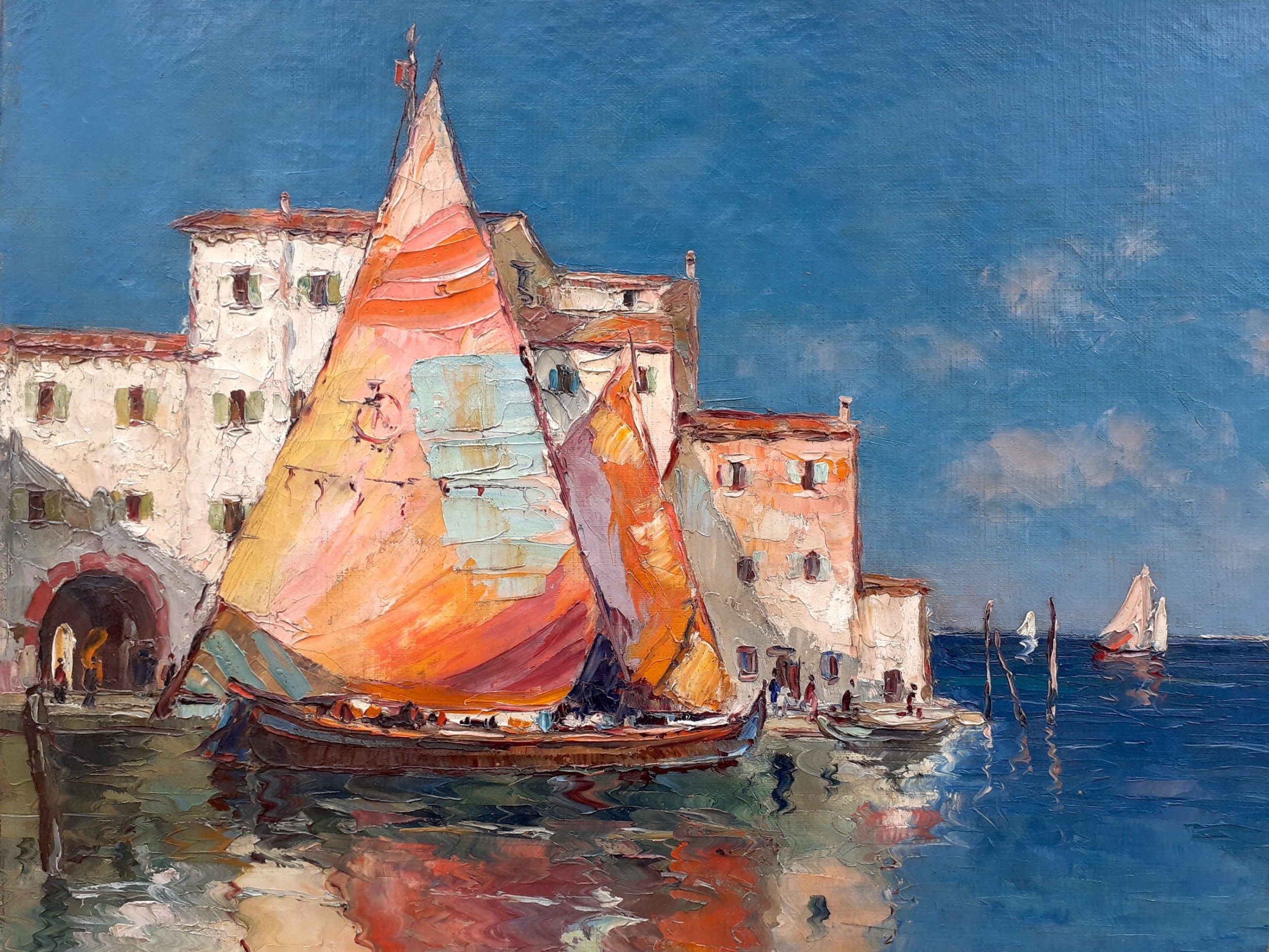
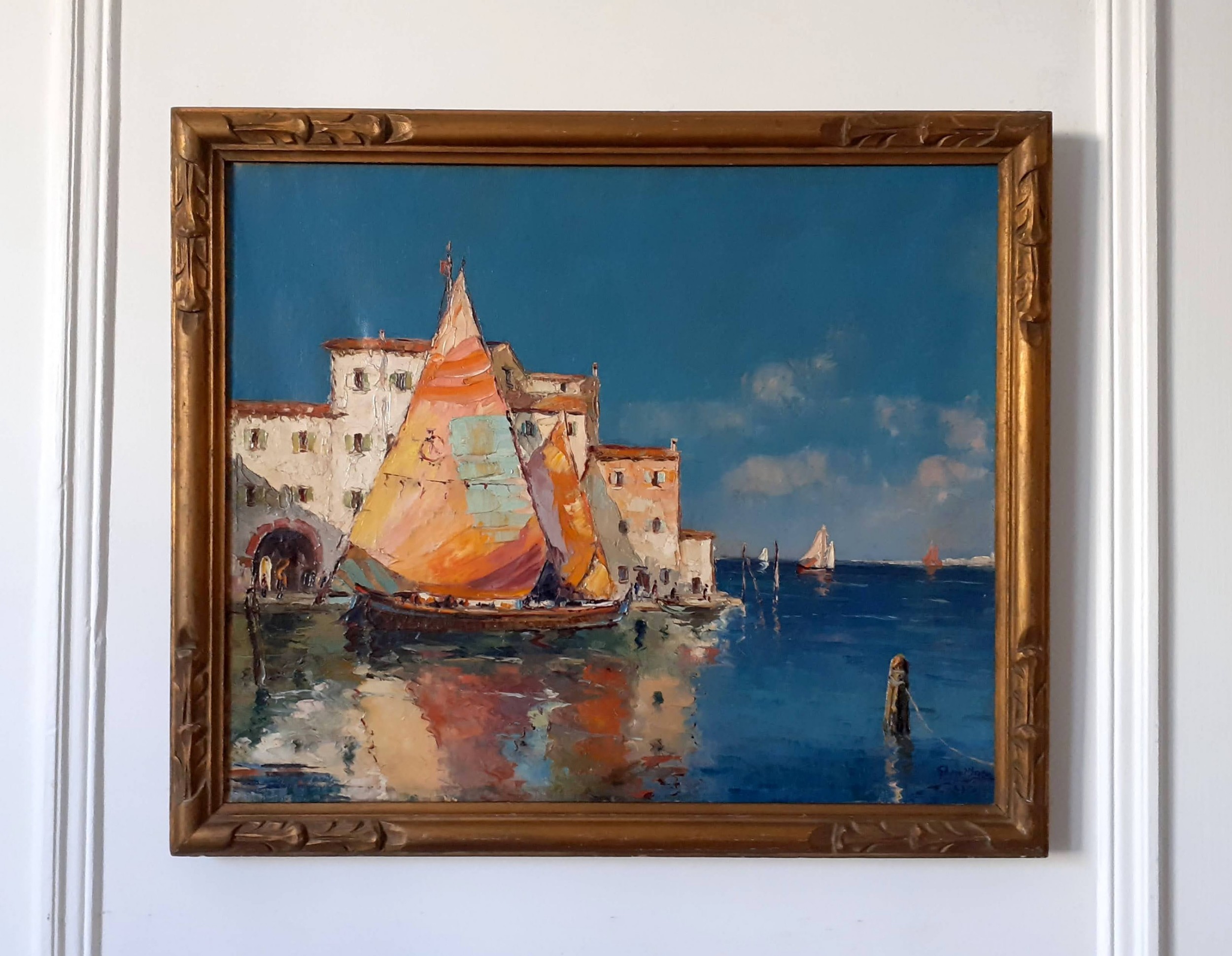
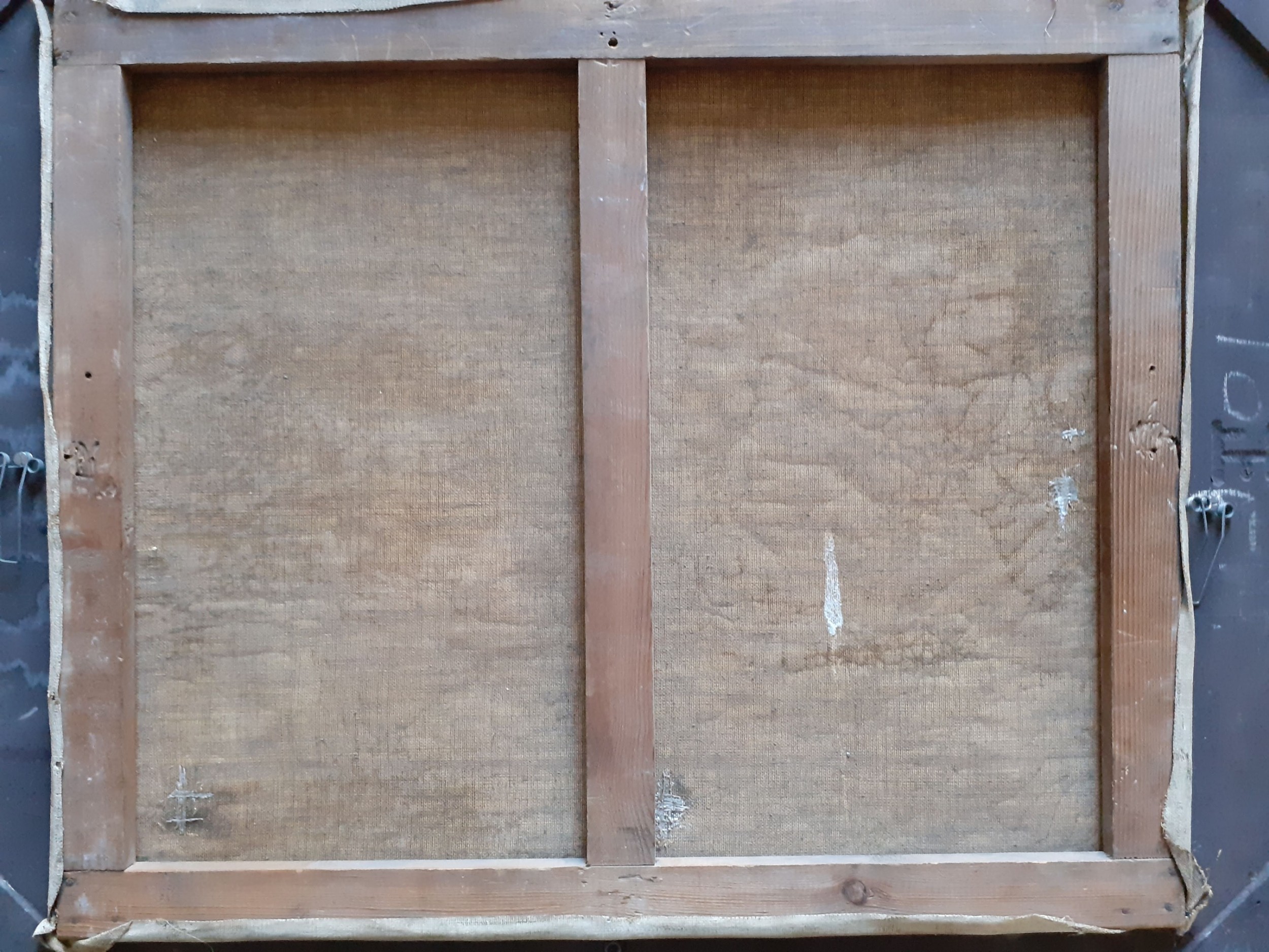
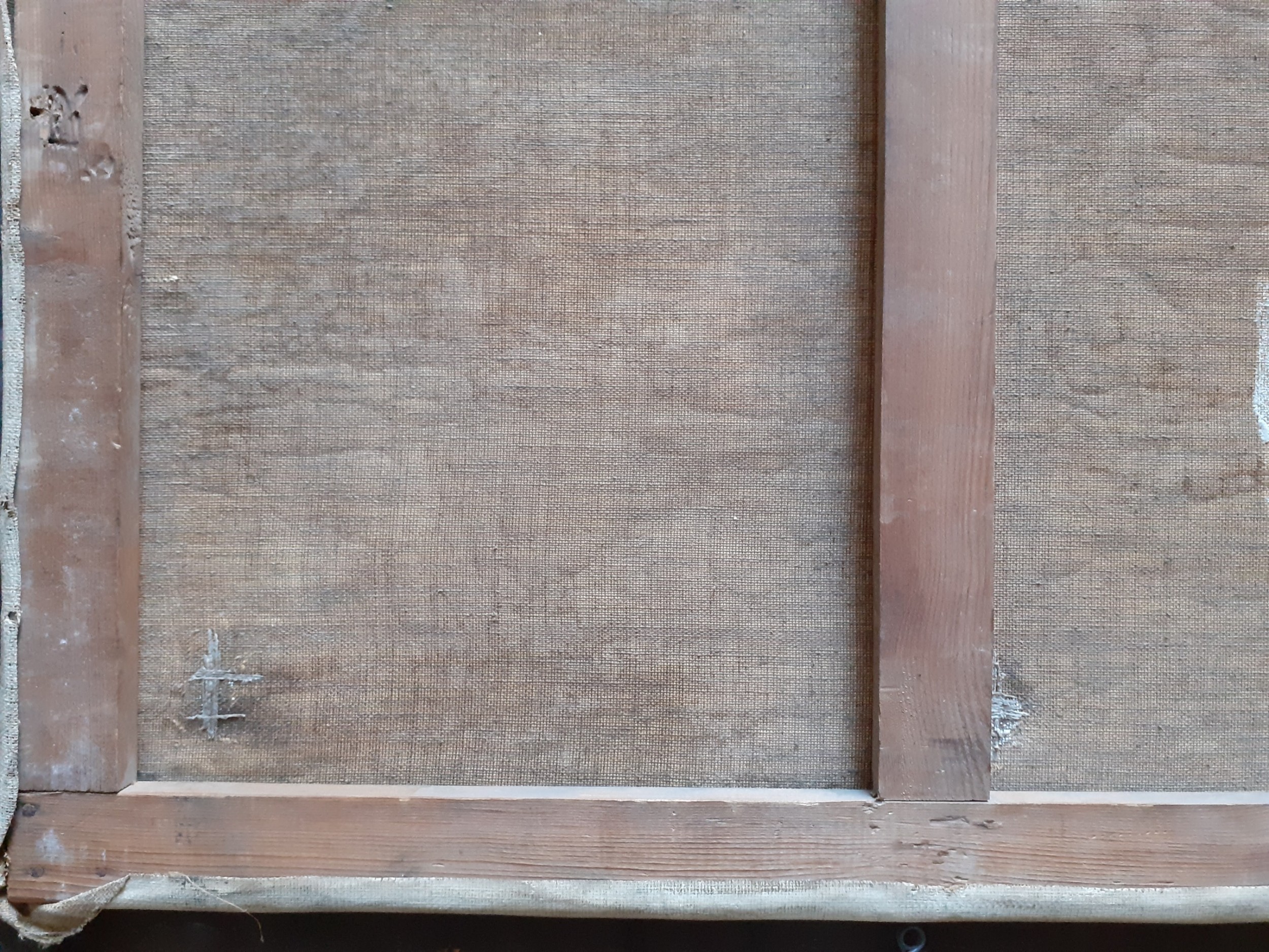
Skippings Fine Arts has dated this piece to the 1920s.
Gherri Moro's was born in Castelfranco in the North of Italy in 1899.
The First World War led Gherri Moro to fight, as part of Garibaldi's Brigade, in Bligny, France. Taken prisoner at the end of the war, he moved to Paris, where he encountered the bohemian streets of Montmartre, and became friends with his compatriot Gino Severini. In late 1918, as Mario Sèrtoli recalls, he made the acquaintance of Amedeo Modigliani at the Café des Artistes de la Rotonde in Montparnasse.
Gherri Moro briefly returned to his home town in 1921 and opened his first studio there. He exhibited at the Treviso Art Exhibition until 1924. In Treviso, Venice and Vicenza he obtained his first successes.
But Paris was not forgotten, and soon Gherri Moro would return there to live.
He established his studio on Avenue de la Motte-Piequet in 1925 and became, in effect, a bohemian artist . Very quickly he got noticed as a painter. The friendships with Maurice Utrillo and poet Camille Mauclair were fundamental: they encouraged him to continue painting and helped him to set up his first personal exhibition in 1926 at the Henri Manuel gallery in Montmartre.The exhibition, in which he mainly presented Venetian works, met with success.
He met and exhibited with the most important artists who worked in the city: Soutine, Chagall, Rouault, Maillol, Arp, Braque, Dufy, Picasso, to name but a few. He was friends with poets and writers such as Cocteau, Warnod, Radiguet, Geltrude Stein, Marinetti.
In the company of Derain, Matisse, Maillol, de Chirico he took part in the meetings of the Closerie des Lilas. Gherri Moro also loved music. He sang, danced, played, held concerts and accompanied on the guitar the best artists of the time: Maurice Chevalier, Joséphine Baker, Suzy Salidor, Serge Lifar, and others.
In 1926-27, Bruno Gherri Moro was among the privileged few accepted by André Citroën to help design the luminous decoration of the Eiffel Tower. As a decorator he also collaborated on the lighting arrangements of the Magasins du Louvre, those of La Samaritaine and of the Cirque d'Hiver.
The Parisian success of Gherri Moro was further consolidated by the personal exhibition held at the Georges-Petit gallery in 1929.
He participated in numerous group exhibitions held by various Parisian galleries, as well as in Brussels, Dundee and London.
He was accepted at the Salon d'Automne in 1931, and was also present at the Salon des Indépendants. In 1932 he held a large solo exhibition at the Café des Artistes de la Rotonde in Montparnasse, achieving great success with about fifty paintings depicting Venetian environments and subjects.
In 1935, Bruno Gherri-Moro exhibited at the Carmine gallery in Paris and at the same time he exhibited at the XIIth Roman Quadrennial. In 1936 he was invited for the first time to the XXth Venice Biennale.
One of the most prestigious awards obtained was in 1937, at the exhibition of the Charpentier gallery in Paris, where he participated together with De Chirico, Severini, De Pisis, Campigli and others, and won the French State purchase prize for the Jeu de Paume Museum. The same year, at the World Exhibition in Paris, he won the Asnières Prize and shortly afterwards he obtained the Silver Medal of the Arts-Letters-Sciences Society of Paris. In 1938 he was again invited to the Venetian Biennale.
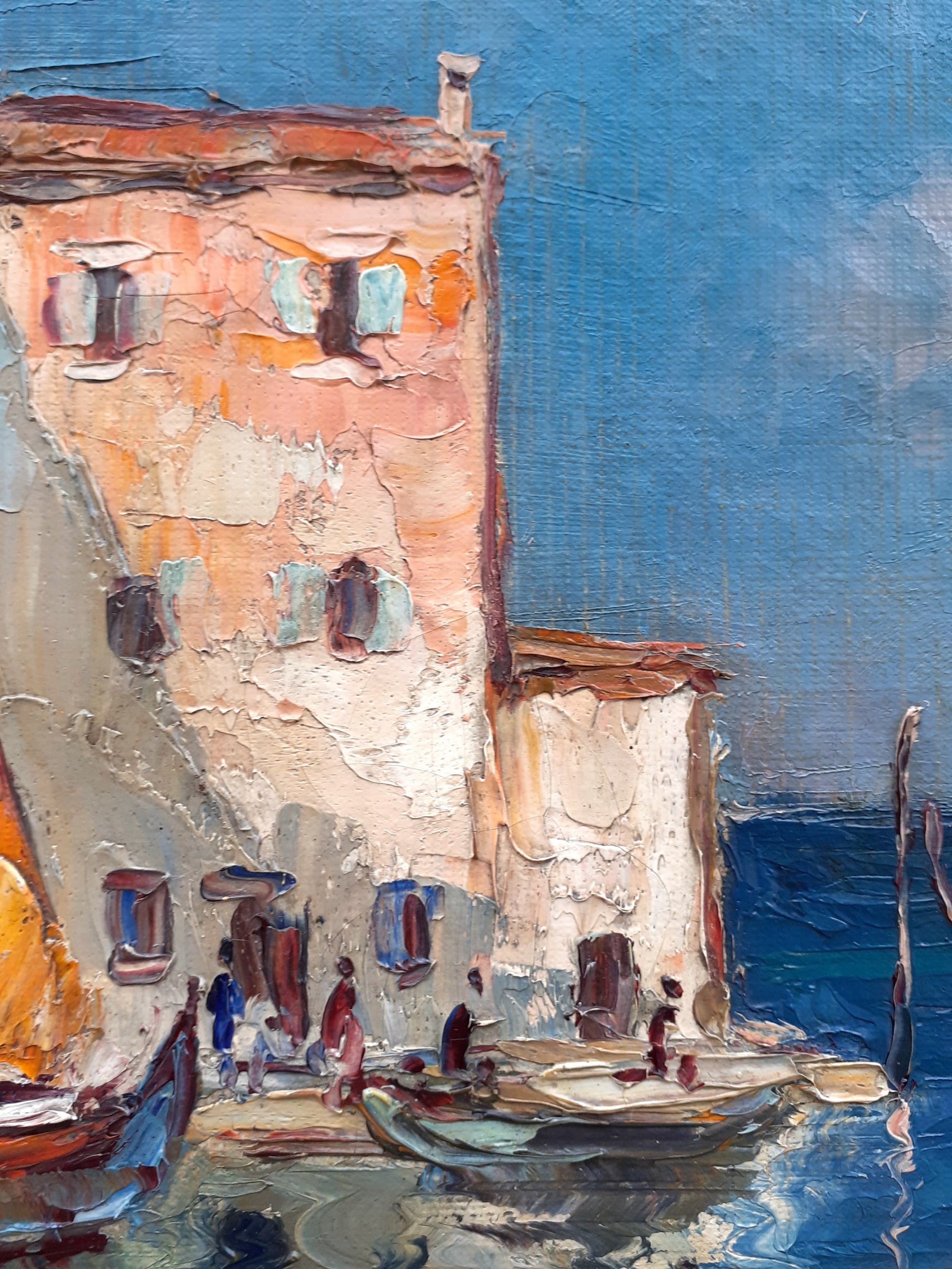
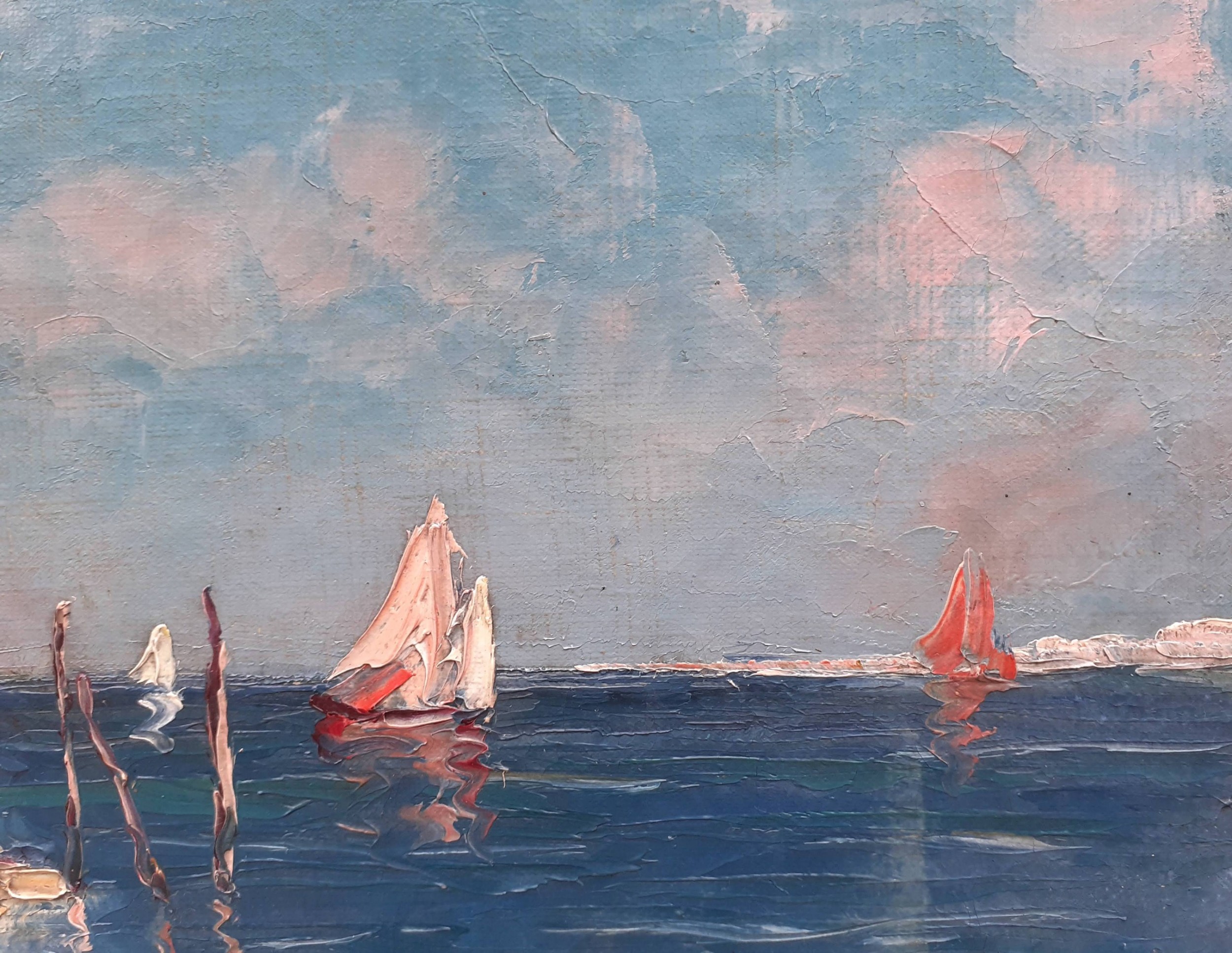
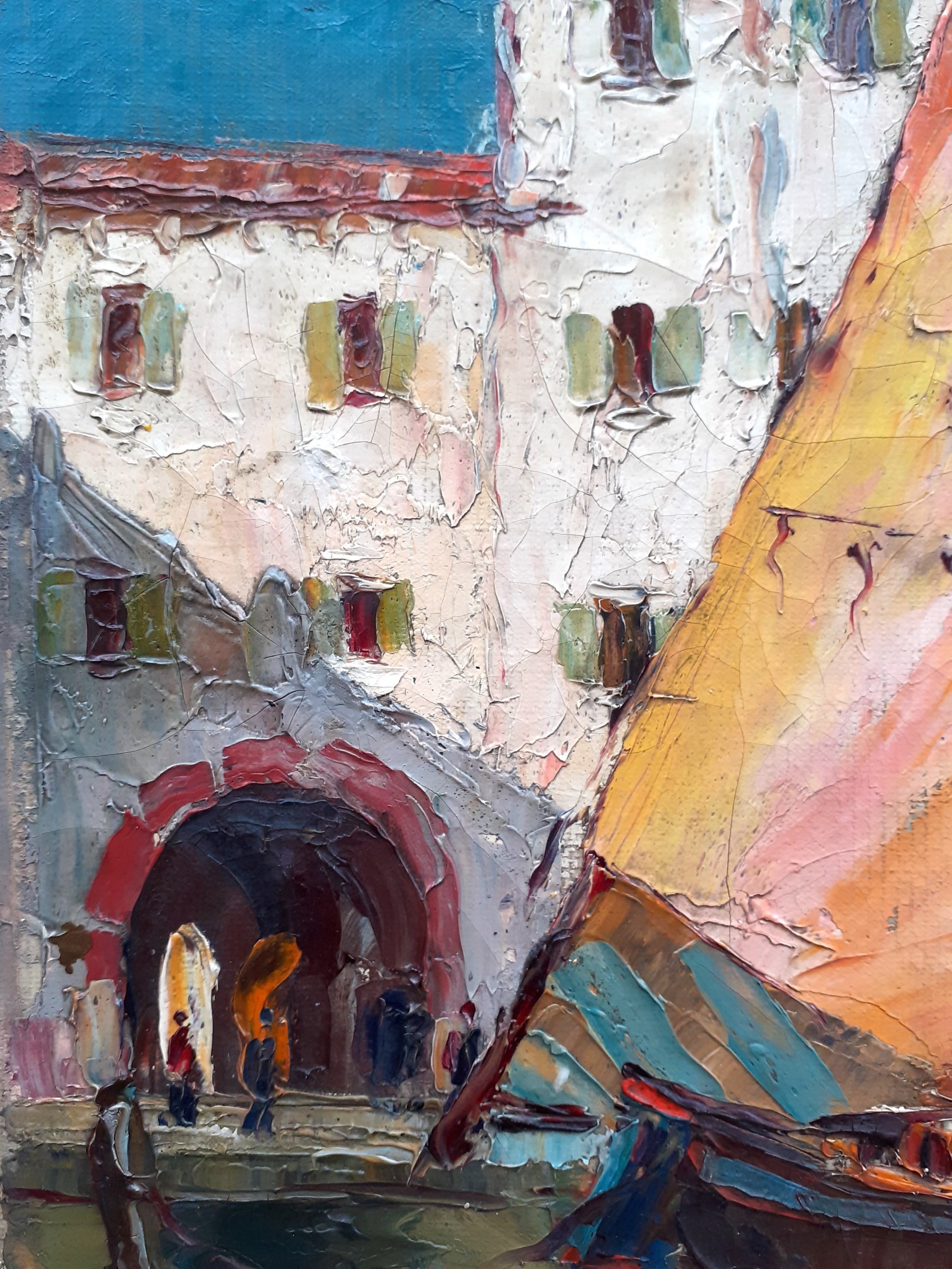
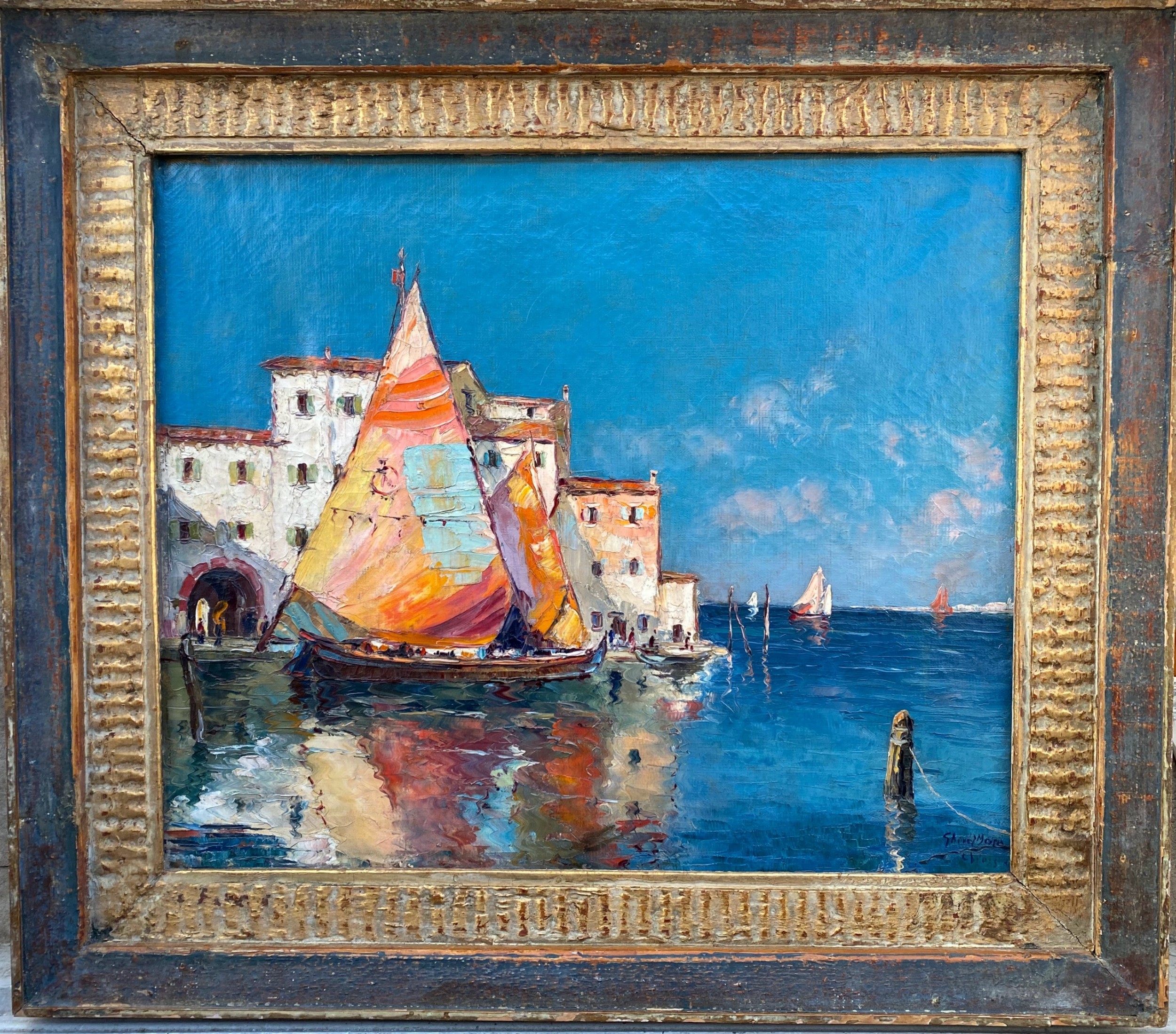
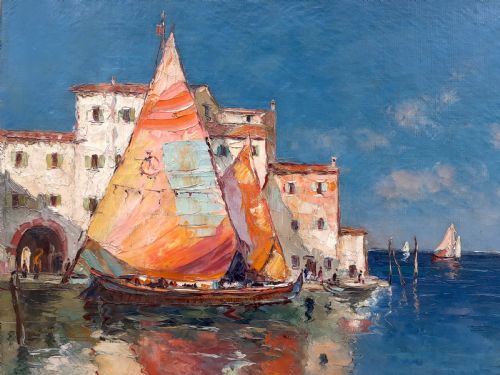
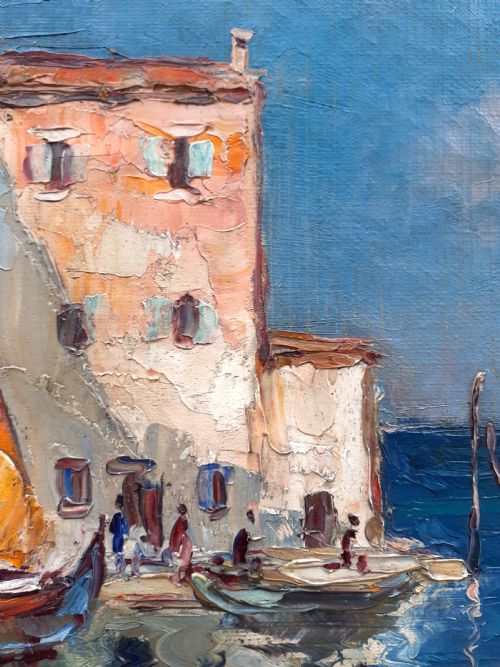
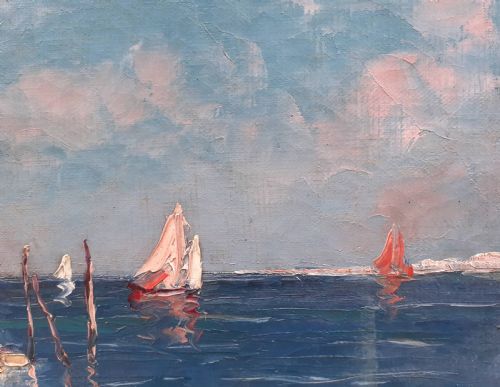
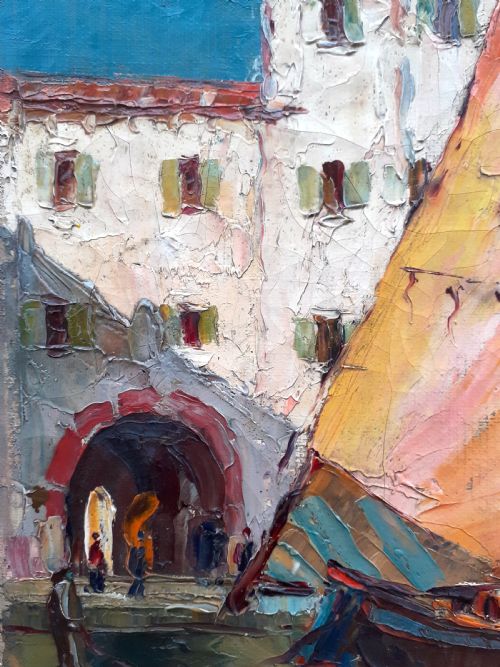
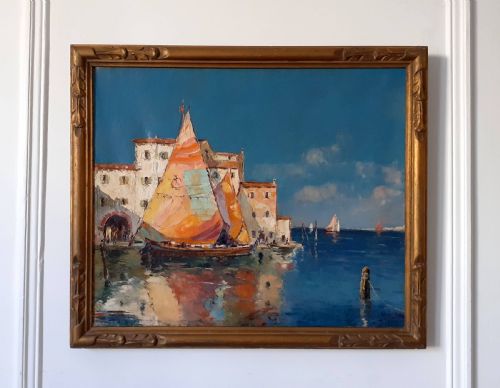
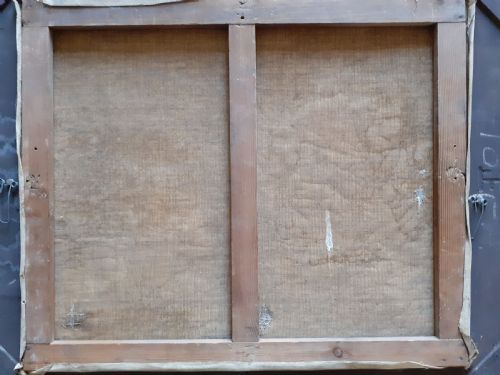
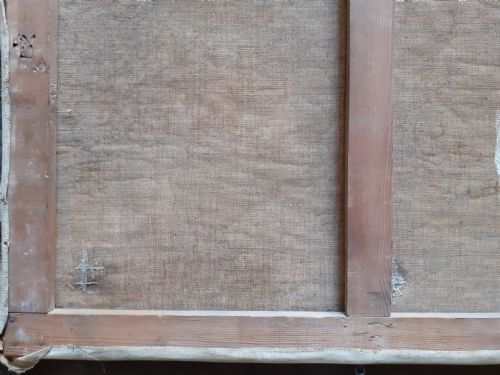
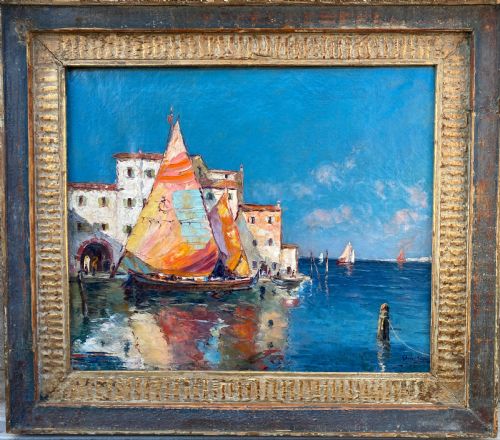
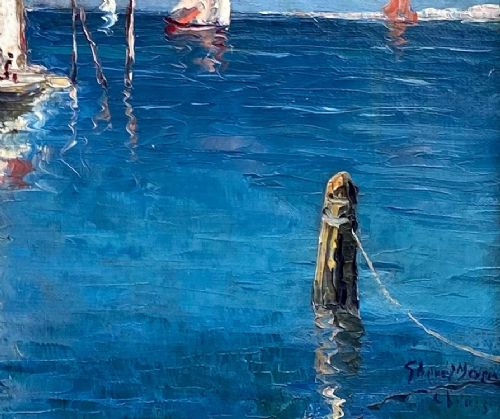
The painting I am proud to present here dates from the 1920s, and is as vibrant as the period in which it was painted. It depicts most likely the Venetian Lagoon, to which Gherri-Moro
Skippings Fine Arts has dated this piece to the 1920s.
Modern french & continental pictures selected by a former french auction house expert
You can view the stock and full dealer information on the Skippings Fine Arts Profile Page
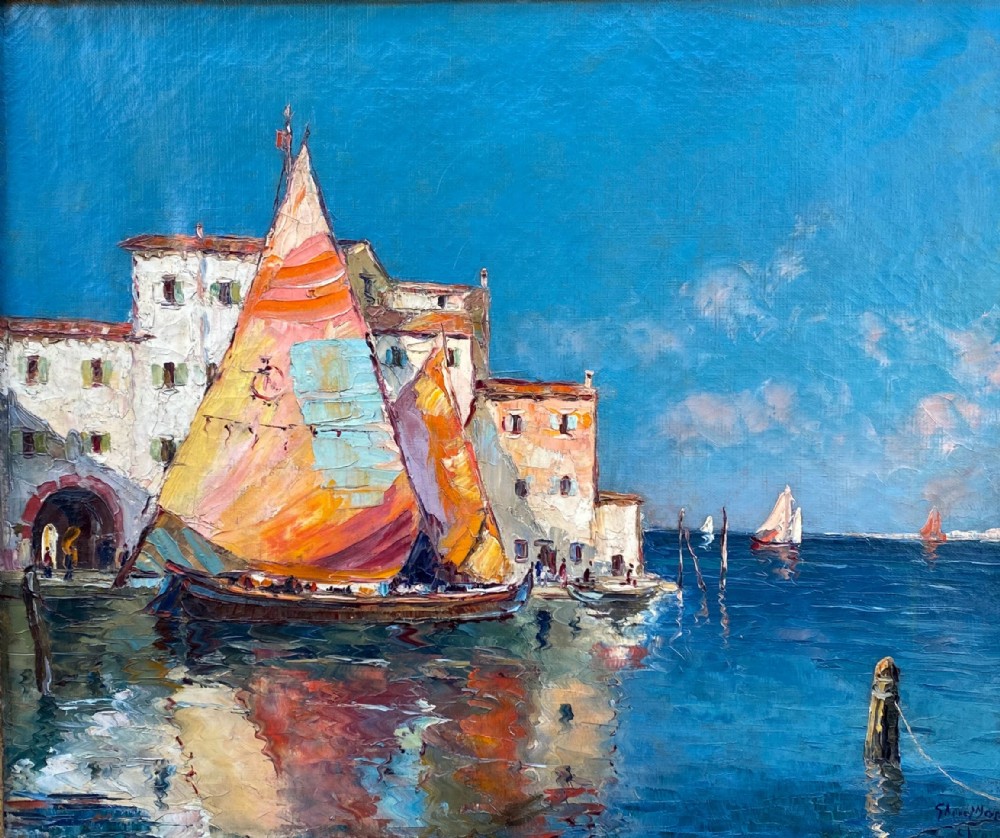
Sail Boats in the Venetian Lagoon, Ca 1920 Mediterranean Seascape Venice, Italy Sun Flooded Oil on Canvas