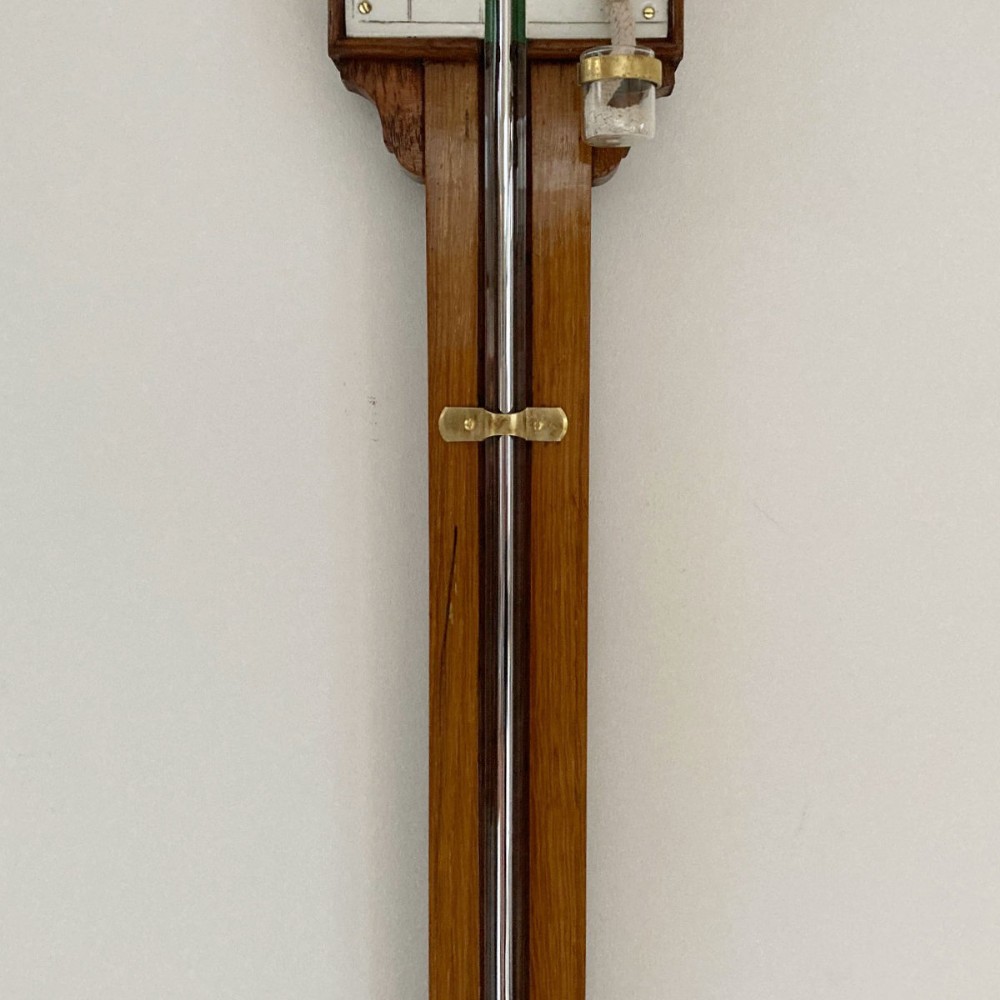
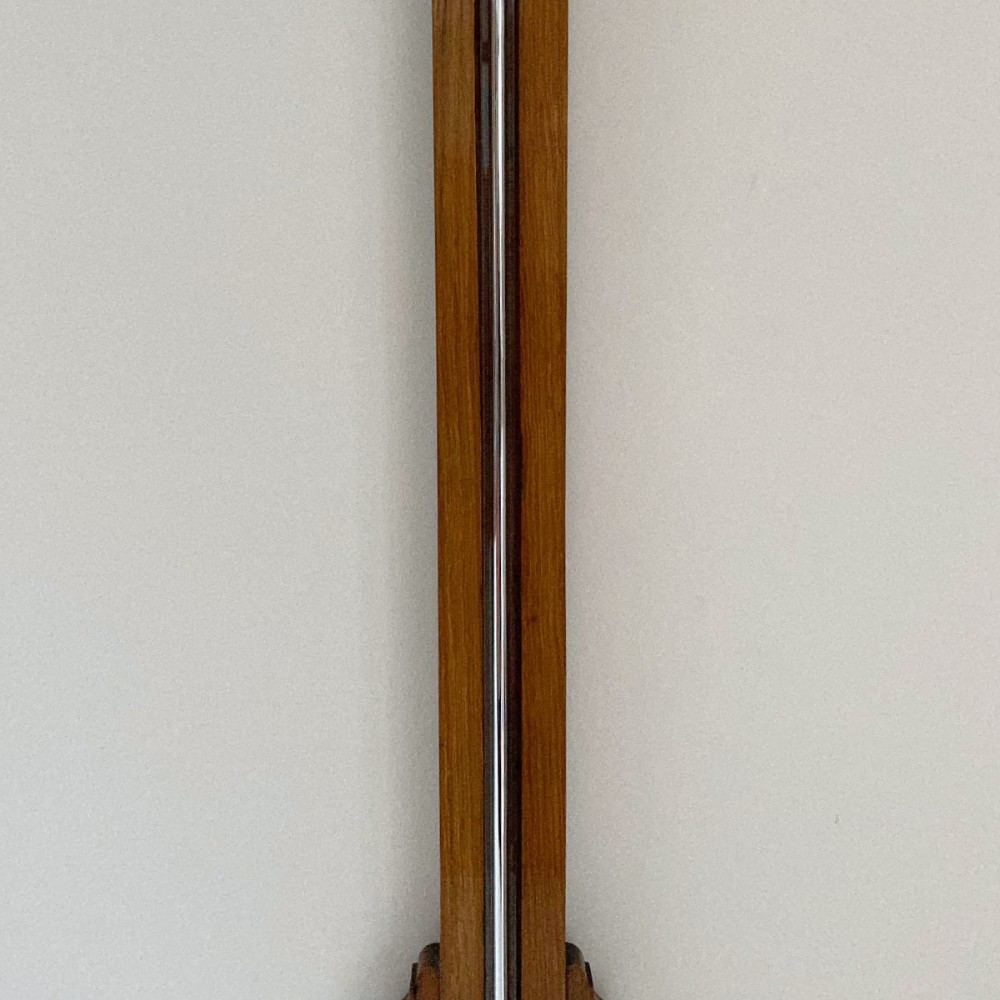
It was listed by Jason Clarke Antiques. Sold pieces stay on Sellingantiques as a record of what has passed through, and the next one is rarely far away.
Jason Clarke Antiques has dated this piece to the 1860s.
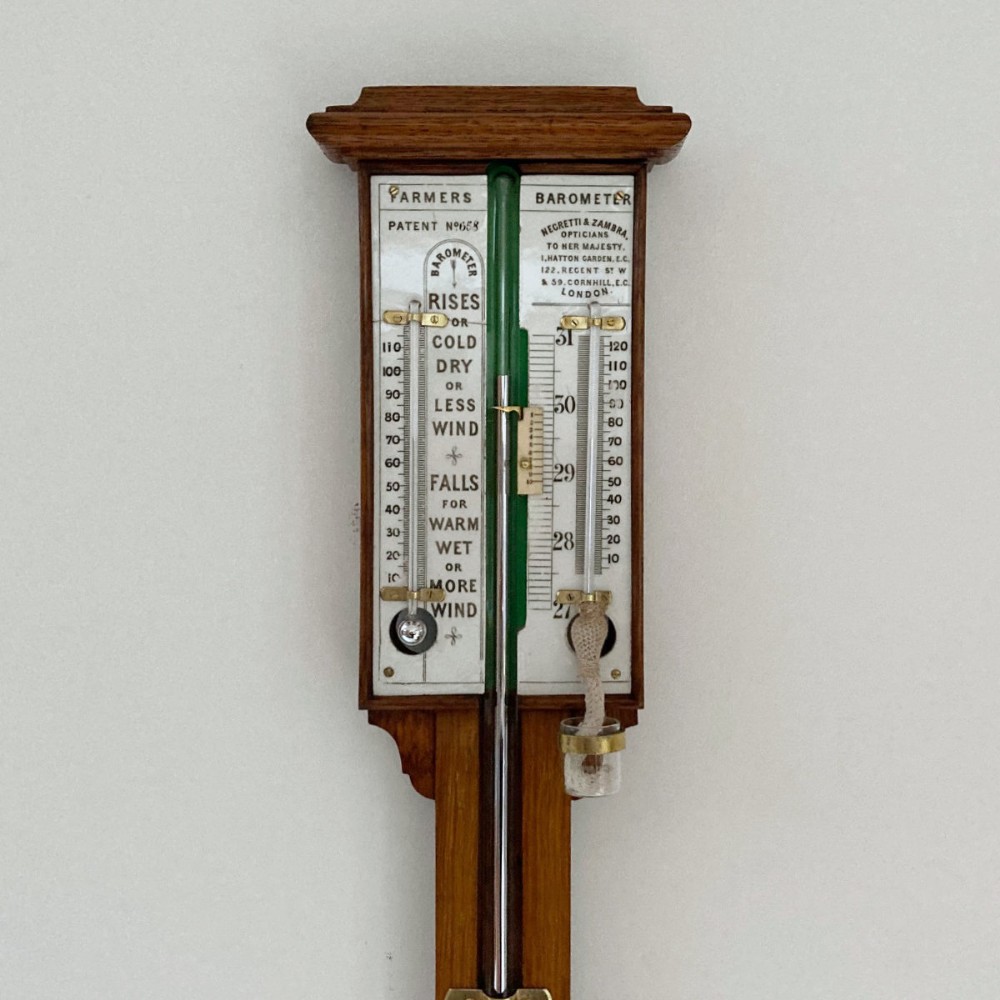
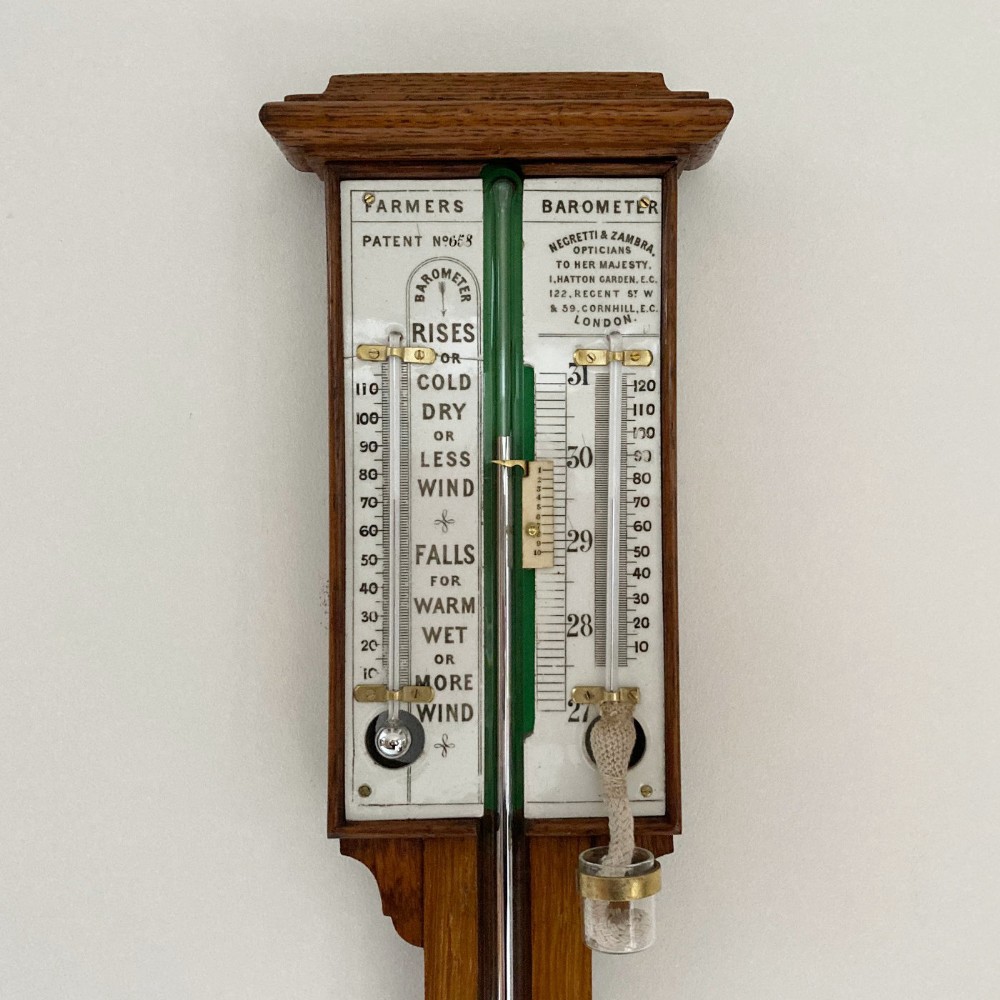
This fascinating barometer is comprised of a solid golden oak body with a small, graduated pediment above a twin porcelain scale plate measuring 27 to 31 inches of barometric pressure to the right-hand side and with hand adjustable Vernier for precise measurement.
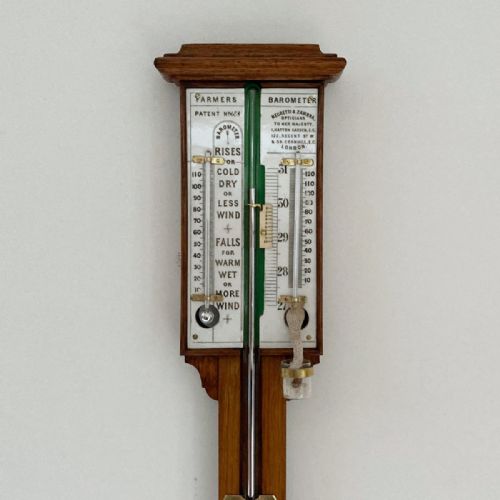
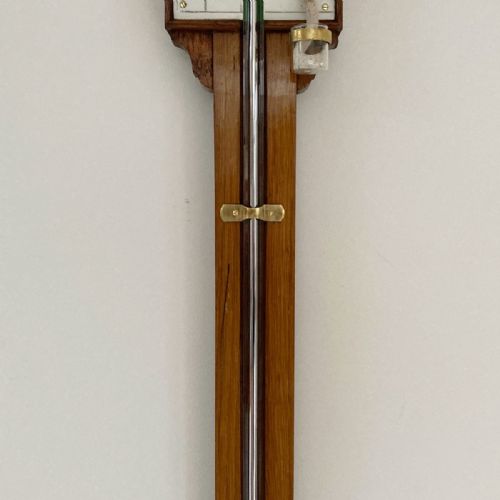
Both plates have the addition of a Fahrenheit thermometer and painted temperature scale which when used in unison form a hygrometer. The left thermometer is for measuring standard air temperature whilst the right thermometer is further provided with a small glass vessel attached below by means of a brass ring. The water vessel is intended to continually dampen the bulb of this thermometer to derive a wet temperature. Both measurements compared will provide the observer with an understanding of the relative humidity currently present in the air.
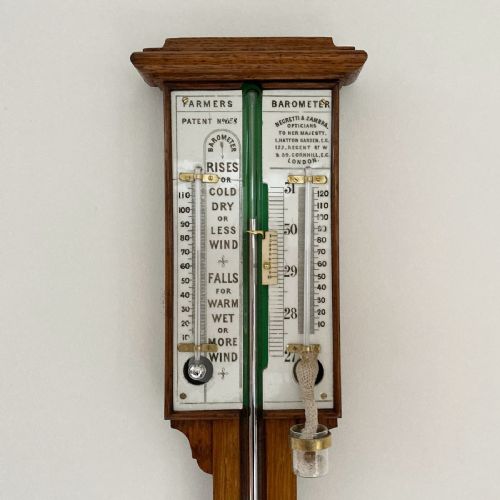
The top of the scale provides the name, Farmers Barometer with patent no: 658 and the then current addresses of the firm. It states,
Negretti & Zambra, Opticians to Her Majesty – 1 Hatton Garden, 122 Regent St & 59 Cornhill, London.
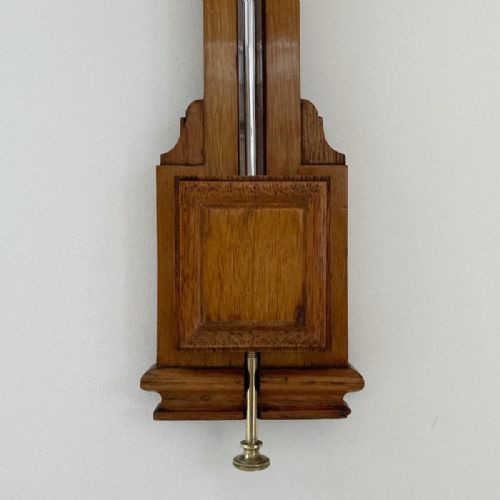
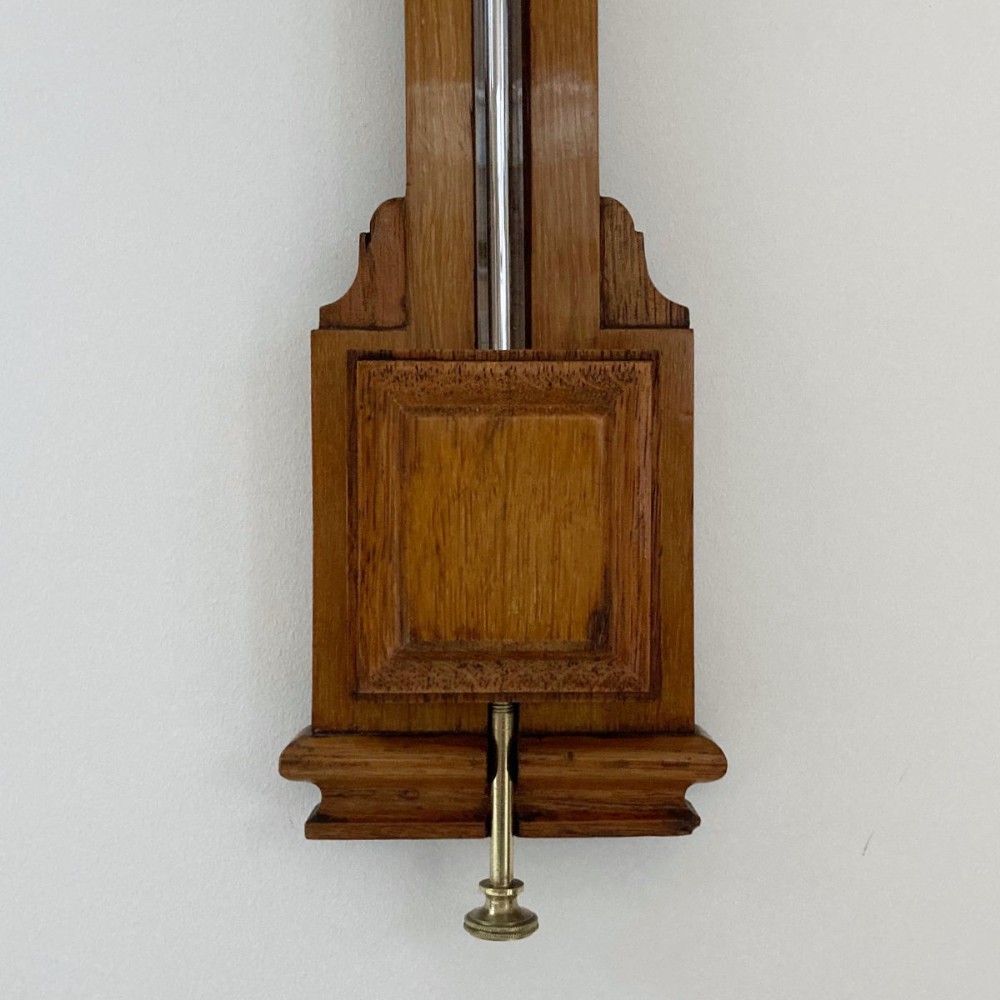
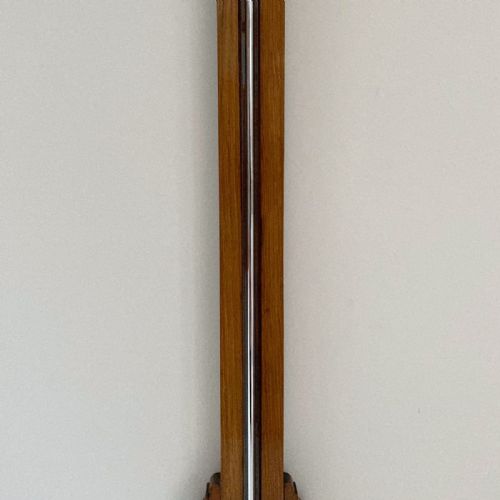
The thin oak neck of the barometer is incised down its centre to partially encase and protect the exposed barometer tube and is held in place with a brass collar attached to the front. The cistern is protected behind a simple square shaped cover and the travel screw is visible as it follows out of the base. A pair of simply designed shoulders are attached where the neck meets the cistern and are repeated below the scale plate to soften the angular shape of the oak body.
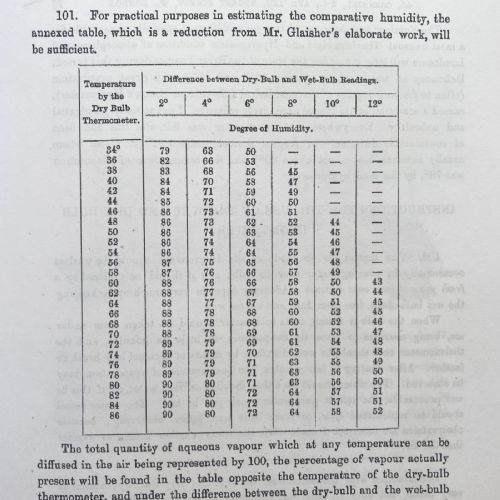
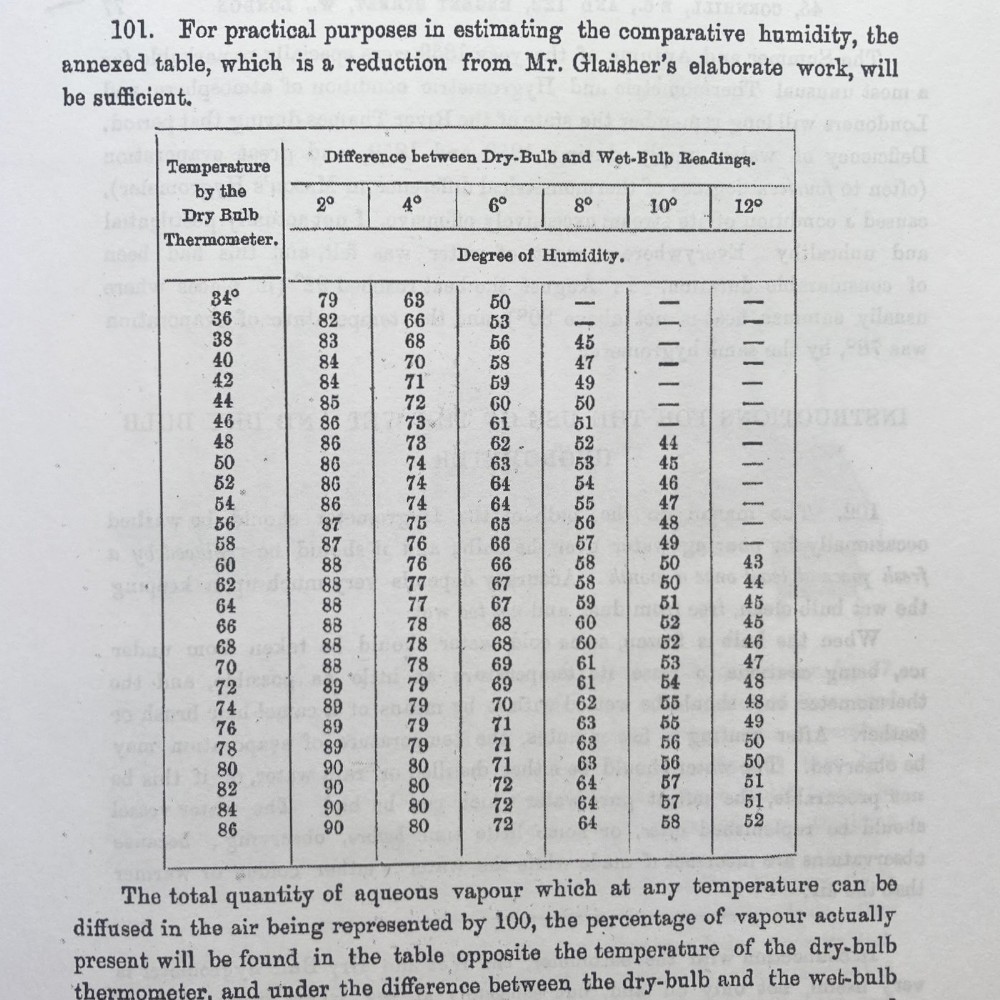
A wonderful barometer intended as a very practical instrument rather than for huge interior statements, the addition of a hygrometer was perhaps not a new idea as they had appeared on wheel barometers in wheat beard form for some time. However, with the use of more scientifically precise instruments (thermometers) and in using the published work of James Glaisher on humidity, it took the barometer to ever greater levels of forecasting precision. It is unsurprising that the company chose the name, given the benefits it would bring those involved in agriculture, but they were careful to find other practical applications as part of the advertising:
“For ascertaining the humidity of the atmosphere, the general character of the weather, and the approach of wind and rain. The Farmer’s barometer combines three distinct instruments – the Barometer, The Thermometer, and the Hygrometer, and is equally valuable to the Agriculturist and the Invalid, a difference of 5 to 8 degrees being considered a healthy amount of moisture in the air of dwelling rooms. The action is very simple, and so long as a sufficient supply of water is kept in the cistern, the Hygrometric condition of the atmosphere can be known at any moment.
It is a well known fact that the barometer is as much, or even more affected by a change of wind as it is rain, and the objection raised against a simple barometer reading, as leaving the observer in doubt whether to expect rain or wind, is entirely removed in the instrument now offered to the Public by the addition of the hygrometer, an instrument indicating the comparative degree of dryness or dampness of the air; a most important item in the determination of the coming weather.
Hitherto the use of scientific instruments of this class has been confined to very few observers. Nevertheless, through the instrumentality of James Glaisher Esq FRS, as Secretary of The British Meteorological Society, multitudes of observations have been taken with extreme accuracy, and duly registered; and it is from these carefully collected data that we are enabled in a measure to interpret the various changes that we feel and see
Jason Clarke Antiques has dated this piece to the 1860s.
You can view the stock and full dealer information on the Jason Clarke Antiques Profile Page
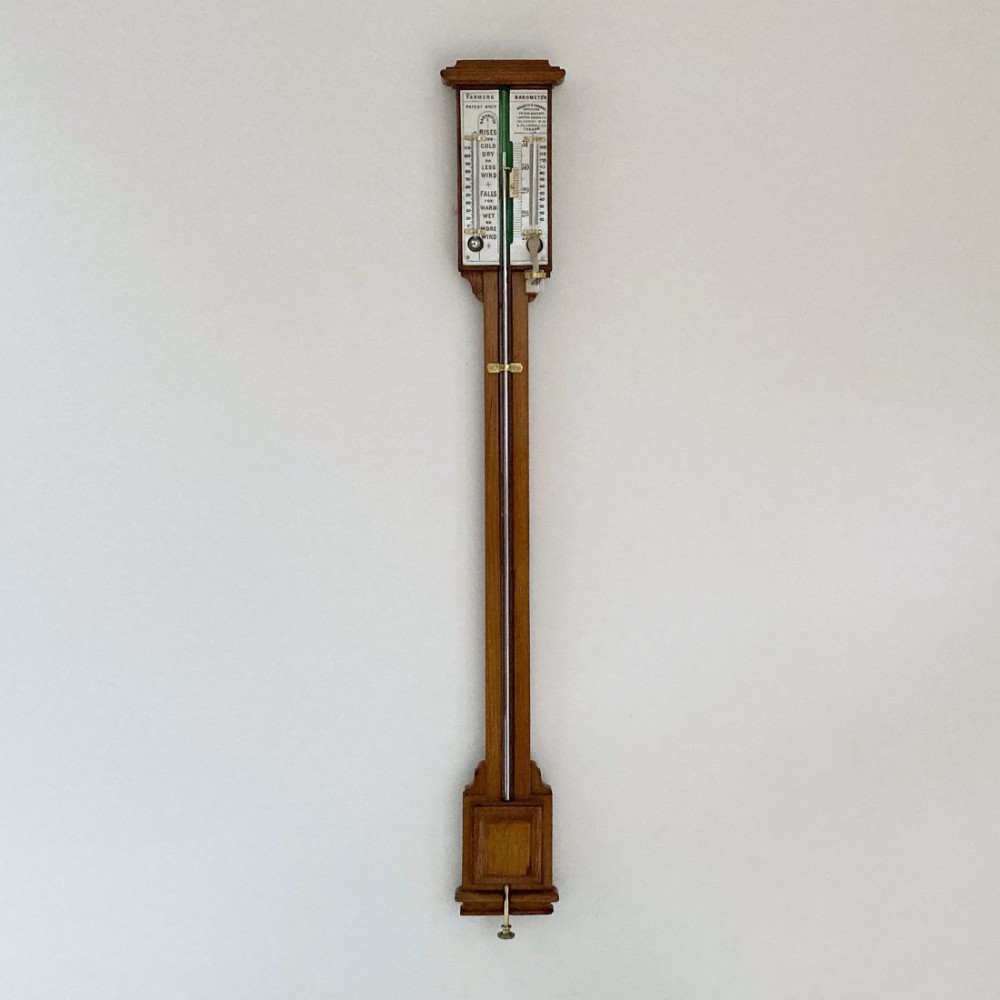
Early Victorian Farmers Stick Barometer by Negretti & Zambra