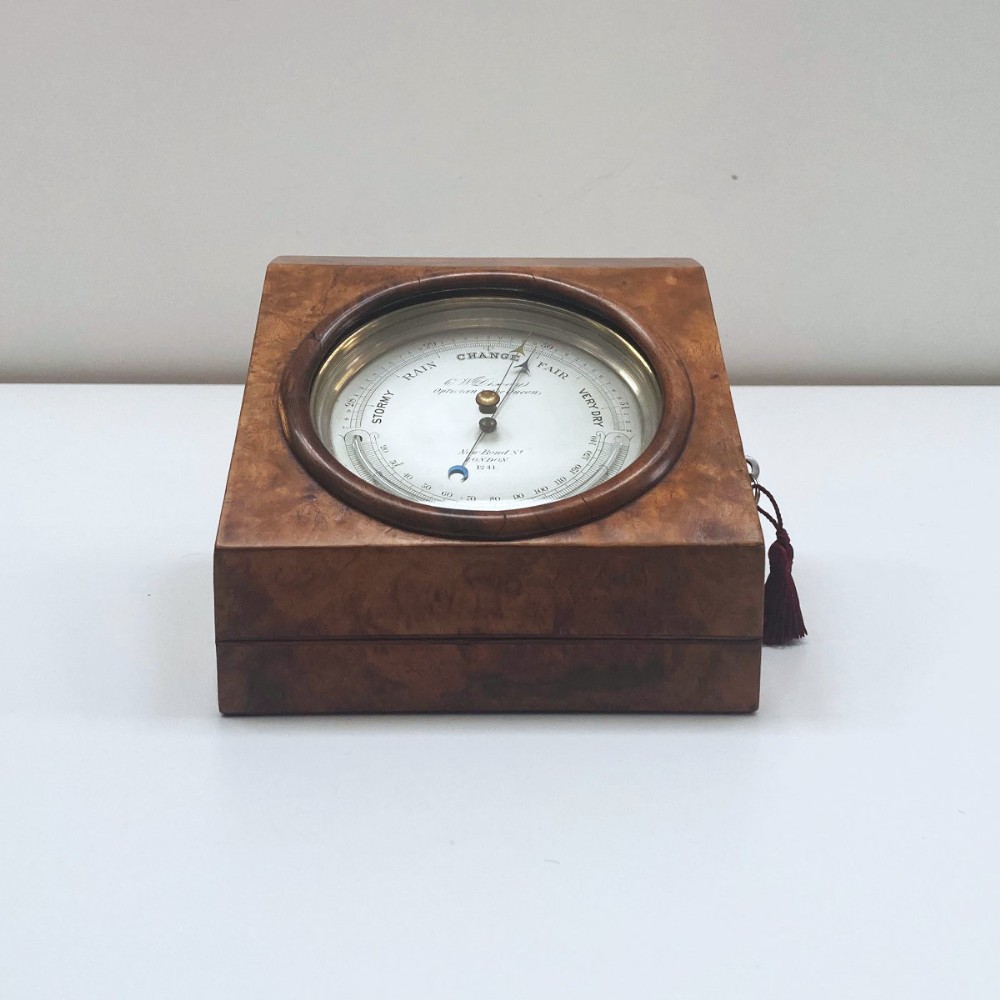
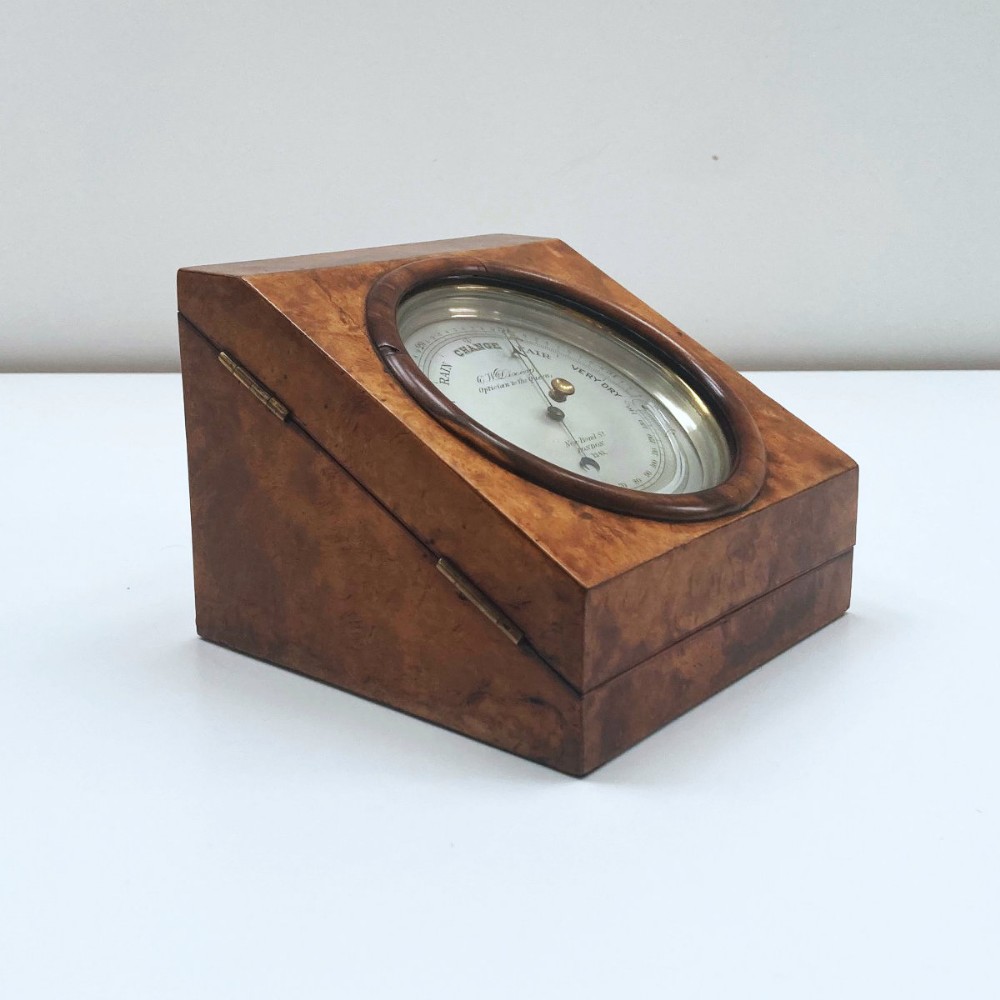
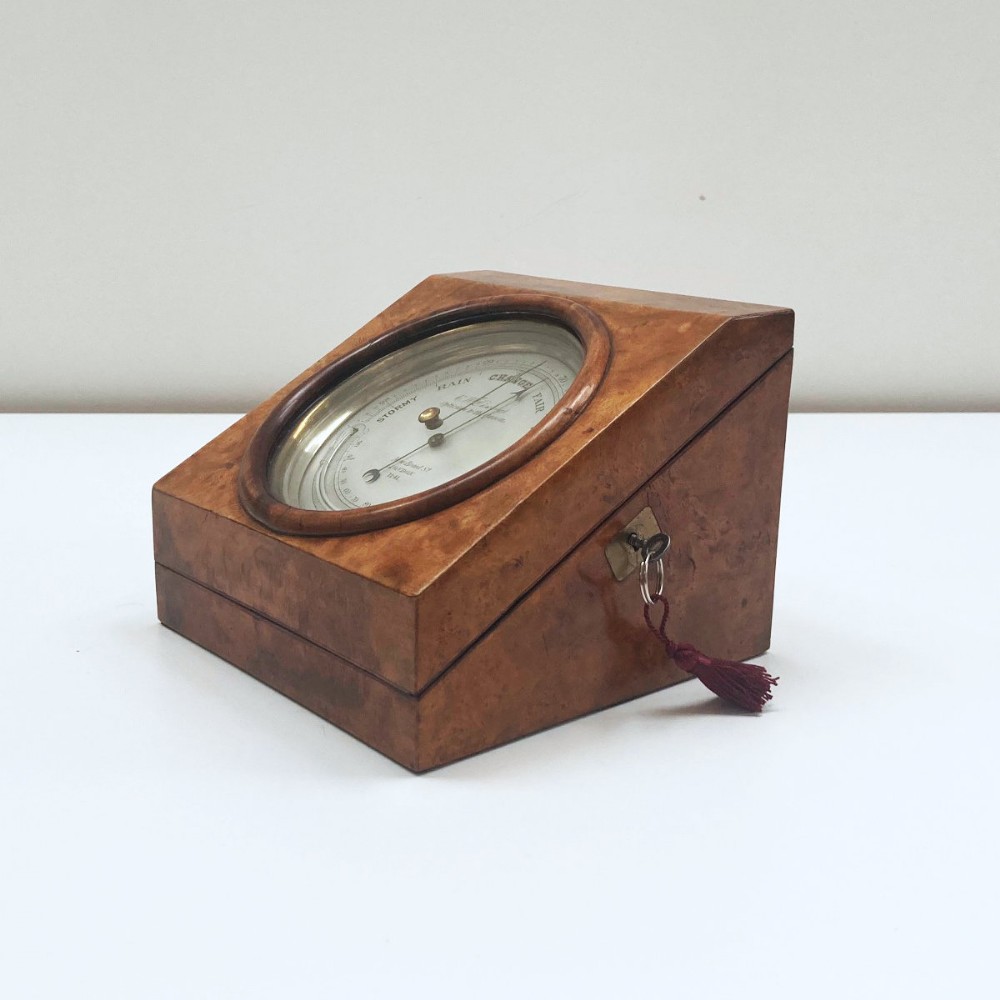
Jason Clarke Antiques has dated this piece to the 1850s.
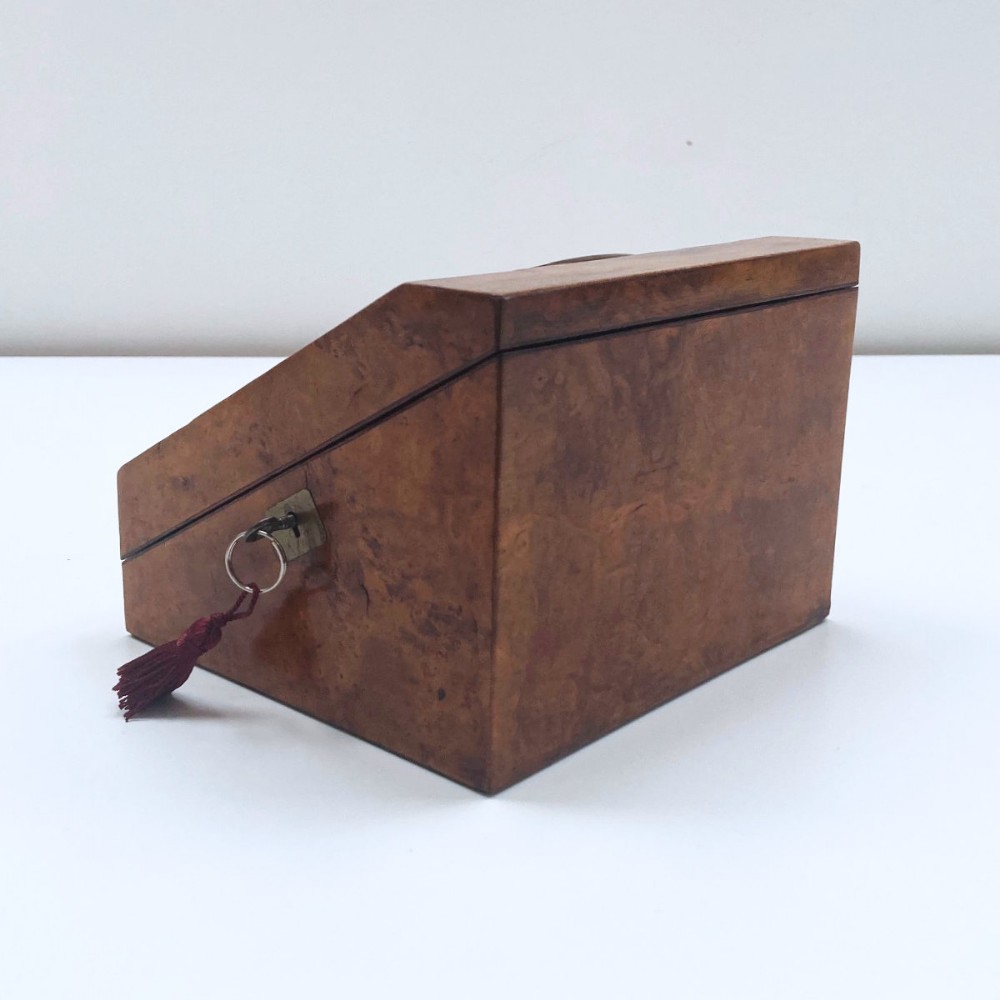
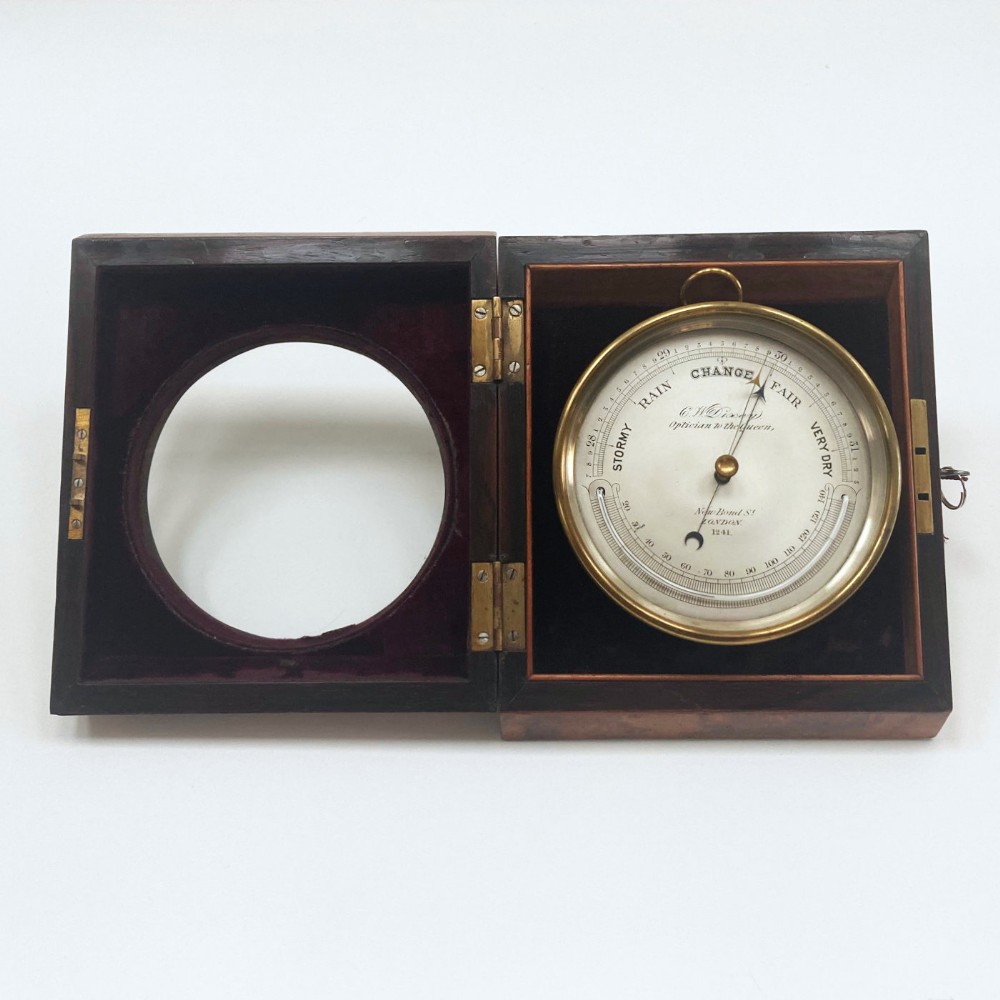
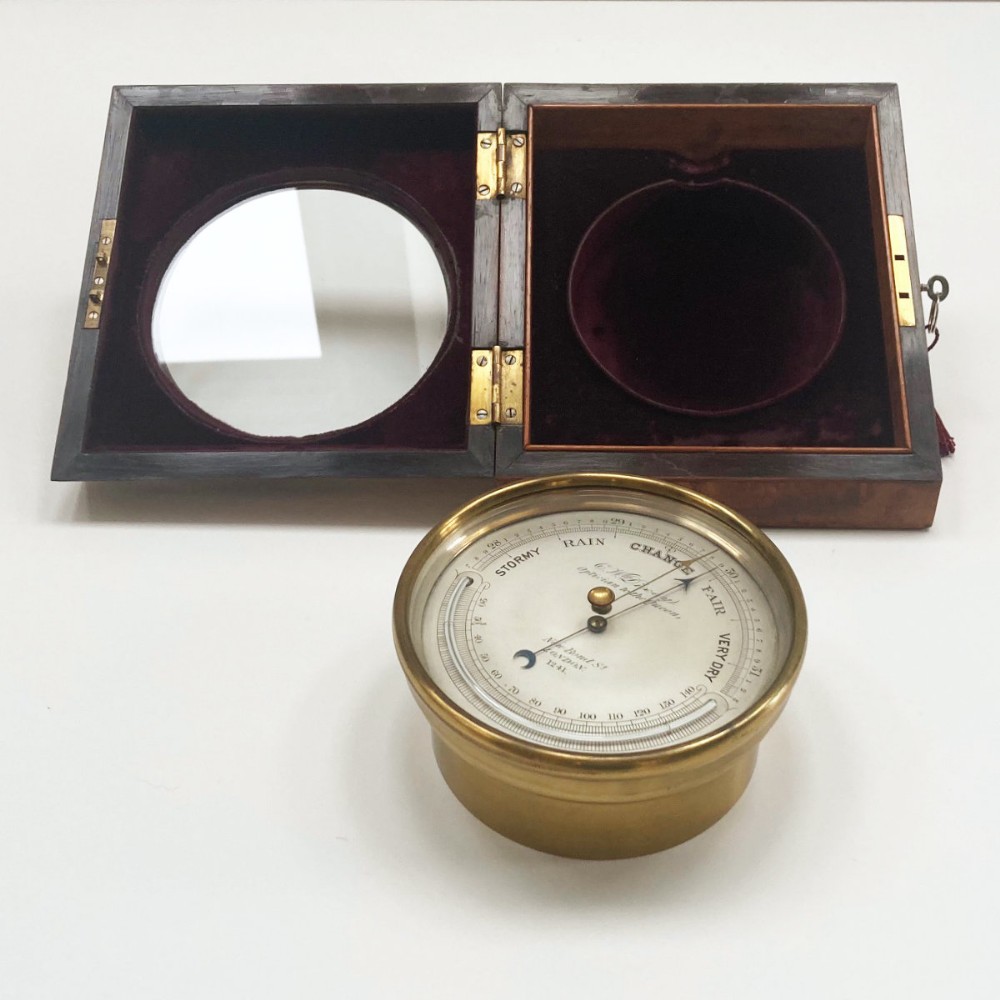
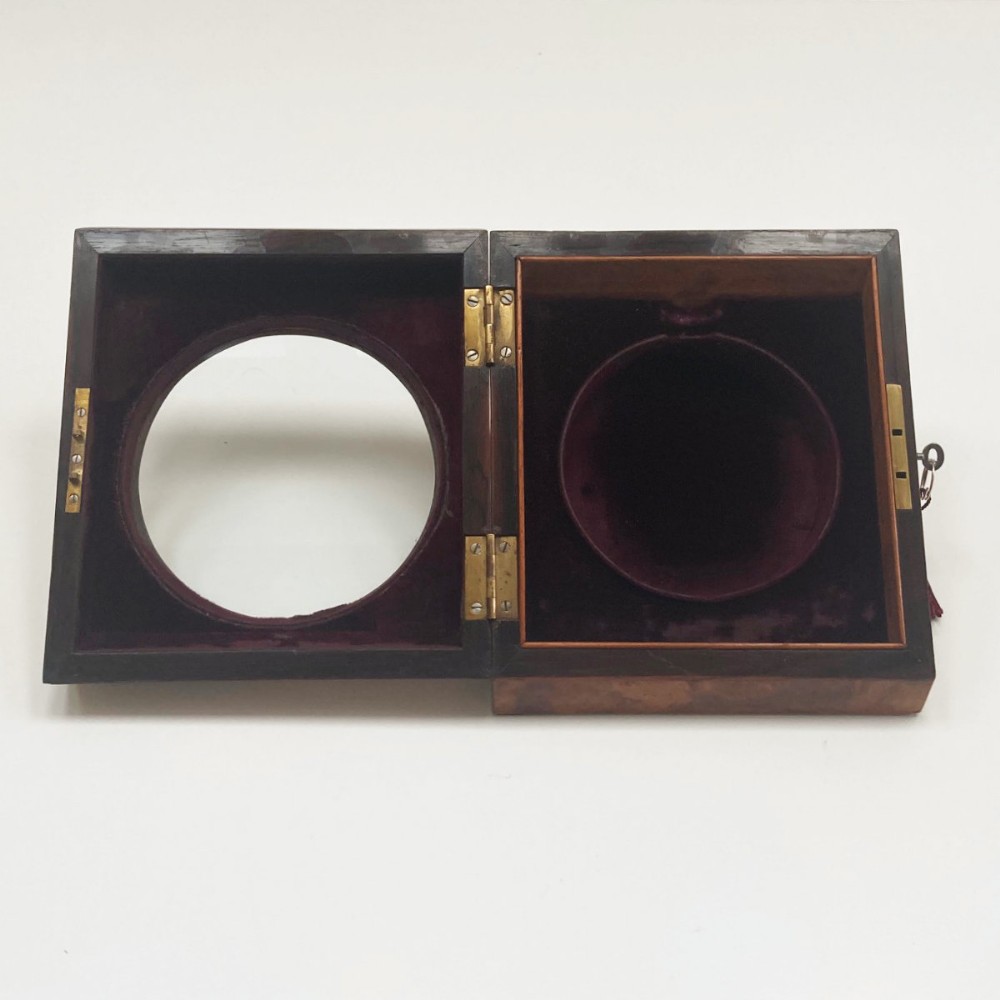
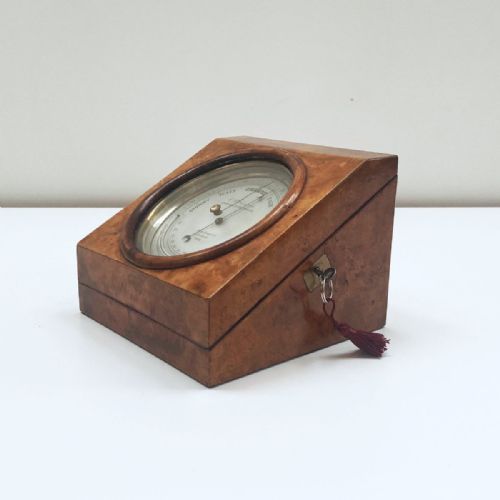
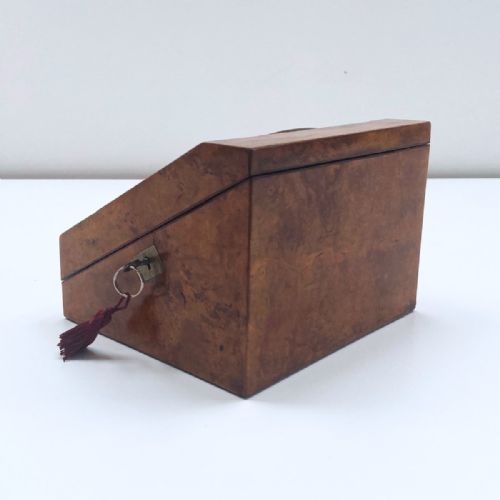
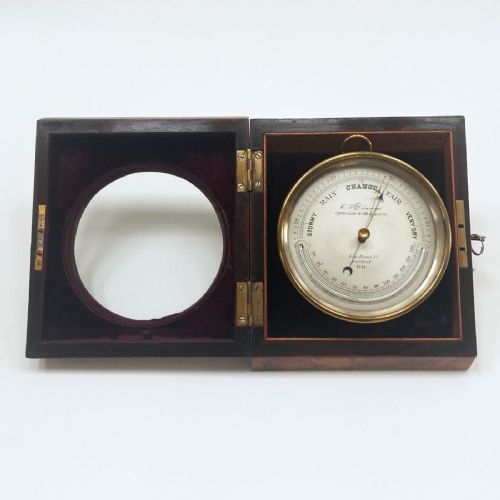
The circular glazed window in the lid is further accentuated with a walnut bezel providing contrast and a perfectly subtle indication of quality and attention to detail. The interior of the case is upholstered with maroon velvet to both the lid and the base and remains in super condition. It also retains a working lock and key.
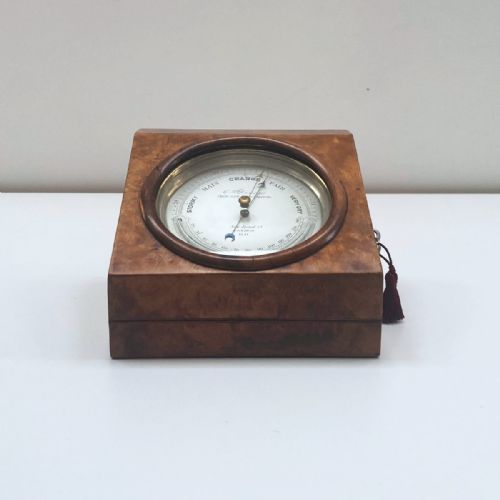
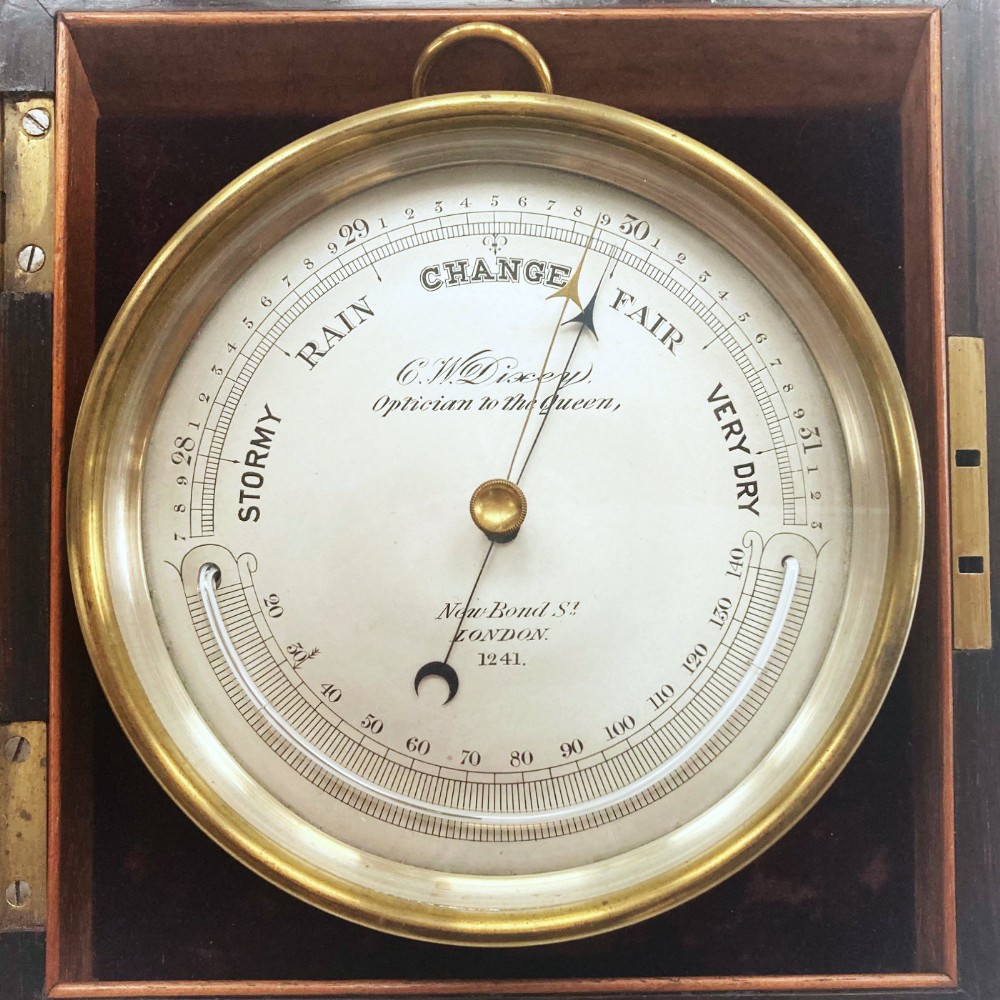
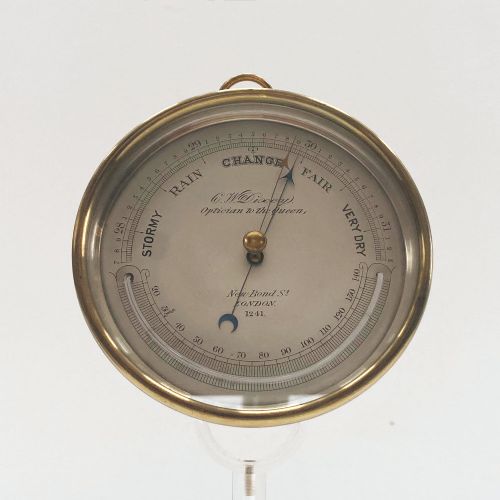
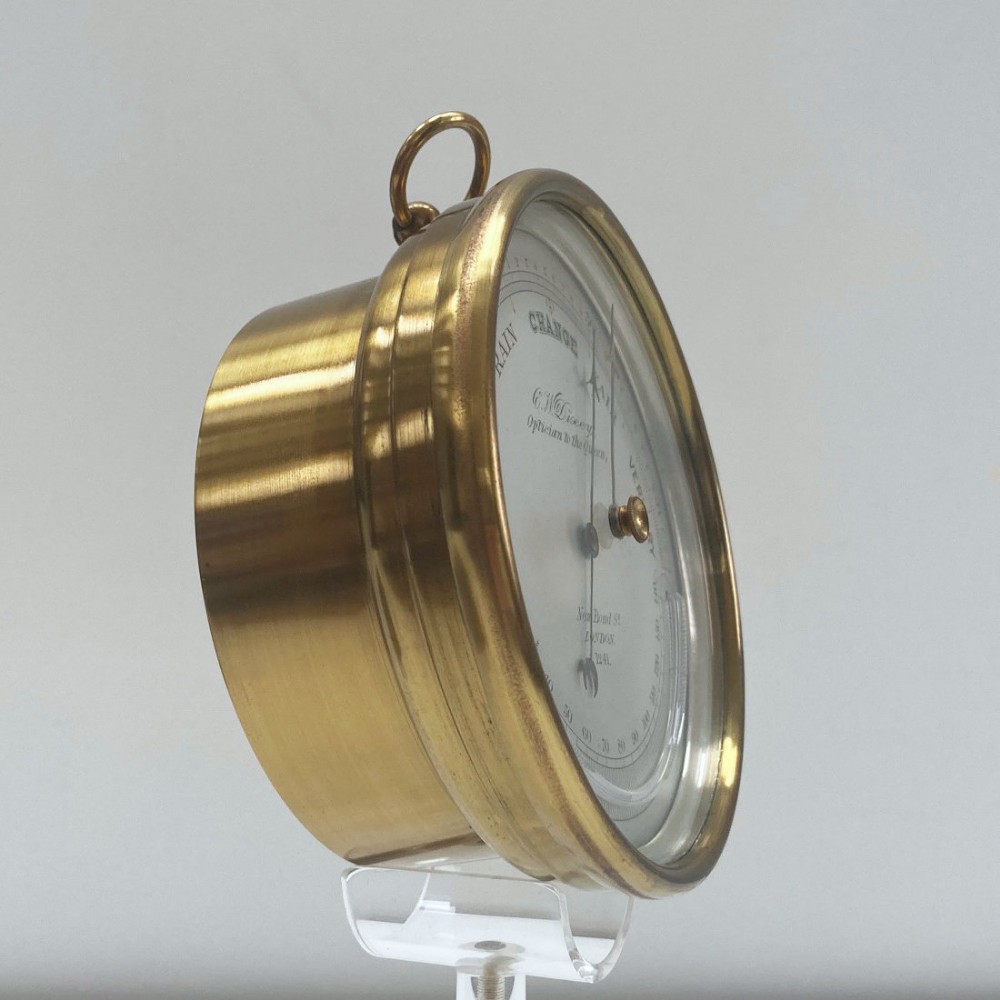
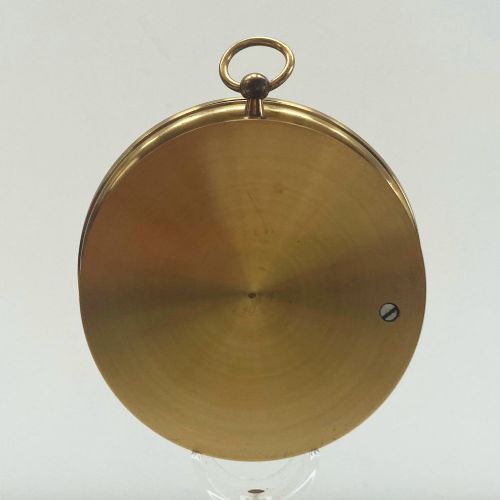
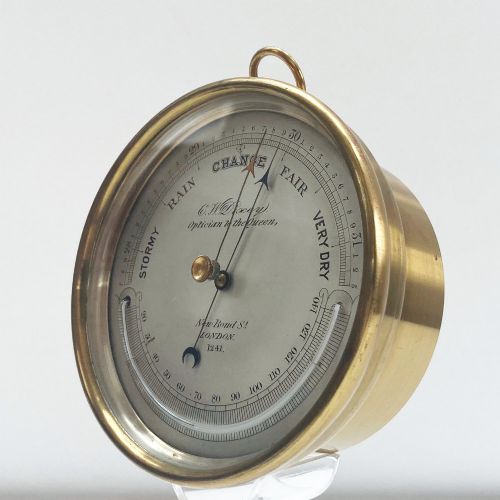
The fitted interior secures a super quality brass cased aneroid barometer with a half circle silvered scale measuring 28 to 31 inches of barometric pressure and Vidi type weather indications to the inner circumference. The centre of the dial is beautifully engraved to “CW Dixey. Optician to The Queen, New Bond Street, London” and serial number 1241. The lower half of the dial is also fitted with Fahrenheit thermometer with an engraved scale measuring 20 to 140 degrees. The barometer is complete with blue steel “Breguet” type pointer and a brass arrow head set hand.
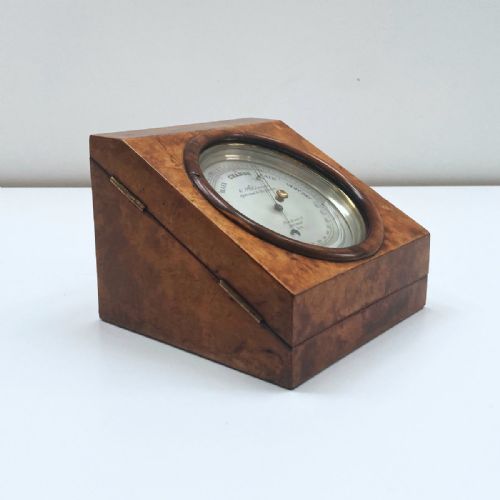
The engine turning detail to the circumference of the bezel is reminiscent of the earliest Vidi barometers retailed by EJ Dent which gives a good indication of its early date.
This truly exquisite example was made by Charles Wastell Dixey or CW Dixey which still trades today as a manufacturer and retailer of high end spectacles. The story of the dynasty however, is comprised of two strands of history. The present company’s history on its website is told in relation to the premises at 3 New Bond Street of which the company of G&C Dixey took over in 1825 from William Hawks Grice. Grice had traded at that address from 1818 to 1823. He in turn had taken over the business of the Fraser family in 1818.
The Fraser family had been in business as instrument makers from the 1770’s and are listed at 3 New Bond Street from about 1780. Started by William Fraser, his son Alexander joined the business as William Fraser & Son in 1805 and upon William’s death in 1812, the company was finally listed as just Alexander Fraser. William was a renowned maker and had received a Royal Appointment from George III, an accolade that Alexander kept after his father’s death. The reasons for the Fraser family selling to Grice is unclear but Grice himself seems to have continued the association with the Royal Family according to his, “description of the new improved self-registering thermometer” published in 1818 and from drawing instruments still contained within the Royal Collection. He is also described as a member of the City Philosophical Society and is listed as a contributing member of The Society of Arts in 1820 and 1823. According to the CW Dixey website, Grice is described as an assistant of the Fraser business and some records show him to have been apprenticed to the family business before he bought it. It also makes some reference to Grice having brought the business into ill-repute for having used it as a gambling den but I can find no record of this story. If true, it would explain his short tenure at the property but his membership of notable societies and his continued relationship with the Royal Family would suggest that he was a reputable instrument maker before this time.
Whether it was for reasons of criminal activity or not, the business was eventually sold in 1825 to George & Charles Wastell Dixey. George Dixey is known to have been apprenticed to George Wilson and Charles Wastell Dixey to his father Edward Dixey and Edward’s earlier records of trading form the second strand of the Dixey family story.
Edward’s history is somewhat difficult to unravel, he was born in 1772, the son of John Dixey a victualler or publican in Vine Street, Piccadilly and Catherine Dixey (nee Harris). According to most records,
Jason Clarke Antiques has dated this piece to the 1850s.
You can view the stock and full dealer information on the Jason Clarke Antiques Profile Page

Early Victorian Desk Aneroid Barometer in Burr Walnut Case by Cw Dixey London