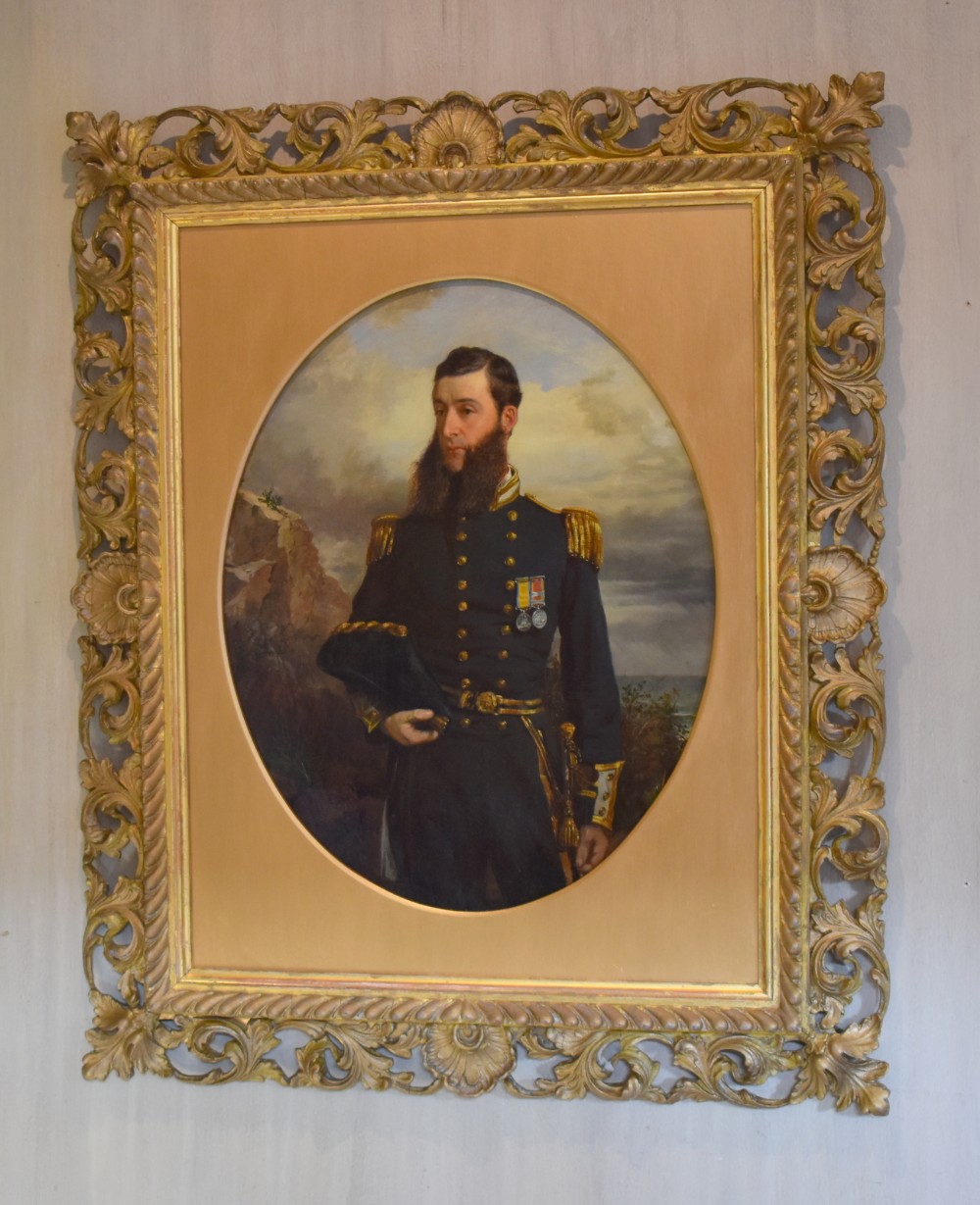
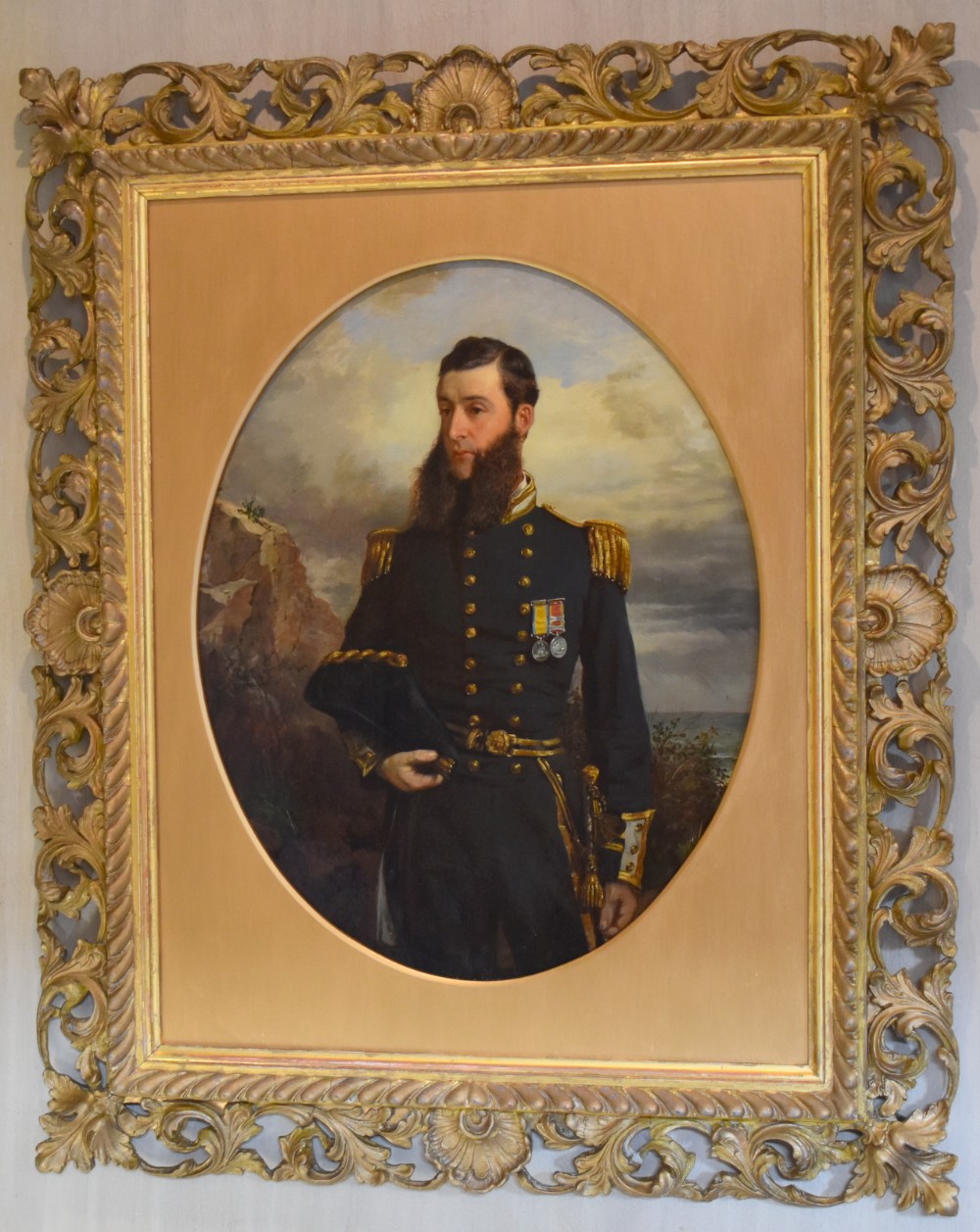
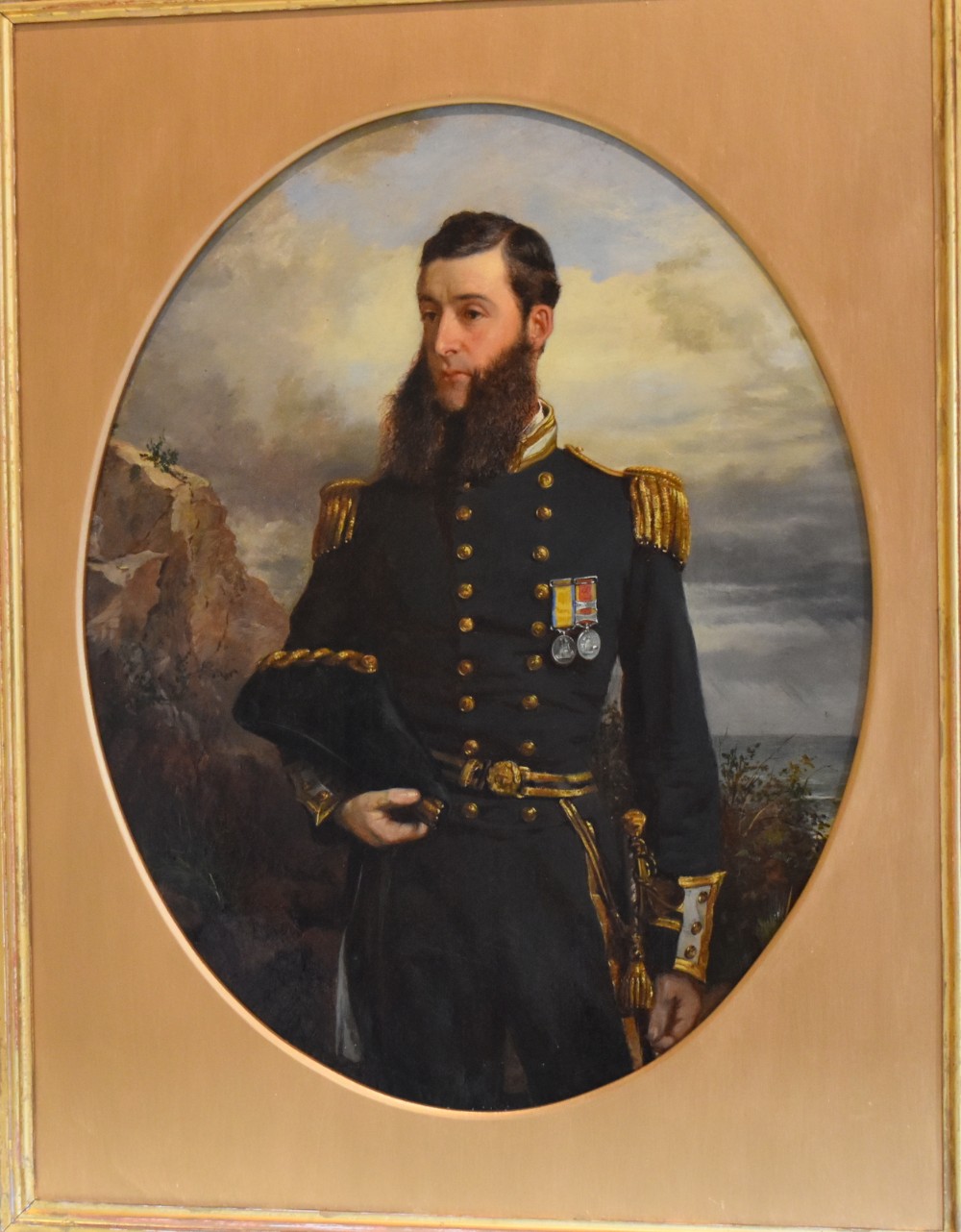
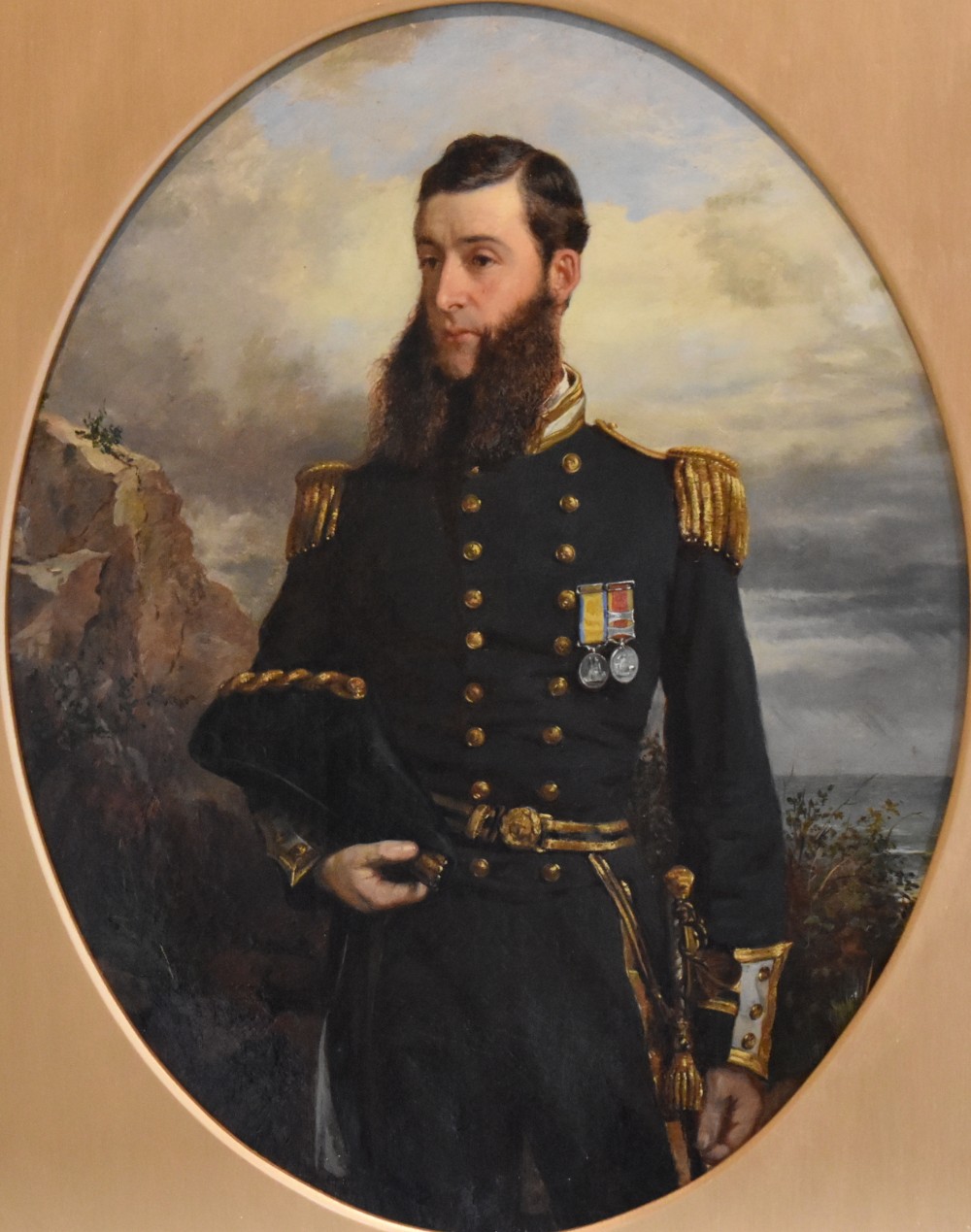
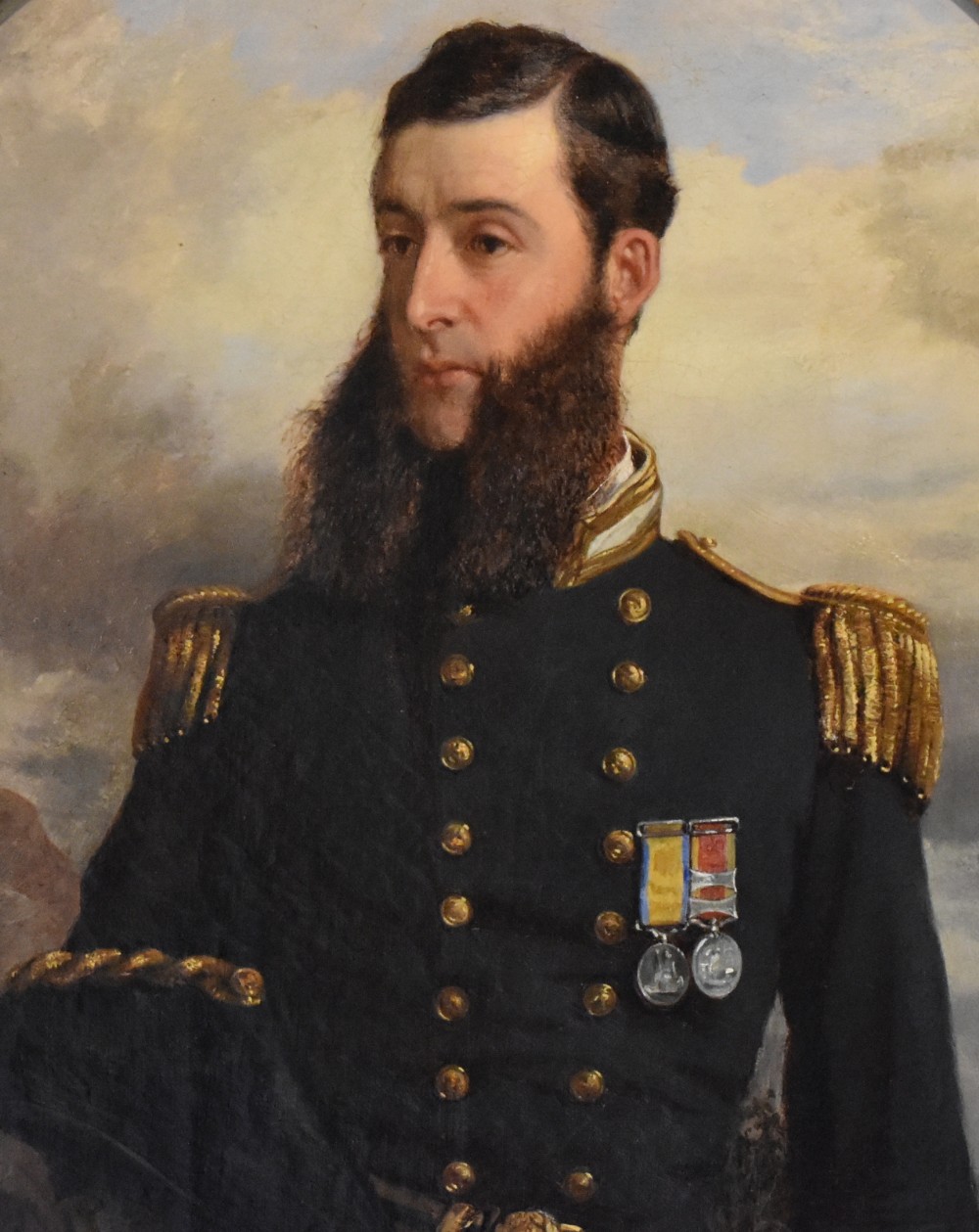
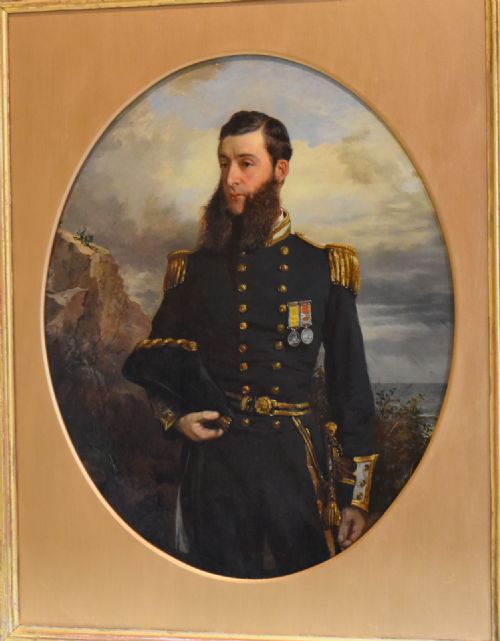
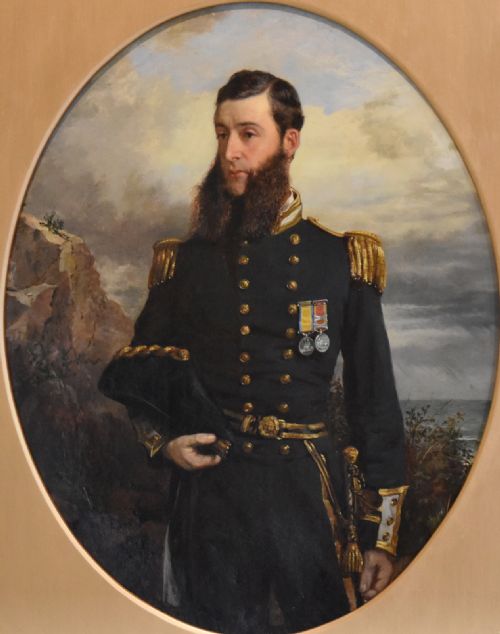
Prometheus Antiques has dated this piece to the 1860s.
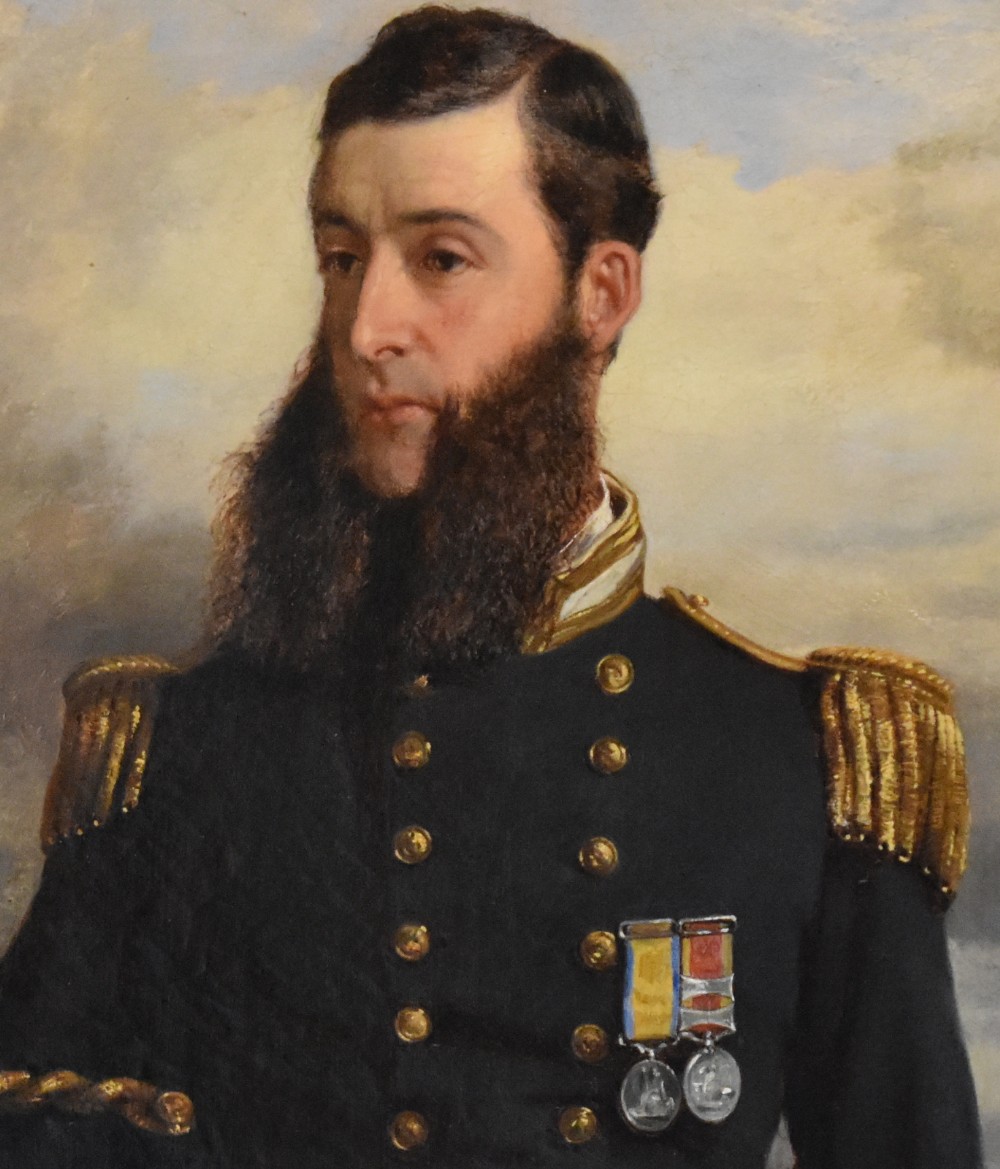
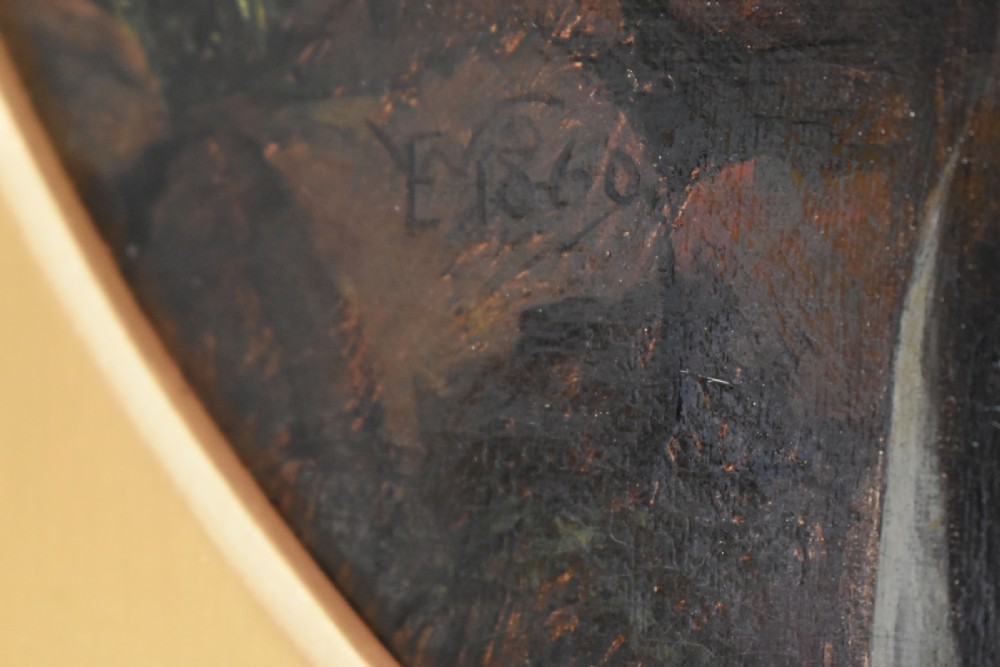
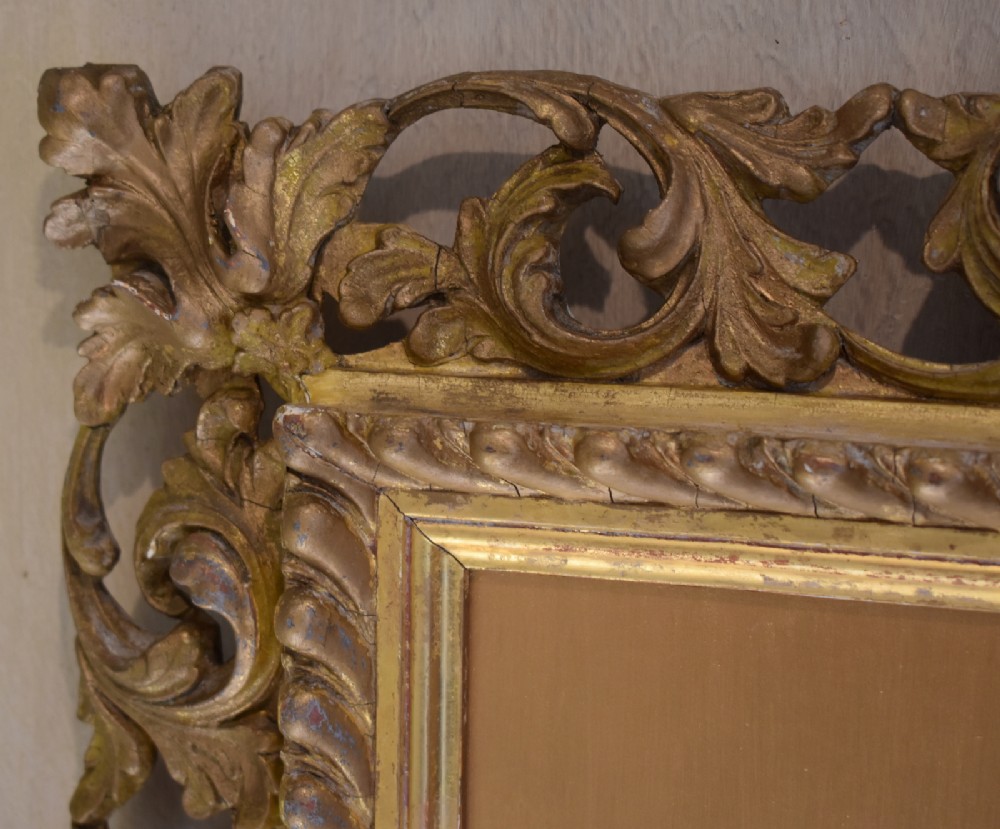
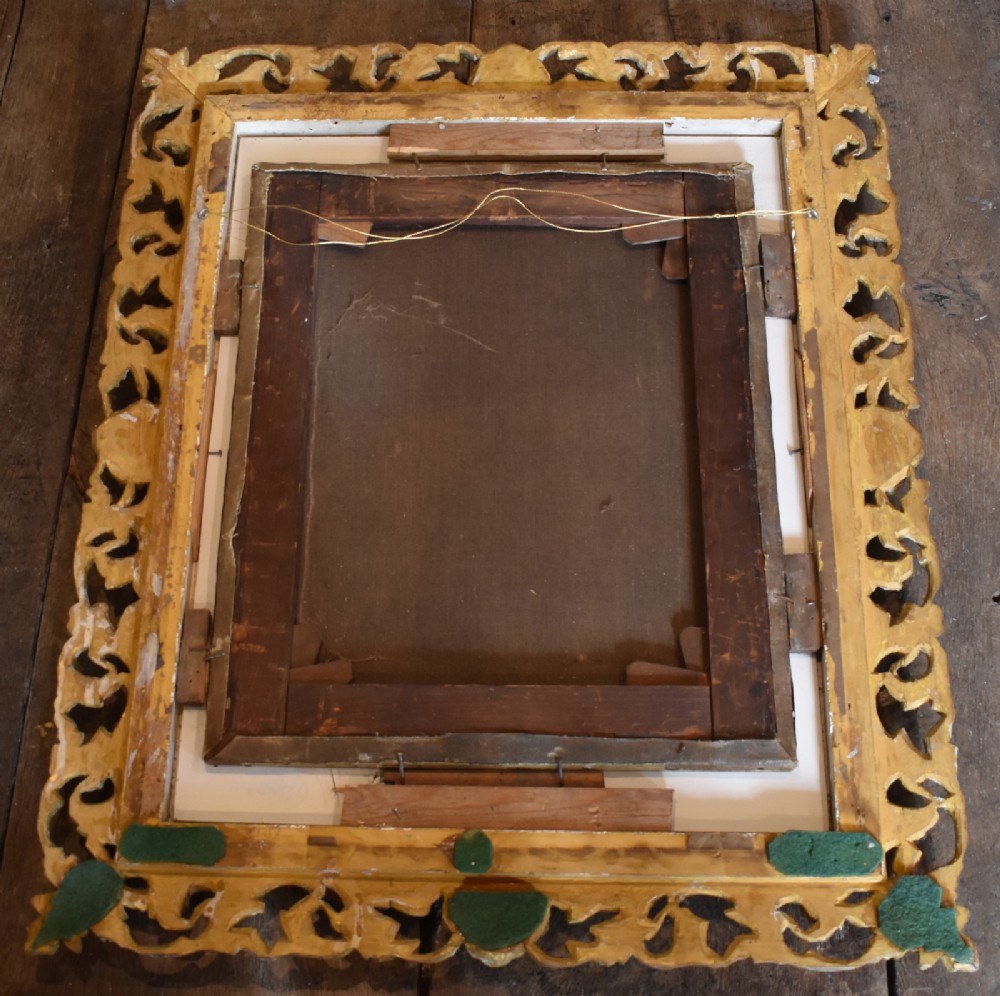
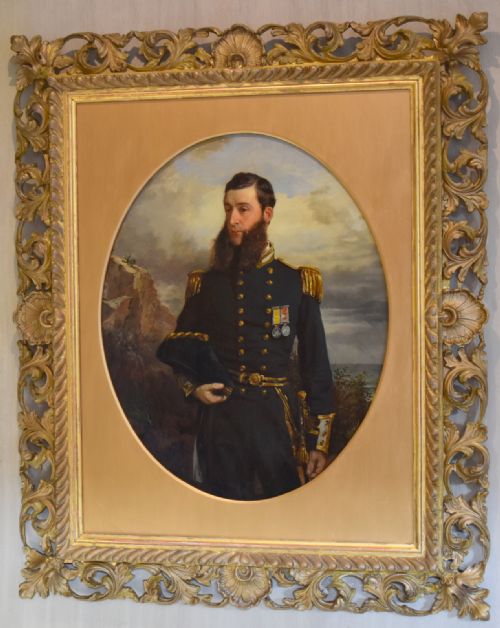
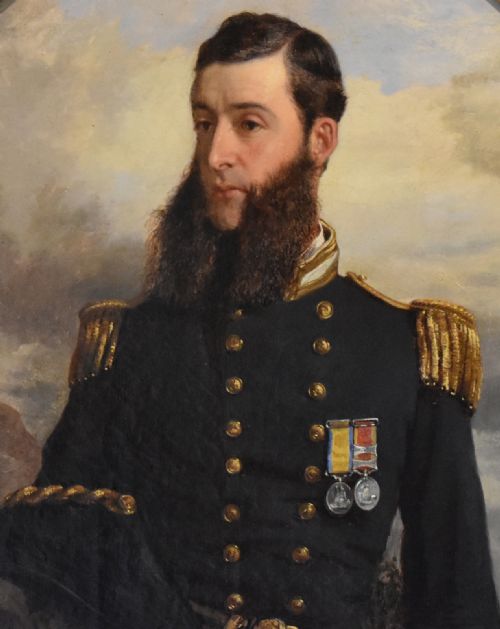
The work is in excellent condition it has been lined at some point in the past and it has been professionally cleaned recently. The painting is framed in a Victorian period gilt frame with modern oval slip. The frame has a great worn look and works very well with the portrait. The painting is signed by monogram EW and dated 1860. The date matches the medals he is wearing which are for the Baltic and Chinese campaigns of the 1850’s. The whole has a great period look and a great history. It is ready to hang.
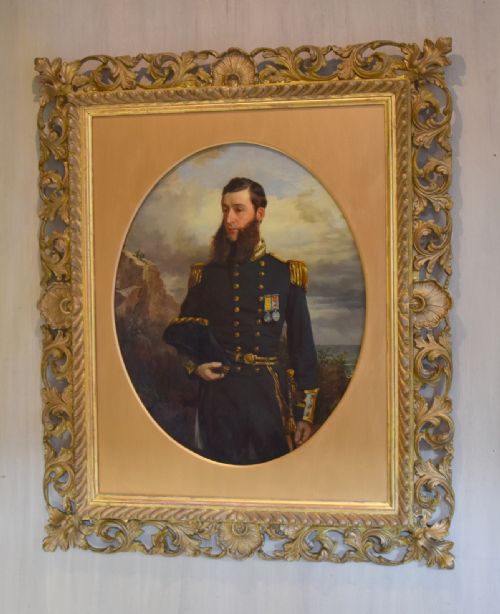
Overall sizes in inches including frame: 26 ½ by 32 ¼
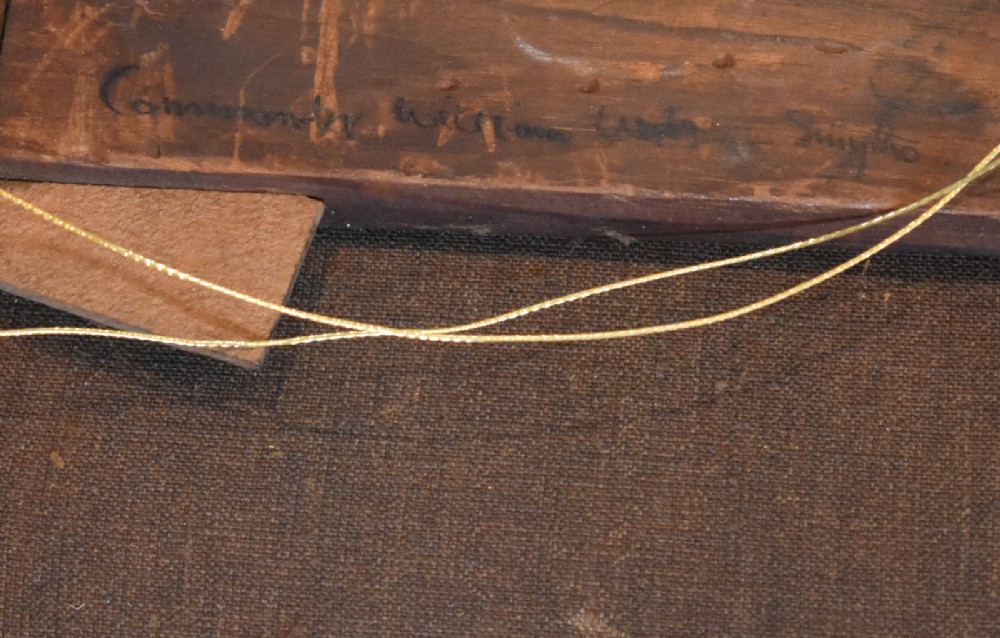
Biography of Commander William Watson-Smyth
Commander William Watson-Smyth had an illustrious naval career eventually becoming one of the Naval Knights of Windsor. He entered the Royal Navy as a Naval Cadet in October 1853, joining the steam flag ship H.M.S. Ajax flying the flag of Rear Admiral Sir William Carroll, K.C.B., in which he served in the Baltic Campaign of 1854-55. He was promoted to Midshipman in October 1855 and, in May 1856, he was appointed to the Sloop H.M.S. Niger, Captain the Honourable Arthur A. Cochrane, C.B., for service with the Pacific Squadron. He took part in the opening stages of the Second China War and was also present at the destruction of the Chinese fleet in Fatshan Creek on 1 June 1857, and the storming of Canton in December 1857. He was Gazetted on 1 August 1857, ‘as having been engaged in the Niger’s boats at the destruction of a flotilla of Chinese gunboats’ (Midshipman Niger’s 2nd Gig, 1 June 1857: Destruction of Fatshan Flotilla of War Junks).
In 1858 H.M.S. Niger (Captain P. Cracroft, R.N.) was transferred to the Australian Station commanded by Commodore William Loring, C.B. William Smyth was promoted to Mate in October 1859, and took part in the early actions in Taranaki including the capture of Te Kohia Pa on 17-18 March 1860, and the attack on Omatto and Waireka on 28 March 1860. He was given independent command of the colonial schooner Caroline, formerly known as Ruby, which had been requisitioned for naval service and was reported as rendering valuable service in transporting and landing troops and stores in support of the various naval actions. On 12 December 1860, William Smyth was transferred in a death vacancy to Commodore Loring's Flag Ship H.M.S. Iris. In this vessel he was present at the action at Mata-rikoriko (Winking Eyes) on 29 December 1860. During the early part of 1861, the Iris landed a small Naval Brigade, which took part in the skirmish at the Valley of Waitara. Smyth was Gazetted ‘as having been engaged in the spirited action with the enemy’.
On promotion to Lieutenant in March 1862, he was transferred to the steam corvette H.M.S. Tribune, also serving on the Pacific Station, and remained in her until she returned to England in 1865. He was invalided from H.M.S. Tribune in 1865 “
‘for preservation of life’, his nine year service in Far Eastern waters, including adverse climatic conditions and active involvement in two wars, having taken a heavy toll on his health. His health showed only minor improvement and when appointed to the training ship Impregnable, based at Devonport in September 1865, he was far from well. In July 1867 he was appointed First Lieutenant of H.M.S. Ganges, a training ship for boys based at Falmouth. His services while holding this post were commended but continuing failing health resulted in his early retirement as a Commander in 1873 after nearly 20 years of service.
His good services were recognised in January 1876 when Queen Victoria selected him to be the youngest, aged just 37, of the Naval Knights of Windsor, whose number never exceeded seven retired naval officers at any one time, under the terms of the
Prometheus Antiques has dated this piece to the 1860s.
Providing fine antiques and art from all periods and of all styles, including oil paintings, pottery, furniture and much, much more.
You can view the stock and full dealer information on the Prometheus Antiques Profile Page
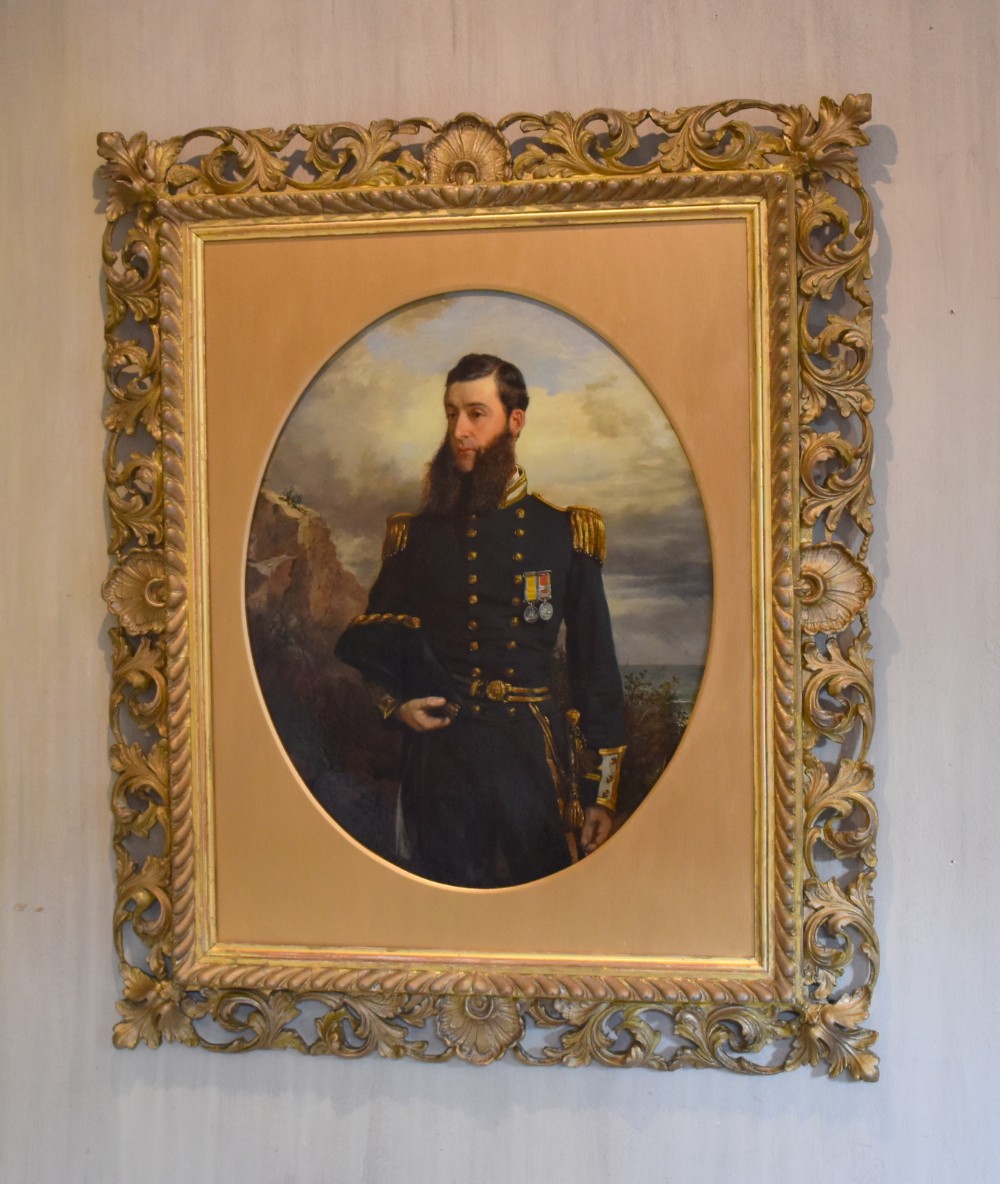
Superb Victorian Oil Portrait of a Naval Officer